


Thu, 23rd July Cardiff 18°
Nation.Cymru wordmark
Advertisement

Opinion

With the elections over, local democracy in Wales now needs a big overhaul
By NationCymru
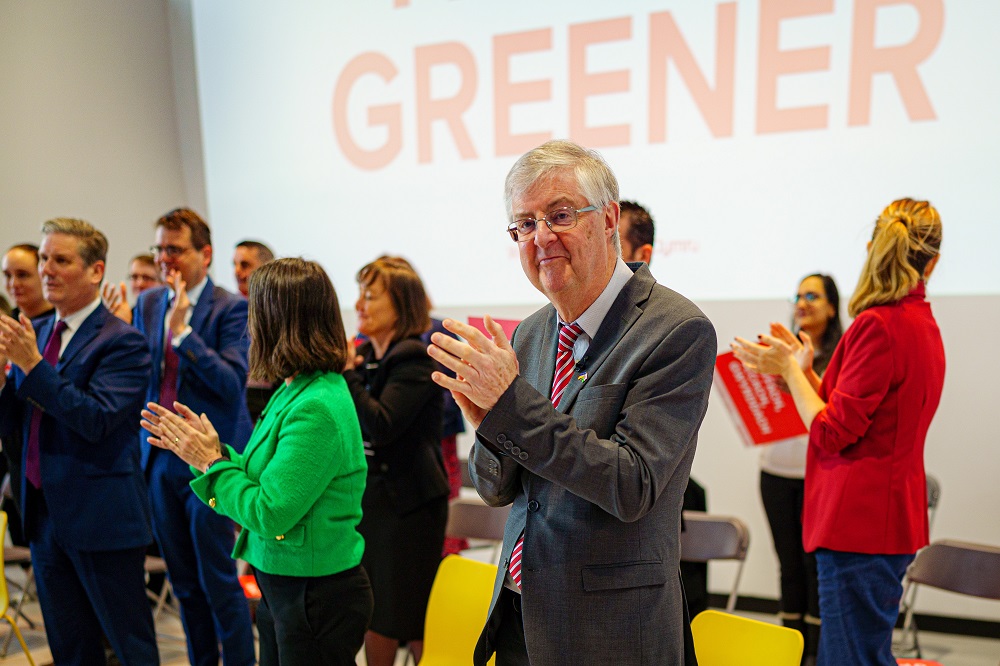
Welsh First Minister Mark Drakeford at the launch of the Welsh Labour election campaign at Bridgend. Picture by Ben Birchall / PA Wire

Ifan Morgan Jones

Well, that was fun, wasn’t it?

I teach a lecture on covering elections every year as part of a university module and my advice to students on local elections has tended to be that they're usually not as worth bothering with to the same extent as devolved or Westminster elections, because the public isn’t as interested.

I may have to revise that advice after yesterday when over 50,000 people tuned into Nation.Cymru’s local elections coverage, and journalists elsewhere have told me that they saw similar spike in interest.

The new trend, as seen during last year’s Senedd elections, of counting the results during the day certainly helps. I used to be opposed to daytime counting as I thought it marked Senedd and local elections out as being less important than Westminster elections.

But I think that what we’ve seen this year and last year is that they lead to much more public engagement in the excitement and tension of the count. And what Wales needs more than anything is more public engagement in its politics.

[mid-content-banner]

Too many wards

This mention of engagement however brings me to some of the most obvious shortcomings of local electoral politics in Wales, which could be improved upon before the next set of elections in 2027.

The main problem with Welsh local politics can be best summed up with: too many councils, too many wards. All the other problems, ultimately, flow from these.

Wales and Scotland have roughly the same number of councillors (around 1,200) despite Scotland having a population of 5.5m compared with Wales’ 3.2m.

You might argue that as much local representation as possible can only be a good thing. But it isn’t because what we see in practice is that when there are too many seats to contest, parties just don’t have the human or financial resources to field candidates in all of them.

72 council seats across Wales were uncontested. The number in England? One.

The town of Caernarfon alone had three times as many uncontested seats as all of England. They were all taken without by the single Plaid Cymru candidate. In one of the only wards in the town where there was a contest, the challenger, Labour, won a surprise seven vote victory.

Deryn’s candidate coverage party tool is extremely revealing in this regard. It shows that Conservative candidates are for the most part concentrated along the north-Wales coast and the M4 Cardiff commuter belt. Labour’s candidates are concentrated in the south Wales valleys, and Plaid Cymru’s in the Fro Gymraeg.

It’s essentially Dennis Balsom’s 'Three Wales model' in infographic form and reveals that much of the different parties' electoral dominance rests at least partly on the fact that they tend to stand in much greater numbers in some parts of the country than in others.

The immediate quick fix for this problem that should be brought about straight away is Single Transferable Voting in multi-member wards. Much larger wards would ensure that it would be far easier for parties to ensure that they at least have one candidate standing in every ward in Wales, and STV would ensure that every candidate had as fair a shot as any other.

It would instantly transform Wales from a country where over 100,000 voters had no choice at all to one where every voter had near a full menu of candidates to choose from.

In 2020 the Senedd voted to allow councils to move to an STV voting system by the 2027 election and they should all take up the opportunity.

Seven councils

While the introduction of STV might be a quick fix, it doesn't solve some of the other problems that come with having too many councils and too many wards within them.

With the scarcity of resources available to councils, a nation of 3.2m people doesn’t need 22, mostly very small, unitary county councils, all doing the same jobs as neighbouring demographically similar areas. They all need chief executive officers, fully staffed planning departments education departments, environmental departments, and so on.

They also need fully staffed committees of councillors to oversee this work. All councillors do important work but at some point just multiplying their number for no reason, and a lack of real barriers to becoming a councillor in some areas, will inevitably lead to a lower quality of representation and a further duplication of costs.

Wales itself can't argue that it adheres to smaller councils as a consistent democratic principle because we have some enormous ones as well.

Wales’ largest council, Cardiff, has a population of 369,000 people, while the smallest, Merthyr Tydfil, has a population of 60,424.

In Cardiff, one councillor represents almost 5,000 people, in Merthyr Tydfil it’s 2,000. This is indicative of a system that has developed by accident rather than by careful design.

I would argue that Wales only needs around seven councils, each with a population of between 300,000 and 450,000 people.

These would be:

  • Greater Cardiff – Cardiff and a few of the Vale of Glam, Caerphilly suburbs around it
  • Greater Gwynedd – Gwynedd, Anglesey and Conwy
  • North East – Denbighshire, Flintshire, Wrexham and Montgomeryshire
  • Dyfed and Brecon – Ceredigion, Pembrokeshire, Carmarthenshire and Brecon and Radnorshire
  • Swansea and NPT – what it says on the tin really
  • Gwent – Monmouthshire, Newport, Torfaen and Blaenau Gwent
  • Central Valleys – Merthyr Tydfil, what is left of Caerphilly, Rhonda Cynon Taf

Bridgend and the Vale of Glamorgan could decide to jointly or separately join in with Swansea and NPT, Greater Cardiff or the Central Valleys or form their own stand-alone conurbation.

These councils should not just be enlarged but also properly empowered. The ideal model might be something like the Cantons of Switzerland, which have a great deal of individual power over tax, education, health and planning.

They would also all have fewer but better-compensated councillors, all who would have had to endure a competitive electoral process in order to be there.

That would ensure a higher quality of councillor but also a more diverse choice too as people could treat the role as essentially a full or part-time job rather than something that mainly attracts older men.
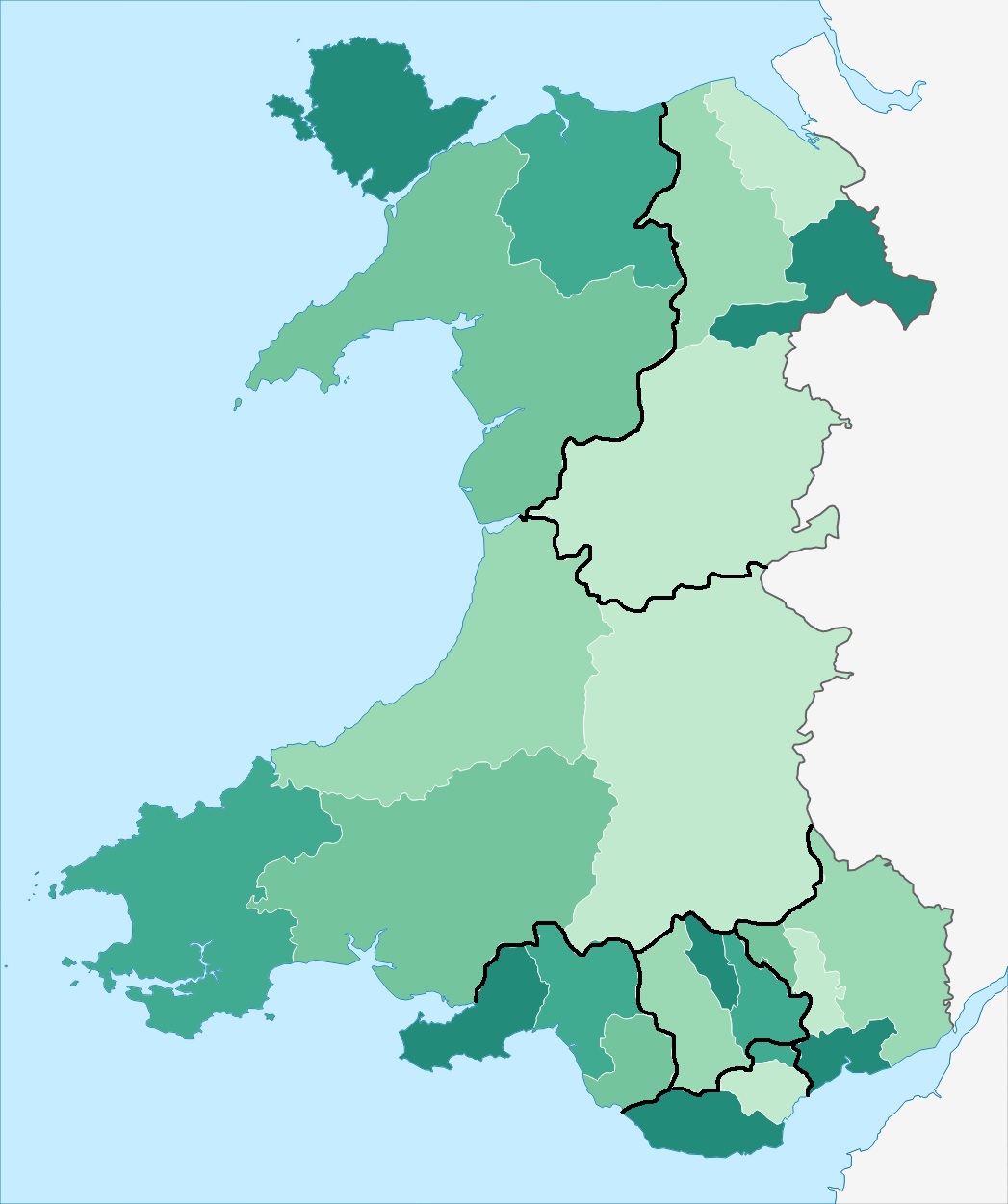
Are seven councils enough? Base image by XrysD (CC BY-SA 4.0).

Corporate

These are changes that should have the support of politicians across Wales. Plaid Cymru want to see their councils have more powers over local development plans, education, language and second homes.

The Conservatives have been going on for years about the need for ‘real devolution’, not just to Cardiff Bay but also to the local communities beyond. That is the entire political rationale behind the shared prosperity and ‘levelling up’ funds bypassing the Welsh Government.

The Welsh Government themselves at the same time clearly see the need for conglomeration. They did have a go at reorganising the councils but gave up in 2008 due to political opposition from the local authorities themselves. Turkeys, Christmas and all that.

But the work has essentially proceeded anyway with the creation of new larger bodies that supersede the smaller councils, including both capital regions and Corporate Joint Committees.

The six Corporate Joint Committees in particular seem to amount to council reorganisation through the back door.

But the problem with all of these new bodies is that they’re not democratic. No one votes for how their super-region or CJC is run. There is no Mayor of the Swansea City Region.

The Cardiff Capital Region recently had to defend itself after advertising itself as having lower salaries than other cities. But how do voters voice their displeasure at this activity?

Another problem is that these new initiatives are being pushed forward centrally, or perhaps in reality south-easterly, by the Welsh Government in Cardiff. Are people in Cardiff bay the best people to decide how these opaque new CJCs in the north and the west of Wales are run?

Ideally, we would be drawing power out of Cardiff and devolving it yet further into our communities so that people who live and work in those communities can decide how they are run.

Larger multi-member STV wards, fewer councillors and larger, more empowered councils would all ensure as much democratic choice as possible while also bringing power as close as possible to the people.

For the price of a cup of coffee a month you can help us create an independent, not-for-profit, national news service for the people of Wales, by the people of Wales.

Get more trusted Welsh news

Choose Nation.Cymru as a preferred source in Google News to see more of our journalism.

Choose Nation.Cymru as a preferred source in Google News

29 comments

E Jones

Why not have 8? you could perhaps call them Gwynedd, Clwyd, Powys, Dyfed, West Glamorgan, Mid Glamorgan, South Glamorgan and Gwent. Sound familiar?

Reply
KC Gordon

1974 local gvt. reorganisation ...and nobody liked it!

Reply
Royston Jones

Because it was a two-tier system

Reply
Richard

Ah but David Hunt did im afraid and his voice was the only voice then

Reply
Andrew Thomas

Oh come on this is the daftest reply I have ever seen! Finally some sensible proposals from Ifan. I would go further calling north east Wales the Wrexham city region and Swansea and Cardiff the same. Also 720 community councils is for too many with at least a 50% reduction all by stv voting

Reply
Ryan Morgan

Whilst I fully support introducing STV for local elections in Wales (and for Senedd elections) I really don’t see why the fad of ever bigger and fewer local councils in Wales. Reducing the number of councillors as a whole may have merit. But surely Councils should be focused on smaller population and geographic centres than large arbitrary population zones? Look at Denmark (pop. 5.8 million) it’s local authority areas tend to have an average population of 20,000. Smaller local government units can be far more responsive to local needs and more democratically accountable. Making a county that includes Brecon, Pembrokeshire, Sir Gaerfyrddin and Ceredigion is absurd. They have significant different local needs, issues and population spreads. Given the population of said county would also largely be focused in the south with Llanelli, Haverfordwest and Carmarthen being 3/4 of the largest towns in the county (Aberystwyth being the exception). And where would the council be seated ? Arguably Camarthen as its the most central town in said County but thats still over an hours drive from Brecon and Aber. And thats ignoring the extremely poor public transport links. What it’d create would essentially be a miniature version of the Senedd where the power and population are focused in the south. Which would take even more power away from rural, poorer and more remote parts of Wales. Local government should be focused on smaller population and geographically compact areas to make them more responsive and democratically accountable to local needs and issues. Recreating a miniature UK in Wales with power increasingly centralised in more distant and unresponsive institutions would be a massively missed opportunity.

Reply
Sion Tomos

Those aren't local authorities in Denmark though the kommuner are the equivalent of our community/town councils (albeit with more powers). At the level below central government Denmark is devided into five regions.

Reply
Ryan Morgan

The regions dont really operate like local authorities though they’re more like regional coordination councils (like the London Assembly) and are largely in charge of healthcare provision a bit like Wales’ Health Boards, they also cannot directly level taxes and only partially coordinate secondary education. So comparatively Danish municipal councils operate far more closely to how Welsh unitary authorities do than say Welsh community councils.

Reply
Ruth Elliott

I live in Switzerland and the Swiss model of Cantons who do the important work, whilst the Federation covers the outward looking role and those inward looking roles that are best organised from one place is very effective. It can look like an over heavy bureaucracy but the citizens know who is responsible for what. The functionaries live in the same areas as the citizens, their children go to the same schools, they all use the same hospitals so it helps breed an egalitarian feel. Wales needs to be brave and try a different model from that inherited from Westminster - power all concentrated in one area of the far South-East - and this said by a Cardiffian! Other small countries provide different models which are worth looking at but it's worth remembering that Switzerland also has a number of language areas - german, french, italian and romantsch plus its towns are isolated by mountains and lakes. It is surrounded by much larger neighbours. So not dissimilar to Wales in may ways.

Reply
CJPh

Along with elements of the Irish, Czech and Scandinavian systems, I've long championed aspects of the Swiss model of governance. Along with specialised areas of expertise and compelling reasons to both attract and form businesses, elements of the economy and civic culture could be things for us in Cymru to emulate. Maybe then we can attract citizens like yourself back.

Reply
Evan Aled Bayton

Well well! Let’s go back to 1974 and have the previous councils like Dyfed, Powys etc. Or perhaps a more imaginative local government based on cooperative services spanning several councils with better use of community councils to continue local identity.

Reply
Paul

So , you want the people of Wales to have absolutely no control over any aspect of Welsh political life?

Reply
Dai Rob

A better ider, lets join London & the SE of England with Northern France, with the HQ in celtic Brittany! Plonker!

Reply
Rhosddu

That would only work if Merseyside, Birmingham and Bristol were in Wales, but it's unlikely that Wales would agree to any request on their part to be incorporated into this country.

Reply
John Brooks

For a balanced view you need to include the Town and Community councils in the equation. There are about 70 in Powys alone. Many have vacancies which are too often filled by Co-option, insufficient candidates and many have never had a contested election. We are trying to get too many representatives out of our population.

Reply
Paul

There are 110 community councils in Powys. Absolutely ridiculous with an average population of 1100 each. When you take out the 'big' towns like Newtown, Brecon. . There are councils with nearly as many councillors as residents. The problem with geographically huge councils such as Powys is they become democratically divorced. Services become centralised and difficult to access. Llandrindod is over 2 hours drive from many parts of Powys. The Swiss ideas are sounding good

Reply
Lyn Thomas

This is a perpetual source of disagreement, personally I'd like a two tier system - more reminiscent of the 1974 system but with 5 regional councils based on 1. The North (Gwynedd, Clwyd, Montgomery), 2, Dyfed Powys, 3 Gwent, 4, Swansea Bae (Swansea, Neath Port Talbot, Llanelli) and 5. East Glamorgan (Cardiff, The Vale, RCT, Merthyr, Bridgend). These regions would run Health & Social Services, Education (including further but not higher education), Waste Disposal, Police, Fire, Ambulance, Transport, Economic Planning. Thus taking in the nominated Heath, Fire, Police and regional consortia that currently exist and some big ticket functions of the current unitary authorities. Below that some 25 local authorities running, Housing, Waste Collection, Libraries and Leisure facilites, local planning, licensing and most of the smaller ticket functions currently carried out by the current unitary authorities. Final tier, community councils, where there would be a reduction of these but covering all of Wales, so the communities in the urban areas would have these, and they would cover the very local functions of running local amenities like footpaths, allotments, community halls and community resources, in addition grant aiding local voluntary organisations - plus any functions devolved to them by the 25 or so district councils. All elected by stv and all with multi member wards (3 - 8 members where 5 is the norm) For a vision of what should have happened from the 1940 from the somewhat visionary Edgar Chappell http://acardiffvoice.blogspot.com/2017/11/local-government-reform-1942.html

Reply
Jack

Council areas can reflect cultural differences in different part of the country. I think we should be careful before we start to merge & change boundaries. Caerphilly is a distinct town with it's own identity, so it would be important to not just relegate it to a suburb of Cardiff which could happen with a council merger. Similarly, I think Newport, Monmouthshire & Blaenau Gwent would be merging 3 very distinct parts of the South East. Also Knighton is on the Powys-Shopshire border but in this map would be in the same Council as Haverfordwest? That's huge! I agree about reforming the voting system, but can't get on board with these new council boundaries.

Reply
Keith Parry

I have now fought Fairwater in Cardiff four times. The ward returns three councillors and has 6000 houses and population of 13000. Leafleting and canvassing is a large undertaking. Yet in Gwynedd councillors serve much smaller populations and are often returned unopposed or with a couple of hundred votes. Councillors have similar allowances weather they have four hundred constituents or six thousand. Yes the system needs reform. But Labour will not reform it. First past the post serves them well, number of seats won in Cardiff bares little relationship to percentage of votes cast. Small wards in Valleys are little better than ' Jobs for the Boys'.

Reply
Mark Flagg

More community councils and PR ...First past the post is not going for inclusion in a democratic society...it keeps power dispersed

Reply
Adarynefoedd

Glad to see that Jack flagged up the problems of a Dyfed-Powys super council. A two hour round trip to HQ does not help democracy. The current LAs are too small for the big ticket items in Social Services and Education - some of these are completely unpredictable (ef secure accommodation) and can break the budget. LSE estimated a population size of around 200,000 for a unitary authority but this is hard to achieve in rural Wales. In terms of local democracy and access to services, there needs to be staffed service points in each town (and most of rural Wales has a core town) to provide a service hub for the public - ideal expansion of the library service - so that the public know where to go. Thank you for the article.

Reply
Lyn Thomas

This is why I suggest a two tier structure, so the Deheubarth region would have 4 district councils for Pembroke, Ceredigion, Carmarthen and Brecon & Radnor (I I would put Montgomery in the Northern Region).

Reply
Richard

An interesting paper with some good points and a sensible direction of travel. Too many councils and too many wards. The trouble is however the link to compare with England and Scotland just moves back towards a one size fits all UK model ! The 7 areas suggested and their size again are creating areas with little cominality and poor transport links. 22 to 7 - no longer LOCAL Gvt ☝️ Local Gvt needs to be accessable Councils need to be viable and of a size that they have the a solid core experteze within their officer structure. A more realistic number might be between 14 to 16…allowing for representing rurality issues and local historical loyalties.

Reply
Geraint

If the number of unopposed councillors is driving this debate we must also look at community and town councils. A significant number of these councils held no elections and in quite a few cases there have been no elections for many years. In one council in west Wales there were no candidates.

Reply
Jonathan Edwards

I for one liked the 7 large counties. Take Dyfed: it was not Labour dominated and was not corrupt. Carmarthen DC had a long history of dodgy dealing. When Carmarthen DC took over its part of Dyfed we got the Mark James regime. Which mirrored Carms and Pembs down the ages, and until very recently. So bring back Dyfed. And revive Community Councils. The Welsh Assembly weakened them after the voters in one, Carmarthen Town, took on Mark James and beat him in the High Court. Historically, Wales rejigs its Councils once a generation, to the great profit of council senior officers, so be careful on the Redundancy schemes!. Query, why not have elected mayors? Not doing this means unelected tyrant Chief Execs and weak Councillors anyway. Why is this so wonderful?

Reply
Llywelyn ein Llyw Nesaf

Thought-provoking. But I feel that the proposal for 7 councils loses sight of the fundamental 'local' part of local democracy! The Dyfed/Brecon council would cover nearly half the area of the country. Local democracy works largely because councillors are familiar with what they're talking about. Would a councillor for Aberdaugleddau be familiar with Aberhonddu? A better arrangement is councils that follow natural/traditional boundaries - like the old counties - but with mechanisms to work together with others where it would help - e.g. Fire Brigades I think a move to larger multi-member wards with STV is a sensible proposal though. As an aside I noticed that a (newish?) county council - Somerset - has 110 seats. And the Tories object to increasing the Senedd from 60!

Reply
Owain Morgan

While I fundamentally agree that we need to reorganise Local Government in Wales, a Council whose responsible for everything from Llanelli to Beaumaris is just absurd! Yes we need to reduce the number of local authorities from 22, as well as cut the number of councillors while trying to ensure that all seats are contested. However this proposed map the writer produced is based purely on population, and nothing else! We need to create a set of criteria for minimum and maximum size of population, along with other considerations and then ask the boundary commission to make proposals. Not everyone will agree, especially the Councillors who are likely to lose their seats, but the price of Welsh Local Government is currently far to high and therefore doesn't deliver for vast majority of residents. When someone comes up with the reasonable proposals it will be backed, by at least a significant minority of voters. Until then we're stuck with this bloated mess 🙄

Reply
토토사이트

"27 Reasons Why Celebrities Love This Product" <a href="https://totohill.net/">토토힐주소</a>

Reply

Leave a reply

Replying to CJPh Cancel

Along with elements of the Irish, Czech and Scandinavian systems, I've long championed aspects of the Swiss model of governance. Along with specialised areas of expertise and compelling reasons to both attract and form businesses, elements...

Comments are reviewed before they appear.