


Opinion
With the elections over, local democracy in Wales now needs a big overhaul
Ifan Morgan Jones
Well, that was fun, wasn’t it?
I teach a lecture on covering elections every year as part of a university module and my advice to students on local elections has tended to be that they're usually not as worth bothering with to the same extent as devolved or Westminster elections, because the public isn’t as interested.
I may have to revise that advice after yesterday when over 50,000 people tuned into Nation.Cymru’s local elections coverage, and journalists elsewhere have told me that they saw similar spike in interest.
The new trend, as seen during last year’s Senedd elections, of counting the results during the day certainly helps. I used to be opposed to daytime counting as I thought it marked Senedd and local elections out as being less important than Westminster elections.
But I think that what we’ve seen this year and last year is that they lead to much more public engagement in the excitement and tension of the count. And what Wales needs more than anything is more public engagement in its politics.
[mid-content-banner]
Too many wards
This mention of engagement however brings me to some of the most obvious shortcomings of local electoral politics in Wales, which could be improved upon before the next set of elections in 2027.
The main problem with Welsh local politics can be best summed up with: too many councils, too many wards. All the other problems, ultimately, flow from these.
Wales and Scotland have roughly the same number of councillors (around 1,200) despite Scotland having a population of 5.5m compared with Wales’ 3.2m.
You might argue that as much local representation as possible can only be a good thing. But it isn’t because what we see in practice is that when there are too many seats to contest, parties just don’t have the human or financial resources to field candidates in all of them.
72 council seats across Wales were uncontested. The number in England? One.
The town of Caernarfon alone had three times as many uncontested seats as all of England. They were all taken without by the single Plaid Cymru candidate. In one of the only wards in the town where there was a contest, the challenger, Labour, won a surprise seven vote victory.
Deryn’s candidate coverage party tool is extremely revealing in this regard. It shows that Conservative candidates are for the most part concentrated along the north-Wales coast and the M4 Cardiff commuter belt. Labour’s candidates are concentrated in the south Wales valleys, and Plaid Cymru’s in the Fro Gymraeg.
It’s essentially Dennis Balsom’s 'Three Wales model' in infographic form and reveals that much of the different parties' electoral dominance rests at least partly on the fact that they tend to stand in much greater numbers in some parts of the country than in others.
The immediate quick fix for this problem that should be brought about straight away is Single Transferable Voting in multi-member wards. Much larger wards would ensure that it would be far easier for parties to ensure that they at least have one candidate standing in every ward in Wales, and STV would ensure that every candidate had as fair a shot as any other.
It would instantly transform Wales from a country where over 100,000 voters had no choice at all to one where every voter had near a full menu of candidates to choose from.
In 2020 the Senedd voted to allow councils to move to an STV voting system by the 2027 election and they should all take up the opportunity.
Seven councils
While the introduction of STV might be a quick fix, it doesn't solve some of the other problems that come with having too many councils and too many wards within them.
With the scarcity of resources available to councils, a nation of 3.2m people doesn’t need 22, mostly very small, unitary county councils, all doing the same jobs as neighbouring demographically similar areas. They all need chief executive officers, fully staffed planning departments education departments, environmental departments, and so on.
They also need fully staffed committees of councillors to oversee this work. All councillors do important work but at some point just multiplying their number for no reason, and a lack of real barriers to becoming a councillor in some areas, will inevitably lead to a lower quality of representation and a further duplication of costs.
Wales itself can't argue that it adheres to smaller councils as a consistent democratic principle because we have some enormous ones as well.
Wales’ largest council, Cardiff, has a population of 369,000 people, while the smallest, Merthyr Tydfil, has a population of 60,424.
In Cardiff, one councillor represents almost 5,000 people, in Merthyr Tydfil it’s 2,000. This is indicative of a system that has developed by accident rather than by careful design.
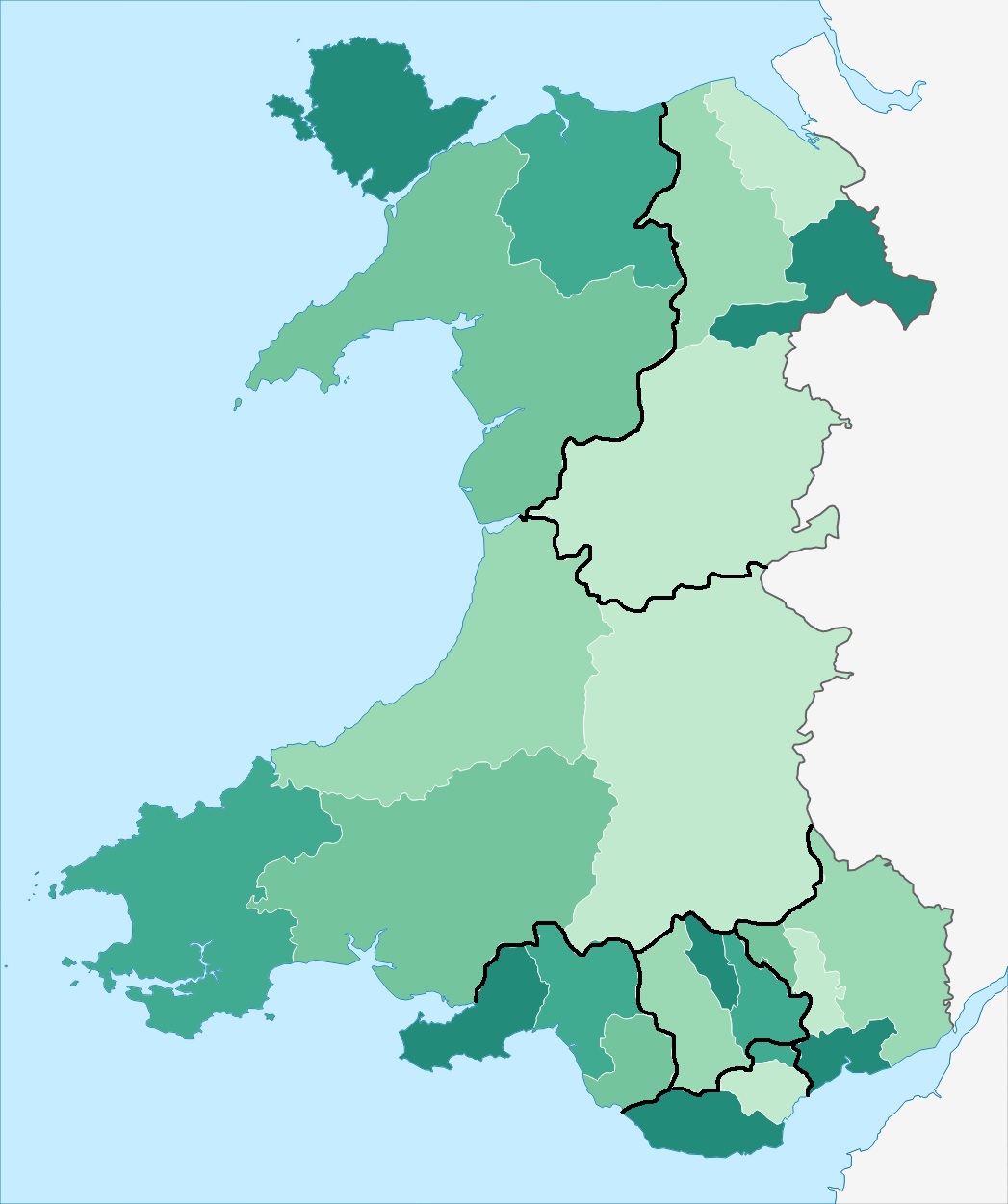
I would argue that Wales only needs around seven councils, each with a population of between 300,000 and 450,000 people.
These would be:
- Greater Cardiff – Cardiff and a few of the Vale of Glam, Caerphilly suburbs around it
- Greater Gwynedd – Gwynedd, Anglesey and Conwy
- North East – Denbighshire, Flintshire, Wrexham and Montgomeryshire
- Dyfed and Brecon – Ceredigion, Pembrokeshire, Carmarthenshire and Brecon and Radnorshire
- Swansea and NPT – what it says on the tin really
- Gwent – Monmouthshire, Newport, Torfaen and Blaenau Gwent
- Central Valleys – Merthyr Tydfil, what is left of Caerphilly, Rhonda Cynon Taf
Bridgend and the Vale of Glamorgan could decide to jointly or separately join in with Swansea and NPT, Greater Cardiff or the Central Valleys or form their own stand-alone conurbation.
These councils should not just be enlarged but also properly empowered. The ideal model might be something like the Cantons of Switzerland, which have a great deal of individual power over tax, education, health and planning.
They would also all have fewer but better-compensated councillors, all who would have had to endure a competitive electoral process in order to be there.
That would ensure a higher quality of councillor but also a more diverse choice too as people could treat the role as essentially a full or part-time job rather than something that mainly attracts older men.
Corporate
These are changes that should have the support of politicians across Wales. Plaid Cymru want to see their councils have more powers over local development plans, education, language and second homes.
The Conservatives have been going on for years about the need for ‘real devolution’, not just to Cardiff Bay but also to the local communities beyond. That is the entire political rationale behind the shared prosperity and ‘levelling up’ funds bypassing the Welsh Government.
The Welsh Government themselves at the same time clearly see the need for conglomeration. They did have a go at reorganising the councils but gave up in 2008 due to political opposition from the local authorities themselves. Turkeys, Christmas and all that.
But the work has essentially proceeded anyway with the creation of new larger bodies that supersede the smaller councils, including both capital regions and Corporate Joint Committees.
The six Corporate Joint Committees in particular seem to amount to council reorganisation through the back door.
But the problem with all of these new bodies is that they’re not democratic. No one votes for how their super-region or CJC is run. There is no Mayor of the Swansea City Region.
The Cardiff Capital Region recently had to defend itself after advertising itself as having lower salaries than other cities. But how do voters voice their displeasure at this activity?
Another problem is that these new initiatives are being pushed forward centrally, or perhaps in reality south-easterly, by the Welsh Government in Cardiff. Are people in Cardiff bay the best people to decide how these opaque new CJCs in the north and the west of Wales are run?
Ideally, we would be drawing power out of Cardiff and devolving it yet further into our communities so that people who live and work in those communities can decide how they are run.
Larger multi-member STV wards, fewer councillors and larger, more empowered councils would all ensure as much democratic choice as possible while also bringing power as close as possible to the people.
Support our Nation today
For the price of a cup of coffee a month you can help us create an independent, not-for-profit, national news service for the people of Wales, by the people of Wales.
Get more trusted Welsh news
Choose Nation.Cymru as a preferred source in Google News to see more of our journalism.
