Opinion
Why is Reform polarising against Plaid Cymru?
Jonathan Edwards
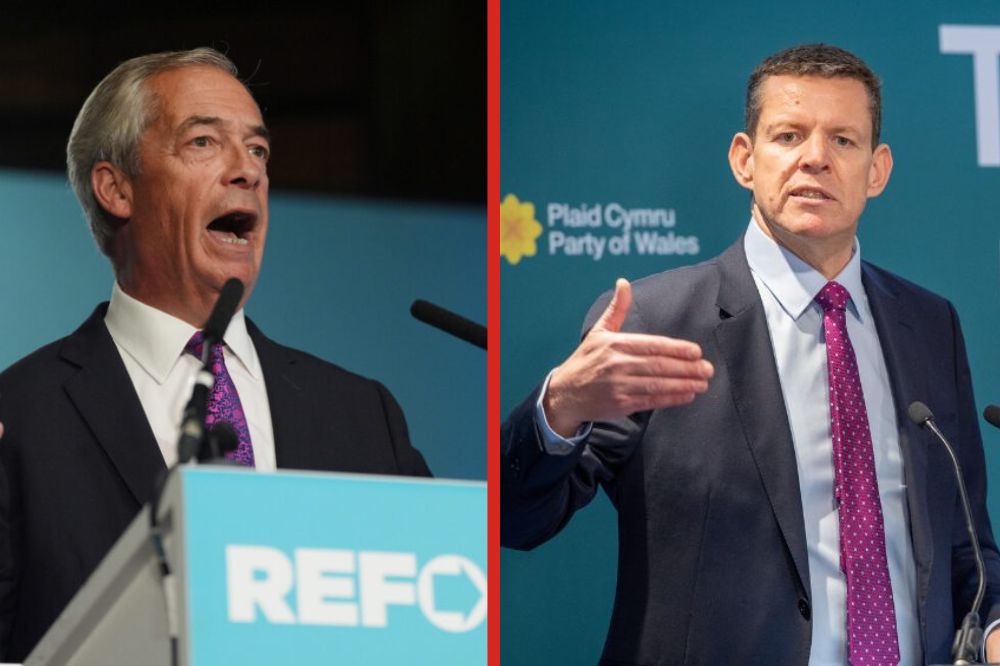
Last week, Nigel Farage attempted to frame the Senedd election as a straight fight between Reform and Plaid Cymru, who he described as a hard left-wing party.
The latest polls indicate both parties are pulling clear of Labour and the Conservatives, and the Caerphilly by-election result further cemented the new political landscape before us.
It seems an obvious statement for Mr Farage to make therefore and there is nothing new in political parties deliberately choosing a target to polarise against. Both Labour and the Conservatives have historically polarised against each other in a self-serving duopoly.
Despite this I thought the specific signalling out of Plaid Cymru was interesting from a strategic point of view. When I look at the Welsh political battleground, for the most part it seems to me as if Plaid, Labour and the Greens are chasing the same voters. On the other side of the spectrum, you have Reform and the Tories competing.
From this viewpoint, if the primary objective of Reform was to be the largest party next May they need the polar axis made up of Plaid, Labour and the Greens to cancel each other out as much as possible. If their vote share equalises the subsequent seat allocation, this is good news for Reform. Having Plaid and Labour both in the low 20s is much better than one or the other with a clear lead. Again, I emphasise, if the priority for Reform is to win the election.
It could be argued that polarising in this manner is a deliberate aim by Reform to get a slice of the Labour pie - by enticing those Labour voters who oppose Welsh nationalism in their bones to the Reform banner. It is true the Labour Party in Wales has always had two traditions, one staunchly unionist and one pro-devolution.
However, I would guess that most Labour supporters these days given a straight choice between Plaid and Reform would not support Mr Farage.
The strategy therefore seems somewhat high risk with the Senedd election in mind. My suspicion however is that Reform has wider considerations at play. I don’t think for one moment that Reform has a driving ambition to assume responsibility for the Welsh Government. It would be complete implosion territory considering the lack of experience and serious policy programme.
The Senedd election is however a stepping stone for Mr Farage in his real ambition of gaining the keys to 10 Downing Street. A rout against Labour in Wales would undoubtedly help that ambition considering the turmoil it would launch within the wider UK Labour Party.
Recruiting sergeant
Conversely from a Plaid Cymru perspective, Reform polling strongly at both Wales and especially UK level is beneficial. The prospect of a UK Government led by Mr Farage performs as the proverbial recruiting sergeant for Welsh nationalism.
If this theory is correct, then next year’s Welsh national election will play a proxy role in the bigger UK battle for supremacy. I can’t think of another Welsh election that has been so consequential for Westminster politics.
If Labour fall from pole position in Wales, that will be the story of the evening as far as the UK media is concerned – as we saw following Caerphilly. Mr Farage is hedging his bets therefore by polarising against Plaid Cymru. From his point of view it doesn’t matter if Reform win the election, the only thing that is important is that Labour doesn’t.
None of this will worry Plaid. Every time Mr Farage attacks them, they should whoop for joy. It may be the key determining factor that results in Rhun Ap Iorwerth becoming First Minister.
Jonathan Edwards was the MP for Carmarthen East and Dinefwr 2010-24
Support our Nation today
For the price of a cup of coffee a month you can help us create an independent, not-for-profit, national news service for the people of Wales, by the people of Wales.