


Thu, 23rd July Cardiff 19°
Nation.Cymru wordmark
Advertisement

Opinion

Why Cardiff's growing economic and political dominance within Wales is a threat to devolution
By NationCymru
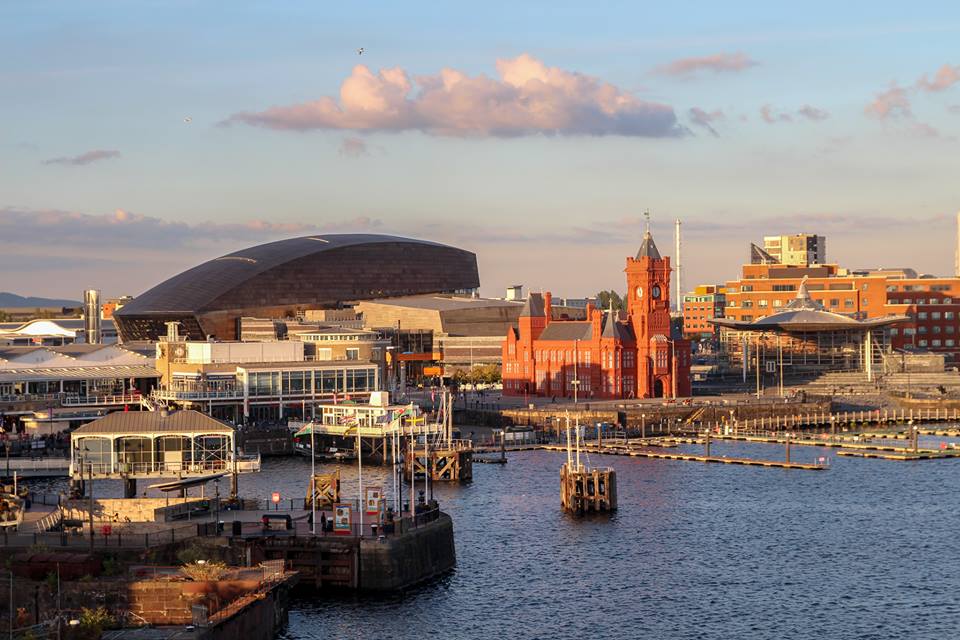
Cardiff Bay from St David's hotel

Ifan Morgan Jones

Cardiff Council perhaps inadvertently put out a very telling statistic this week, when the council boasted that the vast majority of jobs in Wales had been created within the city’s borders.

“Almost four out of every five jobs in Wales being created in Cardiff between 2015 and 2020,” the council said in a tweet.

That the tweet was put out at all suggests the Council may be rather oblivious to the growing feeling elsewhere in Wales that economic and political opportunities are becoming overcentralised in one corner of the south-east of the country.

Only about 13% of Wales’ population live in Cardiff yet the council doesn’t see any problem with claiming that 80% of the jobs in Wales were created there.

This isn’t of course Cardiff Council’s fault as an entity. But the same political party dominates Cardiff as dominates the rest of Wales, all our major political institutions are based there, the bulk of our media and think tanks reside there, and for over half of devolution’s lifetime we have been represented by First Ministers who represents Cardiff constituencies.

Furthermore, in the pre-pandemic world if any of us had anything to contribute on matters of national import we were generally expected to haul ourselves down to Cardiff to say it, and as life unthaws and we enter a post-emergency age the same is likely to be true again.

Despite, like London, having a lot of contrast in wealth and opportunity within itself, visiting Cardiff from another part of Wales today feels a little bit like visiting an alternative world, in which entire communities elsewhere could probably fit inside some of the monumental glass and chrome shopping centres.

[mid-content-banner]

A second London

In 2018, Professor Calvin Jones of Cardiff Business School warned that Wales was in danger of creating “the United Kingdom in miniature”.

“So we’ve swapped a big city in the south east of England for a big city in the south east of Wales,” he added.

But I don’t think the comparison with London is entirely fair. This is because London, for all its faults, is actually quite easy to get to from most places in the United Kingdom.

This contrasts with Cardiff, which remains very poorly connected with large parts of Wales.

Some improvements are now being made to rail transport in particular across Wales, such as the south-east Wales metro.

But Professor Mark Barry of Cardiff University argues that calling for a Carmarthen-Aberystwyth railway – which could form the first leg of a railway up to the north- is to ignore the “demographic reality” that most of the population resides within 20 square miles of the south-east.

There is certainly merit in this train of thought but I think it hits the buffers when one realises that it's the same one that sees Wales ignored altogether for transport funding from the UK Government.

It’s the thinking that has led the UK to become so economically unequal in the first place as it makes it possible to continue to justify feeding what Boris Johnson in his Mayor of London days (before his pivot to levelling up) "the goose that lays the golden eggs" of the UK capital.

It’s also a Catch-22 argument for the rest of Wales because large cities with better connectivity will attract more people and then in turn require even more capital spend to maintain their growth – and so on.

Support

But beyond economic fairness, I think it also ignores the political ramifications of centralising too much opportunity in one corner of a nation. The political class in Cardiff need to remember that the reason they have power in the first place is that people all over Wales felt they were being ignored in London’s corridors of power.

The vote for devolution was narrowly delivered in 1997 by some of the exact places that now, two decades later, still struggle to get to and have any political influence in Cardiff.

Devosceptics have not been as slow to notice this as those in power have. At this week’s debate on Wales in the House of Commons one Conservative MP after another lined up to say that, in the words of Clwyd South's Simon Baynes, “north Wales feel left behind and uncared for by the Welsh Government”.

This is divide and conquer stuff but the Welsh Government have handed them a crack to get their crowbar into.

The vote for devolution was a vote to bring power – economic, political and cultural – closer to home so that it could be used to improve all our lives.

It wasn’t a vote to create a new London within our borders that for many in Wales is harder to get to than the previous incarnation.

If we want to maintain support for devolution across Wales, that means that whatever the demographic reality it has to be seen by people in all parts of Wales to work for all of Wales.

And it definitely – at a minimum – means realising how bad tweets such as Cardiff Council’s look to an audience outside the capital’s boundaries.

For the price of a cup of coffee a month you can help us create an independent, not-for-profit, national news service for the people of Wales, by the people of Wales.

Get more trusted Welsh news

Choose Nation.Cymru as a preferred source in Google News to see more of our journalism.

Choose Nation.Cymru as a preferred source in Google News

21 comments

Antonoir

I think Cardiff is becoming a modern European city. And having that strength is just step 1 in the overall goal of the strengthening the country. The SW Metro is a forward thinking and integral part of internal development here, and can be used as a marker for developing the rest of the Wales. Having a Carmarthen Aberystwyth line is essential though. We still need to improve infrastructure and that'll be high on the list of things to do. The west coast is vastly under invested in.

Reply
Quornby

Yes rail investment is all directed at extraction of resources and sweet fanny adams to do with serving Wales. This won't change until Indy.

Reply
Leigh Richardss

The tweet from Cardiff's Labour council was utterly tone deaf, and Ifan is right to raise concerns about the concentration of wealth in south east Wales which is taking place. One cant help but wonder how different things might look if Swansea (which actually voted Yes in the 1997 devolution referendum) had been chosen to host the then National Assembly instead of Cardiff (which - to its shame -voted No)

Reply
David

Does Cardiff want to be similar to South East England?

Reply
Leigh Richardss

What i would say is that maybe Welsh labour does? Theyve been in power in Wales for 23 years and have had a major hand in creating the worrying geographical inequalities in Wales ifan writes about

Reply
Kerry Davies

Cardiff capital region has the population mass needed to service the Assembly and other capital based services. Swansea region is twice as spread out with half the number of people. With that and the existing transport infrastructure Cardiff was the no-brainer choice. There were already the TV studios and hotels and sporting venues which make a capital and the people who make all that work. Capitalism means money goes to money. The skill then is to share the profits of that centralisation.

Reply
Leigh Richardss

But those 'profits' you speak of are evidently not being shared out, as Ifan's article makes clear - and which is why we should be concerned!

Reply
hdavies15

Fair comment except - it isn't any kind of capitalism. The capital city is almost entirely built on public funding. The big businesses in the capital are there because of hand outs of various kinds dished out over the years. On a small scale Cardiff mirrors the global tango between big government and big business. We do not have politicians who want to break with that mutual dependency so anything west of Culver Cross and north of Taffs Well is in a raffle for occasional favours while the City scoffs the rest.

Reply
Royston Jones

You seem to be missing the point. Rather than correcting a pre-existing imbalance devolution made it worse.

Reply
Paul

I do not think it threatens devolution... But it is developmentally damaging... It is necessary to distribute development and therefore opportunity throughout the entire country... It is not even a controversial point to make. There is significant literature on the subject.

Reply
Peter Cuthbert

Perhaps, as some groups set about the task of imagining an Independent Wales, it might be sensible to also imagine how it should be organised to benefit the majority of the residents of Wales and not just the tourists. Thus the Senedd should ultimately leave Cardiff for a more central location like Aberystwyth or Machynlleth. The west coast railway link is an urgent requirement now but the eastern north-south railway line from Rhyl through Denbigh, etc. should not be ignored (Details for that were published some long time ago). All of the lines should be electrified since we need to be moving to Zero Carbon and electric trains are a useful way of providing the mobility people want. There are also rail links that are logical extensions for the South Wales Metro where former mining villages have been left cut off and yet track beds still exist. Moving Government and extensive investment in good railway connections could do much for the residents of Wales. The big problem is where to get the money to make that sort of investment. The Westminster Governement could easily create it but under the Friends of Putin Regime there is zero chance of it happening.

Reply
Richard

I had the opportunity a year or so back to work in Dublin with two irish national charities on their governmental interactions. The over influence of Dublin on Irish life, the centralisation and its harm to local governance was incredable. Cities like Cork, Limerick and Galway let alone the large suberbs like Sowrds and Tallaght and Bray etc were all dwarfed by the City and City Region. Anyone with any ambition, civil servants and leaders of any state or state linked body just would not move outside greater Dublin. With the Senate and Parliament plus all major stste bodies, the media and the main Unis / ireland was becoming a one City state….. We need to learn this lesson

Reply
KC Gordon

....part of the problem is those in that 20 square miles who think that civilisation stops at the northern boundary of RCT, that Storey Arms is the Khyber Pass and everything north and west is....

Reply
Glen

Yet Cardiff still lags economically well behind Bristol and most similarly sized English cities. Reading this you would believe the streets of Ely and Splott must be paved with gold.

Reply
Mab Meirion

The view from Llanbedr bridge in a month's time will be cars and campers, delivery lorries, buses, ambulances, white van man and the builder between jobs in every direction. If as likely we have a 'bumper' season that will be the norm. Chwarae teg Lee Waters

Reply
Ianto

The two economic hot-spots in Wales are in the south east and the north east. The reason for this is not to be found in Wales. Things wont change until we have major routes between north and south not just east and west. Comparing Cardiff to London is frankly laughable.

Reply
Mab Meirion

Comparing Brithdir to Cardiff is laughable...see bbc Wales...A comparison of London and Cardiff should be commissioned by N.C, perhaps Aber Uni would take it on...to me it cannot be avoided for obvious reasons...

Reply
Neil Anderson

Ifan Morgan Jones is quite right to make the connection between Cardiff and London, and their respective neglect of their northern cousins.  Only radical steps will correct the huge imbalance between the south-east of Cymru and the northeast, northwest and Mid-Wales.  By all means, send them more sticking plasters, but, surprise, it won’t be enough.   Cal Jones and Ifan are right to focus on the political power of Cardiff and how detrimental its concentration is to the rest of the country.  It is not in pursuit of free market theory (or the purported agglomeration benefits of a very small city with hyper-inflated ideas) that has brought people and business to Cardiff.  It is simply that economic power follows political power.   To harness the latter, I propose that post-independence, Cymru becomes four regions.  There is a case for a separate region for Cardiff and environs, but not a helpful one if we wish to redistribute power. Regional government, with the economic clout to hire quality staff and command greater resources, would replace local councils.  Every region would prioritise good hospitals, schools and other facilities for young people, like sports facilities and cultural venues.  Land reform would allow more people to live and work in the countryside, offering better quality lifestyles for their families.  Regional sports teams could compete internally and internationally. Connectivity, a word which excites the wallets of consultants everywhere, should also be improved.  But most all, we need a plan.   The first priority should be to ensure that all towns without one currently have a rail connection.  It would be a mistake to conceive this in terms of heavy (mainline) rail when well-designed light rail would do.  There is a strong case for a north-south mainline and a redirected A470 though. Second, we should ensure that passenger and freight services are planned together.  Light rail can carry freight, at a scale appropriate to many small towns and would help make better use of the track. The four centres of regional government could expect to attract people and business.  No doubt, overweening Cardiff would resent its growth being restricted, especially as some interests there envisage a continuous city from Bristol to Swansea in an unsustainable business-as-usual manner. As Ifan implies, devolution within Cymru would bring economic, political and cultural power closer to all of us.

Reply
Peter Cuthbert

Spot on Neil! Perhaps your plan could be developed for detail and then discussed by regional people's assemblies. That looks like a job for Yes Cymru to me. Any other YC folk out there who agree?

Reply
Neil Anderson

Thanks, Peter. Please see the link embedded in the article ('Regional government').

Reply
Maglocunos

Two questions? How about a new Llandudno Junction to Merthyr rail project? What's the cost for rail tunnel construction per km these days?

Reply

Leave a reply

Replying to Paul Cancel

I do not think it threatens devolution... But it is developmentally damaging... It is necessary to distribute development and therefore opportunity throughout the entire country... It is not even a controversial point to make. There is sig...

Comments are reviewed before they appear.