


Opinion
Why Cardiff's growing economic and political dominance within Wales is a threat to devolution
Ifan Morgan Jones
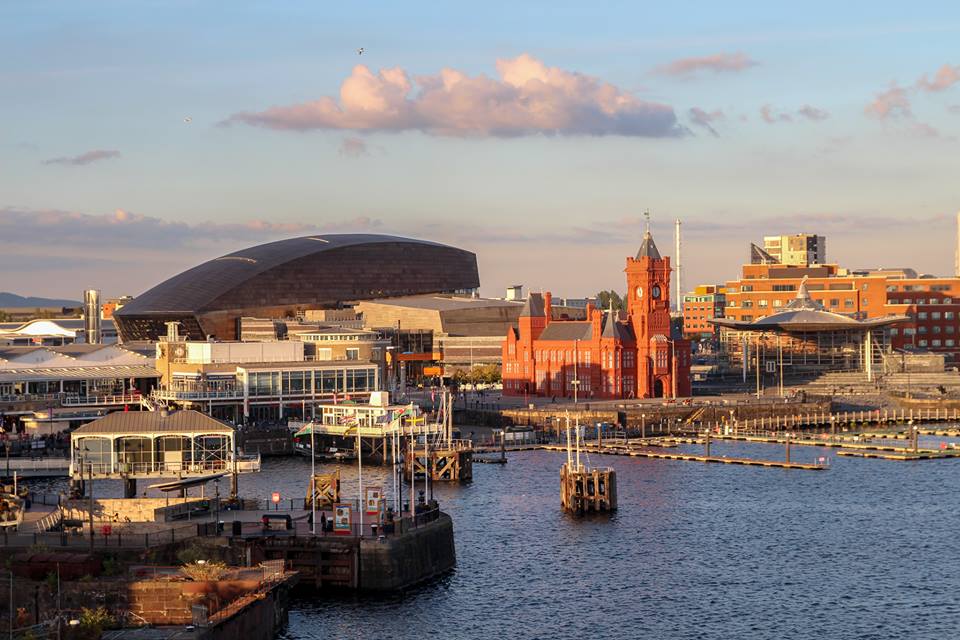
Cardiff Council perhaps inadvertently put out a very telling statistic this week, when the council boasted that the vast majority of jobs in Wales had been created within the city’s borders.
“Almost four out of every five jobs in Wales being created in Cardiff between 2015 and 2020,” the council said in a tweet.
That the tweet was put out at all suggests the Council may be rather oblivious to the growing feeling elsewhere in Wales that economic and political opportunities are becoming overcentralised in one corner of the south-east of the country.
Only about 13% of Wales’ population live in Cardiff yet the council doesn’t see any problem with claiming that 80% of the jobs in Wales were created there.
This isn’t of course Cardiff Council’s fault as an entity. But the same political party dominates Cardiff as dominates the rest of Wales, all our major political institutions are based there, the bulk of our media and think tanks reside there, and for over half of devolution’s lifetime we have been represented by First Ministers who represents Cardiff constituencies.
Furthermore, in the pre-pandemic world if any of us had anything to contribute on matters of national import we were generally expected to haul ourselves down to Cardiff to say it, and as life unthaws and we enter a post-emergency age the same is likely to be true again.
Despite, like London, having a lot of contrast in wealth and opportunity within itself, visiting Cardiff from another part of Wales today feels a little bit like visiting an alternative world, in which entire communities elsewhere could probably fit inside some of the monumental glass and chrome shopping centres.
[mid-content-banner]
A second London
In 2018, Professor Calvin Jones of Cardiff Business School warned that Wales was in danger of creating “the United Kingdom in miniature”.
“So we’ve swapped a big city in the south east of England for a big city in the south east of Wales,” he added.
But I don’t think the comparison with London is entirely fair. This is because London, for all its faults, is actually quite easy to get to from most places in the United Kingdom.
This contrasts with Cardiff, which remains very poorly connected with large parts of Wales.
Some improvements are now being made to rail transport in particular across Wales, such as the south-east Wales metro.
But Professor Mark Barry of Cardiff University argues that calling for a Carmarthen-Aberystwyth railway – which could form the first leg of a railway up to the north- is to ignore the “demographic reality” that most of the population resides within 20 square miles of the south-east.
There is certainly merit in this train of thought but I think it hits the buffers when one realises that it's the same one that sees Wales ignored altogether for transport funding from the UK Government.
It’s the thinking that has led the UK to become so economically unequal in the first place as it makes it possible to continue to justify feeding what Boris Johnson in his Mayor of London days (before his pivot to levelling up) "the goose that lays the golden eggs" of the UK capital.
It’s also a Catch-22 argument for the rest of Wales because large cities with better connectivity will attract more people and then in turn require even more capital spend to maintain their growth – and so on.
Support
But beyond economic fairness, I think it also ignores the political ramifications of centralising too much opportunity in one corner of a nation. The political class in Cardiff need to remember that the reason they have power in the first place is that people all over Wales felt they were being ignored in London’s corridors of power.
The vote for devolution was narrowly delivered in 1997 by some of the exact places that now, two decades later, still struggle to get to and have any political influence in Cardiff.
Devosceptics have not been as slow to notice this as those in power have. At this week’s debate on Wales in the House of Commons one Conservative MP after another lined up to say that, in the words of Clwyd South's Simon Baynes, “north Wales feel left behind and uncared for by the Welsh Government”.
This is divide and conquer stuff but the Welsh Government have handed them a crack to get their crowbar into.
The vote for devolution was a vote to bring power – economic, political and cultural – closer to home so that it could be used to improve all our lives.
It wasn’t a vote to create a new London within our borders that for many in Wales is harder to get to than the previous incarnation.
If we want to maintain support for devolution across Wales, that means that whatever the demographic reality it has to be seen by people in all parts of Wales to work for all of Wales.
And it definitely – at a minimum – means realising how bad tweets such as Cardiff Council’s look to an audience outside the capital’s boundaries.
Support our Nation today
For the price of a cup of coffee a month you can help us create an independent, not-for-profit, national news service for the people of Wales, by the people of Wales.
Get more trusted Welsh news
Choose Nation.Cymru as a preferred source in Google News to see more of our journalism.
