


Wed, 22nd July Cardiff 17°
Nation.Cymru wordmark
Advertisement

Opinion

Why can't Tata upgrade and modernise its blast furnace?
By Emily Price
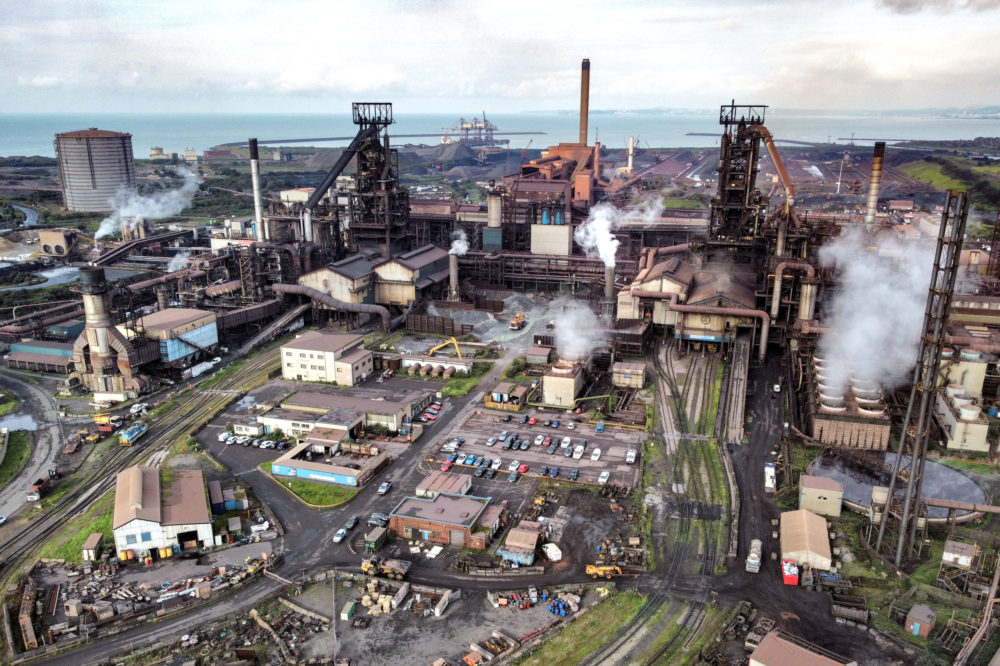
Port Talbot steelworks. Photo Ben Birchall/PA Wire

Mike Hedges - MS for Swansea East

As someone who used to work in the research centre in Port Talbot before Ian Macgregor substantially cut back the number of jobs there I believe that I can contribute to the discussion taking place on the Port Talbot steel works.

Port Talbot Steelworks is currently an integrated steel production plant, capable of producing nearly 5 million tonnes of steel slab per annum from iron ore to the finished product.

This makes it the larger of the two major steel plants in the United Kingdom and one of the largest in Europe. Over 4,000 people currently work at the plant with many more working as contractors and others relying on the steel industry procurement of products.

Most of the slab is rolled on-site at Port Talbot or at Llanwern to make a variety of steel strip products.

Iron come into Port Talbot as iron oxide and needs to be extracted from the ore in a blast furnace. The oxygen must be removed from the iron oxide in order to leave the iron behind and it then moves on to steel making.

[mid-content-banner]

Smelting

Modern steelmaking processes can be divided into three steps: primary, secondary, and tertiary. Primary steelmaking involves smelting iron into steel.

Secondary steelmaking involves adding or removing other elements such as alloying agents and dissolved gases.

Tertiary steelmaking involves casting into sheets, rolls or other forms. With an electric arc furnace, you are effectively recycling previously used steel. An electric arc furnace is a furnace that heats steel by using an electric arc.

To produce a ton of steel in an electric arc furnace requires approximately 400 kilowatt-hours per ton.

[lower-mid-content-banner]

Soaring costs

There are two problems with electric arc furnaces - firstly is the cost of electricity. In 2021 ArcelorMittal temporarily “paused” production at some of its plants at peak times as soaring energy costs hit Europe’s largest steelmaker.

The company said it had been forced to implement “short, selective production pauses” at some of its electric arc furnaces in Europe that make so-called “long products,” more commodity-based products typically used in the construction sector.

The company said the “pauses” were “aligned with the hourly/daily changes in electricity prices,” adding that they were “in response to the high energy prices, which are making it very challenging to produce steel at economical costs.”

In 2019 according to the World Steel Association, there were over 3,500 different grades of steel, encompassing unique physical, chemical, and environmental properties.

The carbon content in steel can range from 0.1%-1.5%, but the most widely used grades of steel contain 0.1%-0.25% carbon. Elements such as manganese, phosphorus, and sulphur are found in all grades of steel.

Stainless steel for example contains chromium. There are four main types of steels namely Carbon Steels, Alloy Steels, Stainless Steels and Tool Steels as well as specialist steels such as electrical steels.

Whilst Carbon steels contain trace amounts of alloying elements and account for 90% of total steel production. They can be further categorized into three groups depending on their carbon content:

    • Low Carbon Steels/Mild Steels contain up to 0.3% carbon.
    • Medium Carbon Steels contain 0.3-0.6% carbon.
    • High Carbon Steels contain more than 0.6% carbon.

Purchase

From the above it is obvious that just collecting steel and melting it will not work - it needs grading into type of steel.

Plaid Cymru have suggested the Compulsory purchase the blast furnaces firstly the Welsh government would need to try and negotiate to buy them.

Why would Tata not want to transfer them to someone else because when iron and steel making end, they will be a liability. Unless you have a steel making plant to send the iron ore to then a blast furnace is of no use.

It is an integrated steel plant whilst I would support bringing steel making back into public ownership the piecemeal purchasing would leave us in a worse place than we are today.

They deal with Steel making differently in Europe, in January, this year Salzgitter Blast furnace A was fired up following complete modernisation lasting just over 100 days.

With the complete relining of the Blast Furnace concluded, the Salzgitter Group took a key operational step towards securing its pig iron supply as it transforms towards low- CO2 steel production by 2033.

During a construction phase, Blast Furnace A was completely relined, among other things, the refractory lining was renewed with 3,000 tons of carbon bricks and other refractory materials.

The complex process and control technology was also modernized. Just over EUR 100 million was invested in the relining and upgrading.

Why can the Salzgitter Group upgrade their blast furnace, run a successful integrated steelworks and TATA cannot?

For the price of a cup of coffee a month you can help us create an independent, not-for-profit, national news service for the people of Wales, by the people of Wales.

Get more trusted Welsh news

Choose Nation.Cymru as a preferred source in Google News to see more of our journalism.

Choose Nation.Cymru as a preferred source in Google News

19 comments

Evan Aled Bayton

Because they can make iron and steel cheaply in India and import it to the UK ostensibly for finishing. In fact I suspect that henceforth most imports will be finished product and small amounts of “production” of recycled steel will be a fig leaf to cover the imports.

Reply
Linda Jones

TATA is an international company who are just opening the world's largest and new blast furnace steel making in India. . Why would they bother to upgrade UK steelmaking, they dont need it. The Plaid idea of renationalising is a good one, the UK needs steel

Reply
hdavies15

Kicking TATA out of Wales would be a good move but our governments in London and Cardiff are too obsessed with the "cost" of doing that. Instead they should count the cost of allowing the greedy barstewards to stay in Wales.

Reply
William Robson

Evict them, Give them a pound and take the plant would save them £365 million a year

Reply
mike hedges

Plaid Cymru want to nationalise the blast furnaces. It is an integrated plant, as I said the blast furnaces on their own are of new use. The whole plant needs to be taken into public ownership.

Reply
Brychan

Mike. Look out of your bedroom window, right now. Standing at anchor in the bay (for you it should be just visible beyond Worms Head) is a bulk carrier. That ship is called Nikator waiting for permission to dock. Check on any marine traffic tracking website and you'll see it's just come from Visakhapatnam Port in India. This is where there's a huge coking operation at a nearby 'integrated' Vizag Steel works. That works currently under a hostile bid from Tata. What do you think it's importing, flip flops? Electric Arc is just a cherry pick for them in a global supply chain. In a few years there'll be workers in Port Talbot begging for a shift at the Tata gates depending on when the scrap carrier docks. That's no future.

Reply
Linda Jones

Yes I meant the whole plant not just a part of it.

Reply
William Robson

They also make tea bags

Reply
Gareth

Because Salzgitter is a German steel making company based and operating in Germany, who, if they dont modernise will go out of business , while Tata is a multi modal Indian company involved in making steel, cars, cosmetics and food products, jewellery and defence products, who have made a profit from steel in Britain, and can now shut down and concentrate on its other businesses without having to spend millions. Thatcher sold off everything she could to foreign firms, who care nothing for the consumers and only for profit, and when Blair took over did nothing to reverse the sale of the countries assets, so now we suffer the consequences.

Reply
William Robson

They made a profit by running the plant into the ground. They shut the coke ovens because they were no longer safe. Lack of maintenance?

Reply
Brychan

What you fail to mention Mr Hedges is that Salzgitter AG is 25% owned by Niedersachsen, the devolved state of Lower Saxony. Your lords and masters down in London won't allow the Welsh Government to make such a public investment. Also, unlike Tata being privately owned, but the private equity in Salzgitter AG is financed as units on the MDAX stock exchange allowing longer term investment calculations, to better to weather fluctuations in steel prices rather than whim of a family of Indian billionaires. Important, as we see the global market price is driven by dumping from China, federal subsidy in the US, and the Tata leverage is not on sales price of finished output but their ownership of profits on upstream commodity, mining and energy. This makes Port Talbot, for them a dispensable site or one that can levy a subsidy on electicity consumption if electric arc.

Reply
Michael

Tata want UK cash to do the job. I believe I read about their demand of "help " from the UK government to modernise last year. Everyone seems to want to keep extracting cash from the goose (the UK ) that lays the golden eggs. Thats the downside of selling the family jewels be they National utilities,defense companies or supermarkets to off shore buyers.

Reply
Simon Hughes

I acknowledge the politicians argument regarding the cost of a buyout from TATA, however, they all overlook or ignore of paramount importance that without our ability to produce steel from iron ore our national security in this uncertain world comes graphically into play. TATA have built 2 huge virgin making steel plants with deep harbour access on the coast and are no doubt deciding that where they can influence the market to their advantage, in our case changing PT plant to an archfurnace, then they have no hesitation in doing so. Politicians have to look at themselves as they are doing a huge disservice to the nation by falsely claiming there is nothing more they can do? You are responsible for our national security and virgin steel making at Port Talbot is essential to that security! I personally have not worked in the steel industry,that said, I recognise a major failure to grasp the importance of such a decision basically placing our security below compulsory purchase in the national interest!!!

Reply
Sikejsudjek

We are potentially facing a war in Europe and we can't rely on importing steel. It needs to be nationalised and cheap imports from India and China banned.

Reply
William Robson

This is an 80 inch wide strip mill capable of producing material to build tanks. It was built along with the mirror image plant in France after WW2 under Marshall aid. Did we ever repay that debt?

Reply
Adrian

This is such a poorly written article. It offers no coherent analysis or argument. The article is titled "Why can’t Tata upgrade and modernise its blast furnace?", so you would expect an answer to this question would be provided. It's starts with a description of the current role of the Port Talbot steel works. It then goes on to describe the steel making process, similar to what you would read in a secondary school text book. Next the author touches on electric arc furnaces and the high cost of electricity. Nothing so far in this article has begun to answer the question posed at the start. Then the author goes on to describe the grades of steel and carbon content. None of this is related back to the steel at Port Talbot or how it impacts on modernising the site there. Finally there is a minor mention of public ownership, but the majority of the final section talks about a steel plant in Saltzgitter. The worst part of the article is at the end. You expect the question posed at the start to be answered, but it ends with another question "Why can the Salzgitter Group upgrade their blast furnace, run a successful integrated steelworks and TATA cannot?" That's what the author should have answered in the article, but completely failed to do so.

Reply
mike hedges

look forward to Adrian producing an article on steel.

Reply
William Robson

Because they don’t want competition. They have many blast furnaces at their site in India. the million pound a day defence is now worn out. They used that to dump the pension scheme and shortly after that they declare a £365 million profit. Pensioners are now on a non indexed BSPS pension they not care about the workers. Why would they not keep one furnace running until the arc furnace was built and operational. How do they supply the BOS plant and hot mills with supplied with resources to create strip. Is there going to be a furnace. Will one arc furnace support the strip mill. Was TaTa sniffing round south wales for their new battery plant. Seems like they are not the self declare philanthropists but are driven by greed. Dumped Wales for Bridgewater. why was Gething on TV in Port Talbot recently seems he had nothing to say? He does not have the power to do anything much like the author of this article. Time devolution was scrapped and the money saved spent on the NHS

Reply
Johnny Gamble

I'm not falling for what you have written in your last paragraph.We were told in 1979 that if we voted against Devolution there would be more money available for the NHS. We voted No and guess what the NHS was run into the ground and the promised money never materialised. Devolution is here to stay at the last Senedd Election 98% of the electorate voted for Pro Devolution parties including The Tories and Reform. Wait until the next Senedd Election and UKIP along with The Abolish the Assembly Part will be slaughtered at the ballot box yet again.

Reply

Leave a reply

Replying to Simon Hughes Cancel

I acknowledge the politicians argument regarding the cost of a buyout from TATA, however, they all overlook or ignore of paramount importance that without our ability to produce steel from iron ore our national security in this uncertain wo...

Comments are reviewed before they appear.