


Opinion
Why can't Tata upgrade and modernise its blast furnace?
Mike Hedges - MS for Swansea East
As someone who used to work in the research centre in Port Talbot before Ian Macgregor substantially cut back the number of jobs there I believe that I can contribute to the discussion taking place on the Port Talbot steel works.
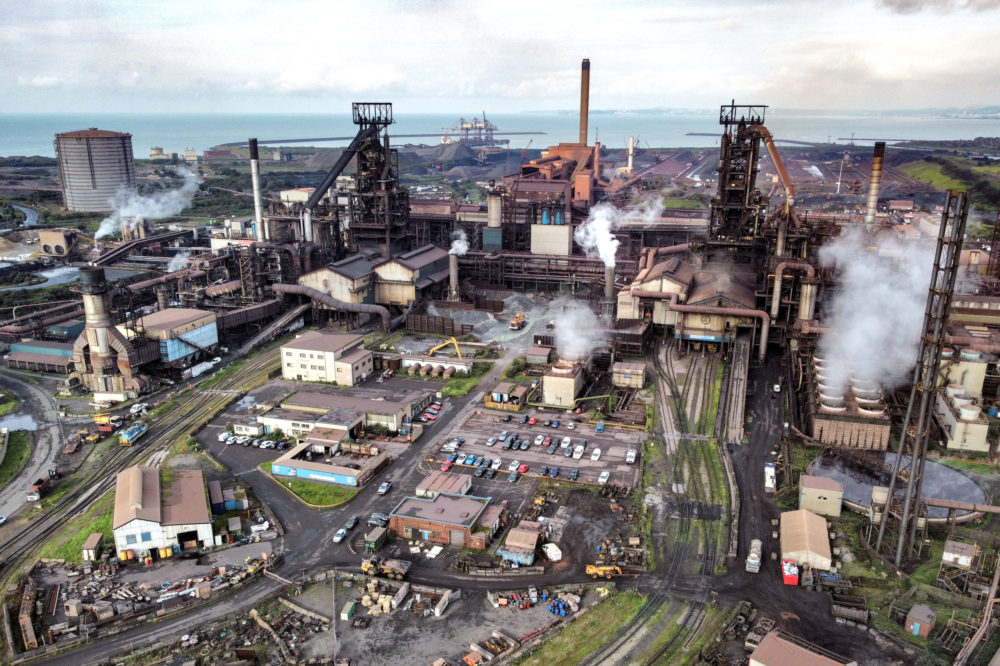
Port Talbot Steelworks is currently an integrated steel production plant, capable of producing nearly 5 million tonnes of steel slab per annum from iron ore to the finished product.
This makes it the larger of the two major steel plants in the United Kingdom and one of the largest in Europe. Over 4,000 people currently work at the plant with many more working as contractors and others relying on the steel industry procurement of products.
Most of the slab is rolled on-site at Port Talbot or at Llanwern to make a variety of steel strip products.
Iron come into Port Talbot as iron oxide and needs to be extracted from the ore in a blast furnace. The oxygen must be removed from the iron oxide in order to leave the iron behind and it then moves on to steel making.
[mid-content-banner]
Smelting
Modern steelmaking processes can be divided into three steps: primary, secondary, and tertiary. Primary steelmaking involves smelting iron into steel.
Secondary steelmaking involves adding or removing other elements such as alloying agents and dissolved gases.
Tertiary steelmaking involves casting into sheets, rolls or other forms. With an electric arc furnace, you are effectively recycling previously used steel. An electric arc furnace is a furnace that heats steel by using an electric arc.
To produce a ton of steel in an electric arc furnace requires approximately 400 kilowatt-hours per ton.
[lower-mid-content-banner]
Soaring costs
There are two problems with electric arc furnaces - firstly is the cost of electricity. In 2021 ArcelorMittal temporarily “paused” production at some of its plants at peak times as soaring energy costs hit Europe’s largest steelmaker.
The company said it had been forced to implement “short, selective production pauses” at some of its electric arc furnaces in Europe that make so-called “long products,” more commodity-based products typically used in the construction sector.
The company said the “pauses” were “aligned with the hourly/daily changes in electricity prices,” adding that they were “in response to the high energy prices, which are making it very challenging to produce steel at economical costs.”
In 2019 according to the World Steel Association, there were over 3,500 different grades of steel, encompassing unique physical, chemical, and environmental properties.
The carbon content in steel can range from 0.1%-1.5%, but the most widely used grades of steel contain 0.1%-0.25% carbon. Elements such as manganese, phosphorus, and sulphur are found in all grades of steel.
Stainless steel for example contains chromium. There are four main types of steels namely Carbon Steels, Alloy Steels, Stainless Steels and Tool Steels as well as specialist steels such as electrical steels.
Whilst Carbon steels contain trace amounts of alloying elements and account for 90% of total steel production. They can be further categorized into three groups depending on their carbon content:
-
- Low Carbon Steels/Mild Steels contain up to 0.3% carbon.
- Medium Carbon Steels contain 0.3-0.6% carbon.
- High Carbon Steels contain more than 0.6% carbon.
Purchase
From the above it is obvious that just collecting steel and melting it will not work - it needs grading into type of steel.
Plaid Cymru have suggested the Compulsory purchase the blast furnaces firstly the Welsh government would need to try and negotiate to buy them.
Why would Tata not want to transfer them to someone else because when iron and steel making end, they will be a liability. Unless you have a steel making plant to send the iron ore to then a blast furnace is of no use.
It is an integrated steel plant whilst I would support bringing steel making back into public ownership the piecemeal purchasing would leave us in a worse place than we are today.
They deal with Steel making differently in Europe, in January, this year Salzgitter Blast furnace A was fired up following complete modernisation lasting just over 100 days.
With the complete relining of the Blast Furnace concluded, the Salzgitter Group took a key operational step towards securing its pig iron supply as it transforms towards low- CO2 steel production by 2033.
During a construction phase, Blast Furnace A was completely relined, among other things, the refractory lining was renewed with 3,000 tons of carbon bricks and other refractory materials.
The complex process and control technology was also modernized. Just over EUR 100 million was invested in the relining and upgrading.
Why can the Salzgitter Group upgrade their blast furnace, run a successful integrated steelworks and TATA cannot?
Support our Nation today
For the price of a cup of coffee a month you can help us create an independent, not-for-profit, national news service for the people of Wales, by the people of Wales.
Get more trusted Welsh news
Choose Nation.Cymru as a preferred source in Google News to see more of our journalism.
