
Opinion
Welsh rugby’s pivotal moment – which way to turn?
Jonathan Edwards
I grew up following the great Llanelli RFC sides of the late 1980s and early 1990s, when the men in Scarlet seemed all conquering and Welsh domestic rugby at least in good health.
In 1988, the Schweppes Cup final between Llanelli and Neath enthralled a world club rugby attendance record crowd of 56,000. To my relief the Scarlets won.
The club contests between Llanelli, Swansea, Neath, Cardiff and Pontypridd in those days were gladiatorial. For me as a diehard Scarlet they were more important than an international fixture due to the deep tribal loyalties involved.
A full house at Stradey Park had an electric atmosphere matched only by the excitement of visiting St Helen’s, the Gnoll and Sardis Road as an away fan. What was incredible about the whole structure was that all the teams involved in top class Welsh rugby were within an hour and a half from each other – a golden triangle from Newport in the East, to Llanelli in the West to Ebbw Vale at the top of the Gwent valleys.
The sense of void in those communities that lost their first-class teams on the advent of professionalism must have been profound. A stark warning to what might happen with the new reorganisation: supporter loyalty didn't mobilise en masse from the old to the new entities.
[mid-content-banner]
Revival
However, regional rugby once bedded in seemed to kick-start a revival in the fortunes of the national team. After what seems a barren period in the 80s and 90s, apart from a few notable successes such as the inaugural World Cup in 1987 when we finished third and the 1994 Five Nations Championship win, the new century saw the national team regain its swagger. We have been truly spoilt with four Grand Slams and two Semi Final Rugby World Cup appearances.
What seemed to be working at national level, however, didn't really feed down to regional level, where successes have been few and far between. I became far more interested in following Swansea City Football Club and the national football team. Rugby alas has had to compete with both Swansea and Cardiff gracing the Premier League and an unheralded period of success for the national football team.
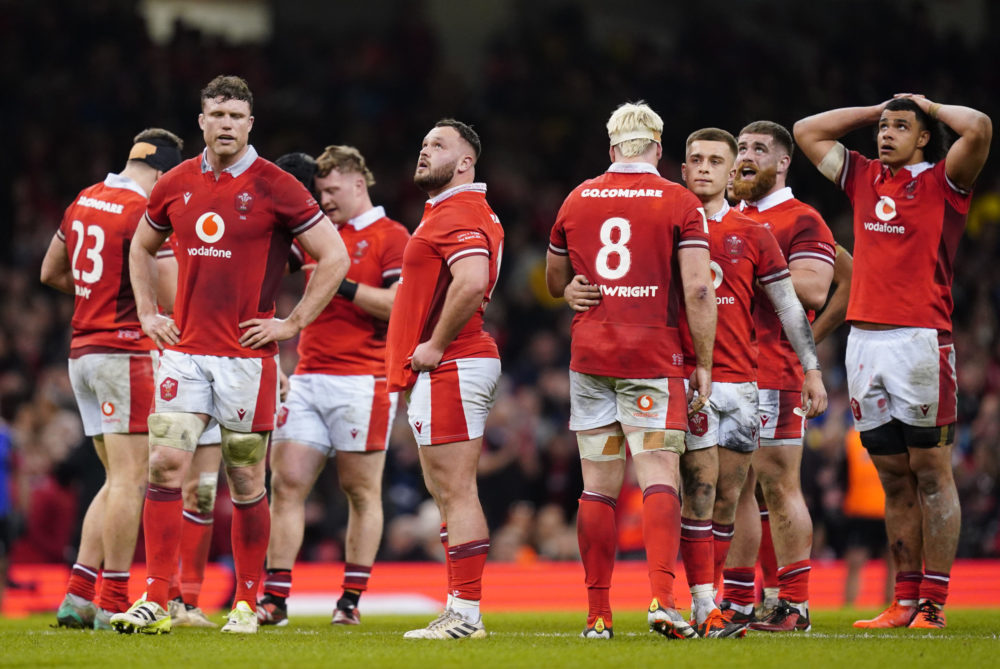
When the national rugby team was competitive and winning, I suppose there was less concern about the seeming financial permacrisis impacting the domestic professional tier. The demise of the national team over recent years has been a major point of inflection - looking from the outside it appears like we are now in an existential crisis for the game in Wales.
The Union has put forward four options and the status quo isn’t on the table. Four teams with unequal funding, three teams with equal funding; three with unequal funding or its preferred model of two teams with equal funding.
[lower-mid-content-banner]
Details
The problem for the Union as they consult on their preferred option of two teams is that there is no detail on what that exactly means. The remaining two teams from the current four or two new entities? If it’s two of the current four, will fans of the two disenfranchised teams swap allegiances? If it’s two new teams, will supporters buy into supporting artificially manufactured entities without any links to past glories?
Then there is the whole question of how the whole structure will fit into the community game and the need to ensure the game at grassroots level is vibrant.
As always when it comes to professional sport, money is king. The weakness of the Welsh economy has had a direct impact on our ability to sustain professional sporting teams.
The Leinster rugby team has a reported playing budget of an eye-watering £14m per annum, undoubtedly helped by the fact that Dublin is the European HQ for a whole host of US multinationals. Average GVA per person (production of goods and services divided by the number of people) in the Dublin area is £136,000 according to the Republic of Ireland’s Central Statistics Office. In Wales the latest Welsh Government stats report Welsh GVA per person at only £25,000. In other words, our friends across the Irish Sea have a far bigger pot to tap into to support sport in their country which impacts not only top-class teams but also the community game.
Competitive
If the Union’s preferred option is adopted, the two professional teams will have an initial budget of £7.8m, which is an improvement on the money available in the current settlement and to be fair matches the English Premiership salary cap. The French Top 14 are instructed to operate within £9.2m per year.
Whatever is ultimately decided might be the last opportunity to provide a future for rugby in Wales where the national team is a competitive global force; where the domestic professional teams can win in Europe and their domestic competition; and where at community level our clubs are producing the players for the future. The big question is will the rugby fraternity be able to unite behind whatever is determined and support the new structure? If not, then the future for our national game seems uncertain to say the least.
Jonathan Edwards was the MP for Carmarthen East and Dinefwr 2010-24
Support our Nation today
For the price of a cup of coffee a month you can help us create an independent, not-for-profit, national news service for the people of Wales, by the people of Wales.
Get more trusted Welsh news
Choose Nation.Cymru as a preferred source in Google News to see more of our journalism.