


Opinion
Welsh Independence - paying the price.
Mike Hedges - MS for Swansea East
If Wales was an independent country, it would be the 137th largest country in population sandwiched in size between Mongolia and Uruguay. We also know that the GVA per capita of many countries is lower than that of Wales.
So why, having identified that Wales is neither too small nor too poor to be independent, do I oppose independence?
The reason is straightforward on both tax receipts and GVA: an independent Wales would be poorer than we are now with a combination of higher taxes and poorer public services.
I did not stand for election to make my constituents poorer, and I believe strongly in the redistributive funding method that exists in the United Kingdom.
According to David Phillips of the IFS: "The most recent estimates from the ONS suggest that public expenditure in Wales is about 10 per cent higher than it is across the UK as whole."
When you include a population share of some of those UK-wide expenses like debt interest, defence and foreign affairs and so on, because unfortunately Wales does have lower levels of productivity and somewhat lower levels of employment, the tax revenues per person, particularly from the income tax and the direct tax side are lower and, overall, are estimated to be about 75 per cent or so of the UK average.
So, if you were to say that Wales keeps its revenues, funds its own public spending and then makes a population-based contribution to the UK-wide situation, at least as it stands, that would lead to quite a large fiscal deficit for Wales.
I think that when we estimated the, if you like, net fiscal transfer, the difference between Wales's relative revenues and relative spending, as it stands under current constitutional arrangements, current economic performance, it is about £12 billion to £15 billion a year.
But it is a substantial number there. I think that, in order for that to be a net budget benefit to Wales, you would need to see something substantially change in terms of economic performance within Wales.
If we have learnt lessons from the European referendum, they are firstly that the detail needs negotiating before the vote, secondly those things that were going to be simple to negotiate were not and thirdly a trade deal is needed.
Issues
For independence a number of issues need addressing including:
Currency - what currency would an independent Wales have.
Central Bank - what would be the central bank to act as lender of last resort and to set interest rates.
Civil Service - On 31 March 2025 according to published figures there were 542,840 Civil Service employees in Great Britain with 41, 155 in Wales.
From the above it can be seen that Wales has more civil service jobs than its population warrants and also has bodies such as DVLA which cover the whole of the UK but there are services wholly provided in England which affects Wales.
There will need to be negotiations regarding these jobs and services.
Armed forces - As above the armed forces would have to be redistributed and relocated. Wales is estimated to provide 7% of the British armed forces which is 2% above the population proportion.
A customs union also will need to be agreed. The rest of the UK is Wales' largest export market and seamless trade will be essential.
Income tax - currently tax is paid in England and Wales based upon where someone lives, if Wales were independent it would need to be collected where it is earned and dealt with as happens between Northen and Southern Ireland
Pensions and other benefits - How will the payments be made for people who have paid National Insurance contributions when living in both Wales and the rest of Great Britain, when the cost of the state pension becomes a Welsh government expense.
Security - There are currently a number of bodies such as Border security that act on a UK basis and would either need to be jointly funded or split up.
National debt - This will need to be allocated on an agreed basis and Wales’s share needs agreeing.
VAT and duties - A method will be needed to align these in order to stop large scale cross border movement of goods.
Project fear
Whilst I am sure that some will describe this as project fear and that solving all this and more would be simple, I am asking that these issues are addressed and a suggested way forward produced.
We need an agreement on the above and other issues before a referendum on Welsh independence is called rather than after the result to avoid the problems of the type we have had with Brexit.
There are also advantages in being part of a larger country such as more moderate business cycles, greater ability to withstand problems in one sector (compare the UK and Iceland dealing with the global financial crisis), able to spread the cost of public goods and crucially be able to stand up to the large multi-national corporations.
Countries splitting up and joining together is not unusual. Some splits are amicable like the Czech Republic and Slovakia and others such as in the Balkans involve conflict.
Countries also become a new nation by joining together include Italy and Germany in the 19th century, whilst in the 20th Century we have seen Germany unify again and Vietnam becoming unified.
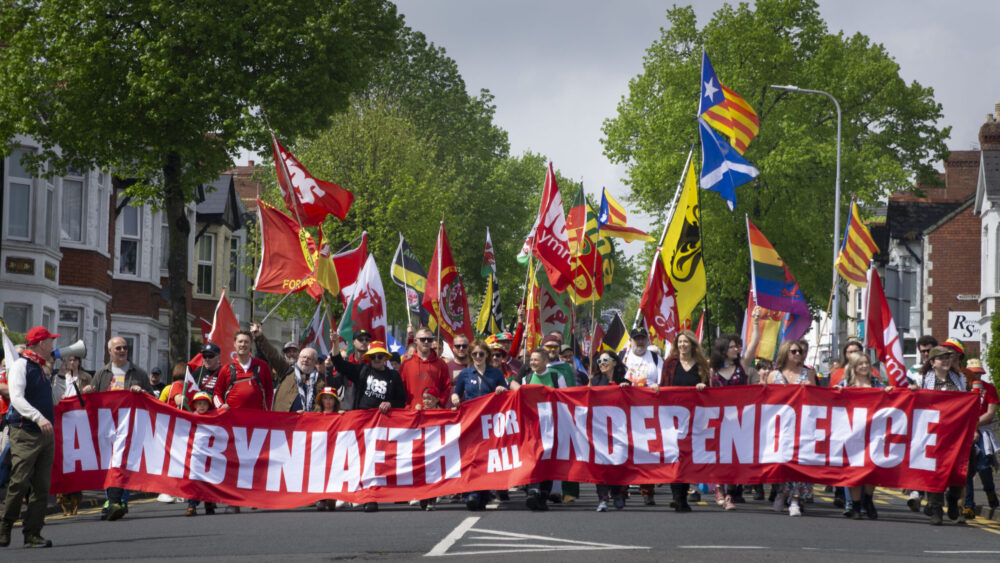
There are independence movements including in Scotland, Wales, and Catalonia whilst in Northern Ireland there is a movement for unification with the South and there is a desire to unify Korea.
Wales itself was created by joining, the kingdoms of Gwynedd, Brycheiniog, Powys, Deheubarth, Gwent and Morgannwg together.
The splitting and joining up of nation states has happened throughout the World but surely it is better to know what the proposals are and their implication than making a decision without the facts.
It is for those in favour of Welsh independence to make the economic case and produce a draft budget and answers to questions including the above.
If we have learnt nothing else from the Brexit referendum, I hope we have learnt that.
Support our Nation today
For the price of a cup of coffee a month you can help us create an independent, not-for-profit, national news service for the people of Wales, by the people of Wales.
Get more trusted Welsh news
Choose Nation.Cymru as a preferred source in Google News to see more of our journalism.
