


Opinion
The Welsh Government must focus more on language attitudes
Meilyr Jones, Language Attitudes Research Team, Bangor University
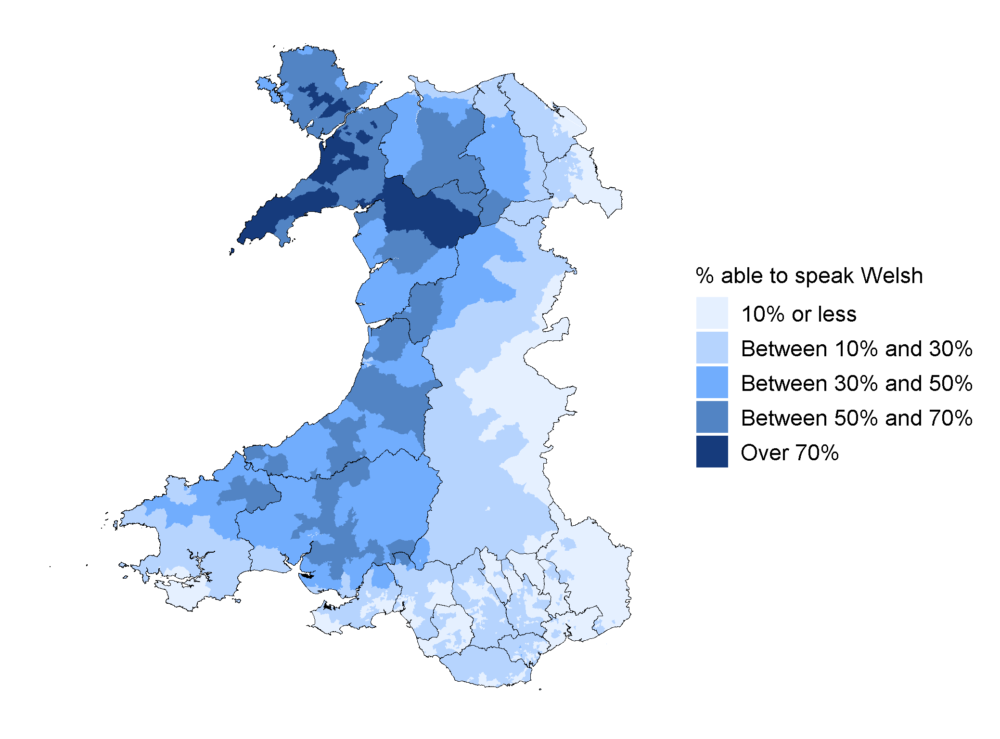
The Welsh Language Use Survey data shows low rates of language use among Welsh-speaking adults.
This is a particular area of concern in government policy, as the Cymraeg 2050 strategy aims to double the percentage of daily use of Welsh.
The reluctance to use Welsh illustrated here is also reflected in decreasing intergenerational family transmission, a domain that is possibly the single most important contributor to the survival of a language.
Research has highlighted that the government’s over-reliance on education as a language revitalisation tool, without initiatives addressing language use, especially in the family, could lead to a situation similar to the one facing Irish.
Importance of attitudes
Revitalizing a minority language must encompass shifting language attitudes.
While policy makers behind the current Welsh Government language strategy Cymraeg 2050 identify “normalising perception and use” as a key challenge to be addressed, the Cymraeg 2050 strategy does not discuss the need to improve attitudes per se.
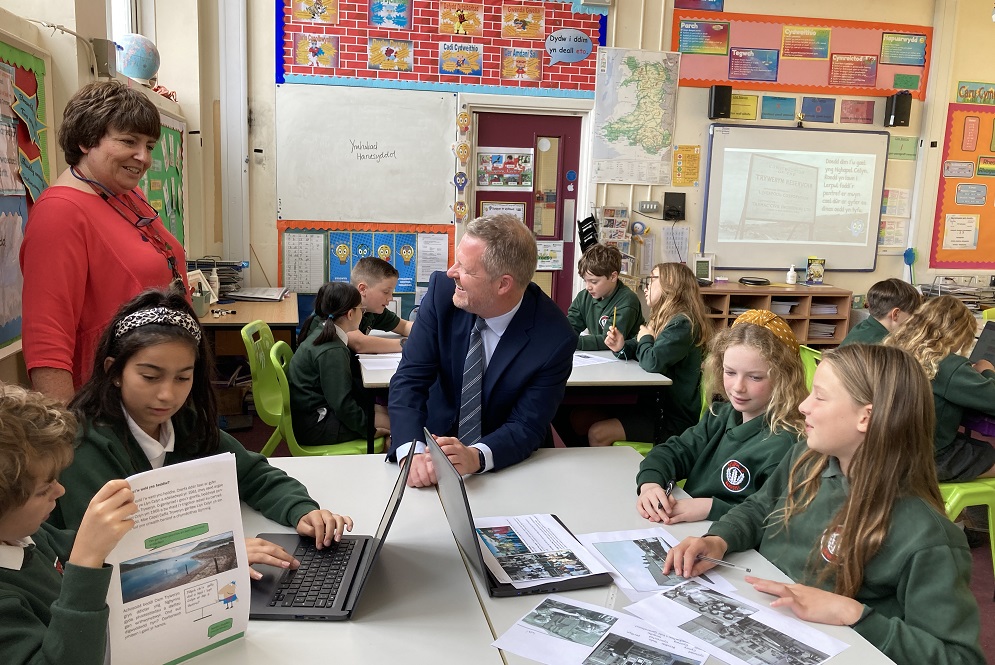
Nevertheless, attitudes play a central role in successful language maintenance, which is why we believe that more focus must be put on improving language attitudes in Wales.
In our research, we explored the relationship between explicit and implicit language attitudes and exposure towards Welsh in north-west Wales.
Comparing speaker background data from the Language and Social Background Questionnaire with results from the Attitudes towards Languages (AToL) Scale and an Implicit Association Task.
The Role of Early exposure
Our results show that speakers hold more favourable explicit attitudes towards Welsh than English.
Therefore, contrary to the current landscape of declining use and exposure towards Welsh in Wales, bilingual speakers’ explicit attitudes towards Welsh remain positive.
Speakers with higher exposure to Welsh at primary school age have more favourable attitudes towards Welsh than those with lower exposure who favour English.
These results show the importance of language exposure in fostering positive implicit attitudes towards Welsh.
Our results suggest that early exposure may do more than give children the necessary language skills required for use — a role which education, too, can successfully fulfil.
What early exposure may be providing above and beyond language skills is the modelling of Welsh language practice in a broad range of community contexts.
This tallies with research in other areas — such as physical activity and sleep patterns — where behaviour modelling has been found to play a fundamental role in influencing children’s behaviour.
Implications
The lack of modelling that some children experience is therefore particularly pertinent when considering the context of declining exposure to Welsh due to a decrease in social use and intergenerational family transmission.

Considering the Welsh Government’s current target to double the use of Welsh in areas such as the workplace and social situations, this suggests that arresting the decline of social use of Welsh and, in particular, intergenerational transmission within the family, is critical for improving implicit attitudes towards Welsh and should be considered a priority for Welsh Government language policy.
Doing this in areas such as north-west Wales that are currently undergoing language shift ought to be of utmost importance to policymakers.
If current patterns of decline continue, a decrease in exposure could lead to less favourable implicit attitudes towards Welsh, thus highlighting the importance of home and community exposure for the future vitality of Welsh.
Improving implicit attitudes towards Welsh is significant from a language revitalisation perspective as implicit attitudes seem to be better predictors of habitual behaviour than explicit attitudes, that is, how likely the speaker is to use the language.
Therefore, we suggest that implicit attitudes and their potential impact on use should receive more attention by Welsh researchers and policymakers alike.
Future work on language attitudes should include both direct and indirect methods, particularly in other areas of Wales where exposure towards Welsh is lower, and in the assessment of language vitality in general.
Find out more about Bangor University's Language Attitudes Research Team here.
Support our Nation today
For the price of a cup of coffee a month you can help us create an independent, not-for-profit, national news service for the people of Wales, by the people of Wales.
Get more trusted Welsh news
Choose Nation.Cymru as a preferred source in Google News to see more of our journalism.
