


Opinion
The Red Welsh Way is no match for Clear Red Water
Ioan Phillips
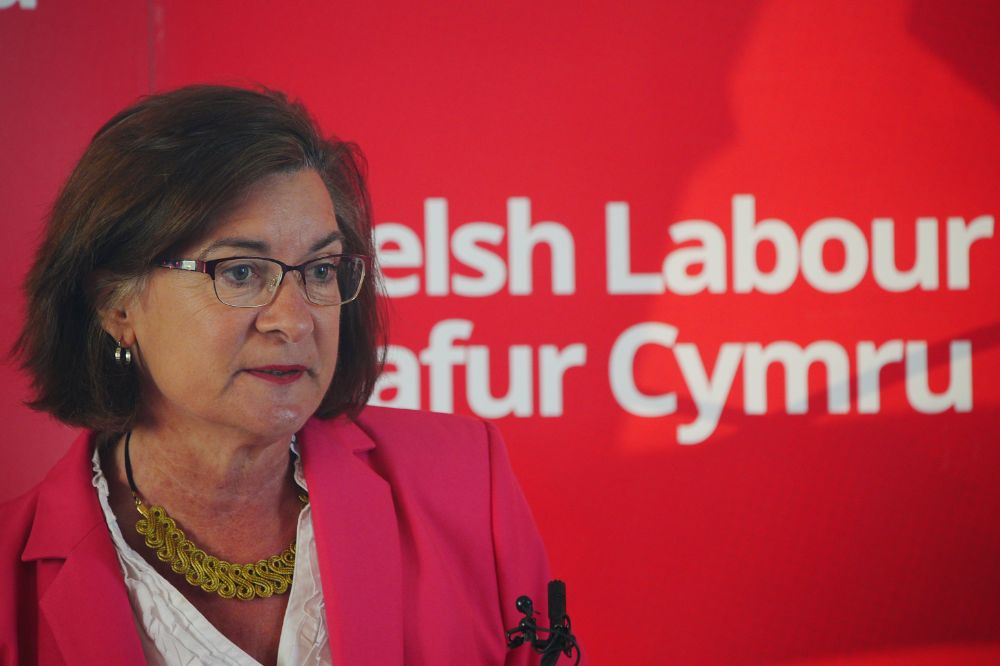
First Minister Eluned Morgan wants us to know that, like so many of her compatriots, she’s a fan of Gavin and Stacey.
Morgan’s keynote speech this week, in which she sought to differentiate the Welsh Labour government from its Westminster counterpart, was trailed to the press alongside the following analogy: “There will be times when what’s right for Essex is not right for Barry. Like Nessa and Smithy, there will be a bond, but there will also be issues.”
Gavin and Stacey ends with Nessa and Smithy getting their happily ever after, but, judging by the reaction to Morgan’s speech, the narrative arc for her party doesn’t appear as nailed-on as Nessa and Smithy’s.
[mid-content-banner]
Press attention
To be fair to Morgan and Welsh Labour spinners, billing the speech as a significant departure from the “partnership in power” approach that Morgan previously advocated worked a treat in gaining national and UK press attention. So far, so good, then.
The problem – which no amount of heavy spinning could obscure – is that the stances outlined within Morgan’s speech didn’t mark a change in direction, particularly because many are already public knowledge.
It’s no secret that Welsh Labour MSs are unhappy about welfare cuts, want more funding for Welsh rail, and wouldn’t mind control over the Crown Estate like that enjoyed by Scotland.
We also know that the First Minister has supposedly challenged the Westminster government, behind closed doors, about its policy decisions before, but to negligible effect.
The major question that the speech didn’t answer is how Morgan’s proposed methods of “calling out” and “shaking things up” are going to achieve different outcomes from her previous tactics.
[lower-mid-content-banner]
Political capital
The elephant in the room is that success will be contingent on whether Sir Keir is prepared to expend political capital in helping his fellow partner in power out.
The signs to date don’t look promising, though.
Pitching the First Minister and, by extension, the Labour brand in Wales as being significantly different from the Westminster version typically only works when there’s a leader viewed as a natural rebel.
Recent political history attests to this thesis: think the late (great) Rhodri Morgan challenging Blair-imposed First Secretary candidates back in the late nineties, or Mark Drakeford resisting UK Government attempts to undercut devolution during the Covid-19 pandemic.
Both were subsequently rewarded by the Welsh electorate for their willingness to go against the powers that be in London.
For all the First Minister’s strengths and experience, there’s – rightly or wrongly – the perception that, as a former MEP, lobbyist, and peer, she might be a little too comfortable with being a political insider.
Conversely, that background, coupled with being First Minister, means Morgan can, as she emphasised in post-speech interviews, get airtime with UK ministers (as to how well she leverages it is hotly contested).
The framing deployed by the First Minister in setting out her stall is just half of the story here, though.
Renewal
Looking at the content of the speech, it seems that, after over a quarter of a century holding power, Welsh Labour might need some intellectual renewal.
The instinct to rely on a rehashed “Clear Red Water”, which Rhodri Morgan used in explaining how and why Welsh Labour was different to New Labour, makes sense, given its centrality in sustaining a string of Senedd election victories.
After all, “Clear Red Water” articulated a substantive political philosophy for policy divergence based on traditional social democratic concepts, leading to popular interventions like free prescriptions.
By contrast, “Red Welsh Way” provided few clues as to what’ll be informing Welsh Labour’s policy platform come 2026. “Sustainability” and “equality” are worthy ends, but aren’t exactly a substantive policy framework, nor do they explain what sets Welsh Labour’s retail offer apart from that of its opponents.
The gaps in rhetoric and policy leave Welsh Labour politically exposed on both sides, however.
From the left, Plaid Cymru argues that, on issues such as welfare and devolution, Welsh Labour only offers timid split-the-difference stuff. From the right, Reform says that only they offer real change from the left-liberal establishment, headed by Labour, that’s run the show for the last quarter-century.
Recent polling by ITV Cymru Wales and Cardiff University suggests that this two-way squeeze is happening.
In urban areas, Plaid is overtaking Labour; in the post-industrial Valleys, Reform’s support is growing.
While there’s a year until the Senedd election, and much can happen in that time (see the heady predictions of a Conservative surge, circa 2020), it’s clear Welsh Labour has a fight on its hands.
Gavin and Stacey fan Eluned Morgan recognises this and knows that her party needs to get its political storytelling back on top form. Otherwise, the political equivalent of UKTV Gold beckons.
Ioan Phillips is a former Whitehall civil servant who worked as private secretary to three Conservative Transport Secretaries
Support our Nation today
For the price of a cup of coffee a month you can help us create an independent, not-for-profit, national news service for the people of Wales, by the people of Wales.
Get more trusted Welsh news
Choose Nation.Cymru as a preferred source in Google News to see more of our journalism.
