


Friday, 17th July 2026 Cardiff 22° · Clear sky
NationCymru A news service by the people of Wales, for the people of Wales.

Opinion

The Red Welsh Way is no match for Clear Red Water
By Mark Mansfield
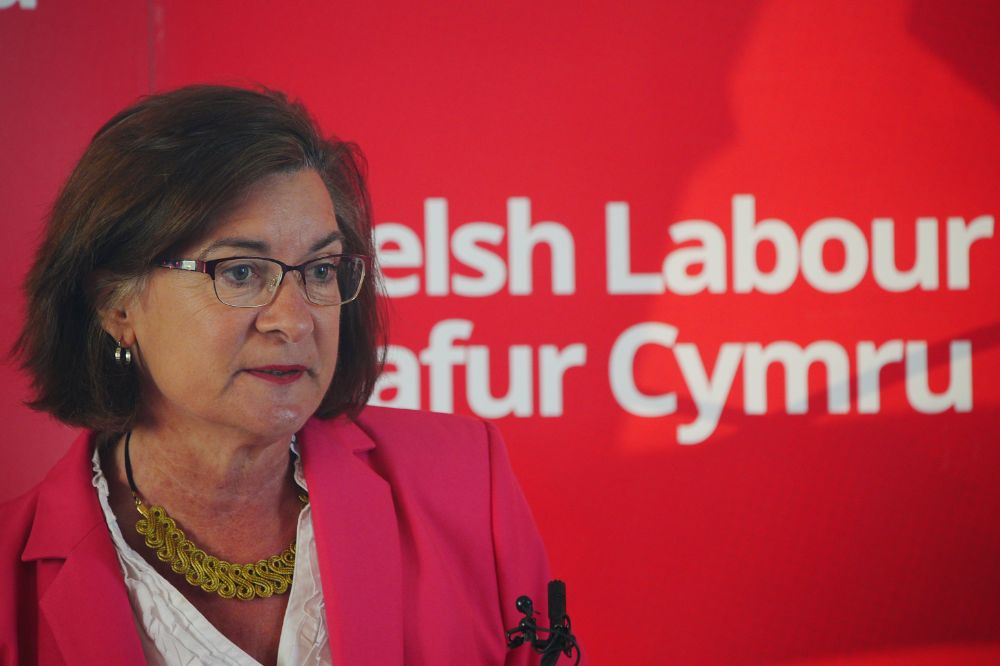
First Minister Eluned Morgan - Image: Ben Birchall/PA Wire

Ioan Phillips

First Minister Eluned Morgan wants us to know that, like so many of her compatriots, she’s a fan of Gavin and Stacey.

Morgan’s keynote speech this week, in which she sought to differentiate the Welsh Labour government from its Westminster counterpart, was trailed to the press alongside the following analogy: “There will be times when what’s right for Essex is not right for Barry. Like Nessa and Smithy, there will be a bond, but there will also be issues.”

Gavin and Stacey ends with Nessa and Smithy getting their happily ever after, but, judging by the reaction to Morgan’s speech, the narrative arc for her party doesn’t appear as nailed-on as Nessa and Smithy’s.

[mid-content-banner]

Press attention

To be fair to Morgan and Welsh Labour spinners, billing the speech as a significant departure from the “partnership in power” approach that Morgan previously advocated worked a treat in gaining national and UK press attention. So far, so good, then.

The problem – which no amount of heavy spinning could obscure – is that the stances outlined within Morgan’s speech didn’t mark a change in direction, particularly because many are already public knowledge.

It’s no secret that Welsh Labour MSs are unhappy about welfare cuts, want more funding for Welsh rail, and wouldn’t mind control over the Crown Estate like that enjoyed by Scotland.

We also know that the First Minister has supposedly challenged the Westminster government, behind closed doors, about its policy decisions before, but to negligible effect.

The major question that the speech didn’t answer is how Morgan’s proposed methods of “calling out” and “shaking things up” are going to achieve different outcomes from her previous tactics.

[lower-mid-content-banner]

Political capital

The elephant in the room is that success will be contingent on whether Sir Keir is prepared to expend political capital in helping his fellow partner in power out.

The signs to date don’t look promising, though.

Pitching the First Minister and, by extension, the Labour brand in Wales as being significantly different from the Westminster version typically only works when there’s a leader viewed as a natural rebel.

Recent political history attests to this thesis: think the late (great) Rhodri Morgan challenging Blair-imposed First Secretary candidates back in the late nineties, or Mark Drakeford resisting UK Government attempts to undercut devolution during the Covid-19 pandemic.

Both were subsequently rewarded by the Welsh electorate for their willingness to go against the powers that be in London.

For all the First Minister’s strengths and experience, there’s – rightly or wrongly – the perception that, as a former MEP, lobbyist, and peer, she might be a little too comfortable with being a political insider.

Conversely, that background, coupled with being First Minister, means Morgan can, as she emphasised in post-speech interviews, get airtime with UK ministers (as to how well she leverages it is hotly contested).

The framing deployed by the First Minister in setting out her stall is just half of the story here, though.

Renewal

Looking at the content of the speech, it seems that, after over a quarter of a century holding power, Welsh Labour might need some intellectual renewal.

The instinct to rely on a rehashed “Clear Red Water”, which Rhodri Morgan used in explaining how and why Welsh Labour was different to New Labour, makes sense, given its centrality in sustaining a string of Senedd election victories.

After all, “Clear Red Water” articulated a substantive political philosophy for policy divergence based on traditional social democratic concepts, leading to popular interventions like free prescriptions.

By contrast, “Red Welsh Way” provided few clues as to what’ll be informing Welsh Labour’s policy platform come 2026. “Sustainability” and “equality” are worthy ends, but aren’t exactly a substantive policy framework, nor do they explain what sets Welsh Labour’s retail offer apart from that of its opponents.

The gaps in rhetoric and policy leave Welsh Labour politically exposed on both sides, however.

From the left, Plaid Cymru argues that, on issues such as welfare and devolution, Welsh Labour only offers timid split-the-difference stuff. From the right, Reform says that only they offer real change from the left-liberal establishment, headed by Labour, that’s run the show for the last quarter-century.

Recent polling by ITV Cymru Wales and Cardiff University suggests that this two-way squeeze is happening.

In urban areas, Plaid is overtaking Labour; in the post-industrial Valleys, Reform’s support is growing.

While there’s a year until the Senedd election, and much can happen in that time (see the heady predictions of a Conservative surge, circa 2020), it’s clear Welsh Labour has a fight on its hands.

Gavin and Stacey fan Eluned Morgan recognises this and knows that her party needs to get its political storytelling back on top form. Otherwise, the political equivalent of UKTV Gold beckons.

Ioan Phillips is a former Whitehall civil servant who worked as private secretary to three Conservative Transport Secretaries

For the price of a cup of coffee a month you can help us create an independent, not-for-profit, national news service for the people of Wales, by the people of Wales.

Get more trusted Welsh news

Choose Nation.Cymru as a preferred source in Google News to see more of our journalism.

Choose Nation.Cymru as a preferred source in Google News

11 comments

Mab Meirion

Slogans containing the word water should be avoided as should using hair straighteners on a poodle, pathetic...

Reply
Ernie The Smallholder

The problems for Morgan is her party policies are imposed, including the labour MPs for Westminster that are chosen from an approved list from London. We need a Welsh government that will not always impose unconditional membership of the UK, and would be prepared to pursue independence if not given an acceptable deal for our peoples. Frankly, Wales and Scotland cannot continue with the current arrangement as imposed by the UK regime in London. There must be a new union treaty because the current one isn't working. Wales, Scotland, Northern Ireland and England are individual countries and must have political autonomy as independent nations. It is good to have a union of nations within Europe, we have so much in common including our desire for freedom and democracy. It must ensure power resides with the people of all our countries. The European Union has and will always be the best union for Wales, Scotland, England and NI.

Reply
Pete

Spot on about the WDA. Almost criminal level of neglect.

Reply
Alain

But the directors were flying on Concorde. Stopping that was surely more important than lifting kids out of poverty.

Reply
Peter J

It'll be interesting to see how many civil servants they'll have to lay off before setting up the new WDA. Laying off people, and recruiting people, costs money! The WDA was wound up when it became ineffective. People remember the good years, but the in last few years we saw most measures such as FDI decrease and flatline.

Reply
Llew Gruffudd

The Welsh Development Agency was a quango. One of the many quangos in Wales that replaces a joined up economic plan. It was formed to mitigate the unemployment and economic chaos in Wales that came about with the dismantling of the Welsh industrial base. Coal, Steel and heavy engineering. The WDA approach, particularly in the valleys, was to build industrial units, dozens and dozens of units, they had to stop in some areas due to the pressure on drainage systems. Grants were then offered to companies to occupy these units. The reality was that ex steel workers initially, were employed making marshmallows, fake fur coats, and in one area the biggest employer was the assembly of greeting cards. It was a mercenary rather than economic policy with firms having to agree a stay of two years or repay the grant. A major vehicle assembly company set up in a unit and a little over two years to the day, the workers turned up on Monday for work only to find the company gone. The gates locked and the unit empty. Over the weekend all equipment and machinery had been transported elsewhere. This time to the company base in the south of England. That's the reality of WDA policy. As for inward investment, that was recently summed up in a debate on the WDA resurrection, when the question was ' what effect did the WDA really have ' . The inward in Wales did exceed that of the UK and was sold on the basis of ' eye watering amounts of money on the table' as financial inducements, together with Wales as a low wage workforce. Foreign Inward Investment in Wales. The electronic boom. Sony, Panasonic etc. All gone. The auto industry is gone. All major inward investment, bar a few exceptions gone, That is the nature of foreign investment. It is transitory. The WDA was a job creation scheme. It didn't create wealth. It was most successful in creating it's own jobs, The WDA employed over 1000. Its demise was not down to its own failings internal corruption, inflated expenses, inflated redundancy payments, employing a senior official with a conviction for fraud, the list goes on. The legacy of the WDA. Wales is still the poorest and lowest paid UK national economy. Apologies for the lengthy reply I could have gone on and I got carried away a little

Reply
Undecided

Your comments cover only one side of the coin. The WDA had its faults, yes; but the jobs it created did last many years in most cases and added value. Its other activities (e.g. on entrepreneurship) were also positive for Wales - but never seriously replaced. It’s been gone for nearly 20 years and the successor arrangements (Welsh Government) are largely responsible for the legacy you describe.

Reply
Llew Gruffudd

I do try not to just cover one side, The point is, was those jobs created by the WDA or the inducements they were able to offer. Were they the best jobs or just to fill the gap, the fact that Wales is a low wage economy seems to suggest they were not. The jobs you mention are not long lasting. Those that I mention in the valleys no longer exist, they have just been replaced by something similar and so it goes on.The wage deficit between Wales and the UK average remains constant from that time. You mention entrepreneurship. Although small and starter companies consisted of 63% of the applications, 75% of the grant aid was given to large established companies I am no admirer of the present Welsh government, but there is actually very little difference between the results of their policies and those of the WDA and that's the problem

Reply
Llew Gruffudd

And where are they now

Reply
Undecided

Agreed. Rhodri Morgan was the big personality of the early devolution years and deserves some credit; but he wasn’t a great First Minister in truth. The WDA is but one example. His tenure coincided with budget increases that his successors could only dream of. But it produced very little - a hallmark of an over cautious approach.

Reply
Charles Coombes

I'm a fan of Gavin and Stacey. But it's set in South Wales and does not reflect the way of life in the north or mid Wales where the support is for Plaid.

Reply

Leave a reply

Replying to Alain Cancel

But the directors were flying on Concorde. Stopping that was surely more important than lifting kids out of poverty.

Comments are reviewed before they appear.