


Opinion
The English speaking Welshman
Lewis Norton
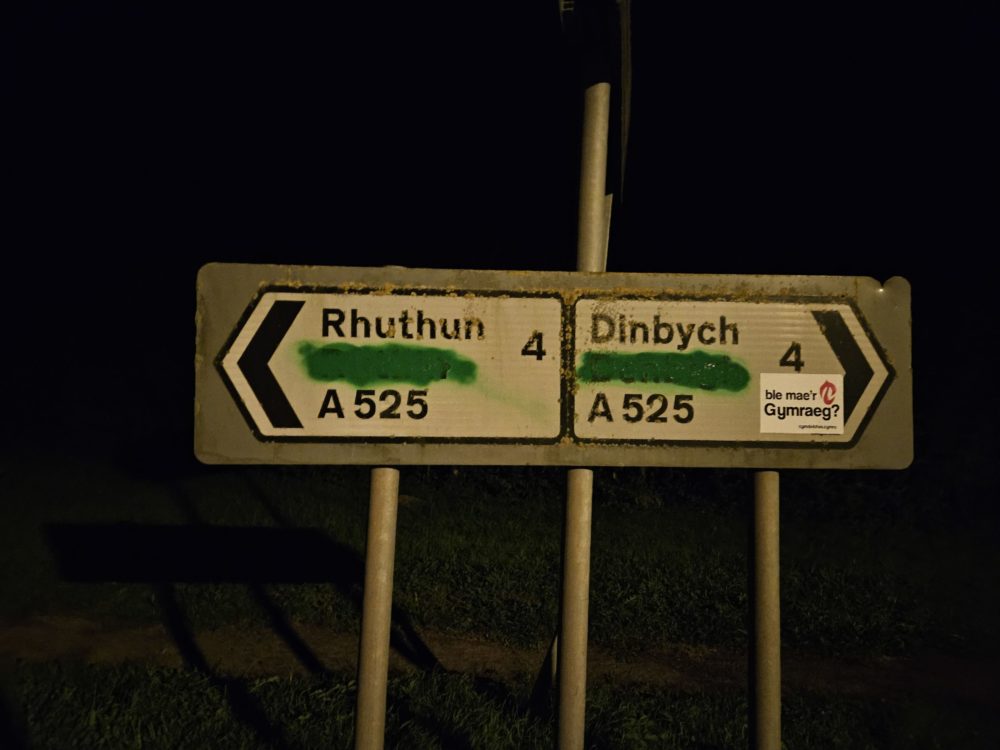
Recently, a youth Welsh independence group took it upon themselves to deface road signs in Denbighshire, covering the English versions of Welsh place names.
Their rebellious display against what they call “failed attempts at forced assimilation” divides opinion.
While met with applause from Welsh independence supporters online, it hits home for me as one of the various reasons why the Welsh independence argument is potentially doomed to fail.
Quite simply, the narrow focus on the Welsh language by many is what will continue to see many English speakers disenfranchised by calls for independence.
[mid-content-banner]
Lay of the Land
Whether it is liked or not, English is the language spoken by the overwhelming majority of Wales, with only 17.8% speaking Welsh. Especially in the areas of “British Wales”, English is spoken on a monolingual basis.
In Denbighshire, where the incident occurred, 22.5% of the population reported that they could speak Welsh in the 2021 Census.
This figure gets considerably lower in nearby areas such as Wrexham (12.2%) and Flintshire (11.6%), and even lower in places like Monmouthshire (8.7%) and Blaenau Gwent (6.2%).
Welsh speaking has declined in proportion across most of Wales, and remains heavily concentrated in the west of Wales, generally the further from the Anglo-Welsh border you are, the more likely you are to speak Welsh.
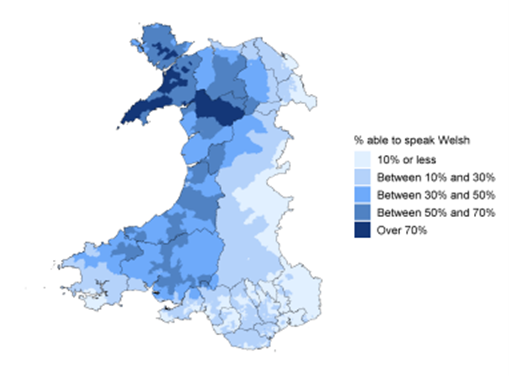
Of course, it is not just the language that divides Wales geographically. More broadly those areas speaking less Welsh tend to be those who identify less as Welsh. In the 2021 census, many of the areas identifying the least as “Welsh only” were on or near the border, including Flintshire (34.7%), Monmouthshire (41.9%), Powys (42.0%), and Denbighshire (44.7%).
The debate here isn’t about the importance of the Welsh language, as a budding Welsh learner I am eager to see the language not only protected but expanded.
But all the more I am eager to not see others be disenfranchised from learning the language themselves, or feel less “Welsh” simply because they cannot speak the language.
How then, can the blockage of the primary language of the large majority not be seen as an attack?
Divisive Past
The incident got me thinking, and as I shared my core thoughts online that acts like these only serve to fuel the fires of Welsh being seen as a divisive tool, it struck me how many saw this as controversial.
While we are in a better place now, the perceived divisiveness of Welsh is not a myth made up by ‘colonists’, but is a very real reason why at times, Wales’ road to increased self-determination has faced setbacks.
Devolution faced these setbacks, particularly in 1979 when it was soundly defeated in a referendum, in part because many English speakers feared that a Welsh Assembly would be dominated by Welsh speakers who would seek to impose the language upon them.
These same issues have more broadly played their part in the evolution of Welsh nationalist thought, and specifically the thoughts of Plaid Cymru. The divisiveness of the Welsh language caused Plaid Cymru to change course in their intellectual upbringing.
Plaid Cymru evolved from a movement born to preserve the language, to a party which from 1968 has adopted the policy of bilingualism to combat their confined support in Y Fro Gymraeg, an issue that arguably still lingers.
Most striking in this process was Plaid’s disassociation from the Welsh Language Society around this time, for similar reasons as have been discussed in relation to the defacement, over fears of alienating the masses and creating hostility to the Welsh language.
Whether through big acts like this, or small ones such as their bilingual name “Plaid Cymru - The Party of Wales”, their development acts as a display of how the divisive potential of the Welsh language is real, and how Welsh nationalists need to continue to recognise this and adapt, if they want their dream of an independent Wales to be realised.
If we compare to our friends across the British Isles, Scotland enjoys the benefits of not having language and culture being the core of their independence movement.
The distinct elements of their history compared to ours, such as their separate institutions, has allowed them to focus more on statehood, an area less emotionally driven than that of one’s culture, language and religion.
An independence campaign fought on erasing the English language is a campaign doomed to failure.
Everyone's Wales
What does it mean to be Welsh? Is it from being born here? Or living here for a significant time? Having Welsh ancestry? Speaking the language? Would you go further by saying a real Welsh person
would only want an independent Wales?
Depending on your criteria, you may well consider me, and many like me in Wales, to not be Welsh.
I speak English, have significant English ancestry, and come from a significantly anglicised area of Wales.
But I have lived here all my life (except for University), I consider myself primarily Welsh and not British or English, and I am slowly learning the Welsh language, even if at present I’m not very good!
Perhaps most key, is I am not yet convinced by Welsh independence. English speaking and not pro-independence; should I hand in my Welsh identity at the door?
But like many of you, I will cheer against anyone playing England at football. Isn’t that what being Welsh is all about?
Divisive arguments around issues of the Welsh language, whether that be road signs, or recognising Cymru as the only name for the country, are counter-intuitive and undermine the cause of Welsh independence.
Using my surroundings as an example, people here still call Conwy “Conway”, they still call Bannau Brycheiniog the “Brecon Beacons”, and Eryri National Park is still called Snowdonia National Park.
Telling the English-speaking Welshman what he must call places, and what language he is to read on a road sign, and making that a dividing line in Welsh identity, is a strategy that ought to be abandoned by anyone serious about a self-governing Wales.
Lewis is a recent BA Politics graduate from the University of York and incoming Welsh Government and Politics MA student at Cardiff University
Support our Nation today
For the price of a cup of coffee a month you can help us create an independent, not-for-profit, national news service for the people of Wales, by the people of Wales.
Get more trusted Welsh news
Choose Nation.Cymru as a preferred source in Google News to see more of our journalism.
