


Wednesday, 15th July 2026 Cardiff 17° ¡ Mainly clear
NationCymru A news service by the people of Wales, for the people of Wales.

Opinion

Why rural Wales' post-Brexit fate chills me to the bone
By NationCymru
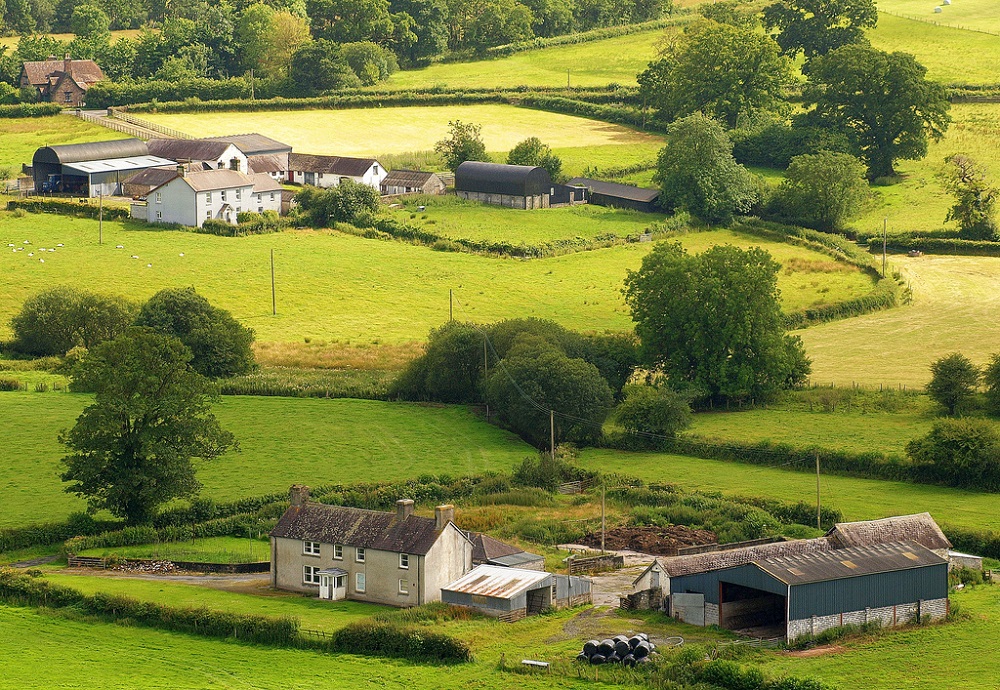
Rural Wales. Picture by Jim Bowen (CC BY 2.0)

Ifan Morgan Jones

In the Welsh sci-fi novel Wythnos yng Nghymru Fydd the protagonist travels to the year 2033 and visits a dystopian future Wales – now called Western England - covered by military ranges and forest.

Wales’ rural society has died out completely, and its culture with it. Here he meets the last Welsh speaker who recites Plasm 23 – ‘Yea, though I walk through the valley of the shadow of death’ – before herself perishing.

Although a very good novel, Wythnos yng Nghymru Fydd, published 60 years ago this year, was written as a piece of nationalist propaganda. The aim was to shock 1957's readers into action.

Well, take a good look at yourself, Wales, because the novel may have got it right: In a few years, your famous landscape could look rather similar to Islwyn Ffowc Elis' nightmare scenario.

Wales is mostly agricultural land, but only 5% of it is good for growing crops. 80%, however, is fine for grazing. That means sheep, sheep and more sheep.

We may groan at the sheep jokes but Wales’ ‘look’ – the patchwork of undulating grassy fields and craggy rocks – has been cultivated by these animals over hundreds of years.

This is all about to change with Brexit. If Wales crashes out of the EU with no deal, Welsh farmers face tariffs of almost 50% on meat.

About a third of lamb in the UK is exported and a big chunk of that meat comes from Wales. Sheep farming, never a booming industry, is about to get a lot less viable.

The UK Government could, of course, come to a deal with the EU that is favourable for farmers, although this is unlikely as industries closer to London are likely to be the priority.

But even then, farmers will lose a big chunk of their income. According to the Farmer’s Union of Wales subsidies from the EU are worth about 80% of Welsh farmers’ incomes.

Farmers only earn an average of £13,000 in Wales – a minimum wage job, basically. They would be on £2,600 without EU subsidies.
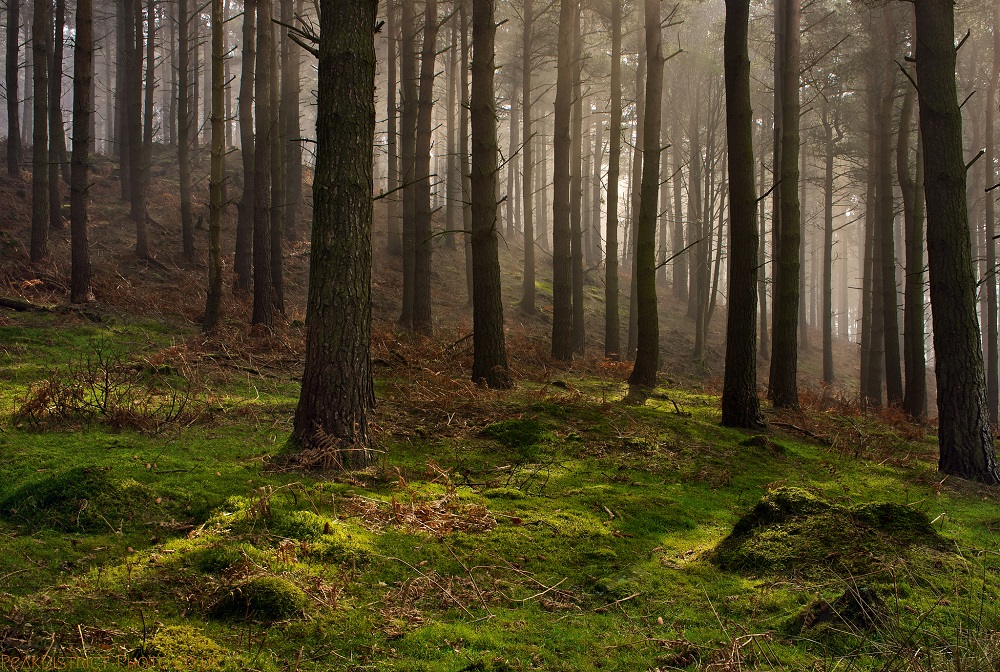
Wales' future? Picture by Dan Cook (CC BY-SA 2.0)

Rewilding

Brexit is so disastrous for farmers I’m not sure why so many I spoke to leading up to the vote seemed so keen on the idea. Why Welsh Conservative leader and farmer, Andrew RT Davies, wants it, I can’t fathom.

But it’s not just farmers that will take a hit. Take them out of the equation, and the entire environmental, economic and cultural ecosystem of rural Wales collapses:

  • Wales is going to look radically different, becoming mostly woodland rather than green fields. Picturesque ‘Wild Wales’ is gone. What effect will that have on tourism?
  • There’s an industry of vets, shops, abattoirs, auctioneers and suppliers built around serving farmer’s needs. How do we sustain the rural economy?
  • If the rural economy has its legs kicked out from under it, how then do we save Wales’ language and culture? How do we stop the brain drain and encourage the young to stay in their communities?

You could argue that not all of these changes will be bad, of course. There are highly respected environmentalists who have long argued that sheep are a plague on Wales’ landscape.

The romantic idea of a ‘rewilded’ Wales full of beavers and wolves is one that appeals to many.

But the problem with ‘rewilding’ rural Wales is that the country isn’t just a park – there are people living here too who have their own history, language and culture.

Take away one Jenga block – the agricultural economy – and what gives a large portion of Wales its already fragile sense of identity could go with it.

We could soon be facing the uninhabited, forbidding forest of Western England as prophesied by Islwyn Ffowc Elis. And it may be too late to do anything about it.


Support our Nation today

For the price of a cup of coffee a month you can help us create an independent, not-for-profit, national news service for the people of Wales, by the people of Wales.

39 comments

Court Medlicott

Interesting piece. Your second point, about the death of the farming industry in Wales, is something that would need to be faced up to soon regardless though. With ever-increasing research in to plant-based diets and meat alternatives it's time for a change. I realise this may be bad news economically for large portions of Wales, but morally it's a huge, welcome step forward.

Reply
Capitalist and Welshnash

'morally'? Our species eats meat. You're fine to be a vegetarian or a vegan, but don't impose it upon other people by bringing sanctimonious morally into it coupled with the word 'forward' to insinuate that those who value traditional diets and meats are somehow backwards and regressive. Meat alternatives, no thanks. We should focus on buying Welsh products at every level of our society, not singing a trumpet of self-righteousness about what people eat.

Reply
Gruff

Capitalist and Welshman: Your concept of moral vegetarianism is a couple of decades out of date. It's no longer a welfare only issue, but a sustainable land use and climate driven issue. And that in itself is very quickly moving from a moral cause to a pragmatic approach to human survival. We cannot afford to continue eating meat at this rate. Our meat eating "tradition" is fast approaching its sell by date.

Reply

In reply to Gruff

Sibrydionmawr

As the piece points out, only 5% of land in Wales is suitable for arable, and 80% for pastoralism, so that would suggest that the only sustainable way of food production on this land is livestock, sheep and cattle, as it ever was. About the only alternative to sheep and cattle is conifer plantations, or wind turbines, neither of which appeal to the blow-in white settler vegetable munchers who largely don't give a stuff about the Welsh language, or it's speakers. I've long regarded them as England's cultural shock troops, or colonists, who are encouraged to come to Wales as they aren't really wanted in England either.

Reply

In reply to Sibrydionmawr

flofflach

thought of your reply as I waited for the bus yesterday and listened to a "blow-in white settler vegetable muncher" speaking Cymraeg. I find it is the meat eating blow-ins, nearer retirement age, who don't like wind turbines

Reply
RdWd

I understand the economical importance of sheep farming in Wales, but perhaps it's time to put that aside for the greater good of the planet? Obviously, for better or worse, sheep-farming is tied into the cultural identity of Wales, but there's no reason why we cannot make reforested regions of Wales a cultural signifier of Wales of the future. If I'm given the choice between a rewilded and biodiverse Wales, that depends on reforestation to capture carbon dioxide, then I'll take that over clinging to the cultural tradition of sheep farming. I remember reading about how mid Wales is a perfect spot for growing the endangered coastal redwoods. Lots of mist and rainfall for them, and they're huge consumers of carbon. Perhaps farmers should become foresters to save the planet instead of getting hung up on the sheep farming thing.

Reply
Margaret Hall

There is already a lot of forest in Wales, but if it's the wrong kind of forest, it contains hardly any birds or other wildlife. The native broadleaved woodlands are the best for biodiversity, not conifers. Actually, one of the best CO2 stores is the endangered peat bog. They're better than forests for capturing and holding CO2.

Reply
billprice

In the post Brexit world we will need that Blitz/ allotment spirit, ‘Dig for Victory’. There is huge sustainability issues if the food chain is going to go through major upheaval at the end of March 2019.

Reply
martinowen

The notion of a sylvan glade is attractive - but misguided. The unmanaged landscape becomes a bracken and bramble jungle a long time (if ever) before it becomes anything like the beautiful vestigial oak woods. Not a pretty sight and not much use for tourist income. The managed landscape of cedar or whatever other cash crop we choose to plant we already know is very dull following decades of FC planting. As far as carbon capture is concerned upland bogs are more effective.

Reply
Graham John Hathaway

I would like to know what research shows only 5 % of Wales is good for growing crops. Illustrations and forecasting is fair game. I live in an area once heavily mined and exploited. There was no forward planning to deal with its extinction. The key to all change is who is driving it. And who profits. Inevitably it will not be those who live in rural Wales. I hear the sounds of exploitation again. The warnings have been given of an area called western England. I see this as a real threat. Add climate change and we are heading for a perfect storm. Wales has hugh natural resources unexplored. These need to be factored in. Let's make change a Welsh thing. To preserve our heritage, have balance of use of precious land, and build resilience based on future trends and opportunities.

Reply
boicymraeg

In defence of George Monbiot (who I assume is the “highly respected environmentalists” you mention), he addresses the issue of the rural economy (with specific reference to Wales) in his book Feral and makes it very clear that he is aware that Wales is not a park, nor should it be. He makes the point that the existing subsidy system is disastrous and primarily benefits wealthy landowners as well as promoting pointless work e.g. paying many farmers to keep unproductive land clear of trees for no reason at all. The book is well worth a read. Ellis’s dystopian vision, incidentally, was that Wales would be covered in the dense highland conifer plantations which were being widely planted by the Forestry commission in the 1950s, and still blight our highland landscape. Environmentalists rightly abhor these as much or more than sheep farming – they are an unnatural form of landscape (natural forest would feature a large variety of trees of different ages) which damage blanket bogs, releasing carbon into the atmosphere, as well as providing no kind of habitat for any wildlife. It’s important not to confuse the forests that rewilding advocates envision with such plantations. Most woodland of any size in Wales at the moment is conifer plantation. Also worth mentioning is that rewilding wouldn’t mean the whole place was covered in trees. Trees take decades to reach maturity and even if all sheep farming in Wales stopped today, it would take decades or even centuries for the landscape to return to its pre-human state. It also wouldn’t all be forest anyway – much of the highlands cannot sustain any real concentration of trees; to plant the conifers many bogs had to be drained first (itself a damaging practice). A genuinely wild Welsh landscape would have a lot more trees, yes, but wouldn’t turn Snowdonia into the Amazon overnight. There would be a mixture of darker, mossy “rainforests” on the valley floots, with open meadows and semi-open scrubland higher up, and blanket bog in many other places, though of course it all depends on many factors such as the concentration of animals (even if you lose all your sheep you still have feral populations of goats and horses in many parts of Wales, which you would expect to spread if there were no sheep, not to mention deer). The threat posed by Brexit to the rural Welsh economy is indeed grave, and of course we want to mitigate this. But quite apart from its questionable environmental credentials sheep farming is totally unprofitable (as you point out). Maintaining subsidies post brexit is treating the problem without curing it. The answer must surely be to get these people to diversify and provide them with alternative employment. We should not seek to sustain the status quo simply because that’s what we’ve always done.

Reply
RdWd

Indeed, the uplands bogs are great at capturing carbon, it'd be misguided to replace one with the other. As for the forestry commission's planting of pines and the like, I do agree in that their plantations can come across as dull - but I'd like to hope we've learnt from it all these last few decades. If managed - and perhaps not used solely as a cash-crop, coastal (and giant) redwood groves in the U.K. do spectacularly (the largest coastal redwood stand in the U.K. is in Center Parcs, Longleat, Wiltshire). They provide a range of habitats for fauna and flora, and, for the tourist angle, perhaps I'm bias, but I think they do look real attractive.

Reply
Thomas Moseley

I am not a farmer and have no knowledge of what is now economic or feasible in farming. I only mention that when I was a boy in Mid Wales during the war, crops were grown where now sheep graze: wheat, barley mangles sugar beet and potatoes were common. Even if they were made compulsory by wartime regulations the fact that they were grown at all shows that it was possible. The topography pf Wales has not changed much.apart where it has been built upon. Now there are sheep everywhere. Why?.

Reply
Trailorboy

I simply can't believe the negativity on here about sheep farming. It is not as if we are going to embark on de-forestation to create land for sheep farming. It has already happened and not even remotely recently - trying to reverse that would do very little for the global climate challenge and could have a severe effect on local people, culture and communities - something environmentalist idealists are not supposed to do. If these sorts of ideas were being presented in Africa, people would be up in arms about it. There is ever increasing need for good arable land and a constant need to increase the productivity of arable land, putting pressure on using good quality land for sheep and livestock. We are going to need meat products and I suspect we will always want meat products like lamb and the best places to farm them is in places such as the Welsh hills - it's the perfect place to do it. The price of lamb may be weak currently, but the environmentalists should be appalled at the idea of having to increase sourcing of things like lamb from the other side of the world and all the energy and fuel that needs to be expended to get it here, not to mention packaging waste and all the rest. The most environmentally friendly lamb is home grown, on land that is the least productive for arable crops - i.e. places like the Welsh hillsides. Turning Wales into a glorious forest to staisfy the conscious of do-gooders, many of whom have two or more homes - (one in Wales for a bit of peace and relaxation) is a non-starter for me - we need to do more with the land we have, not less.

Reply
Dafis

A well stated realist environmentalist case. Beats turning the country into a haven for "off road pursuits" recreational camps, and all those other activities that will require a final clearance of any indigenous folk just going about the business of earning a living ( just!) .

Reply
Edeyrn

Relying on sheep, an industry brought in by the Norman French...to last forever is not wise though

Reply
Trailorboy

we had sheep long before the normans. theres evidence of sheep in Dorset in neolithic times

Reply
Eos Pengwern

The example of New Zealand is highly instructive in this case. Prior to when the UK joined the EEC in 1973, the UK was the main overseas market for New Zealand lamb and beef, importing 86% of all New Zealand lamb production. By entering the EEC and introducing steep tariff barriers which had never been there before, we pulled the rug out from under the New Zealand lamb industry, and the New Zealand government at the time responded by heavily subsidising New Zealand farmers. However, after a little over a decade, the level of subsidy being given was simply unsustainable for the rest of the economy, and the new Labour government that came in in 1984 responded by abolishing all farm subsidies overnight. So New Zealand farming had lost both its main export market and all its subsidies. The farming sector withered and the country became overgrown by trees, right? Wrong. Today the farming sector in New Zealand is universally agreed to be flourishing, providing the country's biggest source of export income and 7% of all employment (compared to 4% in Wales). Almost 100% of milk, meat and wool is exported, with the output of the dairy industry in particular having quintupled since the 1980s. It goes without saying that the rest of the New Zealand economy has surged forward as well, no longer chained to a single export market and having to subsidise one part of it heavily at the expense of all the rest. Now I don't want to make it sound too much like a bed of roses: the transition seems by all accounts to have been a painful one, but it was surprisingly short. New Zealand had the advantage of being an independent sovereign nation (OK, dominion, but it amounts to the same in practice) so there were things that the government could do to smooth things out and prevent, for example, all the country's land being bought by foreign investors. All in all, though, if the example of New Zealand is anything to go by, the elimination of the twin evils of over-dependence upon a single export market and heavy government subsidy seems to have done the agricultural industry a power of good. I could put a stack of links in to various case studies, but anyone who knows how to use Google can easily find them themselves.

Reply
Cymraes

If you would be content with the New Zealand's lack of Welfare of Animals and no rights for walkers to roam footpaths I can assure you that conscientious Welsh farmers are not..........

Reply
CapM

"All in all, though, if the example of New Zealand is anything to go by, the elimination of the twin evils of over-dependence upon a single export market and heavy government subsidy seems to have done the agricultural industry a power of good. " There is a difference between a healthy agricultural sector and healthy socio-economic-cultural rural communities. As I understand it this article expresses a concern about the latter. Since you've taken New Zealand as a possible role model, their stats show that NZ sheep numbers have halved since the early 1970s. I would think that the numbers of farmers involved in sheep farming in NZ has declined significantly also. Something similar happening in Cymru would result in many farms being put up for sale. The option of switching to dairy farming which has happened in NZ isn't an option on the vast majority of sheep farms here. http://www.stats.govt.nz/browse_for_stats/environment/environmental-reporting-series/environmental-indicators/Home/Land/livestock-numbers.aspx

Reply
Red Dragon Jim

The New Zealand example wouldn't work for Wales. We would not survive the drop in national flock size which happened in New Zealand. Also, NZ lamb now relies on export markets like Japan, Australia and North America. Hello! England and Europe are our version of that! Wake up, please! Rewilding is another issue. What is sensible is paying farmers for sustainable land management. However there is no proposal in CAP for mass rewilding, and converting CAP from food production payments to rewilding payments would be even less financially viable than sheep farming is. So until there is a costed and sustainable plan, what exactly are we debating? George Monbiot is not some kind of enemy to me, but he is simply wrong about sheep farming and hill farming. He painted a vision of slash and burn agriculture that does not exist in Wales. Fundamental inaccuracies. On farm woodland is not declining in Wales. Overall forestry is not declining in Wales either. It's lazy stuff. Perhaps we should remember that biodiversity includes humans. If we want to improve the environmental sustainability of farming, which despite not being what alot of farmers want to hear is generally good for all of us, then we have to start by working with the people who actually live there and respecting their culture and livelihood.

Reply
Eos Pengwern

You've missed my point somewhat: as of 1973, England was New Zealand's version of that, too, but on a much bigger scale: 86% of production went to the UK, and we turned our backs on them by joining the EEC and left them high and dry. Once we're out of the EU, Japan, Australia and North America will be available to us as export markets as well, since we'll no longer be cut off from them by the current high EU tariff barriers. Actually, though, one of New Zealand's biggest export markets is China, which is only half as far away from Wales as it is from New Zealand. Bear in mind though, that I'm not saying that Wales can or should follow exactly what New Zealand did: Wales is Wales and New Zealand is New Zealand. The point is that a future of being subsidised to grow lamb that no-one wants to buy is no future at all, any more than a future of being subsidised to mine coal that no-one wants to buy. Sooner or later the subsidies become unsustainable, as they did in New Zealand in 1984. What New Zealand showed us is that when a sector of the economy faces an existential challenge with imagination and enterprise, the results can be pretty spectacular, but being an independent country helps a lot. What South Wales in the 1980s tells us is that when the challenge is faced with resignation and resentment, and a local political culture which values confrontation over cooperation, then the results are completely dire. It would be double tragedy if the farmers end up making the same mistake that the miners made.

Reply
CapM

"You’ve missed my point somewhat: as of 1973, England was New Zealand’s version of that, too, but on a much bigger scale: 86% of production went to the UK, and we turned our backs on them by joining the EEC and left them high and dry. Once we’re out of the EU, Japan, Australia and North America will be available to us as export markets as well, since we’ll no longer be cut off from them by the current high EU tariff barriers. Actually, though, one of New Zealand’s biggest export markets is China, which is only half as far away from Wales as it is from New Zealand." The situation regarding New Zealand, even if it's only suggested as an inspiration, is that the picture is made up of more than one point and not just the one you've highlighted, and they include - New Zealand sheep farmers had less environmental constraints on switching to other forms of agriculture. NZ sheep farmers received high(40%) subsidies from the NZ government for ten years after the UK joined the EEC. Ten years which allowed for trade negotiations between NZ and the EEC and others to be worked on. Agreements on the conditions of international trade are nowhere near as simple and straightforward as you suggest and take time often years to complete. I don't know what atlas you've seen but Cymru is nearly twice as far away from China than NZ is. Unless you are suggesting we fly our lamb out there rather than send it by ship. But even then NZ - China is only about 25% further than UK - China.

Reply
Graham John Hathaway

The realism of any major change affecting a key industry is subject to impacting on both socio and economic indicators of any or all sectors. The extractive industries are a reasonable pointer to an example of what happens to static communities solely dependent on them for their livelihoods. Only decline and despair. This isn't intrinsically about what type of farming, or environmental impacts or choices, as important as these are, but the survival of rural communities and the very existence of culture shaped from the medieval age. The exposure to chill winds of a structural nature will blow for many generations and wipe out all before it. It's that rampant a curse on people's standard of living with little option to move to alternative employment but to up-sticks and become nomadic. The economics of structural change benefits only those with capital to exploit the declining markets of unsold properties and land. Many ordinary folk will becom disenfranchised and vulnerable. Ive read Ifan's article and can feel the sentiments so carefully advanced and with references to predictions many years ago. There's time to adjust. But it needs courage, belief and invention. This is best delivered by a consensus built here in Wales. And administered by Welsh enterprise and capital. I fear if we remain

Reply
Graham John Hathaway

As we are we will be unable to respond.

Reply
Clive King

The article documents well one important aspect that makes up the future of rural areas. There are others. Drive through parts of rural US you encounter small towns like Sonora in Tuolumne County in Eastern Californina which is riding a wave of heroin and crystal meth addiction feed by despiration and hopelessness of young and middle aged people with no hope or future. Structural economic change eliminated opportunities for those under 40 and a new breed of entrepreneur saw an opportunity. By the time the problems were recognised, they had taken hold. Rural areas are not immune. While I hope that rural Wales has a bright future for its young people, in the spread of likely outcomes post EU exit, changes will likely be swift, brutal and all levels of government won't have the money or experience to play catch up. While near all areas of the UK have some substance abuse issues, it will be noise compared to what is likely coming. South Wales valleys of the 1980's should have taught us this lesson. It is not only agriculture that will have to change, education and public services will both need to find new ways to deal with reality. Both are major employers and those jobs will likely reduce significantly. The knock on effects to support businesses will also be significant. Rapid large scale economic adjustments always[1] bring social problems and crime. The Sonora model[2] more likely based on our current direction of travel for rural welsh towns and villages. I do hope I am wrong. [1] I can not think of a counter example. [2] Shame rural areas don't have more JD Wetherspoons to capitalise on the post EU exit mood

Reply
Graham John Hathaway

Useful insight from Sonora, America. Really apocalyptic. The critical issue touched upon is the apparent lack of resources and solutions gifted to Wales, to effect the changes we know are coming does the line.

Reply
Graham John Hathaway

Tourism cannot be the main stay industry that will support major revenue for Wales and provides sustainability. This can only come from eg a much more expansive renewable energy sector and exploiting rich resources of Wales. We are already lagging behind other Europeans in manufacturing and implementation. If there is a read across to the agricultural industry sector then so much the better. But planning for change must begin quickly and in partnership with the rural corporations.

Reply
Efnisien fab Euroswydd

Your apocalyptic vision could well come true, Ifan, which is why serious work should be done on how to mitigate Brexit's effects. And, no, tourism is emphatically not the solution. Farmers and the industries that support them are skilled, and talented. Those need to be put to good use. WAG needs to play its part (eg infrastructure - road, rail & blanket 5G coverage). Given half an opportunity, these industrious, skilled risk-takers could thrive. Of course, all this would be so much easier with independence...

Reply
gertomosGeraint

Get planting crops in the vale of Clwyd and polytunnels. Grade A land wasted on sheep grazing

Reply
Trailorboy

There are very interesting issues here. It's very easy to say remove all subsidies and leave it all to resolve itself, through the whims of market forces. The comments linking to the decline of the South Wales Valleys are very apt. Letting industries simply die out without any planning or investment for the aftermath creates huge costly problems and any transition if it's going to happen needs to be planned, managed and the alternative future has to be created, before destroying what already exists. The tourism and forestry options need to be vigorously challenged and we can't simply allow unscrupulous profiteers to plunder our rural areas without rules and mechanisms to challenge and interrogate their influence and long term effects. Any significant changes could be viewed as a grand social engineering project and these have a habit of going badly wrong, if left unscrutinised.

Reply
Hadrian

Haven't got the reference, but in his article Monbiot claims, " by value Wales imports seven times as much meat as it exports". If true, we need to develop our internal market!

Reply
Jim

There's nothing traditional about farming in Wales now anyway. We make it sound like it's some kind of timeless tradition that's about to be wiped away by Brexit. It's not. Much of Wales' landscape today is a product of Enclosure, which saw many smaller farmers and tenants turfed off the land, where they migrated to the bigger towns and cities to become what used to be the Working Class (which ain't what it used to be either). To what extent was Enclosure a product of colonisation by England? Large swathes of upland Wales in particular are registered Common Land, and as older farmers die out and are not being replaced by younger entrants, these areas of common are becoming woodland anyway - bracken is simply a stage in a process which will ultimately take us closer to what we had in Medieval times - large areas of Oak woodland. It's been happening for decades anyway. We can either fight against this process, or work with it and re-shape agriculture into a newer (possibly older) model. And we also need to ask to what extent the subsidy regime we have inflates land prices and prevents the re-distribution of our population to rural areas, and a reversion to the older, pre-enclosure pattern of smallholdings and pastoral grazing which would have been in place probably since the Neolithic! We now have a large post-industrial population sitting around in south Wales in particular and if they don't have work in Wales well they're just going to do what they've always done which is move!

Reply
Joniesta

Re wiliding is a dream for many but a final nail in the coffin for rural Wales and it's culture. It will consign us to be the playground of England. Make no mistake about it, if the consequences of Brexit on farming is high tariffs cheap imports this will effect meat, dairy and arable farmers alike. RT Davies et al were idiots during the EU referendum and duped many farmers to believing that voting out would get rid of the red tape. Of course this is an untruth. The public will want the traceability of the product and have confidence that the animal has been well cared for. It will actually end up with more red tape and rules. However Brexit could be a catalyst for change, in particular the planning process. Rural Wales needs to be re industrialised and the shackles of the current planning process needs to be cast away to the dustbin of history. Currently we have a planning system that allows the building of million pound grand designs in places like Abersoch and on the other hand we cannot find spaces in villages to build new housing fit for this century for young Welsh families. We have large unsustainable housing developments on the outskirts large towns and cities. We have the unexploited potential of green energy production and we are investing in expensive nuclear reactors, the workers required swamping the locality with unsustainable immigration from England and with it their social problems. Too much emphasis is being placed on tourism and the perceived gain is pathetic for the majority of the poorly paid workforce.The development regions has made nothing to support the rural communities of Wales, in fact it has hastened the clearance of young families from those areas. It is a massive failure of government and really shows that they do not understand or choose to ignore the principles of sustainable development.

Reply
Graham John Hathaway

The idea that people simple move to where there are better prospects is the hallmark of how civilisations are created. The one key component is the availability of employment and opportunities around it. People will not simply move to areas in decline. It doesn't make sense. The whole process of renewal of areas is a major economic project requiring significant capital and careful planning over many decades.

Reply
Jenny wren.

Why would you want to stay in the EU? We fought the last war so that we wouldn't be taken over by Germany, now 'people' want to be taken over by the EU. They are bleeding us dry, and when we are weak enough they will then take over all our assets, if they are not doing it already. This government has no spine at all to stand up for it's own people.

Reply
Meurig

Sadly, the article is a realistic assessment. Comments like this one above are so removed from reality it's laughable: "Once we’re out of the EU, Japan, Australia and North America will be available to us as export markets as well, since we’ll no longer be cut off from them by the current high EU tariff barriers. Actually, though, one of New Zealand’s biggest export markets is China, which is only half as far away from Wales as it is from New Zealand." There are already some Welsh Lamb sales in Canada. But China, Japan, USA and many other countries are entirely closed as export markets for beef and lamb from the UK, despite over 10 years of diplomatic wrangling. Being out of the EU doesn't make a blind bit of difference. And the idea of Australia being a major export destination for Welsh agricultural goods is... optimistic.

Reply
Nick

I wonder how many of those commenting on this blog would have supported the closure of Wales coal mines in the 80s? If they believe their environmental arguments that much they they would presumably have been wholeheartedly on Thatcher's side given how coal is undeniably many times more damaging than agriculture. I suspect the majority of those commenting in support of policies which would decimate communities are left-leaning. Someone could write an interesting PhD on the way in which left wing views have come to mean something very different from what they once did.

Reply
cubespawnJames Jones

Many very clear and well reasoned comments here, quite a different environment than most of the web ;-) What follows is a little self serving, but the intent is to get an honest assessment from one or many of your analytical minds regarding a different approach to the future. Rather than focusing on agriculture as a basis for export to generate revenue for economic stability, what about turning a little more inward an approaching Wales economy as a closed system, for the source of this view: I am attempting the very initial stages of building a self sufficient homestead/village, I’m not some starry eyed teen either, While the practical difficulties of building such a system are daunting, it seems so far that a substantial portion of the external expenses (money for taxes, groceries, utilities etc) can be generated on the land I have. This has to a limited extent been put into practice, and is feasible within limits. The idea put forward here is: if Wales generated everything it could internally, what would it lack? And under what circumstances could those requirements be altered or generated internally? Utah, in the US generates power and sells Data Center services, since the climate does not require air conditioning, they are competitive. (Not Suggesting Wales expand its already significant Data Center business, just thinking out loud…) My project will of course have a single automated greenhouse, not an agricultural system consisting of 1000’s of farmers, and few automated CNC’s instead of a manufacturing sector, but the objective is to build as large a proportion of needed replacement, parts, generate my own power, capture rainwater, etc within the boundaries of my 15 acres, and use these resources to lessen the synchronization of the ups and downs economy at large and my personal well being. Lastly, part of the project is to make affordable, automated manufacturing, available at a scale appropriate to a single homestead, it is very much a work in progress, but i am “open sourcing” the designs to try and build a community of tinkerers to refine it toward better performance and capabilities. The project is called “CubeSpawn” and a preliminary introduction is here http://patreon.com/CubeSpawn

Reply

Leave a reply

Replying to Meurig Cancel

Sadly, the article is a realistic assessment. Comments like this one above are so removed from reality it's laughable: "Once we’re out of the EU, Japan, Australia and North America will be available to us as export markets as well, sin...

Comments are reviewed before they appear.
