


Opinion
Rudakubana is no terrorist
Ben Wildsmith
In 2003, I was working in Walsall in the West Midlands, running an education project for young offenders.
Eighteen months after 9/11, there seemed to be new terrorist plots being uncovered every week.
Accordingly, we all became familiar with the security services’ terrorist threat levels. Ranging from low to critical, changes in the level made the news and added to the generalised paranoia that seemed to characterise life in the new millennium.
One summer’s afternoon, I was taking a group of our students out of town for a walk in the countryside when we encountered a roadblock on the outskirts of Walsall.
Police diverted us into a car park where officers were running checks on registration plates and demanding names and dates of birth so that everyone could be checked for outstanding warrants.
[mid-content-banner]
Detained
With a car full of the area’s naughtiest children, we were detained for over an hour as officers made sure they were all were supposed to be at large.
The car next to ours had no tax and its distraught owner had to hand over his keys so that it could be taken away and crushed.
‘New terrorist threat level,’ an officer explained. ‘Came in this afternoon, so we can stop vehicles without reason and check records.’
Imminent terrorism isn’t, you see, as universally unwelcome as you might assume. If, for instance, you are a senior policeman looking to bolster your petty crime clear-up rate then it’s a positive boon.
The inconvenience for officers of policing by consent magically evaporates when the public is terrified enough to consent to anything. So, busting people for failure to pay car tax became an unexpected benefit of the war against Islamic extremism.
This came to mind on Thursday as Axel Rudakubana was sentenced for his horrific attack in Southport.
Manipulation
The widespread horror at this crime reflects the decency that characterises much of society but also leaves the public vulnerable to manipulation. We have seen how disinformation about Rudakubana was used to incite riots shortly after his arrest.
Nigel Farage, relying on information from Andrew Tate’s X account, fuelled rumours that the perpetrator had entered the UK illegally.
Other accounts claimed that he was Muslim. All of this was seized upon by people who wanted those things to be true.
The subsequent disorder across England resulted in a slew of harsh sentences for rioters and those who had encouraged them online.
The same figures on the right who had fuelled the disorder in the first place now focused their ire on what they claimed was a draconian response.
Comparisons were drawn between sentences handed to rioters and those imposed on members of grooming gangs and the government stood accused of operating a two-tier justice system that disadvantaged ‘indigenous’ Brits.
Outside of the Brazilian rainforest, you’d have a job on proving anybody was ‘indigenous’ to anywhere nowadays and it’s a particularly spurious term when applied to our much-visited, oft-invaded, post-colonial group of islands.
The only respectable definition you could arrive at for the term as applied to the UK is of a person who was born here.
Political capital
Rudakubana’s birth in Cardiff is a serious inconvenience for those seeking to make political capital out of the atrocity he committed. It is even more awkward for them that he professed no faith and was from a Christian family.
Immigration status and religion are routinely used as a smokescreen behind which old-fashioned racism can be conducted. They provide plausible deniability for bigots who realise that an objection to someone’s ethnicity is no longer acceptable outside of fringe groups.
If Rudakubana is a British-born atheist from a Christian family, how can he be plausibly disavowed as alien by society?
One solution is to recategorize terrorism so that it includes his crimes. If Rudakubana is a terrorist, he is no longer a product of society but an enemy of it.
Terrorism
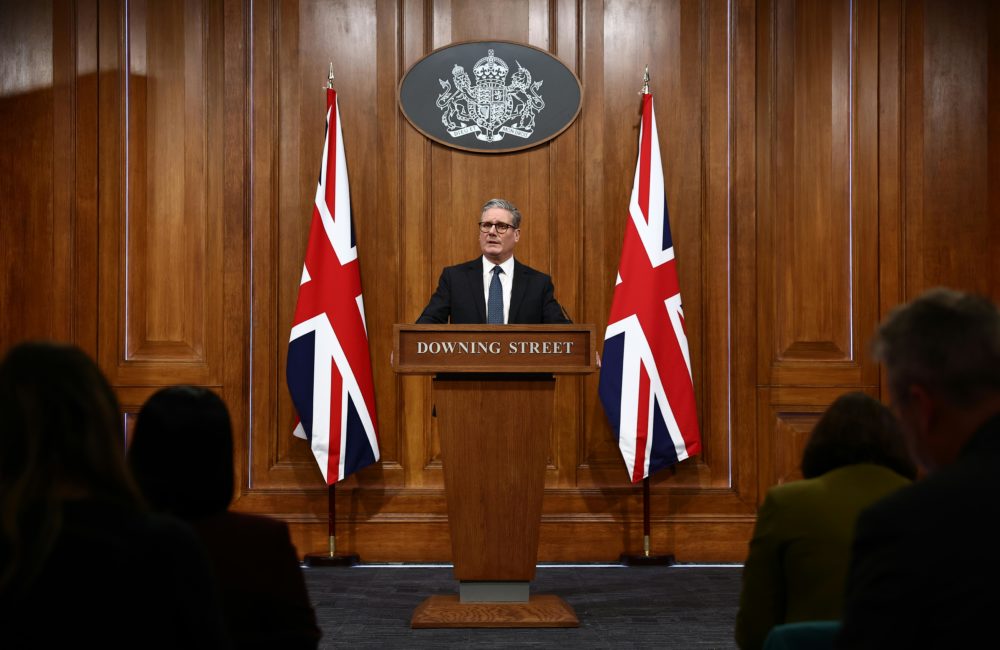
The Prime Minister responded to Rudakubana’s 52-year sentence by suggesting that terrorism had changed. The implication was that its legal definition doesn’t protect against lone operators.
That is a real concern. Online radicalisation is a serious problem that sees terrorists inspired by extreme Islamists, the far right, and incel groups to commit crimes without direct involvement from the groups themselves.
The lack of a formal conspiracy means it is difficult to prosecute these crimes under terrorist legislation.
Why though, would Keir Starmer bring this up in relation to Axel Rudakubana? There is no evidence of an ideological component to his crimes; he has no connections to terrorist groups aside from using practical information from Al Qaeda that is available to anyone; he has made no demands of the UK government. As far as we know, he simply wanted to kill people.
If crimes such as Rudakubana’s are designated as acts of terrorism it would extend police powers dramatically. We would, in effect, be saying that individual wickedness is an act of war for which we should all surrender a portion of our liberties.
Whilst the appeal of that to government, especially one led by a prosecutor, is obvious, it’s hard to see why it is supported by the supposed libertarians of the new right.
By racializing a tragedy, they have allowed themselves to be complicit in the very state overreach they pose to abhor. Nigel Farage claimed that ‘This barbaric and senseless attack was clearly both political and ideological.’
There is no evidence at all for that and the confluence of Farage’s nativism with Starmer’s statism is an outcome we should be worried about. As traumatic as the events in Southport were, we must not be manipulated into victimhood ourselves.
Support our Nation today
For the price of a cup of coffee a month you can help us create an independent, not-for-profit, national news service for the people of Wales, by the people of Wales.
Get more trusted Welsh news
Choose Nation.Cymru as a preferred source in Google News to see more of our journalism.
