


Wed, 22nd July Cardiff 25°
Nation.Cymru wordmark
Advertisement

Opinion

Rhun ap Iorwerth kicks the independence can down the road
By Mark Mansfield
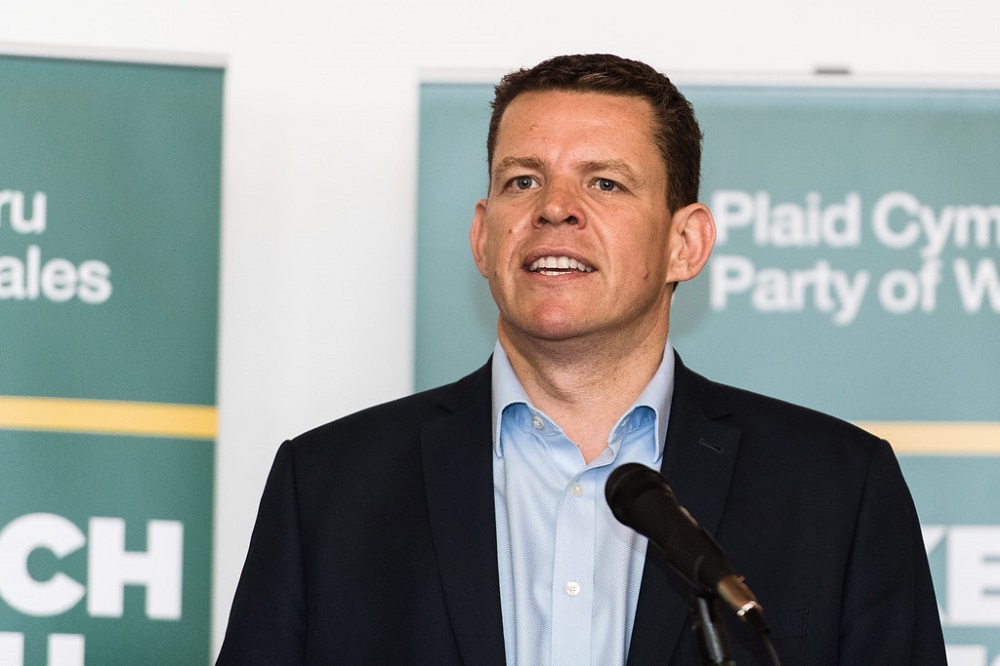
Rhun ap Iorwerth. Photo by Plaid Cymru

Martin Shipton

Plaid Cymru under its current leadership has kicked independence down the road, it seems.

That’s the only realistic way to interpret Rhun ap Iorwerth’s latest keynote speech.

It’s a long way from the heady days when Adam Price was leader and advocated a referendum on Welsh independence in around 2030, during what he hoped would be Plaid’s second term in government.

Such plans came unstuck, of course, primarily because Plaid came nowhere near winning the Senedd election in 2021. In fact, Labour did so well that not even Plaid’s Plan B - being junior partner in a coalition with Labour - was an option.

Adam Price’s plan - always ambitious - was to outshine the uncharismatic Mark Drakeford during the election campaign and form a minority Plaid administration. Covid put a stop to that, and Mr Drakeford became, for a while, a kind of anti-charismatic hero in contrast to Boris Johnson, who lost his lustre.

When Mr Price quit the leadership because of internal party issues relating to sexual harassment, Rhun ap Iorwerth was drafted in as his calming but competent successor. He spent the rest of 2023 trying to rebuild Plaid’s credibility and is now setting out his stall on the single issue that defines Plaid Cymru: how to deliver independence for Wales.

[mid-content-banner]

Cautious

It’s no surprise that Mr ap Iorwerth is being cautious - that, after all, is why the party called on him to settle things down after a traumatic period. But the inevitable corollary to that is that he won’t be making bold claims about wanting a referendum any time soon. He’s among the corps of realistic nationalists. He gets the message from opinion polls, which is that despite an increase in support for independence over the last few years, there needs to be a lot more movement before there is any chance of victory.

That’s why in his latest speech he describes the road to independence as “a journey”. It certainly is - and a much longer journey than travelling by road or rail from Ynys Môn to Cardiff, something Mr ap Iorwerth has had to get used to since the flights ceased.

He takes as his starting point the findings of the Independent Commission on the Constitutional Future of Wales, chaired by Laura McAllister and Rowan Williams, and draws on Plaid’s own Commission on Independence, published while Adam Price was leader.

Mr ap Iorwerth takes comfort from the fact that the McAllister-Williams commission concluded that independence was “viable”, although it says other things, including that in the short term an independent Wales would be likely to face financial problems. Indeed, Plaid’s own commission said as much too, leaving open the question of whether a referendum could be won on such a prospectus.

Gordon Brown

It’s no surprise that a Plaid leader would prefer the recommendations of the McAllister-Williams commission, including justice, policing, broadcasting and railway infrastructure, than the more modest offerings of youth justice and probation put forward by Gordon Brown in his report for the Labour Party and taken on board by the Shadow Cabinet in advance of the general election, as Shadow Welsh Secretary Jo Stevens has made clear.

It’s difficult to imagine Ms Stevens or another Labour Welsh Secretary arguing the case in a future Starmer-led Cabinet for a referendum on Welsh independence, regardless of the circumstances. That, doubtless, is why Mr ap Iorwerth is so keen to get the right to call such a referendum transferred to the Senedd. Best of luck with that!

The bulk of the Plaid leader’s latest speech is a re-presentation of pro-independence arguments outlined in Plaid’s commission, with a few updates. The key issue of affordability rests on research carried out by the Irish academic John Doyle. Mr ap Iorwerth told his audience in the Senedd’s Pierhead Building: “Wales’ fiscal gap is generally estimated at £13.5bn.

However, Professor Doyle’s analysis of its main components – including pensions, UK national debt repayments, and defence spending, together with under-estimates of Wales’s share of tax revenues – has found that the parts of these that would likely transfer to an independent Wales would actually amount to around £2.6bn. At around 3% of GDP, this would give Wales a fiscal deficit well within European norms on day one of its independence.

“Doyle has gone on to argue that an independent Wales proceeding from this baseline would be fiscally sustainable in the medium term. Accounting for a range of plausible growth trajectories and options for public spending, and assuming a pathway to eventually rejoining the EU, Professor Doyle’s modelling shows that in 8 out of 9 scenarios, an independent Wales could run a balanced budget by year 15.

“Crucially, this would create the fiscal headroom that an independent Wales would need to develop and implement new social policies: new measures to further grow and green our economy, spread wealth more fairly, and invest in our people. Doyle emphasises the need, for example, to invest in education, training and skills. This is something that independence would give us greater space to do more effectively, as has been done in Ireland.”

Critics

Mr ap Iorwerth acknowledges that there have been criticisms of Prof Doyle’s calculations. Critics have indeed scoffed at the assumption that the UK Government would be prepared to continue paying pensions to citizens of an independent Wales.

In terms of what currency an independent Wales would use, Mr ap Iorwerth relies on the research of Thibault Laurentjoye, an assistant professor of economics at the University of Aalborg in Denmark. Laurentjoye “suggests that the particular nature and needs of the Welsh economy lend themselves to the introduction of a new, independent Welsh currency, live as of day one of independence.

This would give an independent Wales greater financial flexibility and control over its macroeconomic policy than would be afforded by a currency union – either formal or informal – with England. An independent currency and the power to adjust exchange rates could, for example, help to make our exports more competitive on global markets. A new Welsh Central Bank, supported by a range of other new financial institutions, would provide financial stability by acting as a lender of last resort.”

These ideas are interesting, but creating a new currency is fraught with difficulty because international lenders will probably charge higher interest rates than they would if the pound were retained. That, however, would deprive a newly independent Wales of fiscal flexibility.

Borders

The third piece of independent research cited by Mr ap Iorwerth is that on borders by Professors Katy Hayward and Nicola McEwen. who argue that “across a range of different policy areas, managing cross-border differences in approach is already an established fact of life for these people and businesses. In areas like health, education, transport and many more besides, policy is already different in England and Wales. To put it slightly differently, Wales already manages its borders, including with England. And developing a new border regime for an independent Wales would be building on existing practices and established precedents.”

But Plaid’s hope, of course, is for Wales to rejoin the EU. At a time when additional restrictions are being introduced on cross-border trade in food products between the UK and the EU, it seems unlikely that there would be seamless trade between an independent Wales and England, if the latter continues to wallow in its Brexit isolation.

Mr ap Iorwerth acknowledges that the road to independence will be complicated. It will, of course, be a journey rather than an instantaneous transformation. To help us along the journey, he suggests the establishment of yet another talking shop. This one will be called the National Commission.

He said: “These are questions on which the hard work of evidence-gathering, analysis and debate must continue. I would therefore call this evening for the creation of a standing National Commission, charged with analysing the full range of options for Wales’ future as they continue to evolve, and with monitoring relevant political and economic trends on an ongoing basis.”

This sounds, it has to be said, remarkably like a way of kicking the independence can down the road. But will it be enough for the party faithful, who have somehow retained their patience for 99 years since Plaid Cymru was founded by six men in a cafe in Pwllheli?

For the price of a cup of coffee a month you can help us create an independent, not-for-profit, national news service for the people of Wales, by the people of Wales.

Get more trusted Welsh news

Choose Nation.Cymru as a preferred source in Google News to see more of our journalism.

Choose Nation.Cymru as a preferred source in Google News

14 comments

Padi Phillips

Marketing the idea of independence is vital, and nothing succeeds more than success, so in the short term a Welsh Government of any hue needs to focus on the needs of the here and now. At best just a third of the electorate supports independence, so it would be highly likely that any referendum stage prematurely would fail to deliver independence and perhaps turn back the tide of independence. Justice, policing, broadcasting and the railways certainly need to be brought under the control of Cardiff Bay, with broadcasting perhaps being a particularly important power, along with developing a media strategy for the country, maybe reflecting Norway where the media receives government grants to maintain the democratic balance. So many citizens are virtually clueless about what makes the country tick, and are probably more aware of what happens in Westminster than they are about what is going on in Cardiff Bay. Justice and policing are areas that would have eventually to be devolved in any case; as time goes on there is developing a body of Welsh law that diverges from that of England. Both Scotland and Northern Ireland have control over justice and policing, so why not Wales too? Hopefully Plaid will increase its representation in the Senedd in 2026, but the likelyhood is that we will, once again have a Welsh Labour government, but if this is the case Plaid needs to remain alert and ready to pounce in loud criticism while at the same time supporting any progressive and positive policies being presented by the Welsh Government. Maybe, if over time the important things like education and healthcare get measurably better, (and these need to be a priority) people will rally and want to safeguard them, and much would need to be made of this, because surely in 2029 we'll be facing another government by the Tory wreckers as I can't see Starmer's Labour being anything but a one trick wonder. Hopefully there will be a hung parliament and there has to be a Labour/SNP coalition. Starmer has thus far ruled out such, but he may face a stark choice of accepting that or letting in another Tory party, only this time a Tory party far worse than anything we have yet seen. At least with a Labour/SNP coalition we might see more action on the kinds of investment needed at a UK level, that the very wealthy and global corporations get taxed properly and that some of the more egregious Tory laws abolished. If the political and economic environment were positive and people feel upbeat about their lives maybe they'll feel a little more confident in putting a little more faith in being able to rule themselves?

Reply
Rob

I don't think we should rule out the possibility of a Labour/Lib Dem coalition in the event of a 2028/29 hung parliament. According to Electoral Calculus they are predicted to make gains at the next election, and if the tories continue to lurch further to the right then the Lib Dems will continue take votes away from them, including moderates who were purged by Boris Johnson.

Reply
Annibendod

Perhaps it's me but I can't see the name of the author of this opinion piece - who wrote this? I would very much like to know. It reads as though it is somebody with an axe to grind. Shall we say that the author is rather stingy in acknowledging what Plaid has achieved during its existence? This criticism of Rhun's approach strikes me as rather disingenuous. There's a particular bent to the narrative being portrayed here. Rhun is fully aware that building a democratic mandate is precisely what is necessary to achieve our independence. His speech is precisely about that. Has the author not appreciated the Welsh political landscape? Softly, softly eh? ... I mean, he could promise the Earth like Adam did. I guess Adam raised the profile, but it wasn't what I'd call a S.M.A.R.T. target. Clearly that didn't work as the author mentions - so why berate Rhun on a different political strategy? The goal is as clear as it ever was - A Democratic Welsh State. Rhun is looking to bring the Welsh electorate as well as political establishment with him as opposed to trying to force the issue. Sounds sensible to me. In the end, what will put a rocket under Plaid's efforts to win our Statehood is a mandate at the ballot box. So if you are in favour of independence, help make that happen. Because when Plaid holds the majority in Wales, the conversation changes and the imminence of our national emancipation will be upon us. This opinion piece reads like a petty jab in the sides. Is the author a member of Lab4IndyWales perchance? If you want Welsh Independence you wouldn't support such a loudly professing unionist party would you? How many times do we need to see Keir Starmer wrapped in a Union Jack before the penny drops?

Reply
Annibendod

Ah, I see it's been updated - it's Martin Shipton. A very one-sided take this Mr Shipton. I don't agree with your conclusion. Rhun and Plaid generally are building the case for our Statehood. Knocking over the next domino in the row is the political task of the here and now. We've come a long way. The next big battle is to wrest from Westminster the means of shutting down our Parliament without our mandate or consent. That was a huge point in the report. Plaid will keep on fighting for Wales as we always have.

Reply
KC Gordon

...' a new Welsh Central bank'.. - of last resort? - so where would it get gold from?

Reply
Mab Meirion

Plenty left in these hills around me, get your picks and shovels from TH's...

Reply
Richard Davies

Central banks don't need to hold any gold. Britain left the "gold standard" in 1931. Most European countries left it in 1932 and the usa did the same in 1933. By 1971, most countries of the world had dropped the "gold standard" (it became official throughout the international monetary system in 1976) with money becoming "Fiat currency." See: https://en.m.wikipedia.org/wiki/Gold_standard https://en.m.wikipedia.org/wiki/Fiat_money

Reply
Iago Traferth

We used to have a lot more gold until the Gordon gave it away.

Reply
Rob

I believe in independence however I also believe that a referendum is not going to be winnable until at least Scotland goes. Whatever concerns Welsh voters will have in regards to the currency, pensions or border regimes with England will have to wait to see what an independent Scotland would look like for an answer. These are of equal concerns to Scottish voters as they are to us, however in terms of negotiating an independence settlement the Scots will have more bargaining power than we will. Scotland has more natural resources and are of strategic military importance for NATO. Once a settlement has been negotiated then the precedence has been set for us to follow. If its good enough for Scotland than its good enough for Wales.

Reply
Rob

For the meantime Plaid's should be demanding fairness for Wales, to have the same level of autonomy powers as Scotland and Northern Ireland. Parity with everyone else.

Reply
Dr John Ball

In the meantime Plaid should be presenting sensible policies to make Cymru a better place now, while building the case for independence. Your comment - whilst quite genuine - simply reinforces the party's begging bowl mentality.

Reply
Annibendod

Plaid have been making that point for quite some time Rob. And I disagree with John. The party has to win a mandate at the ballot box for independence. We have to adapt to the political landscape. Plaid cannot be all things to all people. It has to navigate public opinion. What it is doing IMHO is consistently making the case for Wales increasingly governing its own affairs and it has more than played its part in us proceeding down that road. John does make some very good points on currency/economy/timing. As the UN says wrt colonialism - lack of preparedness is not an excuse for witholding Statehood. However if the Welsh electorate is not prepared, that is a different matter which is to what you allude and yes, of course as I said, something to be navigated.

Reply
Dr John Ball

Why wait for Scotland - why wait for anybody??

Reply
Dr John Ball

This article - and Iorwerth's speech - raises any number of issues but a few need an response. The first is the party's stance on independence. Of course there is not going to be a referendum tomorrow or the day after, but that does not stop Plaid Cymru being totally unequivocal in seeing a sovereign state as the future. The speech suggests another agenda: quietly drop independence, why otherwise call for a commission when one has just reported? The parts of the speech on the economy need correction. First, it is likely that the new independent state would face some financial difficulty, but this was true of all the newly independent states in Europe - and look at them now! The fiscal deficit is NOT £13.5bn, the report from Doyle commissioned by P C suggested a deficit in the region of £2.5bn, reflected in my research. Budget deficits incidentally are dynamic, my research suggested a deficit in the region of £1bn before covid, but this has risen recently as a result of the pandemic and will almost certainly reduce over time. The content on currency is nonsense. The new independent state can continue to use the pound sterling and it would be to our advantage to do so. This may not suit the purists, but this reality! A Central Bank would be needed to undertake the duties associated with such a bank even though a non-domestic currency is used, as in the case in Europe. Yet again Plaid Cymru has missed the point. It should be leading the discussion on the one, simple issue - independence. As ever it is trailing behind.

Reply

Leave a reply

Replying to Dr John Ball Cancel

In the meantime Plaid should be presenting sensible policies to make Cymru a better place now, while building the case for independence. Your comment - whilst quite genuine - simply reinforces the party's begging bowl mentality.

Comments are reviewed before they appear.