


Opinion
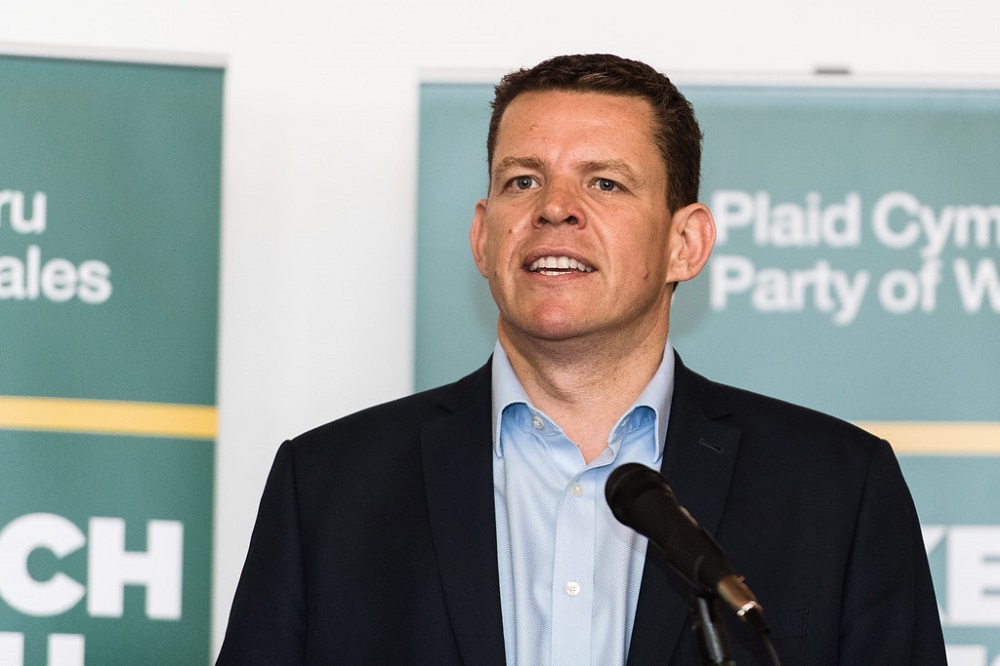
Rhun ap Iorwerth kicks the independence can down the road
Martin Shipton
Plaid Cymru under its current leadership has kicked independence down the road, it seems.
That’s the only realistic way to interpret Rhun ap Iorwerth’s latest keynote speech.
It’s a long way from the heady days when Adam Price was leader and advocated a referendum on Welsh independence in around 2030, during what he hoped would be Plaid’s second term in government.
Such plans came unstuck, of course, primarily because Plaid came nowhere near winning the Senedd election in 2021. In fact, Labour did so well that not even Plaid’s Plan B - being junior partner in a coalition with Labour - was an option.
Adam Price’s plan - always ambitious - was to outshine the uncharismatic Mark Drakeford during the election campaign and form a minority Plaid administration. Covid put a stop to that, and Mr Drakeford became, for a while, a kind of anti-charismatic hero in contrast to Boris Johnson, who lost his lustre.
When Mr Price quit the leadership because of internal party issues relating to sexual harassment, Rhun ap Iorwerth was drafted in as his calming but competent successor. He spent the rest of 2023 trying to rebuild Plaid’s credibility and is now setting out his stall on the single issue that defines Plaid Cymru: how to deliver independence for Wales.
[mid-content-banner]
Cautious
It’s no surprise that Mr ap Iorwerth is being cautious - that, after all, is why the party called on him to settle things down after a traumatic period. But the inevitable corollary to that is that he won’t be making bold claims about wanting a referendum any time soon. He’s among the corps of realistic nationalists. He gets the message from opinion polls, which is that despite an increase in support for independence over the last few years, there needs to be a lot more movement before there is any chance of victory.
That’s why in his latest speech he describes the road to independence as “a journey”. It certainly is - and a much longer journey than travelling by road or rail from Ynys Môn to Cardiff, something Mr ap Iorwerth has had to get used to since the flights ceased.
He takes as his starting point the findings of the Independent Commission on the Constitutional Future of Wales, chaired by Laura McAllister and Rowan Williams, and draws on Plaid’s own Commission on Independence, published while Adam Price was leader.
Mr ap Iorwerth takes comfort from the fact that the McAllister-Williams commission concluded that independence was “viable”, although it says other things, including that in the short term an independent Wales would be likely to face financial problems. Indeed, Plaid’s own commission said as much too, leaving open the question of whether a referendum could be won on such a prospectus.
Gordon Brown
It’s no surprise that a Plaid leader would prefer the recommendations of the McAllister-Williams commission, including justice, policing, broadcasting and railway infrastructure, than the more modest offerings of youth justice and probation put forward by Gordon Brown in his report for the Labour Party and taken on board by the Shadow Cabinet in advance of the general election, as Shadow Welsh Secretary Jo Stevens has made clear.
It’s difficult to imagine Ms Stevens or another Labour Welsh Secretary arguing the case in a future Starmer-led Cabinet for a referendum on Welsh independence, regardless of the circumstances. That, doubtless, is why Mr ap Iorwerth is so keen to get the right to call such a referendum transferred to the Senedd. Best of luck with that!
The bulk of the Plaid leader’s latest speech is a re-presentation of pro-independence arguments outlined in Plaid’s commission, with a few updates. The key issue of affordability rests on research carried out by the Irish academic John Doyle. Mr ap Iorwerth told his audience in the Senedd’s Pierhead Building: “Wales’ fiscal gap is generally estimated at £13.5bn.
However, Professor Doyle’s analysis of its main components – including pensions, UK national debt repayments, and defence spending, together with under-estimates of Wales’s share of tax revenues – has found that the parts of these that would likely transfer to an independent Wales would actually amount to around £2.6bn. At around 3% of GDP, this would give Wales a fiscal deficit well within European norms on day one of its independence.
“Doyle has gone on to argue that an independent Wales proceeding from this baseline would be fiscally sustainable in the medium term. Accounting for a range of plausible growth trajectories and options for public spending, and assuming a pathway to eventually rejoining the EU, Professor Doyle’s modelling shows that in 8 out of 9 scenarios, an independent Wales could run a balanced budget by year 15.
“Crucially, this would create the fiscal headroom that an independent Wales would need to develop and implement new social policies: new measures to further grow and green our economy, spread wealth more fairly, and invest in our people. Doyle emphasises the need, for example, to invest in education, training and skills. This is something that independence would give us greater space to do more effectively, as has been done in Ireland.”
Critics
Mr ap Iorwerth acknowledges that there have been criticisms of Prof Doyle’s calculations. Critics have indeed scoffed at the assumption that the UK Government would be prepared to continue paying pensions to citizens of an independent Wales.
In terms of what currency an independent Wales would use, Mr ap Iorwerth relies on the research of Thibault Laurentjoye, an assistant professor of economics at the University of Aalborg in Denmark. Laurentjoye “suggests that the particular nature and needs of the Welsh economy lend themselves to the introduction of a new, independent Welsh currency, live as of day one of independence.
This would give an independent Wales greater financial flexibility and control over its macroeconomic policy than would be afforded by a currency union – either formal or informal – with England. An independent currency and the power to adjust exchange rates could, for example, help to make our exports more competitive on global markets. A new Welsh Central Bank, supported by a range of other new financial institutions, would provide financial stability by acting as a lender of last resort.”
These ideas are interesting, but creating a new currency is fraught with difficulty because international lenders will probably charge higher interest rates than they would if the pound were retained. That, however, would deprive a newly independent Wales of fiscal flexibility.
Borders
The third piece of independent research cited by Mr ap Iorwerth is that on borders by Professors Katy Hayward and Nicola McEwen. who argue that “across a range of different policy areas, managing cross-border differences in approach is already an established fact of life for these people and businesses. In areas like health, education, transport and many more besides, policy is already different in England and Wales. To put it slightly differently, Wales already manages its borders, including with England. And developing a new border regime for an independent Wales would be building on existing practices and established precedents.”
But Plaid’s hope, of course, is for Wales to rejoin the EU. At a time when additional restrictions are being introduced on cross-border trade in food products between the UK and the EU, it seems unlikely that there would be seamless trade between an independent Wales and England, if the latter continues to wallow in its Brexit isolation.
Mr ap Iorwerth acknowledges that the road to independence will be complicated. It will, of course, be a journey rather than an instantaneous transformation. To help us along the journey, he suggests the establishment of yet another talking shop. This one will be called the National Commission.
He said: “These are questions on which the hard work of evidence-gathering, analysis and debate must continue. I would therefore call this evening for the creation of a standing National Commission, charged with analysing the full range of options for Wales’ future as they continue to evolve, and with monitoring relevant political and economic trends on an ongoing basis.”
This sounds, it has to be said, remarkably like a way of kicking the independence can down the road. But will it be enough for the party faithful, who have somehow retained their patience for 99 years since Plaid Cymru was founded by six men in a cafe in Pwllheli?
Support our Nation today
For the price of a cup of coffee a month you can help us create an independent, not-for-profit, national news service for the people of Wales, by the people of Wales.
Get more trusted Welsh news
Choose Nation.Cymru as a preferred source in Google News to see more of our journalism.
