


Thu, 23rd July Cardiff 20°
Nation.Cymru wordmark
Advertisement

Opinion

Reopening the Carmarthen to Aberystwyth railway line - the economic case doesn't stack up
By Mark Mansfield
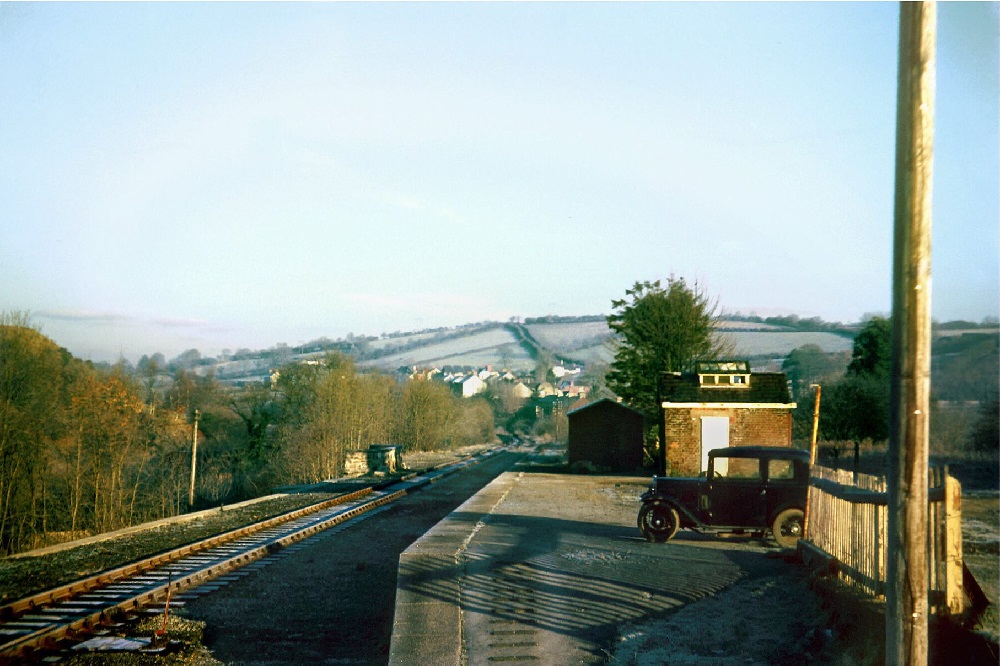
The remains of Pencader station in 1970 when it was still open for freight. Photo by Roger Joanes is licensed under CC BY-NC-ND 2.0.

Professor Stuart Cole, CBE, Emeritus Professor of Transport Economics and Policy , University of South Wales

Since the Carmarthen to Aberystwyth railway line was closed following the mass cull of Wales’ railways  in the 1960’s, there have been demands to reopen it. Those demands are based on the low level of transport investment in rural compared with urban areas. It is, though,  a railway passing through beautiful countryside and historic sites.

The first passenger service reduction in 1951 saw stations on the Aberaeron branch  close . The main line north of Pont Llanio station (near Llanddewi Brefi) to Aberystwyth lost its passenger stations and was closed in 1965. Although milk trains continued until 1973 on the southern section to Carmarthen.

As a resident and native of Carmarthenshire nothing would please me more than a north – south railway entirely within western Wales as was available up to the 1960’s for south Wales industrial families holidaying at Butlin’s Holiday Camp at Penychain (Pwllheli). However as an economist I take the potential funders view.
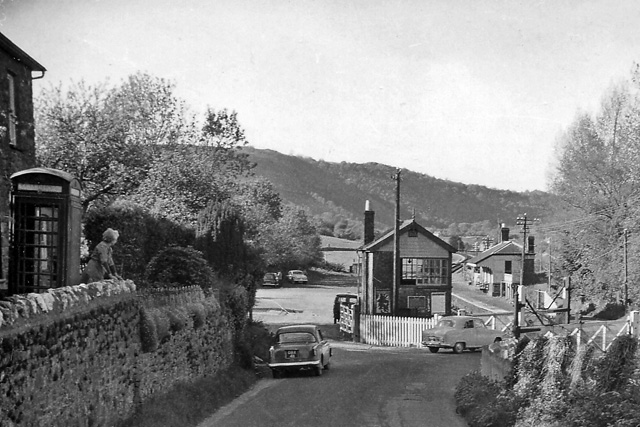
Bronwydd Arms Station. Photo by Ben Brooksbank is licensed under CC BY-SA 2.0.

The line’s financial fate had already been sealed at its inception in 1860. This was the period of ‘railway mania’ and the pressure was on to build a railway line, as the means to economic prosperity,  supported financially by local farmers, landowners and wealthy business people to move their agricultural produce to growing urban markets.

[mid-content-banner]

Unviable

The original route from Carmarthen to Llangurig on the Mid Wales Railway was changed to Aberystwyth as its destination because the cost of construction, (even with a single track) and some of the gradients (up to 1 in 30) made the original scheme unviable.

Funding was not easy to raise then for a scheme with low possibilities of freight and passenger traffic.

Directors were continuously seeking investment funds. This reflects the present economic viability of a possible reopening.

Indeed the line was initially opened illegally having been refused authorisation in1865, though ‘friends in high places’ seem to have achieve Board of Trade acceptance in 1866.

Unfortunately, by 1857 the competing Heart of Wale Line (HoWL) had been completed to perform the same link from the north of England to west Wales.

There the new deep-water port of Neyland had been developed by the Great Western Railway. The line from Shrewsbury to Neyland had been secured and Manchester cotton merchants saw the possibility of breaking the Manchester Ship Canal monopoly linking Manchester to its  ports.
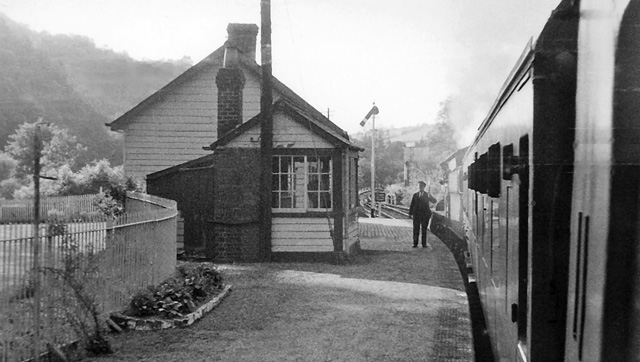
Conwil railway station. Photo by Ben Brooksbank is licensed under CC BY-SA 2.0.

It has even been suggested that Parliament should not have authorised another line with a low-density population along its route serving almost the same market as the Heat of Wales Line.

The HoWL route had the added advantage of investment from the Great Western (to Llandeilo) and London and North Western railway companies.

UK Treasury

Let’s move forward 160 years to 2023 and consider whether the Carmarthen – Aberystwyth Line should receive  £800m (in 2018 prices – now over £1bn) to provide a modern diesel-powered rail service.

Rail investment is an expensive activity.

Funding reopening would fall to the UK Treasury using the 5-case business case process. The benefit cost ratio would come well below the Treasury bean-counters minimum economic case despite the strategic case now having greater importance.

One might argue that were rail investment devolved to the Welsh Government, it might look more-kindly upon this scheme. However our government has embarked on its biggest rail investment project – the south east Wales metro (Valley Lines to everyone else).

Here the same amount of investment funding (ÂŁ1 bn) will generate a far greater strategic and economically acceptable return. And Welsh Government, like the Treasury, has many other capital schemes in health or education to consider.

The operating subsidy would also come from Welsh Government and that, in today’s financial climate, is unlikely.

The cost / revenue reality of reopening a railway line disused for sixty years is not dissimilar to the economics of a new line. There may be parts of the formation still in place but this is merely a piece of land measuring fifty-one miles (82km)  by 100 yards (91 m). This has advantages in that compulsory purchase of land may not be required if in the ownership of the British Railways Board Residuary Authority.
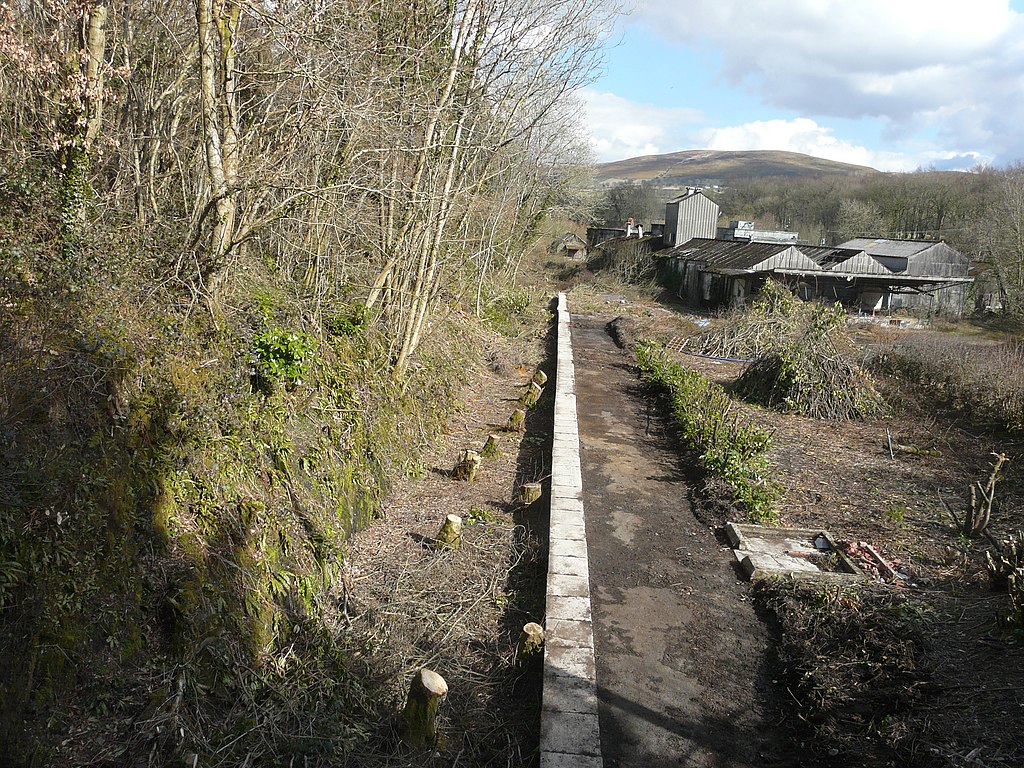
The remains of Llanio Station platform. Photo by John Baker is licensed under CC BY-SA 2.0.

However, some key sections are not. This includes the approach to Aberystwyth station with commercial buildings  and the Vale of Rheidol Railway workshops; and the Gwili Railway which owns nine miles (17.6%) of the track length.

The Gwili is one of Wales’ most successful heritage railways and with its 20,000 passengers annually provides a significant contribution to the local economy. Its operations are not compatible with TfW main line services.

Structures such as bridges or embankments are in a poor state or have been demolished for safety reasons. In a similar railway proposal (2012)between Monmouth and Chepstow my study for Welsh Government showed the line of route was there but required total rebuilding of embankments and bridges. Parts had been sold or "unofficially" built upon.

Demographics

The demographics, low population density and  high car ownership would take some time to attract regular travellers and farebox income to satisfy (with revenue support) reasonable economic and financial cases.

The most appropriate north-south strategic rail route from Swansea to North Wales is via Cardiff and the Marcher Line. The Bangor – Cardiff  journey time could be reduced to three hours from Bangor and to Swansea in four hours. This is achieved through re-signalling, track straightening and higher track speeds on the Marcher Line and North Wales Main Line.

In 2010 Welsh Government commissioned me to consider how best to provide affordable rural public transport on the most effective and economically justified transport mode. This, for the Carmarthen – Aberystwyth route continues to be a modern comfortable bus / coach service on an hourly service frequency as provided by TrawsCymru for both local and long-distance demand.

Major investment in electric buses has recently been made.

The route providing the best passenger revenue, serving most people is along the coast via Aberaeron and Lampeter and not via Tregaron. With key bus priority measures on that route a journey time would be compatible with a single-track railway but for little cost.

The early history of this line tells us that it was a financial mistake from the beginning as it was built for freight not passenger traffic and not enough of either.

As I have said previously the economic justification for the line is a long way off, if at all.

For the price of a cup of coffee a month you can help us create an independent, not-for-profit, national news service for the people of Wales, by the people of Wales.

Get more trusted Welsh news

Choose Nation.Cymru as a preferred source in Google News to see more of our journalism.

Choose Nation.Cymru as a preferred source in Google News

78 comments

hdavies15

If the roads were improved then the case for exclusive funding of even more bus services would dominate the debate. However Wales Gov is adamant that spending on roads is some kind of taboo so making it a bit easier to run regular reliable buses with feeders from likes of Tregaron, Llandysul, Castell Nweydd and Aberteifi will be off the table for ever. So Prof Cole get on with twisting Lee Waters' arm because his head isn't picking up on the problems with his present policy position.

Reply
Mab Meirion

So that's it... For a country world famous for its rail network, to not image outside the firebox is once again small beer thinking... Telford, himself, recognised that railways were going to be a lost leader and in truth only the heritage lines pay and then with help from the volunteers. It is treasure of a different kind that is created...

Reply
Gareth

Mean while all the major European economies are upgrading the railways and looking to increase the movement of freight from road to rail, and investing in electrification. The UK stand alone as the only economy in Europe who insist the railways turn a profit, and do not look at them as a means of transport for people and goods for the benefit of society as a whole. The money saved on road building and less emissions from less road traffic eventually benefits the whole of society.If it is good enough for Germany, Spain, Italy, France, all of them own the railways, why not Cymru.

Reply
George Thomas

You've given the case for what was and what is now but not what could be. Are there any models which predict what would happen to local economy if rail network was invested in? If the decision making tree goes as "there isn't sufficient activity here - the costs now are too great - we shouldn't invest here," then you're ignoring that the final outcome which inevitably is "activity will struggle to grow here." I'm not saying that considering this will make investment in this line worthwhile, arguably buses are the way forward rather than trains due to growing climate emergency and how our rail tracks already struggle in the heat, but parroting Westminster's line for not investing in Wales isn't all that.

Reply
Vahan

Absolutely not, we need to revolutionize our railways. Switzerland has done it, even in the most remote areas over a century ago. Climate change will also affect the heat of roads and tyres. Trains fit more people than buses, meaning there's less of a call for more frequent services if trains are made longer. Really poor take.

Reply
Vahan

Despite this, a railway is still necessary, a north-south corridor is vital. Let's be real, nobody will take this article seriously.

Reply
hdavies15

"A north south corridor" or maybe 2 or 3 corridors. Like Carms > Aber > Bangor in the west, Swansea > Builth > Wrexham on the SW-NE axis, and say Cardiff > Builth > Llandudno up the middle. All this needs a commitment to improving roads, some wit and imagination on use of rail and a lot less Cardiff-centred decision making where anything beyond the line of sight of the myopic Bay cliques gets no priority.

Reply
Avran

One corridor would be good, two or three would be fantastic, viable and beneficial.

Reply
Graham Hall

How many countries have a railway system where, to get from one end of the country to the other, you have to travel via a neighbouring country? Where is our national pride? The Aberystwyth-Carmarthen line would be a component of a Cardiff-Bangor link, so would be used by passengers making a variety of journeys between south-, mid- and north Wales. If this is seen to be a convenient way to travel for work and leisure, it will soon increase in popularity - like the recently restored railway from Edinburgh into the Scottish borders.

Reply
Evan Aled Bayton

The railway in Mid Wales did not break the Manchester Ship Canal monopoly. The Ship Canal was the end stage in various projects aimed at freeing East Lancashire and its cotton industry from the extortionate tolls and charges of the Mersey Docks and Harbour Board. One mid Victorian estimate was that it cost 25/- a ton to send calico goods to Calcutta of which 19/6d was the cost of getting it onto the ship. The 5/6d was the cost of the rest of the journey! The Manchester Ship Canal opened in 1896. There is an Illustrated London News picture of the Lord Mayors of Liverpool and of Manchester paying homage to Queen Victoria. Liverpool looks anxious and Manchester is grinning like a Cheshire Cat. The southern part of the railway from Llanybydder on seems to have been used to carry cattle and other livestock from a railhead. The Aberaeron branch opened in 1912 as I recall. My Mamgu had a day off school to celebrate. It had been opposed by the mariners who believed it would destroy their trade. It never extended to Llanarth and New Quay as intended and stopped short of the harbour in Aberaeron. The whole railway did have some use for tourist specials - I have seen a poster for a miners’ holiday special to take holidaymakers from Newport and South Wales stations to Pwllheli on holiday for a fortnight. Likely you would need that time to recover from the journey which took about 12 hours or three thermoses.

Reply
Gareth

I just remembered.What everybody is forgetting here, is the fact we have been told, by Labour and Tory UK Govs and by Labour in Cardiff ( Mark Drakeford Nov 2022 to Al Jazeera news), that we have a unique geogrgraphy in Cymru, that makes it almost impossible to build a railway, south/ north. If we 0nly we had the terrain of say, Switzerland or maybe Nepal or India, it would be oh so simple, and we would already be travelling by train. Silly me.

Reply
wayne

whilst the article talks of viability, consideration should be given to tourism. Allow the Gwili Railway society to have the land to develop the railway at a pace that is sustainable. Again we hear of the East - West divide. How about upgrading the Hart of Wales Line. Extending a metro System up the Amman Valley and around to the Swansea Valley. This would then give a choice to commuters between 20 mph traffic congestion and a modern train commute.

Reply
Philip Owen

Agree. Llandeilo and south should be part of the Metro area. Rich people live in Llandeilo. They will travel by train but not bus.

Reply
Gaynor Jones

Old rich retired people won't maintain a train service.. young and middle aged communters will

Reply

In reply to Gaynor Jones

AntonJacques

Funny that Aberystwyth and Lampeter have universities. I would say they'd use trains a lot

Reply

In reply to AntonJacques

Gaynor Jones

There are hardly any students in Lampeter. The university is more like a shell company these days than a centre of learning

Reply
Richard Thomas

Mid and West Wales is always going to come last in these situations, sparsely populated and remote. The focus is always going to be where the people and (therefore the votes) are. Which is why the UK is ruled for the primary benefit of South East England, the same principle applies in Wales (I'm surprised nobody has yet called for an independent Powys, give it time). Having said that, the TrawsCymru bus service is vastly superior just about anything you'd find in England these days. I frequently make use of it, you can have some good days out and the fares are very reasonable.

Reply
Philip Owen

The line connects all the former colleges of the University of Wales and a number of other Universities as well. In this time of low carbon travel policies the education sector alone will generate traffic not previously considered. This is not just for academics. Whole sports teams can get drunk and still travel home with sensible weekend timetabling. The whole public sector has low carbon policies. Beyond that, Aberystwyth becomes a much more viable destination for All Wales meetings and conferences. This will damage Llandrindod but the consolidation will generate new rail traffic for Welsh conferences in general. Restricting traffic analysis to that generated on the line itself will severely underestimate total numbers. What about Builth Road to Moat Lane Junction as an alternative? Longer journey times, less traffic generation but cheaper?

Reply
John Davies

A good deal depends on exactly what criteria are used for assessing the economic case. For instance, would the line take traffic off the roads and if so what value would be gained in reduced pollution, accidents, etc? Such externalities are often not figured in to conventional calculations of value but they affect all of us. Would the line have to be built to mainline standards, which are very expensive? A line built to light railway standards with a reduced speed limit could still offer a journey quicker and more convenient than driving, especially in the tourist season when the highways are filled with slow traffic which does not seem to understand how to drive on Welsh country roads. An agreement with the Gwili railway over shared use of the trackbed could almost certainly be reached. The North Yorkshire Moors Railway already shares the use of part of the Esk valley line to enable it to run through trains to Whitby. This is just a matter of sensible negotiation and goodwill on both sides.

Reply
Gareth

A good point about "what criteria is used", if we are talking cutting the time between travelling from the north or the midlands of England to London , money is not a problem, HS2 is up to ÂŁ100 billion already, and still counting, if its Cymru, whatever the criteria, it is going to cost too much.

Reply
John Davies

There are currently light rail vehicles under development specifically with the aim of bringing rail transport back to rural areas. They are comfortable, economical and designed to the best anti-pollution standards. They are limited to, typically, 65 mph and are designed to be safe and stable on lightly laid track. A decent rural rail network for Wales could be reconstructed for far less cost than the HST, as you point out. It's not just Caerfyrddin-Aberystwyth. How about Barmouth Junction to Ruthin? Or re-connecting Brecon with the railway network? As petrol becomes more expensive, pollution becomes even less acceptable and the full costs of a widespread shift to electric road vehicles become apparent, rail will come back into its own.

Reply
Rob

How can linking one side of the country with the other not be economically viable? Granted those living in Bangor or Llandudno would continue to use the Cardiff - Shrewsbury - Wrexham - Holyhead service, but this would connect the North West of Wales with Carmarthen and Swansea. It would also give residents of Lampeter, Tregaron and Caernarfon access to the rail network. Furthermore exactly how is reserving rail infrastructure in Wales in your interest if your a Unionist? If it was devolved and the Welsh Government came to the same conclusion as this article, then we wouldn't be able to blame the lack of a North-South rail link on the English or the Conservatives then would we?

Reply
Bill

Dr (Lord) Beeching was quite adamant that his terms of reference precluded him from at anything other than the economic aspects of British railway operating.. itay well be that so social and environmental.cpnsidetstiomd lead to different conclusions.

Reply
CapM

A Carmarthen -Aberystwyth rail link would be nice but as Professor Cole says it's not economically viable or justifiable. If built the only real beneficiaries would be tourists from outside Cymru and travel card carrying pensioners taking trips. Building a modern nation requires better use of resources than spending on the methods used and in reality overused by the Victorians.

Reply
Gaynor Jones

Can we follow the Chile model of buss transport please. No trains but fab bus service all integrated which is key to successful system and use.

Reply
wayne

Stagnating at 20 mph, or do we have a dedicated bus lane?

Reply
Gareth

I really dont see how the victorians " overused " the railway, when the only other options to get around available to the people were, the horse and cart, or the hot air balloon, not forgetting the " toll gates" one had to navigate in the 1830s.

Reply
CapM

Overused in the sense that some railway lines were built that couldn't really be justified on commercial grounds, demand or need. Over optimistic speculation, vanity projects and visceral competition between rival magnates being some of the other reasons they were built. As I've said a Carmarthen - Aberystwyth line would be nice. But with limited funds do we choose to fund transport projects that mainly benefit tourists and the part time and seasonal work they bring or projects that benefit workers and consumers in the general population year round.

Reply

In reply to CapM

Gareth

In regard to railways built with no commercial justification, during Victorian times , these were privately funded not state funded. Without infrastructure we have no jobs, lack of connectivity has been give as a reason in the past for no industrial activity in large areas of Cymru. Without spending on infrastructure we will only have seasonal and part time jobs, viscous circle, and when our funding is diverted to projects in England, HS2, we are never going to advance. Speculate to accumulate is apt for our future

Reply

In reply to Gareth

CapM

We have infrastructure in rural Cymru - roads. We have mass transport carriers - buses. Unwise spending on H2S in England doesn't mean we should spend unwisely on rural railways in Cymru.

Reply

In reply to CapM

Gareth

If you think the A470, as an example, is good enough for our infrastructure , then in terms of its suitability to handle large HGV's I think it's useless, and the buses are repeatedly complained about as not running frequently enough. The A470 would be fine for locals if we had railways able to handle the freight now hauled by HGV's. We need to upgrade, now. Isn't it both UK and Senedd policy to reduce polution and road usage? Electrified railways would do that.

Reply

In reply to Gareth

CapM

A470 is a different issue. Anyway why would a rail link between Aber and Carmarthen have much of effect on HGV traffic on the A470

Reply

In reply to CapM

Gareth

You said " we have roads" I give an example of why these roads are not good enough and we need to reopen the closed lines we have,to improve the infrastructure we badly need and connectivity between all areas of our country.. Get cars and lorries off the roads and people and freight onto trains, electrified railways are the way forward, it's what all other European countries are doing, are they all wrong.

Reply

In reply to Gareth

CapM

Roads provide access to very very much more of the places where people live, work, where goods are produced, services provided, recreation areas, educational establishments etc than railways ever did or can ever feasibly do. Railways should play an important part of our overall infrastructure and there could be good arguments for reopening some lines and even creating new ones. However opening historic lines in rural Cymru even one with significantly fewer physical and ownership constraints as the Carmarthen Aberystwyth line is difficult to justify as a priority for that area.

Reply
David Smith

Bangor is the most used station in North Wales. Something to do with the university perhaps? Two more of which sit along the putative line.

Reply
G Horton-Jones.

Provide the link between Carmarthen station track end and Glangwili hospital halt and full restoration is possible and viable. Cofiwch Aberystwyth University exists because poor people raised funds to get a better education for their children so they would not live on in colonial poverty for perpetuity Provide the link and the people will come

Reply
Bob McIntyre

Of course it doesn't stack up. Question No 1: how much would it cost to build? TfW have already proved themselves hopeless at sums with the Cardiff Metro which is already going to be nearly 1/3 over budget. Question 2: Would it be economically viable? No and for the same reason the line was closed in the first place: it services too few centres of population. Question No 3: Could TfW run it efficiently like the rest of the Welsh network? Err: that word just isn't in TfW's vocabulary. Let's take today as an example: virtually NO trains running in West Wales, and TfW unable to source buses for a replacement service. And this is not untypical: Llandovery has has just four days since last November on which all the trains ran and were on time. Pathetic isn't it

Reply
Gareth

You have just listed the reasons why devolution of the railways needs to happen now, with the track included, and full funding provided, not withheld on the premise we are part of HS2 and are getting our equal share, whilst being short changed of millions every year.

Reply
Pete Cuthbert

Yes, TfW is not doing at all well at the moment, but may improve in the future when they have enough trains to operate a decent service. However, the article may be a good piece of prefessorial work, but it misses out on a whole lot of issues because it is too narrowly focussed. The re-building of the railway if done by local people will see a significant multiplier effect that will enhance the prosperity of that part of Cymru which is direly needed. Once better connectivity is provided it is usual for all sorts of economic developments to emerge but at the 'should we do it' stage it is not possible to put money values on this since nobody knows what will emerge. Essentially, it is a project that we need to do as a social investment not as a narrow accounting exercise.

Reply
John Brooks

This is a typical bean counters argument. What about the service to the public. If economics was the test there would be no buses or trains as they are all subsidised.

Reply
Rheinallt morgan

Where does the money come from then? Magic money tree?

Reply
Gareth

The same money tree the Tory gov used to fund HS2, over ÂŁ100 billion so far, behind schedule and over budget and half of it has been scrapped, the same tree where cross rail 1 ran over budget at ÂŁ7 billion and 3 years late, and cross rail 2 has been announced at a initial cost of ÂŁ15 billion, the tree that gave ÂŁ37 billion over 2 years to a failed test and trace app, money will be found when the Gov wants to. ÂŁ 14 million to a ferry company with no ferries to ship goods from France to Dover, Need any more?

Reply
Glwyo

Don't forget the roads, they would all be toll roads and the unprofitable ones would get axed. Odd how nobody argues for that, totally weird.

Reply
CapM

Gleaned from various internet sources The TrawsCymru bus service from Carmarthen to Aberystwyth via Aberaeron leaves every hour from 6.05 am until 7.05pm the journey taking two and a quarter hours with 18 recognised stops on route. The train service from Carmarthen to Aberystwyth via Tregaron left three times a day 6.10am, 10.35am and 5.50pm the journey taking approximately two and half hours with 16 stops on route. A transport service already exists for Carmarthen - Aberystwyth which is significantly better than the old train service was or a new train service could be. Unless you're a railway romantic it's a no brainer especially if a small fraction of the costs of reinstating the railway line was spent on improving the experience and popularity of the bus service.

Reply
Gareth

Using this logic,London has land railway lines, the underground railway ( the tube system), a bus service , docklands light rail system, river boat services ,and London trams. Why did they need crossrail 1 that was 3 years behind schedule and over budget, at ÂŁ7 billion, crossrail 2 is starting with a ÂŁ15 billion budget, HS2 , when they could have saved billions of ÂŁ by just using the buses. If we are expected to get by with just the bus, why dont they? The answer is, infrastructure is essential for a modern economy, why cant we have one. Why do we have to go without.? And why are people in Cymru happy to put up with it, when money is always found for projects in England while we lose out.?

Reply
CapM

It's a mistake to think that London and rural Cymru are comparable on this issue (or on most others). Independence would improve matters but it wouldn't alter the poor social and economic return (compared with other infrastructure projects) of resurrecting the Carmarthen - Aberystwyth rail route.

Reply

In reply to CapM

Gareth

I know that London and Aber are not comparable in this case, I am using it as an example, you said we have buses, so there is no need for a railway, I point out the multiple modes of transport available to London, who already had buses, so why was money spent there.

Reply

In reply to Gareth

CapM

But you're still comparing London -population a densely packed 8 million with mostly rural Ceredigion Carmarthenshire total population 250,000. Your argument appears to be - they have buses and trains in London so we should have buses and trains from Carmarthen to Aber. I think it's unlikely that an independent Cymru would prioritise the Carmarthen Aberystwyth link as it doesn't make economic or social sense. The current problem is that the UK government has no interest in giving priority to any infrastructure development here.

Reply

In reply to CapM

Gaynor Jones

I think that many of the arguments for the line to be rropened are made by people who never use buses . As a resident of Carms and Ceredigion i have used the Traws in all of its reincarnations for 40 yrs +. Its great for communting to work. Saves parking and cheap. We need more bus services in the west to be used by more of the population instead of these needless 1 person by car journeys. People don't even car share these days they have become so individualist. As a regularbus user I would like to see them able tocarry bikes, work in synch with rail time tables and carry deliveries to sub journeys ...like they used to do

Reply
Rheinallt morgan

I see your point London and Dyfed are in a very similar situation re transport.

Reply

In reply to Rheinallt morgan

Gareth

Exact same position, both populations need to move around, only difference is, one gets funding while the other is ignored.

Reply

In reply to Gareth

Rheinallt morgan

If London did not have multiple modes of transport nothing would move. The traffic on the coastal road to Aber moves fine and dandy. How about having an ultra low emissions charge on the coastal road to improve air quality and use the payments to pay for transport upgrades as they do in London.

Reply

In reply to Rheinallt morgan

Gareth

Isnt there a call by both the Senedd and UK Gov's to get cars off the roads, hence the congestion charge, that is one if the reasons we have a moratorium on road building in Cymru, so why not take the opportunity to get people and freight off the roads onto trains by reopening closed lines using electrified rail system, or "light rail" as posted above.

Reply
Glwyo

Eh, are you saying a reopened line would have to use the same route and locomotives as the original line? Why doesn't TrawsCymru limit itself to horse and carriage instead of busses then?

Reply
CapM

The reason the reopening of the Carmarthen -Aberystwyth link can be considered is because the original route has not been built over/neglected to an extent as to make it ridiculously expensive to reopen it. A new route though virgin territory is total fantasy.

Reply
Glwyo

Aberystwyth was one of my university choices. Its remoteness was the reason why I went elsewhere. If the argument that a place has too little *current* economic activity to be worth investing in then you are really insisting it should remain a backwater indefinitely. The Welsh Government really should have the balls to try to develop areas outside of Cardiff.

Reply
Neil Anderson

I agree with Stuart that there is no economic case for the re-opening of the Carmarthen to Aberystwyth [heavy] rail line, but there is a strategic one. Although standard economic analysis may (or may not) adjudge the investment in Cardiff's metro as 'beneficial', it is likely to have been based on false and unsustainable premises - specifically, that commuting and the growth of the city are to be encouraged. Post-independence (and post-growth), Cymru will need much enhanced north-south links within our borders. One of these should be a coastal rail link. Buses are not adequate, not popular and could never permit the ride quality or efficiency of steel-on-steel. Reduced car ownership and use will require an alternative all-weather means of ensuring access and basic mobility beyond that can be provided by e-scooters and e-bicycles. Truly light light rail (LR) is the solution. Not only for inter-urban routes but within towns, particularly connecting those with no current rail (HR) access. The real transportation issue in Cardiff is not about 80 000 people coming into the city during the morning peak but about the 250 000 moving around within the city by wholly unsuitable means with a huge environmental and safety impact. Changes in work patterns and the advent of the leisure economy will further reduce commuting as working at or near homes (including in hubs at rail or tram stops) becomes more prevalent. LR can operate on roads with track sunk into the roadbed where no right of way exists. Powered by electricity (perhaps utilising supercapacitors), which Cymru is already producing far too much of, the trams (LRVs) could be manufactured here. We have steel, we have the design and engineering skills. Only the policy and leadership are lacking. As for 'how do we pay for it?', Keynes said (1942), "anything we can apparently do we can afford" - without inflation. The power of a sovereign fiat currency is virtually unlimited (though the resources required are not), and surely creating a sustainable low-impact means of transportation within our country must be a medium-term priority for our longterm future. And it should be free for residents.

Reply
Bachgen o Lerpwl

Free you mean somebody else should pay for it.

Reply
Neil Anderson

Yes, the government. The social value of free internal travel is worth orders of magnitude more than fares, net of the cost of collecting them. The UK's sovereign currency, aka the magic money tree, paid for World War 2, Covid and much else besides. It is neoliberal nonsense to deny its existence and pretend that expenditure of high social value (eg. nurses' enhanced salaries) cannot be afforded.

Reply

In reply to Neil Anderson

Rheinallt morgan

I get your point. Everything should be free and people should be paid loads of money. So all travel in the UK should be free not just travel to Aber?

Reply

In reply to Rheinallt morgan

Neil Anderson

Er, did I say that? Don't think so. You should read more carefully... There are many things which are free to use at their point of use. Say, roads, pavements. Why not a lifeline supply of energy, food? What is a government for if it is not to make things better for the people?

Reply

In reply to Neil Anderson

Rheinallt morgan

Absolutely nothing is FREE services are provided based on the amount of TAX people pay. The Government is there to ensure taxpayers money is used responsibly and hopefully cut the taxation burden hard working people pay.

Reply

In reply to Rheinallt morgan

Neil Anderson

With respect, Rheinallt, that's just neoliberal nonsense. Tax pays for nothing, but has other important functions. Taxpayers' money is your money after your tax has been paid, nothing else. A pro-active government provides the support the private sector needs to thrive by creating the funding for it. Spend precedes tax, not the other way around. Of course government should ensure they don't waste much, but they do. Heaps. For example, nuclear weapons - billions for weapons which cannot be used. How responsible is that? The private sector also wastes a great deal, much from the duplication implied by 'competition'. Household waste is also significant. All government spending should be audited rigorously. Let's see the private sector emulate that! You are right that nothing is free. But we treat the environment as a free good - fine to contaminate with air, soil and water pollution. We subsidise cars enormously because we don't pay their full environmental cost. Tax can reduce some of those anomalies if wisely designed. Tax rates are set by politics, not economics. We need a wider range of taxes on purchases, say, so that income tax and NI can be reduced. There is a strong case for higher taxes (of various types) on the income and assets of the wealthy. Growing the 'cake' is no longer an option. Redistribution is the only way to a fairer society.

Reply
Glwyo

No present ecnonomic case perhaps, if the idea is that infrastructure is built whilst capping the population of Lampeter etc to their current levels. However the purpose of infrastructure is to transport people in the future, not people now. Sometimes the gamble doesn't pay off and the future passengers/freight don't materialise, which the article describes, but the failure to make investments in Cymru in the past is the reason it is impoverished now.

Reply
CapM

Lampeter already has and has had for decades far better connections than it ever did with rail. It's not the lack of rail lines that's holding back rural Cymru.

Reply

In reply to CapM

Neil Anderson

We need to ask the question, what is rural Cymru for? Future land uses will change from the present farming model.

Reply
Neil Anderson

The population of Cymru is unlikely to ever reach 4 million (global climatic breakdown and refugees in large numbers would re-prioritise everything). Much of the infrastructure we have already built will become obsolete (eg. many airports). As you rightly indicate, scale is the important issue, not helped by rampant growth fantasies. Tram networks should be designed to accommodate freight with mini-containers as well as passengers. This won't eliminate the requirement for bulk handling but self-sufficiency and much smaller global trade flows will reduce that as well.

Reply
Diawl Blin

Never, EVER, take seriously an economist who espouses 'post growth' policies. Malthusian psychopath. You should be locked up.

Reply
Neil Anderson

That's very kind, Daiwi Blin. Which planet are you on?

Reply
Dafydd

Build it and they will come....

Reply
CapM

 They original quote from the film, Field of Dreams was "If you build it, he will come". In the case of a resurrected Aberystwyth to Carmarthen rail line "he" will probably be a retiree and train enthusiast from Dudley!

Reply
Diawl Blin

This is absolute tosh. Supply precedes demand. There is no-one to use the line...because there is no line. And to use the economics of the 19th century to justify this ridiculous state of affairs is pitiful. It's this kind of small time thinking that makes Wales utterly insufferable, devoid of hope or ambition. Stuart Cole needs to gracefully retreat from public life, and enjoy his retirement.

Reply
Neil Anderson

Diawl Blin, I challenge you to demonstrate that, as a general or specific principle, supply precedes demand. It would help if you could provide appropriate references in support. Perhaps you might then go on to show how modern fantasy neoliberal economics - as practised so successfully by the UK Government, with stunning, internationally impressive results to prove it - could justify the the Aberystwyth to Carmarthen line. Or even HS2. Or Hinkley Point C. While I often disagree with Stuart, I don't on this occasion. His economics are sound, if somewhat narrowly focused. And, believe me, I and many many other Cymrians share a vision of hope and ambition that independence will release.

Reply
Hywel Davies

For an example of supply preceeding demand, just Google "Historic England Hendon Central Underground Station" The building in the centre of the picture is the station which was built in a wholly undeveloped greenfield location. Now though, this is prime fully developed real estate in NW London - Metroland. It was built, and they did come.

Reply

In reply to Hywel Davies

CapM

Actually they were there before it was built. From wiki. In 1921 two years before Hendon Central Underground Station was built Hendon's population was 56,000. So not really an example of supply preceding demand.

Reply

In reply to Hywel Davies

Neil Anderson

That sounds more like good (if very rare in the UK) transportation - land use planning, Hywel. But CapM's research below suggests that it is not a good example.

Reply
David Smith

No mention of the three universities it would link up. Apparently nine miles of toy railway provides economic benefit but a proper, full-length one won't. No mention of what earthworks and cuttings remain along the route. They must hand out professorships like sweets if this is the tripe they come out with. I note he's a CBE too, probably a stooge of the Brit State to give voice to their desired outcome.

Reply
Max

Coming to this debate a bit late but I recently drove from aberystwyth to Carmarthen and it was a pain. B roads, stuck behind lorries, difficult driving, it's clearly a national dividing line. The article above is a great example of the art of pessimism. I recall similar pieces about the Scottish borders line which has resulted in the rebooting of the towns it reached. Anyone can talk a proposal down but actually, the opportunities is presents are huge and cannot be over estimated. Business will capitalise on this new line and the whole area with will able to breathe Check out the Swiss way of doing things. The line from visp to chur is narrow gauge but not a wee hobby set up. Powerful dwarf locomotives haul ver6 comfortable and competent tra8ns on a bang on time service. Narrow gauge gets you round tight curves and reduces the costs of lines. Good modal interfaces mean freight and passengers move smoothly and with near zero delays. Wales needs to be brought together, north and south. This will help Wales be Wales

Reply

Leave a reply

Replying to Glwyo Cancel

Aberystwyth was one of my university choices. Its remoteness was the reason why I went elsewhere. If the argument that a place has too little *current* economic activity to be worth investing in then you are really insisting it should remai...

Comments are reviewed before they appear.