


Opinion
Reform UK's decision not to elect a leader in Wales is disrespectful to Welsh voters
Meg Davies
The Reform Party’s decision not to elect a leader in Wales ahead of the 2026 Senedd elections speaks volumes about their attitude towards Wales.
With little over a year until Welsh voters choose their representatives, this move feels not only disrespectful to the Welsh electorate but also emblematic of the party’s muddled identity.
The political landscape in Wales is shifting. Labour, despite holding power, struggles to deliver on key promises, leaving many disillusioned.
The Welsh Conservative Party is fracturing under the weight of its internal divisions, with their ex-leader veering ever further to the right. They do not seem to represent the rational centre-right views of which there is a market for.
This growing discontent has provided fertile ground for protest votes, with Plaid Cymru and the Reform Party positioning themselves as better, alternative options.
Yet, where Plaid presents concrete policies – such as their detailed NHS plan – Reform remains frustratingly vague.
[mid-content-banner]
40-seat majority
Oliver Lewis, Reform’s Wales spokesperson, claims the party could secure up to 40 seats in the expanded Senedd, and could therefore form the next government.
Despite currently having no Senedd members, Reform is projecting excellent results for the Senedd elections, with senior members “totally convinced” that they will be the largest party after the May 2026 Senedd election.
A political source told Nation.Cymru that, theoretically, they could form a minority government. As reported earlier this month, “Under the standing orders of the Senedd, the First Minister is elected by MSs at the first meeting after a Senedd election. If MSs from each party group vote for their own nominee, the Reform candidate would win.”
It’s a bold prediction for a party without a Welsh leader, a manifesto, or substantive policy proposals.
Policy?
On the topic of policy, Reform seems unclear. Oliver Lewis has vaguely mentioned “taking one pence off every rate of income tax” and made some dismissive remarks about net-zero “madness”.
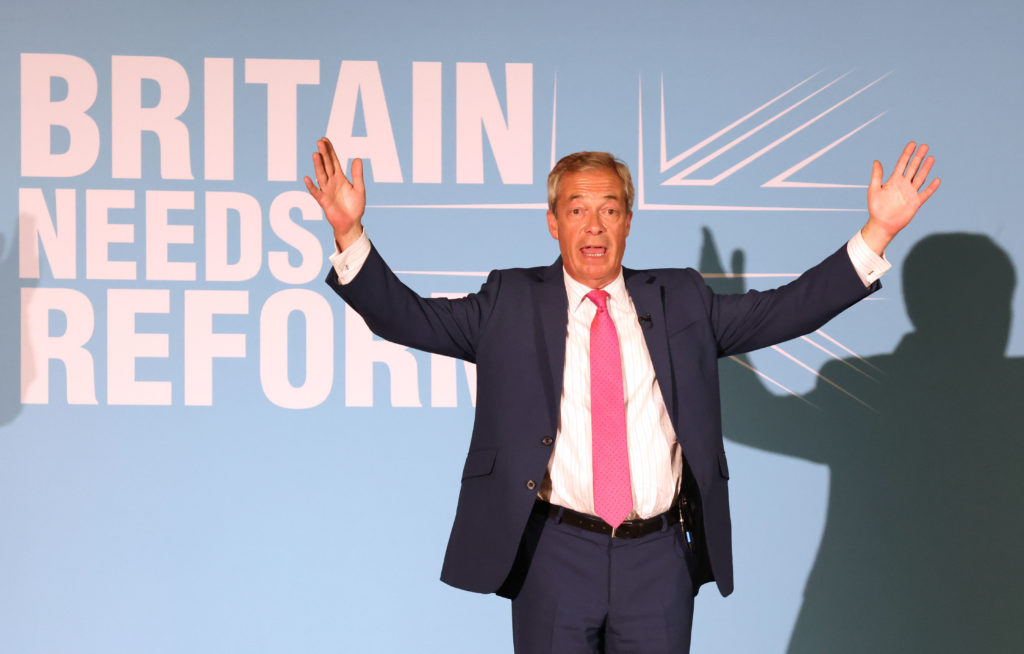
When pressed on the issue of policy, Nigel Farage offers little more than hand-waving assurances of a “fundamental rethink” or “reset of our institutions.” What does this “fundamental rethink” mean in practice? No one seems to know—least of all the Reform Party.
Mr Lewis told the BBC that the party has no plans to elect a Welsh leader. He said: "Nigel is going to play a very big part in the Senedd campaign. He's far more popular than the leaders of the other parties in Wales.”
"Our present working principle is that once we have a caucus in the Senedd, once we have our 20, 30, or hopefully 40 members in the Welsh Parliament they will then select a leader on day one.”
Potential leaders
This decision not to choose a leader is not for lack of choice. David Jones – a former Tory cabinet member – is reportedly a top pick among senior Reform figures.
A political source said he is “something of a hero” to Reform members due to his history as a hard-line Brexiteer.
Another possible is Mark Reckless, who previously represented the Tories in Kent, and then UKIP in South East Wales, although he contradictorily stood for Abolish the Welsh Assembly party (since switching to Reform, he now represents a party who do support the Welsh Assembly).
And there is, of course, Oliver Lewis, Reform’s Welsh “Spokesman”, although he does not seem to have an official role beyond being Nigel Farage’s voice in Wales.
Fundamental disrespect
The decision to delay selecting a Welsh leader until after the election underscores their strategy: avoid scrutiny, stay ambiguous, and appeal to disillusioned voters across the political spectrum.
Lewis’s justification – that their Senedd members will elect a leader once elected – is a glaring example of wanting to have their cake and eat it.
It’s a strategy designed to maximise their chances, but it also reveals a fundamental disrespect for Wales’s distinct political identity.
By refusing to commit to a leader now, they signal that Welsh leadership is an afterthought, subservient to “Brand Farage.” Lewis said this, in plain words, when he explained that Farage is “far more popular” among voters.
By leaning heavily on Farage’s persona, they side-line Welsh-specific concerns, implying that his celebrity allure outweighs the need for a strong Welsh counterpart.
It seems that Farage believes that his blend of populism and charisma can win over Welsh voters, without any Wales-specific polices. Which I suppose begs the question, can it? Can Reform still pick up vast Welsh support without a coherent vision for Wales? We will have to wait until May 2026 to find out.
But if we have learned anything from Brexit, it is that what seems like an attractive option for discontented voters is often the complete opposite once implemented. The allure fades when the reality of governance sets in.
Ultimately Reform UK Party LTD are a confused party. They solely function as a protest vehicle, criticising everything going wrong without providing tangible solutions.
Wales deserves better than a self-proclaimed “fledgling party” that thrives on criticising others while offering little in return.
The Reform Party may serve as a protest vote, but their lack of clarity, leadership, and respect for Welsh voters renders their ambitions of governing deeply implausible.
Support our Nation today
For the price of a cup of coffee a month you can help us create an independent, not-for-profit, national news service for the people of Wales, by the people of Wales.
Get more trusted Welsh news
Choose Nation.Cymru as a preferred source in Google News to see more of our journalism.
