


Opinion
Plaid Cymru’s strategic dilemma
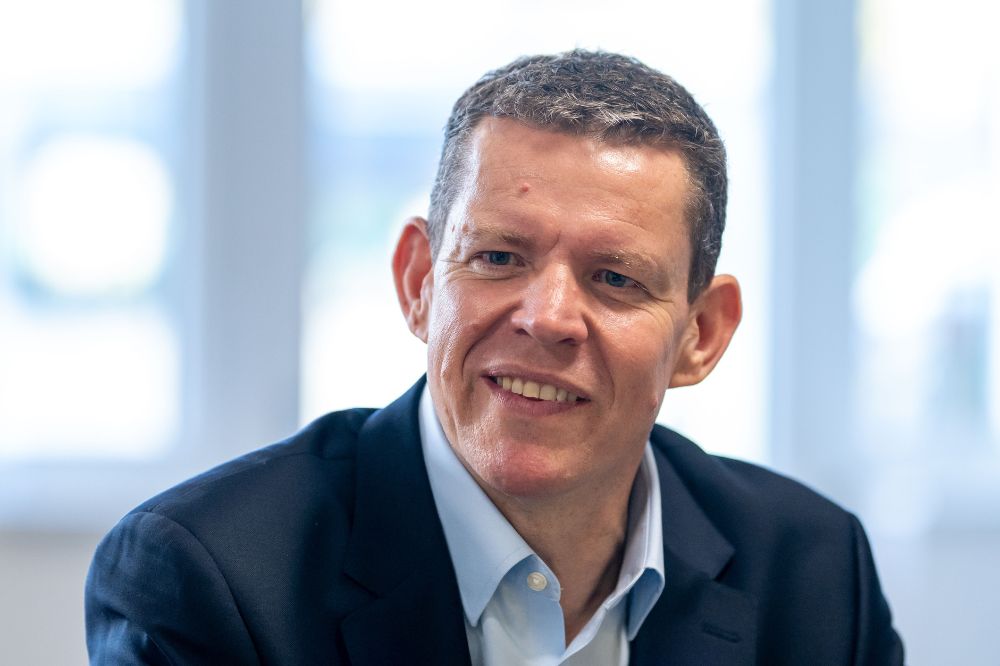
Jonathan Edwards
Last week’s article focussed on the major strategic decision facing the Labour Party in Wales in the lead up to the Senedd election in terms of where to locate itself in relation to the wider Labour Party at UK level.
The full-frontal attack of Jeremy Miles, the Health Minister, on the UK Government’s welfare reform proposals at the weekend indicates that they will not be shy in distancing themselves from their colleagues in Westminster.
The other parties face similarly defining strategic choices, especially on the back of another poll which indicates that matters are going to be very close between Labour, Reform and Plaid Cymru next May.
This week’s Survation poll indicates the difference between the three parties is only 3% (Labour 27%, Reform 24% and Plaid Cymru 24%). While it is not easy to decipher the result in terms of actual seat numbers, we are talking about perhaps a handful of seats between the three and no one having anywhere near enough seats to govern by themselves.
[mid-content-banner]
First Minister
As this column has emphasised over the last year, the political situation gives Rhun ap Iorwerth a realistic shot of sitting in the First Minister’s chair in 13 months’ time.
The stakes are enormous for the party: they will never have a better opportunity of winning an election. The question the party will have to face in the lead up to the election is how will it configure the next government; in other words who are they going to work with?
There is nothing new in this dilemma for the party; it was the same question the party faced following the 2007 National Assembly election and every subsequent election.
Is it Plaid Cymru’s strategic aim to replace the Labour Party in Wales as the party of government or is it to act as a bulwark against the advances of the British unionist right?
If the aim is to replace Labour, then based on the likely Senedd results the party will have to work with Reform as the Tories are unlikely to get enough seats to get to a combined magic number of 49.
Plaid have form here of course: they would have been quite happy to have received the support of UKIP and the Tories following the 2016 election to elevate Leanne Wood to the fifth floor of Ty Hywel.
This would also be a strategic evolution of the tactical decision by Rhun ap Iorwerth, which has arguably worked so far, to distance his party from Labour by ending the Cooperation Agreement and the full-frontal attacks we are witnessing against the Welsh Government from the Plaid Senedd Group.
[lower-mid-content-banner]
British Nationalists
The alternative strategic path is to recognise that at this point in the political history of our nation there will soon be a very strong contingent of British nationalists who are openly hostile to Welsh political autonomy elected to the Senedd. Therefore, the overriding imperative is to protect and preserve our political institutions from what could be a very dangerous period for the devolution project.
In my time I always thought the party strategically had to keep both options open, mainly as if maximum concessions were to be gained from Labour, they had to believe Plaid would be willing to remove them from power. Once an alternative government was off the table, Labour could rest at ease.
However, a deal with the Conservatives is one thing; Reform is a completely different prospect. I would imagine that many voters of a progressive persuasion would find it impossible to vote for Plaid Cymru if there was any danger that they would allow Farragists a direct influence on Welsh Government policy.
Similarly, if Plaid aren’t serious about removing Labour from power, it risks losing a huge swathe of current supporters yearning for change in Cardiff Bay. It is for this reason that the party will try and fudge the debate over the next year, but I fear for them that this will be difficult considering continuous polls which indicate we are heading for stalemate in May 2026.
Coordination
If there is coordination between Plaid Cymru policy and political strategy we will have a good idea, while recognising that the two don’t always work in unison in modern politics. If the party offers “continuity Labour” in its policy programme, that lends itself to one strategic path. If it is offering a complete change of approach, then the alternative strategic path seems the logical one to follow.
Eluned Morgan could play a shrewd card by saying her party will not serve under a Plaid First Minister. I might be way off the mark here, but I cannot see how Labour would agree to be a junior coalition party after over a quarter of a century as top dogs, so such a statement wouldn’t be surprising. What would Rhun ap Iorwerth do in response would then be the big question.
Jonathan Edwards was the MP for Carmarthen East and Dinefwr 2010-24
Support our Nation today
For the price of a cup of coffee a month you can help us create an independent, not-for-profit, national news service for the people of Wales, by the people of Wales.
Get more trusted Welsh news
Choose Nation.Cymru as a preferred source in Google News to see more of our journalism.
