


Opinion
Out of the frying pan? Why Welsh autonomy may not be entirely safe under a Labour UK government
Ifan Morgan Jones
For the first time in this parliamentary term, it looks like Labour may have a better than 50/50 chance of winning the next General Election.
After a hammering in 2019, the odds were that it would take them at least two or three electoral cycles to come back within a shot of winning.
However, a mixture of Conservative self-combustion over partygate and a worsening economic outlook means that a Lab-Lib coalition could now be on the cards.
Those who support Welsh autonomy may think that this would be something of a ‘get out of jail’ card for the Welsh Government and Senedd.
After years of Conservatives chipping away at the devolution settlement, we can expect Welsh autonomy to not just be respected, but to be boosted too.
After seven years of want there could suddenly be seven years of plenty.
I think this would be Welsh Labour’s honest wish as well - but I think there’s a real danger that UK Labour’s attitude to devolution would be more lukewarm than some may think.
This would in the main be due not to Labour’s attitude towards Wales but their attitude towards Scotland.
[mid-content-banner]
Reform
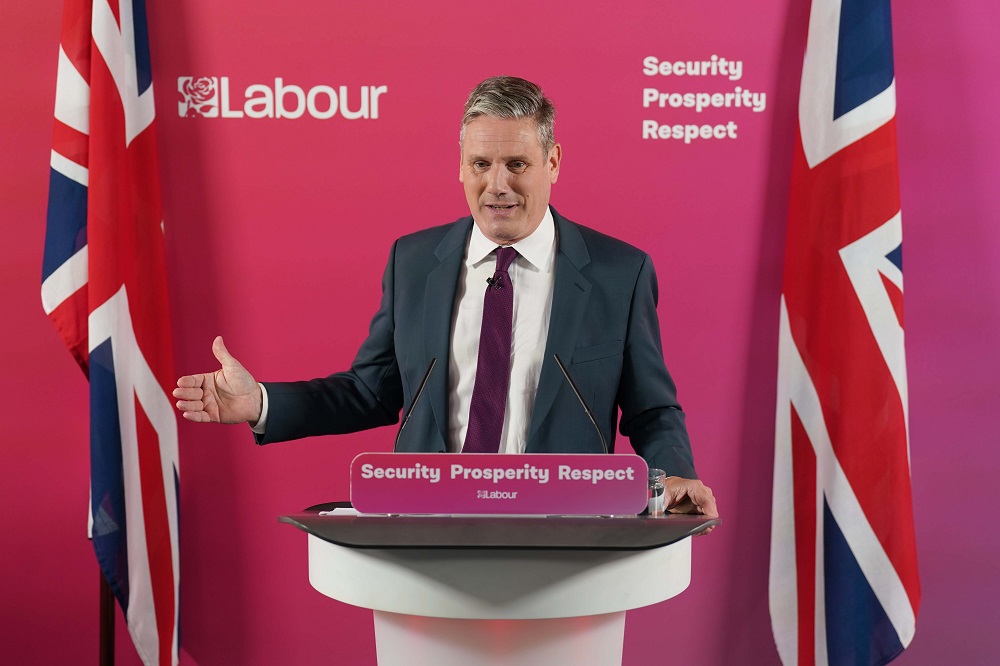
UK Labour leader Keir Starmer knows going into the General Election that the SNP in Scotland is one of his electoral Achilles heels.
The Conservatives will pull out all the stops to suggest that voting Labour will produce a Lab-SNP pact – a ‘coalition of chaos’ that will see England run from Edinburgh, not London.
To win the election Keir Starmer needs to win middle England and will therefore bend over backwards to give the impression that the SNP will hold no sway over him.
He has already said this week that Labour will not make a deal with the Scottish National Party before or after the next general election
He also pledged to block an independence referendum even if the SNP wins more than 50 per cent of the popular vote at the next general election.
Elsewhere, we hear that the UK Labour party has rejected Gordon Brown’s interim strategy to reform devolution across the UK.
Knowing Gordon Brown, these proposals were unlikely to be particularly radical, and yet now face being watered down.
Apparently, the leadership of the UK Labour party also opposed the Scottish Labour party changing their logo from the UK-wide rose to the thistle.
This points to the Labour leadership not being particularly comfortable with autonomy for the constituent nations and regions of the UK.
In fact, in an effort to impress voters from Nuneaton, they may aim to flex their own 'muscular unionist' muscles to match the Conservatives.
Legislation
We have already seen this approach with Keir Starmer’s outright rejection of rejoining the EU, or even the Single Market.
The attitude at the moment seems to be that, however popular something is within the Labour party, if it’s any obstacle to winning the next election, it can be thrown overboard.
With that mindset, how unlikely would it be to see some kind of commitment to bind Wales and Scotland once and for all to the Union in a Labour manifesto, in order to impress voters in England?
We got a preview of this in the last week when Scotland Labour leader Anas Sarwar promised legislation to “require joint working between governments in areas of shared interest”.
But how do you guarantee joint working between governments that fundamentally disagree, as the Welsh and UK Governments have done on occasion?
Any kind of legislation would ultimately have to ensure that one government has a legal duty to agree with the other.
And it’s fair to say that Westminster would not legislate to bind itself to the views of the devolved parliaments.
This would ultimately require the devolved governments to ‘work with’ No 10 and Whitehall whether they wanted to or not.
Inevitable
The danger here from Wales’ point of view is that the Welsh Labour Government happily go along with the UK Government’s plans, because it is a Labour government.
While there is a Labour government in Wales and a Conservative one at Westminster, emphasising Welsh autonomy makes sense as a means to expand Labour’s own power and autonomy.
But once there are Labour governments at both ends of the M4, that motivation to seek distance themselves from Westminster fades also.
But any constitutional tinkering that binds Wales to the UK Government would also then be in place after, inevitably, a Labour government is again replaced by a Conservative one.
In the run-up to the next General Election, and after it – if Labour wins – Welsh Labour, therefore, need to take care.
They need to ensure that any plan that is created to deal with Welsh devolution is one created to suit Wales, not Gordon Brown’s attempts to bind Scotland to the union.
They need to ensure that UK Labour does not make promises to voters in England that are not in Wales’ interests.
And they need to ensure that a devolution settlement is created that would also give Wales wiggle room when there is a Conservative government back at Westminster.
As there will inevitably be before long.
Support our Nation today
For the price of a cup of coffee a month you can help us create an independent, not-for-profit, national news service for the people of Wales, by the people of Wales.
Get more trusted Welsh news
Choose Nation.Cymru as a preferred source in Google News to see more of our journalism.
