


Sat, 18th July Cardiff 24°
Nation.Cymru wordmark
Advertisement

Opinion

Lack of education on Welsh history has failed us all
By David Owens
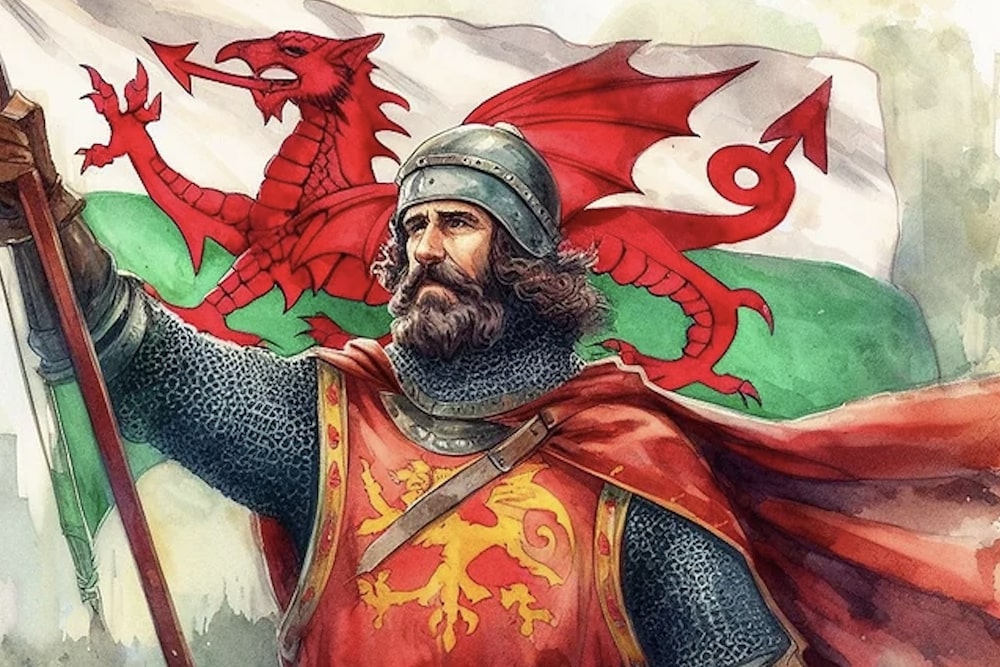
Owain Glyndŵr

Niklas George

Given that I run a Welsh history website; write/edit a monthly Welsh history magazine and operate a popular Welsh history social media with a combined following of over 60,000 people, you might be forgiven for thinking that I have a long-time, deep-seeded affection for the subject.

On the contrary, I had always found it boring. Criminally, I found it boring all the way until the age of 29, when I was talked into launching the Welsh Histories Facebook page by my wife who, at that time, had never even been to Wales (and had only just learned of its existence through me).

I research all manner of Welsh historical topics to keep our community engaged and this process has taught me just how fascinating the subject is – a hidden gem lying beneath the even larger, more polished and renowned diamond that is British history.

[mid-content-banner]

What I have learned over the past 14 months is that it is not the subject of Welsh history that is boring but, sadly, the way many of us were taught it – which means not taught it at all.

I attended secondary school at the now defunct Blessed Edward Jones Catholic High School in Rhyl between 2005 and 2010. Rhyl is not exactly known for being a beacon of Welshness in an otherwise proudly Welsh county and is often wrongfully claimed to be an extension of the Wirral.

Denbighshire, however, is, home to many Cymraeg speakers and boasts a colourful Welsh history, having mostly been a part of the Kingdom of Gwynedd during the height of the Welsh kingdoms.

Nevertheless, during my schooling experience, I learned nothing about this history. In fact, the only bit of Welsh history that I remember learning during my five years at high school (and I did take the subject at GCSE level) was the Romans conquering our Brythonic ancestors; the so-called Welsh Tudor family annexing us and the working-class descendants of the conquered Welsh people being sent to die in World War 1 and World 2. Hardly a patriotic Welsh history, if you ask me.

Betsi Cadwaladr University Health Board

I learned nothing of Welsh heroes, such as Llywelyn Fawr in the north and Rhys ap Gruffydd in the south. Only recently, while looking for things to write about for Welsh Histories, did I discover the tragic warrior princess, martyr of Welshness that is Gwenllian. Betsi Cadwaladr. I thought that was the combination of two Welsh words used for the local health board - not an actual, brilliant and historic Welshwoman who deserves to be talked about at the same level of her rival, Florence Nightingale.

Yes, we learned about Buddug (Boudica for some) during primary school, but she is often claimed by East Anglia – so we can’t even properly claim her as Welsh, despite her spoken language almost certainly having been Brythonic as opposed to Saxon, Norman or English.

We held prayers for Aberfan but learned nothing of the causes of the horrific tragedy – we didn’t learn anything at all about Welsh mining history.
Instead of realising that Welsh history was so absent from my Welsh schooling experience, I just accepted it was too boring for school. I carried this thought into my A-Levels where, once more, I learned nothing about Welsh history.
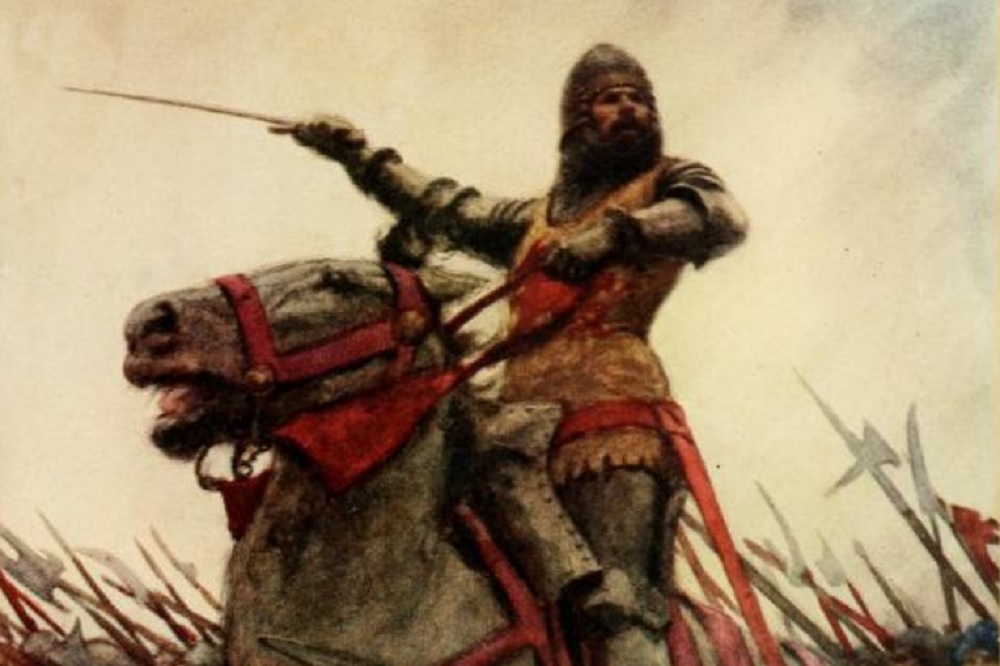
Owain Glyndwr by A.C. Michael

For a period of ten years, I knew more about Frederick the Great, Peter the Great and Catherine the Great than I did about Llywelyn the Great. Yes, I was proud of being Welsh during this period – this patriotism is never lacking in Wales – but I was very ignorant of our history to the point where I just accepted there was nothing worthy of being called history outside of a few sporting triumphs.

Following my A Levels, I went to university in Liverpool - after having rejected Bangor, something I regret as I am certain I would have gotten a Welsh history experience here - and chose to specialise in French history. I wrote my dissertation about Napoleon’s Continental System (1806-1814).

Forgive me for saying, but that time could have been better, and more purposefully given how well-covered Napoleon is, spent writing about the subject of Owain Glyndŵr’s Pennal Letter (still in a French museum to this day), sent by the famed Welsh rebel to the King of France during the height of the Glyndŵr Uprising on 31 March 1406.

[lower-mid-content-banner]

If I had learned any of this Welsh history during my school experience, I would have almost certainly chosen to study it further as a history enthusiast.

It is not just me – I receive comments, messages and emails daily from people who claim they were shortchanged in the history classroom. While the mandatory inclusion of Welsh history now exists on the Curriculum for Wales since 2022, a great disservice has been done to the people of Wales.

There are tens of thousands of people in Wales who were as I was and most of them will never go through the fortunate awakening that I have. For that, I say shame on those who robbed us of our history for so long and may this mistake never be repeated.

For the price of a cup of coffee a month you can help us create an independent, not-for-profit, national news service for the people of Wales, by the people of Wales.

Get more trusted Welsh news

Choose Nation.Cymru as a preferred source in Google News to see more of our journalism.

Choose Nation.Cymru as a preferred source in Google News

35 comments

Dai Ponty

Why is British history SORRY ENGLISH HISTORY rammed down our throats in our schools we have our own history of which goes back around a thousand years before the arrival of the barbaric savages the tribes that where to form England

Reply
Dai

Labour have ruled us for 25 years, run our education system from Cardiff, they set the curriculum.

Reply
Dai Ponty

Yes i know Labour has been in power in Wales for last 25 years and did nothing before that Wales was run from Westminster some time by Labour mostly by Tory and Liberals it goes way back to the late 1880,s so you are just a Tory or a Reform supporter with your head up your backside and yes labour are partly to blame

Reply
Alyn Bevan

It was policy not to teach Welsh history from the Welsh perspective. A great little book is, The Fight for Welsh Freedom by Gwynfor Evans. It's an easy read.

Reply
Frank

Sadly the people of Cymru know almost nothing about our history. Who decided to wipe us off the map? Guess who!! When I attended Ysgol Gymraeg Dewi Sant in Llanelli in the 1950s we did learn a little about our history but then on entering the Llanelli Boys' Grammar Technical School it was all about the glorious triumphs of English kings and queens.

Reply
Cwm Rhondda

In response to your question 'Who decided to wipe us of the map?' my answer would be the Labour party and their ill-founded belief of keeping power at all costs. We all know that if more people knew Welsh history there'd be an increased likelihood that people would vote for Plaid Cymru.

Reply
Elizabeth Jeffreys

My daughter enjoyed history at school and studied Welsh History at Cardiff University in 1990. At the end of her first term, she came home and exclaimed furiously that she had never been taught any Welsh History and its fundamental role in the history of the UK at either O or A levels. She was extremely indignant, it was a big wake up call for her.

Reply
Alan Jones

I & many others of my age group will recognise the account you have portrayed in your article Niklas along with a previous article by Stephen Price in NC. My education was through the Monmouthshire Board of education in the 60s/70s. As far as our history lessons went it concentrated on England's narrative in the main with detours into European history that even then, always seemed to accentuate the relationships & disputes between the ruling dynasties or royal families through the ages. When I left school I could recite the birth date, accessions & deaths of all the kings & queens of England from Ethelred onwards ( & no, please don't ask me to now 50 years later). All I knew of our Cymraeg history was we painted ourselves blue, the Romans invaded & assimilated us, the Vikings came & caused a stir then the Anglo Saxons & Normans came to impose themselves on us. The Tudors as you say sold us out then during the industrial revolution the coal & iron "masters" virtually enslaved us. Both Rebecca & the Chartist movements were taught in fairness but nothing to the extent that British/English history was portrayed. The BBC is not much better in that it would seem by their historical output British history started some time in the 14th century & again contains a mainly English narrative concentrating as always on the royalist angle. Like you I came/stumbled upon Cymraeg history later in life, my route was through my local library and also it has to be said that despite it's many critics, the internet has been a godsend as to just how much is out there that I personally was never aware of. It's so pleasing to see that this issue is now being addressed in our schools & hopefully historical parity & accuracy regarding the British isles can become the normal way of things for our future generations.

Reply
Drew Anderson

Remarkably similar to what I experienced in Scotland.

Reply
Evan Aled Bayton

Monmouthshire has never had a board of education that I know of. In the 1960/70s when I was in school in Monmouthshire there was an education committee which was pretty effective to the extent of offering a school leaving certificate to 15 year olds who did not stay for the CSE exams. There was at that time a national and local debate as to whether the county was in England or Wales and there was considerable animosity towards Wales in East Mon.

Reply
Alan Jones

Many thanks for the correction EAB, the use of "commitee" was in my mind at the time of writing but for some reason I plumped for "board" instead. I do though remember the talk at the time as to whether Monmouthshire was a part of Cymru or England. If memory serves me correctly this time (fingers crossed) the issue was settled with the boundary reorganisation of 1974 with the implementation of the county of Gwent.

Reply
Alun Burge

Elin Jones's book History Grounded brilliantly shows how 5,000 years of Welsh history is all around us and where to look for it - it's packed full of interesting stuff and is an easy read. Recommended

Reply
Alun Burge

(And it's aimed at schools...)

Reply
Mandi A

Libraries, Ladybird Books, even comics and Tell Me Why / Look and Learn for those of a 1960s disposition - and curiosity - why always wait to be told an official partial version of history? We should be taught to take responsibility for our own learning from an early age.

Reply
Kevin McLauchlin

This would be a good idea. However, in my experience in Scotland's neglect of my country's history to her own people, I had very little knowledge other than Robert the Bruce, winning independence for Scotland in 1314. EVERYTHING else I know I had to meticulously research myself. I was an avid reader - and still am - and there was NO history at all taught that explained Scotland's role in UK history. So, this is not just a Welsh thing. The blame lies squarely at the colonists door. There should be pressure exerted on government to demand tuition of Celtic languages in high schools in England. And, their attendant history and culture. That is the only real road to progression: when those in the margins are brought in to assist the UK.

Reply
Macsen

Would be nice to live in Wales/Cymru where the vast majority of Welsh children and adults know more about e.g. Owain Glyndwr and Hywel Dda than Henry VIII and his wives...

Reply
Cwm Rhondda

There is much written about how awful the Welsh Not was, and its impact on the Welsh language - justly so. What isn't written about is the Labour party in Cymru via its education policies/political interference in the school curriculum denying our children being taught Welsh history. The Labour party over the last 100 years are the true villains in this story, they will go down in history as promoting Britishness at the expense of our own history being taught in Welsh schools. It is time we called them out for what they've done to our country!

Reply
Richard Davies

The first labour majority government wasn't until 1945, so to claim it is responsible over the last 100 years is incorrect. The blame for most of that time rests with the tories!

Reply
Stevie B

The Labour party have won every UK general election in Wales for the last 100 years.

Reply
S Duggan

This argument often comes up, is Welsh independence really any different to Brexit? Well, simply put, yes it is, and there are reasons aplenty. For one, the EU has never imposed laws upon us (all EU laws were accepted and approved by Westminster), can we say that for Cymru? Then there's the real reason behind Brexit, bigger profits for big business, via (believed) less regulation, is that the reasoning behind the seeking of Welsh independence? Whereas Brexit is a nationalistic cause, Welsh independence is a patriotic cause. No one living in Cymru is excluded from the vision. Unlike Brexit, Welsh independence does not involve wanting to close boarders or reject certain peoples. Brexit wants it's version of 'independence' because certain people fear immigration, that is not the case with Welsh independence. Welsh independence is about freeing a country that was taken illegally, by force, plundered for it's resources and then more or less neglected. None of those things, or anything near as bad, warranted Brexit.

Reply
S Duggan

Like many here I was taught nothing about Welsh history in school. It was not until I went back to college at the age of fifty that I started to delve into the subject. We had to write an essay about our favourite Welsh person. Whereas, many wrote about Tom Jones or Gareth Bale, I chose to write about Owain Glyndwr and it opened my eyes. Not just to the lack of Welsh history being taught in schools but how our neighbour has really treated us for centuries. As a nation we should make Welsh history a priority in our schools, from a young age. Whether the British establishment likes it or not, Cymru is a separate country, with it's own, history, language, customs and traditions and our children need to learn far more about it.

Reply
Stevie B

Please can we stop referring to Owain Glyndwr as a Welsh rebel - this is merely perpetuating the English subjugation of Cymru. It is my understanding that Owain Glyndwr was Prince of Wales or a King - please correct me if I'm wrong.

Reply
Iesu Grist

Can you stop using AI 'art'?

Reply
John. 6

I thought the current thinking is we all have to be ashamed of our history and therefore must "decolonise" everything and re-imagine that all historical figures must be portrayed by any ethnicity other than the original.

Reply
Johnny Gamble

Welsh history comes nowhere near the category that you have mentioned

Reply
J D

I'm in my early/mid twenties and very much remember being taught welsh history in llanidloes, lots of our time was dedicated to llwellyn ap gruffydd & owain glyndwr. Although I have a feeling that was largely due to how passionately welsh our history teacher was!?

Reply
Frank

I see they did not teach you to use capital letters where necessary in Llanidloes though.

Reply
Helen Mary Jones

Fully agree. The new Welsh national curriculum is supposed to address this, but I'm not convinced it will. I hope so, but I think we need to be vigilant

Reply
Kevin

I have a blog where I share the true Welsh history and debunk stupid myths like glyndwr killed as many Welshmen and Welshmen fought for English against llywelyn , IV also proved the "Welsh fought eachother more than anyone else" to be wrong but I keep getting dismissed as a nationalist . Why is promoting Welsh history nationalism?

Reply
roger david smith

as a welsh born person, i was born in 1950. i was taught english history in school. but i the good fortune to be able to read about our welsh history at home. my grandfather had purchased history books so was able to learn all i wanted..

Reply
Evan Aled Bayton

There is a misapprehension about Florence Nightingale, Betsi Cadwaladr and Mary Seacole. There is a Blue Peter John Nettleton idea that all three are equivalent heroic nurses. In fact they are all interesting women but for different reasons. Florence Nightingale was an upper class English woman with a university level education who did study nursing under Lutherans in Germany in order to establish quality nurse training in the UK. In effect she was really a hospital educator and administrator using science to validate her work. Mary Seacole was actually a traditionally trained physician and nearer to a doctor than a nurse. She was mixed race but again quite middle class. Betsi Cadwaladr was the daughter of a non conformist preacher who seems to have enjoyed travel which she followed by being hired as a servant although she did do some nursing.

Reply
Mandi A

A bit like BCUHB seems to enjoy being a Health Board but doesn't really do the job

Reply
Richard Davies

I would describe the english-centric "british" history as a polished turd not a diamond!

Reply
Wrexhamian

I did Welsh 'A' Level history in the 70s, for the WJEC, which was divided into 'British' (English), Welsh, and European history. I had to answer at least two exam questions on Welsh history. I'm appalled to hear that most of Cymru did not have this as part of their history teaching.

Reply
Walter Hunt

The history of history is that for a century or more the peoples of this island were taught that they were on a great civilizing mission. They learnt about Rome because Roman had an Empire. They were taught that the arrival of the self-reliant and freedom loving Anglo-Saxons and their language inevitability lead to a system of law and justice and mother of parliaments that others worldwide would desire to copy. There was no room for Welsh history, culture or language in that narrative. The question is not whether or not more prominence should be given to Welsh history in Welsh education, it should, but what do we want from history education? T H Parry Williams’ poem “Hon” asks why we should care at all.  Dafydd Iwans’s “Yma o hyd” suggests maybe Wales’ greatest achievement is to exist at all- despite everything and everyone. In his poem “A Welsh Landscape”, R. S. Thomas wrote “…there is no present in Wales, and no future; there is only the past, brittle with relics…”. There is a danger of creating an institutionalized Wales in which the nation’s history and culture and language are packaged away (and disempowered, conveniently for some) in history books and museums and heritage centres and Eisteddfodau and when we step outside our doors or go online we find ourselves not in Wales but in the Anglosphere. Today, I read on Golwg360 an article by Alun Rhys Chivers describing the “fandaliaeth/vandalism” of the Wicipedia-Cymraeg website. Wales has been discovered! There are countries with ethnic or linguistic minorities for whom Wales’ attempts to resist assimilation sets a bad example. How will Wales rise to these challenges?

Reply

Leave a reply

Replying to Dai Ponty Cancel

Yes i know Labour has been in power in Wales for last 25 years and did nothing before that Wales was run from Westminster some time by Labour mostly by Tory and Liberals it goes way back to the late 1880,s so you are just a Tory or a Reform...

Comments are reviewed before they appear.