


Wednesday, 15th July 2026 Cardiff 24° · Partly cloudy
NationCymru A news service by the people of Wales, for the people of Wales.

Opinion

Is Jo Stevens a fan of Mark Twain?
By Mark Mansfield
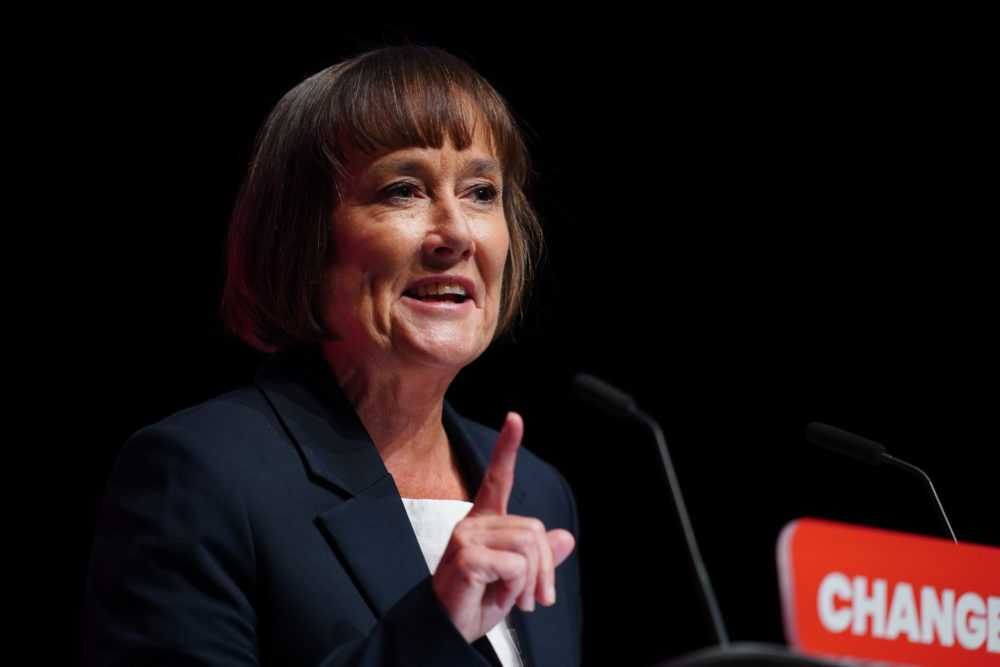
Welsh Secretary Jo Stevens speaks during the Labour Party Conference at the ACC Liverpool. Photo Peter Byrne/PA Wire

Dr John Ball

“Figures often beguile me," Twain wrote, "particularly when I have the arranging of them myself.”

Nation Cymru reported an interesting claim by the Secretary of State, in which she suggested that an independent Wales would have a deficit of some £21 billion.

All she has done is simply illustrate an ignorance of what the ONS data says and indeed, her own ignorance of economics.

The first thing of course is that the ONS data she quoted was NOT that of an independent state, but the current position of Wales within the UK and on that basis, the published data needs to be properly understood.

The figures are taken from the ONS Total Managed Expenditure. These figures collect total taxation revenue and associated expenditure for all ‘regions’ of the UK, and that of course includes Scotland and Wales.

[mid-content-banner]

Apportioned

It is especially important to understand the way in which these figures are put together, the assumptions and the basis upon which they are collected. Almost all economic data is collected on a UK basis and then apportioned to the regions. Careful examination and the assumptions contained therein question the notion of a substantial deficit.

No data is accurate; differences in time, definition and accuracy are always an issue. This applies particularly to revenue collected in Wales. There are thirty-nine separate sources of taxation revenue, of these four provide the greatest amount. Income Tax and National Insurance payments are straightforward, based on the payee’s home address. By far the largest source is Value Added Tax (VAT), this is notably difficult to allocate with so many businesses in Wales owned externally and declaring this tax. This also applies to Corporation Tax.

Total Revenue for 2022/23 (the latest figures available) was £37 billion.

[lower-mid-content-banner]

Accuracy

The issue of accuracy applies even more to expenditure; there are 246 separate sources, some exceedingly small.

According to the ONS, Total Expenditure for the same period was £58 billion.

These latter data are based on the standard statistical approach of who benefits, that is additional intangible expenditure is allocated to reflect costs supposedly incurred by being part of the UK and from which therefore Wales “benefits.”

The highest expenditure was over £7 billion on sickness, disability and income support, a reflection of the overall health and wellbeing of the people of Wales. Ms Stevens might reflect on this figure.

The next highest, according to the ONS were Debt Interest, Defence, a General Expenditure allocation and Pensions. Apart from the latter – which is discussed later – all are allocated on the who benefits approach.

Allocated Debt Interest is £6 billion. Putting aside the legitimate argument that much of the overall UK debt has been for England’s benefit, this figure illustrates why interpretation must be careful. This figure represents 16% of revenue! No nation on earth has a level of debt that requires that much re-payment!

The same applies to Defence, currently £2.6 billion, or 7% or revenue; I am sure Putin would like to be spending that much!

There is an allocation for general expenditure of £4billion, £3billion of which is an accounting adjustment, the remainder expenditure on foreign bases, external activities such as embassies and a contribution to the BBC overseas service.

These three alone amount to £12.6 billion intangible expenditure; in other words, it is a book entry and not an actual cost.

Pensions

The cost of pensions, according to the ONS is £6 billion. Putting aside that a third or so claiming pensions have moved into Wales and that cost should clearly be allocated to England, there are different interpretations on the extent to which, after independence, the new English state has responsibility to continue payment to those who have, in their current working lives, paid for pensions. The received thinking is that this will be the case, there is a clear contract between those currently paying tax and insurance have a contract with the UK government.

Anyone looking at these data would laugh at the idea of a nation spending almost a fifth of its’ income on debt interest, or almost one pound in ten on defence, or some else’s pensions!

Summarising, the intangible expenses amount to £18.6 billion, subtracting this amount from the published expenditure of £58 billion, the actual difference is now £39.4 billion. Subtracting this latter amount from revenue of £37 billion results in a deficit of £2.4 billion.

But this is not the entire answer. Economies are dynamic; revenue moves up and down, as does expenditure. There were, for example, exceptional increases in expenditure during the pandemic, hopefully never to be repeated. Data for the Welsh economy for year pre-ceding the pandemic, and based on the intangible costs used here, there was a small surplus.

Spending priorities

Furthermore, an independent, sovereign state will set its own spending priorities and indeed, could construct its own, innovative sources of taxation.

A final thought for Ms Stevens and friends might think about. The UK budget deficit for 2022/23 was £177 billion, the national debt an eye watering £2.5 trillion (that’s twelve noughts). The UK has the highest level of taxation in seventy years, the highest level of personal taxation of all the nations in greater Europe and the second highest level of business taxation.

I am sure Nation Cymru would be delighted for Ms Stevens to explain.

Dr John Ball is a former lecturer in economics at Swansea University.

For the price of a cup of coffee a month you can help us create an independent, not-for-profit, national news service for the people of Wales, by the people of Wales.

16 comments

Chris Hale

Thank you for this clear explanation of our financial futures in Wales, nailing the myths perpetuated by the Unionist lobbyists. As ever, this illustrates the old adage, follow the money.

Reply
John T

Excellent analysis that underlines the economic ignorance of Jo Stevens. Da iawn John.

Reply
Dr John Ball

Thanks! Good to hear from you.

Reply
Lyn E

Thank you for this. It is important for anyone interested in the constitutional future of Wales to consider these issues. You make many good points, although I disagree with some. As you say, ONS data refer to the position within the UK rather than of an independent Wales. In its Country and regional public sector finances: methodology guide, ONS itself shows far more awareness of the limitations of available data than does Jo Stevens. You rightly criticise the ONS’s approach to the apportioning expenditure. For most elements of non-identifiable expenditure, it does this by population, although in a few cases (science and technology, transport, environment protection), it also uses Gross Value Added. It does not explain why GVA has not been considered for other elements, which would give much lower figures for expenditure in Wales. It is difficult to draw conclusions from any of this about the fiscal position of any future independent Wales as there are so many unknows around both the terms of separation and economic policies.

Reply
Lyn E

Allocation of public debt is a central issue is a central issue in prospects for an independent Wales. International law is not well defined around this, but a useful starting point is the 1983 Vienna Convention on Succession of States in Respect of State Property, Archives and Debts, even though that has not yet been ratified by the UN. This makes an important distinction between the cases of a newly independent state and the dissolution of a state. It is unclear which would apply in the eventuality of an independent Wales. In the case of state dissolution (‘the breakup of Britain’), Article 41 of the Convention says, ‘When a State dissolves and ceases to exist and the parts of the territory of the predecessor State form two or more successor States, and unless the successor States otherwise agree, the State debt of the predecessor State shall pass to the successor States in equitable proportions, taking into account, in particular, the property, rights and interests which pass to the successor States in relation to that State debt.’ This does not define ‘equitable proportions’ but it does imply that Wales would inherit a substantial proportion of the debt of the current UK state. In contrast, Article 38 says, ‘When the successor State is a newly independent State, no State debt of the predecessor State shall pass to the newly independent State’. That looks much more promising, but it continues with an important caveat, ‘unless an agreement between them provides otherwise in view of the link between the State debt of the predecessor State connected with its activity in the territory to which the succession of States relates and the property, rights and interests which pass to the newly independent State’. Negotiating the terms of our future relationship with England, whether seen as the continuation of the UK or as a new state, would be unavoidable. The allocation of public debt would form part of that negotiation, and the outcome of those negotiations would, as always, ultimately depend on the balance of power. At first sight, the prospects for Wales in such negotiations do not look good. We cannot expect an unreformed Westminster to be generous. But Westminster does not prioritise the interests of most people across the UK, whether seen in terms of geography or of class. The ‘breakup of Westminster’ could benefit most people in England too. Hence, we should not take a narrow Welsh perspective on constitutional change across the UK.

Reply
Dr John Ball

You make some interesting points in your two contributions. You are correct in pointing out the difficulties in assessing the future fiscal situation of an independent Wales. However, what the existing data from ONS does provide is a picture of an economy that is paying its way and upon which we can build. I pointed out in the article that this is, by definition, the situation today within the UK; independence will provide the opportunity to look at the Welsh economy in the round, to implement innovative tax and spending regimes appropriate to Wales. Your second contribution raised an issue that does indeed need to be addressed. Again, I pointed out that the issue of debt is one that has to be addressed, although I thought your closing comment was somewhat negative. We would certainly not be entering any negotiation with a such an attitude but from a position of strength and optimism in our future.

Reply
Lyn E

Thank you. We should enter any independence negotiations with optimism tempered by realism, confident in our future but avoiding any Johnson-style bluster of claiming we can get whatever we want, a delusion quickly dispelled by the EU. The UK’s Brexit experience merits careful examination by any potential negotiators. International evidence shows that small countries can prosper but that to do so they need high integration with their neighbours. That is why most examples quoted by supporters of Welsh independence come from within the EU. Nobody wants to reference Moldova or South Sudan. The relationship with England will be critical to the future prospects of an independent Wales. Issues such as freedom of movement, single market and customs unions would loom just as large as they have under Brexit. More attention must be paid to these.

Reply
Walter Hunt

Interesting point about the Vienna Convention. However, in considering the apportioning of assets and liabilities at the time of dissolution of the UK or independence of its constituent parts, should there not be consideration of the relative wealth of the constituent parts? By this measure, Wales has not benefitted proportionately from what is now UK national debt. In 1921, the Irish Free State was held liable for its share of UK national debt, but this was negotiated away in the 1925 London Agreement

Reply
Lyn E

Thanks. As I noted, ‘proportionality’ in the Vienna Convention is undefined, and an argument could certainly be made for considering relative wealth. As both John Ball and I have observed, the ONS apportionment raises similar questions. Negotiations could of course lead to positive results. But we have to be hard headed about those. Wales could not afford a repeat of the Brexit debacle.

Reply
Lyn E

You assume that the new English state would inherit state pension responsibilities for people in Wales. But you do not explain why that responsibility would not pass to the new Welsh state (other than for those who had worked in England). Implied contracts with the current UK government could go either way for both debts and assets. The British pay-as-we-go pension system is an implicit inter-generational agreement in which today’s workers pay for today’s pensions on the assumption that they will be similarly paid in future. Welsh pensioners are today benefitting from this. There is no pot of money that a dissolving UK state could hand over to a new Welsh state to pay for future pensions. It is hard to see why workers in a new English state should pay for pensions in a foreign state, which is what an independent Wales would be. And harder still to imagine an English Chancellor wishing to explain that to the House of Commons. All this would have to be subject to negotiation.

Reply
Dr John Ball

I think that there were two reasons why the YES campaign in Scotland lost - pensions and (not quite relevant to this particular debate), currency. To begin with, as I noted in the article, anything up to a third of pension recipients are from outside Wales, mainly England. Their pensions will continue to be paid by the successor English government, this the case now where 'Brits' who have moved to Europe continue to receive their pensions. There is no question that there is a moral and legal responsibility to continue payment for those, currently citizens of the UK, who have paid for their pensions, even with a pay-as-you go model of contributions. Clearly, there is a contract. Whilst the current model is a pay-as-you-go, there is in fact a National Insurance Fund into which contributions are paid. This fund regularly runs at a profit, latest figures (2022/23) show a surplus of £15billion, it has been higher and of course varies with the level of economic activity. Interestingly, both the Plaid Cymru sponsored report by Dr John Doyle of Dublin City University and Cardiff University's report on the economy, published in 2020 suggested that responsibility for pensions would remain with the successor English government.

Reply
Lyn E

I agree there will be a moral and legal responsibility to pay pensions to contributors. The question is whether that responsibility would rest, post-independence, with the English state or the Welsh state. I agree there is a strong argument that the English state should pay the pensions of those who have worked in England then retired to Wales (and a moral case that it should also contribute to their health and social care costs) but the position for those who have worked and retired in Wales is less clear. There is indeed a National Insurance Fund but its annual surplus (£14bn in 2024) is small against its receipts of £146bn and payments of £132bn. The Welsh share of that surplus would cover just some weeks of pension payments. I read Professor Doyle’s original paper some years ago and was not convinced by his argument. His comparative examples do not cover the case where a state dissolves or a new state becomes independent. He acknowledges both there and in his subsequent paper for Senedd that England might not wish to meet its obligations. I assume you are referring to the 2020 paper by Guto Ifan and others on the fiscal deficit. If so, that does not assume that ‘responsibility for pensions would remain with the successor English government’. It states, ‘Pensions spending represents by far the largest part of UK government spending for Wales. The future financing of state pensions and benefits would need to be resolved before any state separation. Currently, the UK government pays the pension of British citizens who have fulfilled the requirements to receive the state pension, regardless of whether they choose to retire within the UK. This could be a subject of negotiation between both governments in the event of independence. A continuation of this status could reduce Wales’ deficit by around £5 billion or 6.7% of GDP, though this would gradually re-accumulate onto the Welsh budget as new Welsh pensioners start claiming. However, it is likely the Welsh Government would wish to have control over, and fund pension payments made to pensioners living in Wales as the UK government could change entitlements unilaterally by Act of Parliament. It is unlikely therefore that this is an area which would yield significant savings for the Welsh budget barring a very favourable outcome from negotiations.’ (4.1.4) The essential point is that pensions, like everything else, would have to be negotiated. Doyle rightly notes that the trades unions would have a stake in this. Those unions are UK-wide. It is another example of how we need to find allies beyond Wales.

Reply
Mike T

"Furthermore, an independent, sovereign state will set its own spending priorities and indeed, could construct its own, innovative sources of taxation." So what? You still need things to tax? Wales is a very poor country. What would we tax? Also, are you suggesting the English / international courts would let us walk away from the UK's pile of debt without having apay anything? If we did, wouldn't they just impose crippling sanctions on our new independent nation?

Reply
Dr John Ball

Thank you for your contribution. Sadly, you see only the problem and not the opportunity. There are any number of different forms of taxation used throughout the world that do not apply to personal taxation and which could be adopted by the new state. These are detailed in my book, hopefully published next year. By all means question, but please remember the facts. I really do take issue with your "Wales is a very poor country," reflecting the ongoing - and incorrect- mantra that we are poor. Look at the article. We may not be rolling around in dollar bills, but we are paying our way; I'm not saying that, the ONS data says that. By the standards of small European nations, we are comparatively poor, but not in a state of abject poverty that you suggest. Given the opportunity, we can become a successful, thriving European nation. Your final comment is, frankly, risible. Any negotiation over the debt will be between the new Welsh government and the successor English state. It will have no more to do with international courts than the man in the moon. And as for "crippling sanctions." From whom, and why??????

Reply
hdavies15

Jo gets some member of her staff to arrange the numbers in a way that suits her case. She is emotionally wedded to the Union. Therefore, she would never ask for a set of numbers that undermined that dependency stance.

Reply
Gwyn Hopkins

  Labour’s derogatory attitude to Welsh independence is reminiscent of the derision of “The Times” towards Maltese independence on 6/1/1959: “Malta cannot live on its own........the island could pay for only one-fifth of its food and essential imports; well over a quarter of its present labour force would be out of work and the economy of the country would collapse without British Treasury subventions. Talk of full independence for Malta is therefore hopelessly impractical”. Malta became independent on 21/9/1964! It is now a lot wealthier than Wales.  

Reply

Leave a reply

Replying to Dr John Ball Cancel

Thank you for your contribution. Sadly, you see only the problem and not the opportunity. There are any number of different forms of taxation used throughout the world that do not apply to personal taxation and which could be adopted by the...

Comments are reviewed before they appear.
