


Opinion
Is Jo Stevens a fan of Mark Twain?
Dr John Ball
“Figures often beguile me," Twain wrote, "particularly when I have the arranging of them myself.”
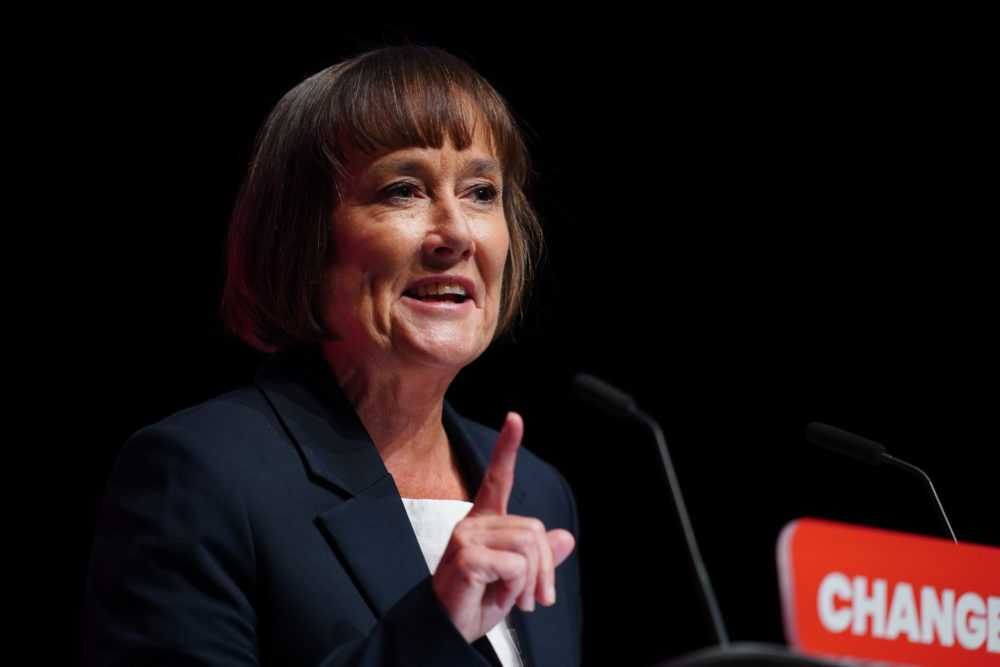
Nation Cymru reported an interesting claim by the Secretary of State, in which she suggested that an independent Wales would have a deficit of some £21 billion.
All she has done is simply illustrate an ignorance of what the ONS data says and indeed, her own ignorance of economics.
The first thing of course is that the ONS data she quoted was NOT that of an independent state, but the current position of Wales within the UK and on that basis, the published data needs to be properly understood.
The figures are taken from the ONS Total Managed Expenditure. These figures collect total taxation revenue and associated expenditure for all ‘regions’ of the UK, and that of course includes Scotland and Wales.
[mid-content-banner]
Apportioned
It is especially important to understand the way in which these figures are put together, the assumptions and the basis upon which they are collected. Almost all economic data is collected on a UK basis and then apportioned to the regions. Careful examination and the assumptions contained therein question the notion of a substantial deficit.
No data is accurate; differences in time, definition and accuracy are always an issue. This applies particularly to revenue collected in Wales. There are thirty-nine separate sources of taxation revenue, of these four provide the greatest amount. Income Tax and National Insurance payments are straightforward, based on the payee’s home address. By far the largest source is Value Added Tax (VAT), this is notably difficult to allocate with so many businesses in Wales owned externally and declaring this tax. This also applies to Corporation Tax.
Total Revenue for 2022/23 (the latest figures available) was £37 billion.
[lower-mid-content-banner]
Accuracy
The issue of accuracy applies even more to expenditure; there are 246 separate sources, some exceedingly small.
According to the ONS, Total Expenditure for the same period was £58 billion.
These latter data are based on the standard statistical approach of who benefits, that is additional intangible expenditure is allocated to reflect costs supposedly incurred by being part of the UK and from which therefore Wales “benefits.”
The highest expenditure was over £7 billion on sickness, disability and income support, a reflection of the overall health and wellbeing of the people of Wales. Ms Stevens might reflect on this figure.
The next highest, according to the ONS were Debt Interest, Defence, a General Expenditure allocation and Pensions. Apart from the latter – which is discussed later – all are allocated on the who benefits approach.
Allocated Debt Interest is £6 billion. Putting aside the legitimate argument that much of the overall UK debt has been for England’s benefit, this figure illustrates why interpretation must be careful. This figure represents 16% of revenue! No nation on earth has a level of debt that requires that much re-payment!
The same applies to Defence, currently £2.6 billion, or 7% or revenue; I am sure Putin would like to be spending that much!
There is an allocation for general expenditure of £4billion, £3billion of which is an accounting adjustment, the remainder expenditure on foreign bases, external activities such as embassies and a contribution to the BBC overseas service.
These three alone amount to £12.6 billion intangible expenditure; in other words, it is a book entry and not an actual cost.
Pensions
The cost of pensions, according to the ONS is £6 billion. Putting aside that a third or so claiming pensions have moved into Wales and that cost should clearly be allocated to England, there are different interpretations on the extent to which, after independence, the new English state has responsibility to continue payment to those who have, in their current working lives, paid for pensions. The received thinking is that this will be the case, there is a clear contract between those currently paying tax and insurance have a contract with the UK government.
Anyone looking at these data would laugh at the idea of a nation spending almost a fifth of its’ income on debt interest, or almost one pound in ten on defence, or some else’s pensions!
Summarising, the intangible expenses amount to £18.6 billion, subtracting this amount from the published expenditure of £58 billion, the actual difference is now £39.4 billion. Subtracting this latter amount from revenue of £37 billion results in a deficit of £2.4 billion.
But this is not the entire answer. Economies are dynamic; revenue moves up and down, as does expenditure. There were, for example, exceptional increases in expenditure during the pandemic, hopefully never to be repeated. Data for the Welsh economy for year pre-ceding the pandemic, and based on the intangible costs used here, there was a small surplus.
Spending priorities
Furthermore, an independent, sovereign state will set its own spending priorities and indeed, could construct its own, innovative sources of taxation.
A final thought for Ms Stevens and friends might think about. The UK budget deficit for 2022/23 was £177 billion, the national debt an eye watering £2.5 trillion (that’s twelve noughts). The UK has the highest level of taxation in seventy years, the highest level of personal taxation of all the nations in greater Europe and the second highest level of business taxation.
I am sure Nation Cymru would be delighted for Ms Stevens to explain.
Dr John Ball is a former lecturer in economics at Swansea University.
Support our Nation today
For the price of a cup of coffee a month you can help us create an independent, not-for-profit, national news service for the people of Wales, by the people of Wales.
Get more trusted Welsh news
Choose Nation.Cymru as a preferred source in Google News to see more of our journalism.
