


Opinion
If Starmer doesn't change his tune on Europe, he'll facilitate the rise to power of the far right
Martin Shipton
The seeds of complacency about the general election result are already being sown within Welsh Labour.
It’s a highly dangerous path to take.
Cardiff council leader Huw Thomas posted a message on social media that encapsulated the problem. Addressing Stewart Owadally, Welsh Labour’s general election campaign manager, he wrote: “Congratulations Stewart, and the whole @WelshLabour staff team for all your incredible hard work behind the scenes, helping to secure the most dominant Labour victory in Wales for a generation.”
Cllr Thomas’ triumphalism was typical of what’s been on display from Welsh Labour activists on the right of the party.
Yet while Labour won 27 of the 32 seats in Wales, their vote here was actually down to 37.0%, 3.9 percentage points lower than at the last election in 2019, when Jeremy Corbyn was the party leader.
Disastrous
Paradoxically, that election performance has often been described as Labour’s most disastrous since 1935.
To make a more local point, the number of votes cast for Labour last Thursday in Cllr Thomas’ home city of Cardiff was down from 107,016 in 2019 to 70,602 in 2024.
Former Bridgend Labour council leader Jeff Jones, who did the calculations, said: “And what about Caerfyrddin [a Labour target seat that was won comfortably by Plaid Cymru]? Labour held an eve-of-poll rally attended by Starmer. A seat the party clearly wanted and expected to win. In 2019 Labour got 13,380 votes and in 2024, 10,985.
“There is a clear pattern in Wales of thousands who voted Labour in 2019, when the party was led by the devil incarnate Jeremy Corbyn, not voting Labour in 2024 when it was led by ‘Mr Sensible’ Keir Starmer.
“How about Newport, where Labour wards were added to the city’s constituencies so it could keep two seats? 2019: 42,324 votes; 2024: 33,779 votes.”
Worrying
One part of the explanation relates to the worrying fall in turnout across Wales. At the general elections in 2017 and 2019, the voter turnout was roughly equivalent in Wales to that of the UK as a whole (69% in 2017 and 67% in 2019).
But last Thursday turnout slumped to 56% in Wales, four percentage points behind the UK as a whole.
That only three of Labour’s 27 successful candidates in Wales got more than 20,000 votes - Tonia Antoniazzi in Gower, Catherine Fookes in Monmouthshire and Anna McMorrin in Cardiff North - should also be taken as a warning, especially when compared to the mammoth vote totals achieved by Labour in Valleys seats in years gone by.
Even the voting figures in Keir Starmer’s own London seat of Holborn and St Pancras tell a story.
In 2015, when he was first elected and Ed Miliband was the Labour leader, 29,062 people voted for him. In 2017, when Jeremy Corbyn was leader, his vote rocketed to 41,343.
In 2019, Sir Keir’s vote dropped back to 36,641. But last Thursday, when Starmer won his landslide victory, his vote collapsed to 18,884.
Another factor that should worry Cllr Thomas is that across Wales, Reform UK was second in 13 seats, coming closest in Llanelli, where Labour’s Dame Nia Griffith was just 1,504 ahead of the Reform candidate.
Far right
To understand why Reform came so close in Llanelli, I spoke to local Labour councillor Shaun Greaney, who told me: “It’s worrying to see the creeping rise of the far right in working class areas, where diatribes about refugees and small boats have gained traction. They have latched onto local issues like the now abandoned plan to turn the four-star Stradey Park Hotel into a hostel for asylum seekers.
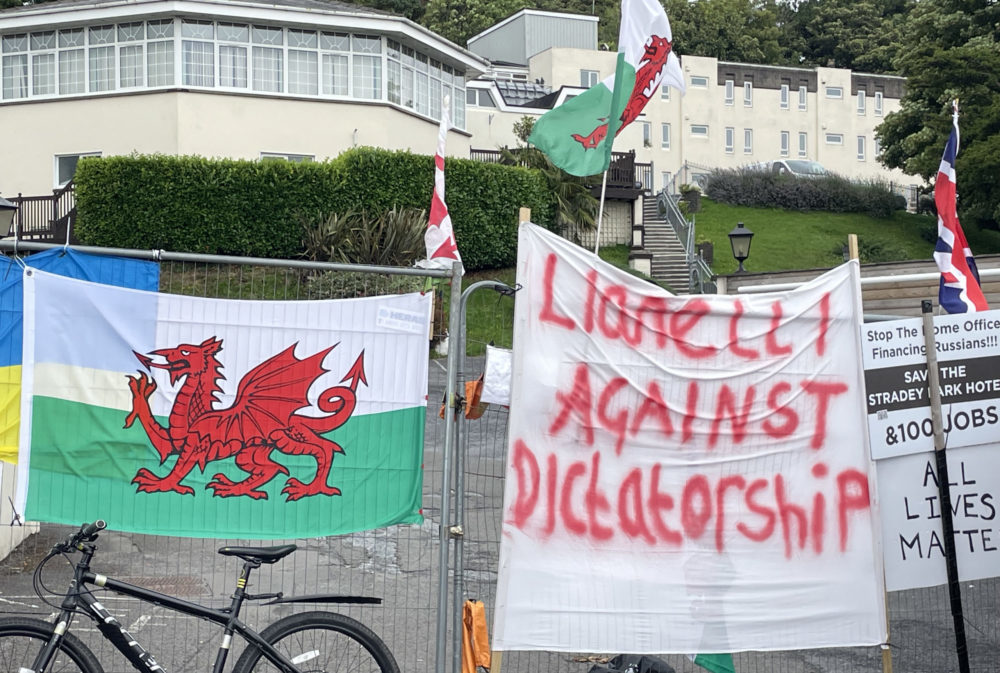
Despite the best efforts of the Labour Party locally, misinformation has been spread that Nia Griffith was supportive of the Home Office’s plan to turn the hotel into a dumping ground for refugees. The truth is that Nia, who has been the MP for Llanelli since 2005, went to the Home Office to oppose the plan and urge a rethink, which was exactly what happened.”
In a place like Llanelli, which has seen a reduction in well-paid job opportunities, a significant decline in the vibrancy of the town centre thanks to foolish planning decisions that have allowed the construction of out-of-town shopping centres, and a noticeable rise in visible drug taking, fresh initiatives are needed to chart a new course. In that respect Llanelli is a microcosm of many similar communities across Wales and the UK as a whole.
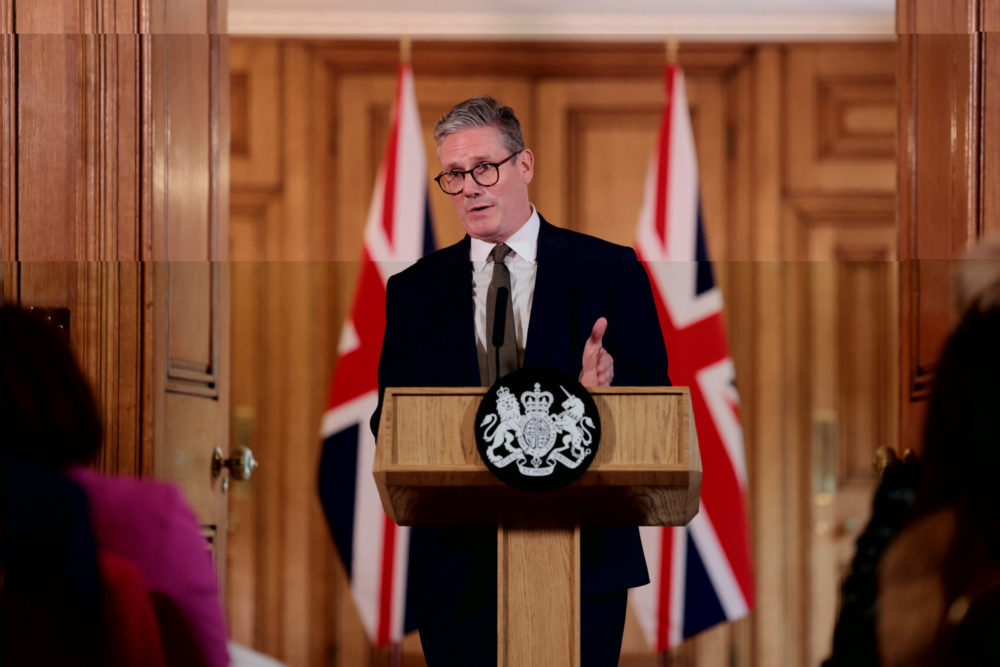
We have a right to expect that after years of dysfunctional Tory government, Starmer’s administration will take decisions that will improve people’s lives. Like every newly elected Prime Minister in recent decades, Starmer made a speech in Downing Street in which he sought to start his premiership on a high-minded note. Margaret Thatcher quoted St Francis of Assisi saying, “Where there is despair, may we bring hope”. Many, not least in Wales, would argue that she did exactly the opposite.
Starmer struck the right note by stating that his government would rebuild hope and opportunity in the UK "brick-by-brick" and show people that "politics can be a force for good”.
Nigel Farage
We must hope that he fulfils his promise without delay. The alternative would, without doubt, see Britain vulnerable to a takeover at the next election in 2029 by the populist far right. Nigel Farage has made it clear that the important general election from his point of view is not the one we’ve just had, but the one due in five years’ time.
He’s succeeded in the first part of his plan by maximising the Tories’ seat losses through standing candidates in virtually every British constituency and splitting the right-wing vote.
For the next five years he will behave as if he is the official Leader of the Opposition, constantly harrying Starmer and his ministers about everything that goes wrong and hoping to sweep to an unlikely victory in 2029.
Several reports from respected think tanks including Cardiff University’s Wales Governance Centre have been written analysing the new Labour government’s spending plans. All of them reached the conclusion that, despite assertions to the contrary from new Chancellor Rachel Reeves, the kind of austerity policies we have depressingly got used to under the Tories are likely to continue.
A day or two before the election Starmer himself gave an interview in which he made it clear that he didn’t expect the UK to return to membership of the EU in his lifetime. Nor does he expect us to rejoin the European single market or the customs union.
It’s a shame he didn’t make that clear earlier in the election campaign or we could have had a debate about Brexit, which both Labour and the Tories were desperate to avoid. Instead, Starmer has doubled down on the foolish decision to support a Brexit which he and every other sensible politician knows is disastrous for Britain and makes it immensely more difficult to achieve the growth we need to raise prosperity levels for ordinary people.
That’s despite consistent polling evidence that a clear majority of voters now accept that leaving the EU was a mistake and is doing economic harm.
There’s a huge irony in Starmer’s position. By kowtowing to Farage and refusing to contemplate the reversal of Brexit, he’s making it more likely that the populist far right will come to power.
Support our Nation today
For the price of a cup of coffee a month you can help us create an independent, not-for-profit, national news service for the people of Wales, by the people of Wales.
Get more trusted Welsh news
Choose Nation.Cymru as a preferred source in Google News to see more of our journalism.
