


Opinion
Flags, prescriptions and a disunited kingdom
Stephen Price
Back when Brexit was merely an idea many (but not all) of us thought wouldn't come to fruition, more than a few logical commenters pointed out that a vote without knowing what anyone is actually voting for was a rather absurd thing to present to a dissatisfied Britain.
Ignored voices suggested calm, clarity, a wait until we knew what we might be voting for, and there were sensible calls for a vote for a pre-existing package akin to Norway or others that are in, but not quite in.
Yes, Brexit means Brexit, but also, what the hell did it mean? We're only really beginning to find out now.
One of the biggest driving issues for the no vote, say what you like, was immigration, but second, perhaps - I'm happy to be proven wrong, was equity, fair play, chwarae teg - and a perception that the EU was pulling the strings, while we just danced to their tune (Westminster anyone?).
And now, as we look inward more and more, isolated on the world stage, the UK's inequity has never looked more obvious.
Like our supposed cousins across the Atlantic, polarisation is the norm, fuelled by social media and increasingly individualistic lives.
The Celtic nations have done quite well out of the new digital age, with much to gain from connection with the like-minded - rallying together, highlighting injustice like never before and generally bumbling along until lately, but England's differences to us have never felt quite so apparent as of late.
[mid-content-banner]
Y ddraig goch yn ddyry cychwyn
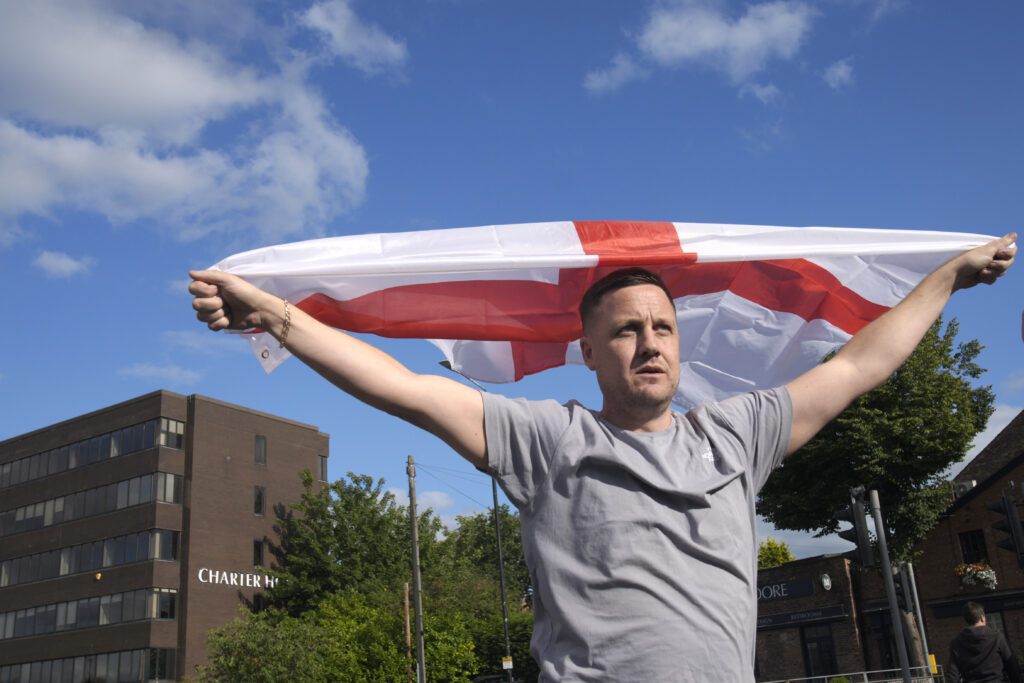
As the Guardian put it recently: "Just weeks after many people in England united around its national flag as the country’s female football team won the European championships, the cross of St George and the British union jack are being raised again in communities across the country.
"This time however, it is part of an increasingly organised campaign that claims to be purely about patriotism but which many fear – amid a climate of anti-migrant protests and rising far-right activity – could be much more divisive and dangerous."
Granted, many have darker motivations for its use, its appearance in protests near hotels housing migrants being the obvious giveaway, but the very fact that any conversation around a flag leads to questions of racism only proves the point of those who feel victimised and branded a fascist for displaying their nation’s colours.
Anti-racism campaigners say they have concerns about the motivation and timing of the movement. “We are concerned that the discussion around the English flag and patriotism is giving cover for racism driven by the far right, and – shamefully – by politicians of all shades,” said Lewis Nielsen, anti-fascist officer at Stand Up to Racism.
“We do feel the movement is quite dangerous and comes at a tipping point where the far right is trying to build.”

Here in Wales, we paint our faces with the Draig Goch, we fly the flag, wear the badge, sticker our cars and big ourselves up with the best of them.
Imagine, though, being told your flag is loaded, your national pride has caveats, your leaders' historical crimes are your cursed birthright.
Forget extraordinary poetry, prose, music, landscape, scientific breakthrough and individual goodness, English equals bad guy, hooligan, racist. Job done.
Any sane person would have an issue with that. I'd be driven to get behind my own if it was constantly derided, I'm sure.
Of course, the flag has been hijacked, but perhaps more harmful than that, the flag has been abandoned - with many instead, at best, hiding behind the Union Jack or an excused 'I'm not like the others and my nan came from the valleys and my dad's cousin's uncle was from Gretna Green, I think'.
And so, for many, they feel it's simply not their flag.
If the shoe was on the other foot, and the right-wing hijacked our flag (which happens) would we be so quick to leave it at the wayside? I would argue not, as we are, generally, a more cohesive, smaller nation which we can, and do, use to our benefit.
Where we see no cohesion, however, is not only across the border lines of our nations, but within England itself.
And we're all paying the price.
[lower-mid-content-banner]
Digital chip paper
Like so many of us, I'm tired of having to drag up the same issues, the same basic call for sense and equity, day in, day out, week after week and year after year.
Wales' insulting Crown Estate legacy has not lost any of its fire, but our leaders rely on our fatigue, our boredom in having to repeat, repeat, repeat, and then grow tired. Yesterday's news doesn't even have the benefit of becoming chip paper in this day and age.
Leaving that issue to one side, though, two news items sum up the UK's simmering tensions perfectly right now, namely the 'craze' of English flag flying and painting underway over the border, and 'health tourists' visiting Wales for our free prescriptions.

A GP from north Wales contacted Nation.Cymru recently, warning that this summer had seen a rise in the number of people who live outside of Wales contacting primary care requesting repeat prescriptions - usually claiming they have forgotten their regular medication at home.
The GP - who did not wish to be named - said: "There is a strong suspicion that people are doing this in order to avoid paying prescription charges, which they would have to do for their medication at their home address in England."
The Welsh Government abolished prescription charges in Wales in 2007. It came after individuals with chronic conditions reported cutting back on essentials like food and bills to afford their medication.
However, in England most working-age adults still have to pay for their NHS prescriptions. The current cost is £9.90 per item - although certain groups are exempt and receive free prescriptions.
The source shared: "Sometimes it will be the third time in 18 months that someone has asked for all of their repeat medication from the out of hours doctor.
"They always just say that they’ve forgotten them at home but it’s quite obvious that some people are doing it to avoid paying for their prescription in England."
[lower-mid-content-banner]
Chwarae teg
Sometimes, we view Wales' 'free prescriptions' as a humorous thing, a bonus for living in Wales, but we overlook the actual unfairness of it.
With friends, and family of friends, with long-term illnesses living in England, they don't get this little 'bonus' - is that really fair though? Forget the cheeky holidaymakers saving a few quid for a moment, and think of English citizens with chronic conditions.
Any valid call for fairness, and equity, also wishes for fairness and equity for others.
Having been out of work beforehand, unable to claim benefits, and coming from a working class council house background, I know what it means to not have, and to walk around a supermarket and wish I could throw in items with the abandon of others around me.
I've also been ill, and walked out of chemists with bags filled with items, and witnessed others throwing away items they had for free and didn't end up using.
For ill folk in England who have to pay for their prescriptions however, it must feel like another punishment on top of their suffering. Like dentistry, another example of our 'free' NHS not being free.
Imagine thinking twice about a doctor's visit because it might end up costing money down the line.
To label people freeloaders if they happen to be visiting Wales, just as we visit England (and have to pay, of course), when their ailment requires an item, isn't looking at the bigger picture of just how unequal the whole thing is.
Living in Monmouthshire, I've had plenty of colleagues who commute from just outside Pandy in Pontrilas (formerly within Wales), and worked alongside others living just outside of the border across Herefordshire. Unlike when I've been ill, sometimes seriously so, they've perhaps had to factor in the expense.
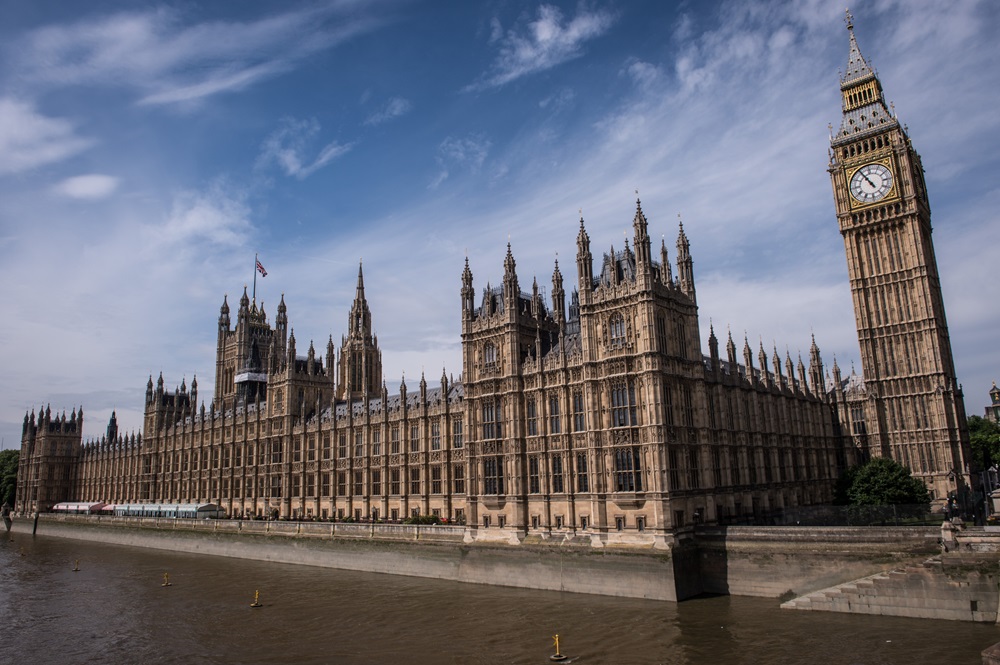
Starmer could, of course, sort this out and make them free in England, but even if he did, the issue remains that the United Kingdom simply isn't united and simply isn't fair.
Unfair too, beneath the surface of the simmering, angry and ‘racist’ motivations of protesters are hurt people, and people who have been sidelined and ignored and told their concerns are invalid, that what they can see with their own eyes is wrong, that politicians as always are right.
Fairness for England too
People are being driven into the arms of parties that are listening to their concerns, however misguided, and the two main parties are done.
We're tired of saying the same things over and over again, but politicians knowing best, social engineering the best, are carrying on business as usual, and behind the protests, both ugly and otherwise, is a lot of hurt, disenchantment, disenfranchisement, and inequity.
And in that inequity, is the lack of an English parliament (unless we see Westminster as being thus), and lack of English pride - where we pit ourselves against each other and count the things others have that we don't.
Of course we're divided and competitive, resentful and suspicious, when we don't get treated the same. And it could be remedied quite simply.
If we were to describe the 'United Kingdom' and its disparity across its nations to someone, accurately, we'd all have trouble relaying precisely what one country gets, what another doesn't, and why that's the case, beyond 'because English party leaders want it this way'.
Until the UK's countries gain their independence, with Ireland uniting, we need revolution and reinvention, and we all need to work together for a fairer society for all.
Be it prescriptions or Crown Estate lands, we, along with the English, must demand equal status in every way, shape and form for all peoples in all countries in the UK.
In the meantime, Wales will continue to pay the price for England’s toxic and seemingly unsolvable internal division.
Support our Nation today
For the price of a cup of coffee a month you can help us create an independent, not-for-profit, national news service for the people of Wales, by the people of Wales.
Get more trusted Welsh news
Choose Nation.Cymru as a preferred source in Google News to see more of our journalism.
