


Opinion
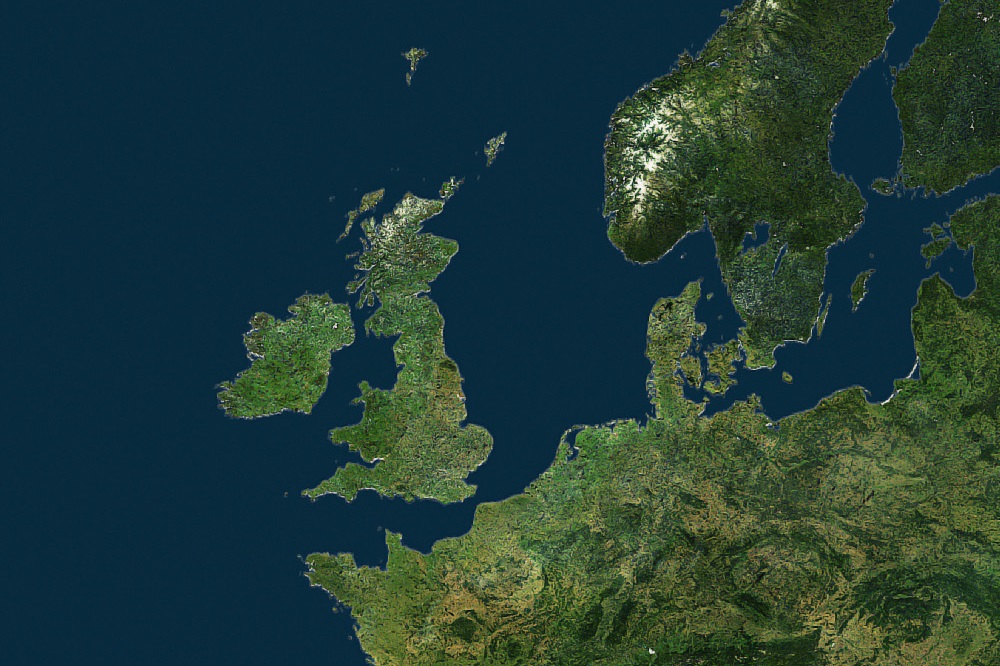
Could the UK's future lie as a partnership of modern sovereign states?
Glyndwr Cennydd Jones
Devolution involves a sovereign Westminster, in effect, delegating a measure of sovereign authority to the devolved institutions.
A confederation turns this constitutional approach on its head, advocating four sovereign nations of radically different population sizes delegating some sovereign authority to central bodies in agreed areas of common interest.
Such a model is explored in my booklet A League-Union of the Isles
The proposition is underpinned by the principles of social, economic, defence, and indeed political, equality and solidarity amid member nations, efficiently tackling our mutual interests, whether regional or global, and empowering each territory to address its own distinct combination of challenges and needs.
In constitutional terms, the new partnership is introduced through a codified confirmation that all powers and rights rest with the individual nations, which in turn delegate or pool a balanced portfolio of strategic functions and objectives to the centre by means of an agreed confederal treaty, with aspects of federal-type controls built into specific mechanisms.
- To sustain our economic union, the proposition assumes a common currency, bank and market, as well as an isles-wide responsibility for macro-economic decision making. This particularly aims to support fiscal decentralisation away from the current UK arrangements.
- The social union is maintained through the guarantee of individuals’ rights of movement, residence and employment across all member nations, along with continuation of the British monarch in role.
- In upholding our joint security, the forces of defence and organisation of foreign policy are both held centrally. This is the protective rock on which our shared values, as projected through common, practical functions, can develop, be maintained, and prosper.
Individuals relate to their member nation, initially, and to the centre next.
A Committee of Member Nations which comprises the First Ministers of the individual territories and the Prime Minister of the Council promotes cooperation, where necessary, on matters that, whilst requiring cross border coordination, are the direct responsibility of the National Parliaments.
[mid-content-banner]
UN General Assembly
Further, the sovereign member nations independently hold four seats at the UN General Assembly but retain the single collective permanent seat on the UN Security Council so as strongly to represent our shared geopolitical and geographical interests at the top diplomatic table—balancing change with continuity.
Therefore, the model embeds the values of equality and solidarity within its strategic objectives and practical structures, providing opportunities for these ideals to be reinforced in action through promoting partner members’ financial robustness and security going forwards.
As a counterweight to any encroachment or misuse of powers in enacting the shared, central functions, and since sovereignty rests with each nation, the right of secession is implicit in the model, subject to appropriate referenda and other treaty-bound checks and balances.
But, a federalist may ask, what is the difference between a League-Union of the Isles and a UK Federation?
It is the case that many of the central functions map across and, in both models, individuals participate democratically in electing representatives to established legislative parliaments at two levels of government. However, a fundamental difference rests in the nature of decision-making processes underpinning the application of shared functions.
Top-down
In a UK Federation, a top-down model of representational authority remains within an overarching framework of clearly delineated responsibilities assigned to the territories and that of the core, which remains the centre of gravity. This is especially true in party political terms.
There is no mistaking which body both spins and holds the threads. The territories remain within their bounds, discouraged from taking on a greater role in governing their peoples in time. The umbrella political identity is a powerful construct, likely constraining genuine national development, progress and reform.
In a League-Union of the Isles, on the other hand, the weight of influence and purpose rests with the nations. The centre exists to serve in facilitating the delivery of the common social, economic and security aims, as already outlined. Individuals elect representatives to take part in central policy decision-making processes mostly on behalf of their member nations’ interests.
Multicultural
With many now asserting a multicultural Welsh, Scottish, Northern Irish or English character before claiming a form of dual nationality which also embraces a British personality, it is legitimate to reconsider the nature of Westminster’s parliamentary sovereignty such that it more appropriately encompasses authority only over select key isles wide functions held in mutual interest and regard by the nations.
The consequential and pressing strategic issue going forward relates to whether sovereignty, as currently understood, should be shared across these five territorially defined identities (including that of Britain) in a traditional federal arrangement or instead assigned individually to the four nations—Wales, Scotland, Northern Ireland and England—which in turn would delegate or pool parts of their sovereign authority to common central institutions of a fundamentally British civic character.
As the traditional understanding of UK state sovereignty adjusts to the practicalities of an interconnected world, made more apparent since Brexit, there is an opportunity for those advocating greater autonomy for Wales, Scotland and Northern Ireland to progressively present a more sophisticated platform of debate for self-government, or even modern independence, which wholeheartedly subscribes to outward facing international structures as offered by a form of confederalism.
Now that provides food for thought…
Glyndwr Cennydd Jones is an advocate for a UK-wide constitutional convention. He is a Fellow of the Institute of Welsh Affairs.
A League-Union of the Isles is available here as an e-book and here as an easily printable pdf version.
Support our Nation today
For the price of a cup of coffee a month you can help us create an independent, not-for-profit, national news service for the people of Wales, by the people of Wales.
Get more trusted Welsh news
Choose Nation.Cymru as a preferred source in Google News to see more of our journalism.
