


Thu, 23rd July Cardiff 18°
Nation.Cymru wordmark
Advertisement

Opinion

Could the UK's future lie as a partnership of modern sovereign states?
By Mark Mansfield
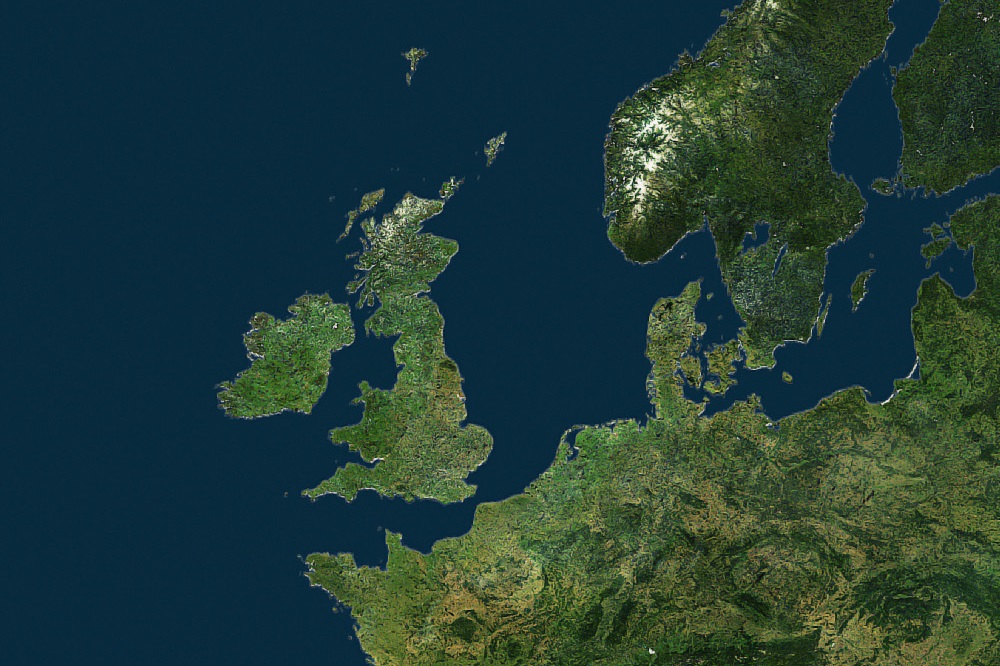
Photo Envisat satellite is marked CC BY SA 3.0 IGO

Glyndwr Cennydd Jones     

Devolution involves a sovereign Westminster, in effect, delegating a measure of sovereign authority to the devolved institutions.

A confederation turns this constitutional approach on its head, advocating four sovereign nations of radically different population sizes delegating some sovereign authority to central bodies in agreed areas of common interest.

Such a model is explored in my booklet A League-Union of the Isles

The proposition is underpinned by the principles of social, economic, defence, and indeed political, equality and solidarity amid member nations, efficiently tackling our mutual interests, whether regional or global, and empowering each territory to address its own distinct combination of challenges and needs.

In constitutional terms, the new partnership is introduced through a codified confirmation that all powers and rights rest with the individual nations, which in turn delegate or pool a balanced portfolio of strategic functions and objectives to the centre by means of an agreed confederal treaty, with aspects of federal-type controls built into specific mechanisms.

  • To sustain our economic union, the proposition assumes a common currency, bank and market, as well as an isles-wide responsibility for macro-economic decision making. This particularly aims to support fiscal decentralisation away from the current UK arrangements.
  • The social union is maintained through the guarantee of individuals’ rights of movement, residence and employment across all member nations, along with continuation of the British monarch in role.
  • In upholding our joint security, the forces of defence and organisation of foreign policy are both held centrally. This is the protective rock on which our shared values, as projected through common, practical functions, can develop, be maintained, and prosper.

Individuals relate to their member nation, initially, and to the centre next.

A Committee of Member Nations which comprises the First Ministers of the individual territories and the Prime Minister of the Council promotes cooperation, where necessary, on matters that, whilst requiring cross border coordination, are the direct responsibility of the National Parliaments.

[mid-content-banner]

UN General Assembly

Further, the sovereign member nations independently hold four seats at the UN General Assembly but retain the single collective permanent seat on the UN Security Council so as strongly to represent our shared geopolitical and geographical interests at the top diplomatic table—balancing change with continuity.

Therefore, the model embeds the values of equality and solidarity within its strategic objectives and practical structures, providing opportunities for these ideals to be reinforced in action through promoting partner members’ financial robustness and security going forwards.

As a counterweight to any encroachment or misuse of powers in enacting the shared, central functions, and since sovereignty rests with each nation, the right of secession is implicit in the model, subject to appropriate referenda and other treaty-bound checks and balances.

But, a federalist may ask, what is the difference between a League-Union of the Isles and a UK Federation?

It is the case that many of the central functions map across and, in both models, individuals participate democratically in electing representatives to established legislative parliaments at two levels of government. However, a fundamental difference rests in the nature of decision-making processes underpinning the application of shared functions.

Top-down

In a UK Federation, a top-down model of representational authority remains within an overarching framework of clearly delineated responsibilities assigned to the territories and that of the core, which remains the centre of gravity. This is especially true in party political terms.

There is no mistaking which body both spins and holds the threads. The territories remain within their bounds, discouraged from taking on a greater role in governing their peoples in time. The umbrella political identity is a powerful construct, likely constraining genuine national development, progress and reform.

In a League-Union of the Isles, on the other hand, the weight of influence and purpose rests with the nations. The centre exists to serve in facilitating the delivery of the common social, economic and security aims, as already outlined. Individuals elect representatives to take part in central policy decision-making processes mostly on behalf of their member nations’ interests.

Multicultural

With many now asserting a multicultural Welsh, Scottish, Northern Irish or English character before claiming a form of dual nationality which also embraces a British personality, it is legitimate to reconsider the nature of Westminster’s parliamentary sovereignty such that it more appropriately encompasses authority only over select key isles wide functions held in mutual interest and regard by the nations.

The consequential and pressing strategic issue going forward relates to whether sovereignty, as currently understood, should be shared across these five territorially defined identities (including that of Britain) in a traditional federal arrangement or instead assigned individually to the four nations—Wales, Scotland, Northern Ireland and England—which in turn would delegate or pool parts of their sovereign authority to common central institutions of a fundamentally British civic character.

As the traditional understanding of UK state sovereignty adjusts to the practicalities of an interconnected world, made more apparent since Brexit, there is an opportunity for those advocating greater autonomy for Wales, Scotland and Northern Ireland to progressively present a more sophisticated platform of debate for self-government, or even modern independence, which wholeheartedly subscribes to outward facing international structures as offered by a form of confederalism.

Now that provides food for thought…

Glyndwr Cennydd Jones is an advocate for a UK-wide constitutional convention. He is a Fellow of the Institute of Welsh Affairs.

A League-Union of the Isles is available here as an e-book and here as an easily printable pdf version.

For the price of a cup of coffee a month you can help us create an independent, not-for-profit, national news service for the people of Wales, by the people of Wales.

Get more trusted Welsh news

Choose Nation.Cymru as a preferred source in Google News to see more of our journalism.

Choose Nation.Cymru as a preferred source in Google News

36 comments

Arwyn

Diolch am hwn. I'm very glad Nation has chosen to publish this article. It deserves consideration. I've mentioned this in previous comments. It is a proposal that is much in line with Plaid Cymru's policy of a Confederation. It should not be confused with a Federal UK. There are significant differences. Whilst I personally would favour more autonomy than GCJ's proposal offers, it does provide the bulk of what we need. In short, yes it is a compromise ... but it is a compromise with which I could live. Moreover, I believe that it is a compromise that could win grassroots support around the UK - IMHO it stands a fair chance of success. As a peacefull pathway for progressive constitutional transition, it offers a great deal. There's a large degree of realpolitik to consider here. There is value in discussing this - particularly with the UK Labour Party and Lib Dems. In the event of a hung parliament with the SNP holding the balance of power ... could this be just the compromise to which we could all agree?

Reply
Dr John Ball

GCJ has written widely on this topic and his views are genuine and well presented. However, any argument in support of (any form) of federation ignores a simple fact. Ultimate power resides in Westminster and you can build in as many safeguards as you like...until another Boris (or heaven forbid Mogg) comes along fixated with the benefits of the union.

Reply
Arwyn

It's not a federation John. It's a confederation. There's a substantial difference. And no, power would not reside with Westminster. What GCJ has outlined here is a union of Nation States. Sovereignty resides with those states. If someone described it as a "mini-EU" I wouldn't argue much with them. I understand and agree with your arguments against a federal UK. My red line is that we should establish a Welsh Nation State. What our relationship with Scotland and England (Cornwall and the Isle of Man too?) beyond that I'm open to negotiating. My question to the indy community is this. If this sort of proposal was sufficient to move the indy-curious to being in favour of a Welsh Nation State in sufficient numbers to win a majority - would we go with it? What if it wasn't just Wales, but majorities in Scotland and England thought it a workable constitutional solution? Could we accept it? We are not currently elucidating successfully as an indy-confident community is what exactly people can expect of an independent Wales. Ok, Lab4IndyWales talk in vague terms of a socialist state. Gwlad have a very different idea. Plaid published its independence commission report. But how much of that cuts through? For most it's a leap into the unknown. So many conversations that I have feature anxiety over this. What this proposal has going for it is that it is a definitive something, a possible constitutional future that can be imagined. Can a fully independent Welsh State win a referendum? Can an independent Wales in the EU win a referendum? Could a Confederation of Welsh, Scottish and English States win a referendum? One thing I'm certain of is that the UK is moribund and that this is the interegnum in which we await its replacement. What I'm uncertain of is which path is the most peaceful and most likely to bring us to our new and much needed Welsh Nation State.

Reply

In reply to Arwyn

Richard

Gwynfor who many think first articulated the concept of self determination ( not independence) saw Wales as a nation that could live in a happy state with its neighbours- learning , sharing and respecting. He worked tirelessly to support partnerships and joint working across the Celtic Nations, Europe ( not just the then EU ) and the world 🌎. His world was that of small nations who shared cultural, linguistic and faith backgrounds bound together in peace ✌️. However all this democratic architecture was made possible by personal and community empowerment developed through learning, a fair voting system and cooperative principles. I really see this as relevant today indeed even more whst Wales needs.

Reply
The original mark

The next johnson is in the wings ready to enter stage right as we speak, Truss will continue were johnson has left off, and Sunak has said he will operate like Thatcher, ffs!

Reply
Gareth

As sincere as some of the people writing these articles are, the biggest problem they have, has been there for hundreds of years, ie, the English establishment will not, and do not want to lose, cede, or share any of the powers they currently hold, witness recent overriding of devolved powers, and attempts to to roll back current levels of devo. As damaging as some of the present arrangements are to Cymru, re justice, policing etc they have no intention of trying to fix the broken system or give us the power to make it work for Cymru. There is only one answer, and in our hearts we know what it is, Annibyniaeth.... Independance .

Reply
Arwyn

Even if the SNP hit the UBI button and succeeded, if the UK completely disintegrated, I think we'd all definitely look towards some sort of cooperation. We might end up at something similar regardless. In the end, the might of the British Empire couldn't keep the Irish Republic in the UK. I can't see how they can keep Scotland in now. In that event, political expediency will kick in.

Reply
Gareth

I think that whichever way it goes, it will not be voulntry on the part of the "establishment". And how much cooperation there would be, again there seems an attitude of " our way or the highway" when negotiating with the EU, and they also traditionally have an attitude of looking down on the devolved Govs, and the people who wrre elected to run them.

Reply

In reply to Gareth

Arwyn

Yes, agree with you there. Worth remembering though, the Tories represent the largest minority in terms of the English electorate. What's more, an increasing proportion of the English electorate are shifting towards a more exclusively English identity and towards English autonomy.

Reply

In reply to Arwyn

Gareth

The people of England need to realise that the voting system they are using, FPTP, is not serving them at all, and yes ,they are moving towards a more "English" identity, but they are still under the spell of the press, who are controlled by a tiny few, who want the status quo to remain. The system as it is, only works for a very small rich group of people, who will do anything to keep hold of power, not only to our detriment, but also that of the other 3 countries., and Labour seem to be attempting now to appeal to the nationalistic core of Englishness, that gave us Brexit.

Reply

In reply to Gareth

Arwyn

Again, I agree Gareth. And in that regard I think UK Labour is leaving Welsh Labour behind and I do wonder what they think of it all behind closed doors? I also think that Labour are appealing to the nationalism they think England has ... but are getting it wrong. Look at Starmer with his union flags in every interview. They think it's British patriotism their former voters want but it's Englishness identifiers that drives their thinking.

Reply

In reply to Arwyn

Gareth

I agree with a lot you are saying, and thank you for engaging in reasoned debate with me.

Reply

In reply to Gareth

Arwyn

Dim problem a diolch i ti hefyd Gareth 👍 I'm very happy that these conversations are taking place. Looking forward to the results of the ongoing constitutional commision. I feel like the future is begining to take shape.

Reply

In reply to Arwyn

Derek

Nicola Sturgeon won't press the UDI button. She makes glaciers look fast-moving.

Reply
William Glyn THOMAS

“Lloegr” yw’r broblem, fyddan nhw ddim yn rhannu cyfrifoldebau ac fe fyddan nhw’n mynnu mai nhw sydd â’r gair olaf. Mae Lloegr bob amser yn pennu a disgwylir i eraill gydymffurfio heb unrhyw iawn.

Reply
CapM

The three bullet points -economic, social and security are all being delivered by various partnerships, agreements, the EU (etc) and NATO for many sovereign nations across Europe. And all without the need for any of them to be in a confederacy.with their nearest big neighbour Maybe Glyndwr Cennydd Jones and others who can't for reasons of sentiment and habit can't bring themselves to opt for an independent Cymru could be consoled if the right to hold street parties to celebrate royal weddings, jubilees, births, passing a driving test etc was enshrined in our constitution.

Reply
John Williams

As I understand it, GCJ's proposal is indeed for a wholly independent Cymru, one which would choose to delegate some powers/functions to an inter-national body in a similar way to France and Germany do to EU institutions. But, in the same way that the UK has withdrawn from the EU, it would remain free to withdraw from that body at an time. Have I misunderstood?

Reply
CapM

As I understand it this Confederacy /League Union of the Isles is a fantasy. An imaginary future for some that see the break up of the UK happening before their eyes but can't bring themselves to accept. It can only exist if England accepts that it will be one of four equals. Anyone like to but some cold hard cash on that happening?

Reply

In reply to CapM

Alun

"As I understand it this Confederacy /League Union of the Isles is a fantasy."  Everything's a fantasy until it happens

Reply

In reply to Alun

CapM

But importantly it should be understood that not all fantasies happen. Some, (most) remain fantasies. In my opinion ,based on the logic I've already outlined, this League Union confederacy confection is one of them.

Reply
I.Humphrys

The new Multi-Polar world is to be welcomed by those wanting a fairer order, instead of the bullying by the West. Cymru should look at how it fits into this. We could look at the enlarged BRICS. Do we accept having our boys in the "Welsh" guards? Me? I am a nationalist.

Reply
Dean Thomas

Interesting comment. If you are a not a nationalist, then what are you? Communist? Cosmopolitanist? Anarchist?

Reply
I.Humphrys

The job of nationalist in today's Cymru, is to get as best a deal as possible. Read my comment with that in mind.

Reply

In reply to I.Humphrys

CJPh

Even if the current "Liberal economic order" (to quote a Democrat party strategist) breaks down, Welsh interests will doubtlessly lie with our neighbours and those with whom a pre-established relationship exists - USA, Canada, Australia, New Zealand, Northern Europe, EU states, India (who, along with Brazil, are drawing away from the BRICS bloc rapidly), Japan, South Korea, plus special relationships with celtic nations and, crucially, England. The economic bloc you suggest we align with have even more problems than the anglosphere/westernised states.

Reply
Brian Clement

Everything depends on England. If there is a push for an English Parliament (and English Independence) in the months and years ahead, then we will be able to start to conjure up options, Until then, this is merely swimming against the tide.

Reply
The original mark

2 things, who controls the money and does every one agree the UN is a force for good?

Reply
CJPh

So... Yugoslavia then? Is it a Soviet model? Or is it a mini EU minus a France to counterbalance German dominance? Or is it a US model that effectively turns the smaller nations into administrative districts of equal sovereignty to "West of England" or "Greater Manchester Metro Area"? I like a lot of the ideas expressed but the overarching structure fixes in all these options rather than allowing for opt-outs like treaties between two fully autonomous states would. Baltics, nordic or low country models would suit better,IMO. Well written, well intentioned, poorly reasoned and unworkable - the trappings of autonomy with no "there there".

Reply
Arwyn

I think you've judged it very harshly and IMHO reached a few incorrect conclusions about it. Whether we agree or not, AFAIC these sorts of proposals are starting points for debate and not constitutional endpoints. The reason I wanted to see this idea given some air is to stimulate some thinking about what the future looks like amongst those who favour a federal UK ... that would be a lot of pro devolutionists in Welsh Labour and Lib Dems and in amongst the broader public. In so many conversations that I have with people, the notion of a shared British identity, institutions and freedoms to travel and work etc feature prominently - ironic I know given what happened in 2016. Now these are people who are fiercely Welsh. They do not want an isolationist independence - they fear that. However, when I discuss the idea of nation states working in a confederation they warm to it. I often get the refrain "OK, but it would have to be a very close relationship." I always come back to my red line which is that Wales must have its own Nation State in order to thrive. But if we're to pursue a purists vision I'm concerned that we will fail to bring people with us. GCJ's proposal is not my ideal but if it were to happen, I could live with it. What I'm trying to say is that in the end we will get our Nation State when a majority of the people of Wales vote for it. We have to be prepared for it to be a Nation State on terms and in a context with which they are happy.

Reply
CJPh

I completely get it as a thought experiment, but with all due respect to you and Mr Jones, it isn't presented that way at all. It's presented as a working model. I'm judging it on that basis and playing the Unionist devil's advocate. I'm not sure it's the ever ephemeral, fuzzy Britishness that is the reason for the draw towards remaining in, effectively, a re-branded Union - whenever I question people who claim pride in this identity, they cannot explain what it means. I think it's the fear of the unknown (plus some unfounded and also some well-founded neuroses about our own abilities as a polity) that will always be at the heart of a minority that exists in a system that isn't tyrannical, isn't poor, but keeps them in a perpetual state of "just behind the curve". The major problem I have with this proposal is that all other systems that have been tried that resemble it fail spectacularly (save the EU, sort of). One anti-indy voice is needed to say "remember the balkans?" and the proposal falls flat. The system post indy is nowhere near as important as fostering confidence in the notion of general self governance - pin the whole shebang to one proposal and we fail in our endeavour. Again. Socialists, trade unionists, Liberals (like us), Conservatives, nationalists and the rest need to agree that indy in and of itself is an inevitability and eschew the instict to pre-define (which ALWAYS leads to, mainly amongst the further left and the language/heritage nationalists in our ranks, to start using the language of hijacking - "if not *add utopian policy preferences/language mandates*, then what's the point of independence anyway?" Pragmatism and a Socratic approach to FAQs is confidence building. Full package models in geopolitics fail totally when they fail. Always enjoy these interactions, by the way - they feel generative and give me hope.

Reply

In reply to CJPh

Arwyn

I still think yours is a very negative take. Other bespoke arrangements such as Benelux and the Nordic union have held up well and those are alongside EU membership apart from Norway. IMHO the isolationist nationalist spasm that is Brexit demonstrates the value of cooperation between nations. You say that you judge the proposal in its entirety but I don't think that's necessary. The end of the UK is inevitable, I wholeheartedly agree. What follows is not; albeit inevitable that it will come down to negotiation and political expediency. I think it is very healthy to have a number of proposals such as this one and others different so that public opinion can be engaged. As I said before, it's not my ideal. I would prefer a looser arrangement based on a "Council of the Isles" to agree FoM, work, cross-border matters, pensions etc. I would prefer our own currency and I would not choose the monarchy as our head of state. I'm prepared to fight for what we need, but prepared to compromise in order to move us along from the status quo. At the end of the day we'll get what we vote for so we need to put something in front of people that they feel they can vote for.

Reply

In reply to Arwyn

CJPh

If you look back at my original post, Arwyn, you'll see that I advocate for a model based on the various regional cross-national arrangements you suggest here - these work because each nation voluntarily agrees on the parameters of the deal without ceding sovereignty. Such blocs and arrangements can be opted out of far easier than the legal framework being proposed here. CapM's point as to the real-life problem with implementation echo my concerns as applied to our sovereignty - we cannot avoid the fact that England's population dwarfs those of the other nations - even if we all agree to the terms, the reality would be an increased tension between the constituent nations (England being bullied by economically, geographically weaker nations or England calling the shots and effectively running the whole operation like in the UK). A Federal UK, a confederated island, total/partial sharing of key decisions at a national policy level all fail on cursory analysis. As a thought experiment, fine. As a talking point on the doorstep, in the media or in general conversations with those who are not yet convinced regarding indy, however, it is an absolute loser. As Welsh self-confidence increases, questions like "If Ireland, why not Wales?" force those on the fence to either agree or admit that they do not believe that Wales and the the Welsh can. This awkward conclusion is increasingly old-fashioned and even worthy of derision and shaming (if trumpeted too loudly). Our culture seems to have rebounded to a healthy place; confident, coherent and creative. Time for the political players to follow suit.

Reply
CapM

People really need to understand that the establishment of a Confederacy in any real and genuine form does not depend on what the people of Cymru (also Scotland and NI) want or will accept. It depends on what the people of England and the English establishment are willing to give up. That is giving up control over the three other components of the UK and seeding a degree of control to them in order keep a semblance of a UK in existance. A confederacy model is less attractive to England than the separation of the UK. This is because in a confederacy Cymru et al will have a say in how England is run. If Cymru et al are independent they will not have a say in how England is run.

Reply

In reply to CapM

Arwyn

Some truth in this. It depends on a majority in each of the nations agreeing to it ... but England being where the bulk of the MP's are at the moment makes it the body politic that needs winning over if it's to pass. I'm not as pessimistic as yourself in terms of what England would agree to. I do think it would likely be a lighter touch approach than what GCJ is proposing here.

Reply

In reply to Arwyn

CapM

"It depends on a majority in each of the nations agreeing to it .." What makes you think that the body politic of England would agree to having less of a say in the running of England than it does now? "a lighter touch approach" would not deliver a confederacy. A lighter touch at most would deliver some form of devo-max where when push comes to shove power over Cymru et al rests at Westminster. I'm not pessimistic I'm realistic. A constitutional proposal that's based on England compromising it's sovereignty is a proposal based on wishful thinking at best.

Reply

In reply to CapM

Llywelyn Ein Llyw Nesaf ond Un

How about starting with independence for Cymru, Scotland and indy/reunification for NI. Create a 3-member League. If England wants to join later, it can be negotiated. Bonus is that approach saddles England, as the successor state of the UK, with the entire UK National Debt!

Reply
Llywelyn Ein Llyw Nesaf ond Un

One question: How are decisions made about matters of common interest? One country, one vote? And how do you have a tie-breaker? Or go for unanimity? And unanimity is tricky - it depends on the question. Do we vote to keep Trident or vote to ditch Trident. Neither would achieve a unanimous decision. And why would the League get a seat on the Security Council? The UK would have ceased to exist.

Reply

Leave a reply

Replying to Arwyn Cancel

Yes, agree with you there. Worth remembering though, the Tories represent the largest minority in terms of the English electorate. What's more, an increasing proportion of the English electorate are shifting towards a more exclusively Engli...

Comments are reviewed before they appear.