


Sat, 18th July Cardiff 24°
Nation.Cymru wordmark
Advertisement

Opinion

BME communities have been overlooked in conversations about Wales and Brexit
By NationCymru
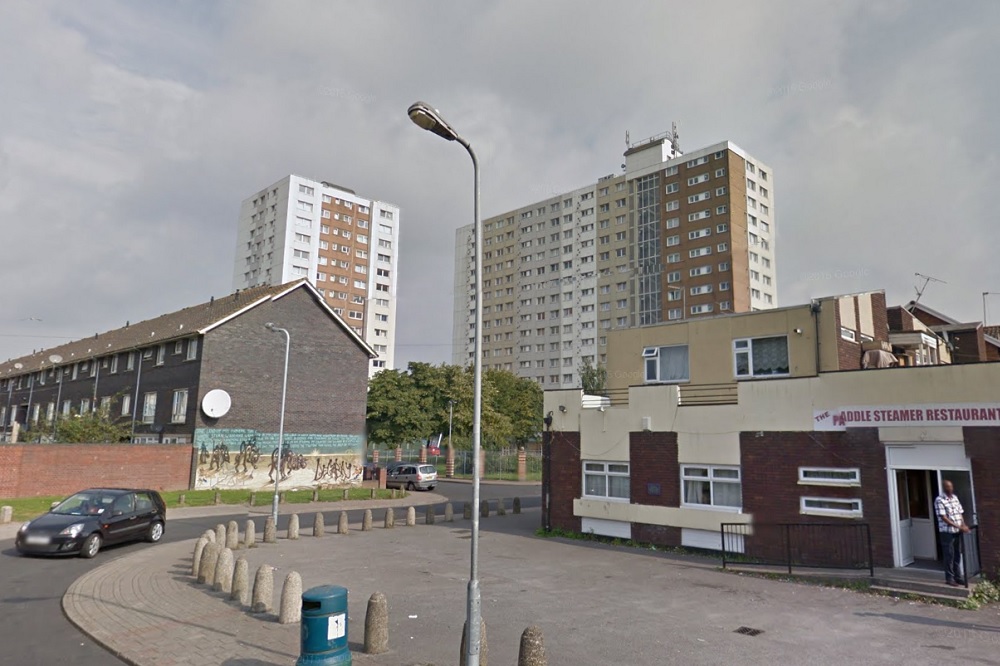
Butetown in Cardiff, one of of the most diverse communities in Wales

Yasmin Begum

Discussions on Brexit and Wales usually tend to have a few characteristics: they’re usually written by someone based in London, with little knowledge of Wales and with a pre-conceived idea that the people of Wales voted against their own interests when they voted to leave the European Union.

The original campaign for the EU Referendum in 2016 made little mention of Wales. The lack of a Welsh public sphere meant that the campaign in Wales was largely an extension of the wider British political and media Brexit campaign.

As a result, the complexities of Wales’ attitude towards the EU have not been well explored in the media and still tend to come back to the stereotype of the white working class in the valleys voting against their own interests.

This narrative has been dominant since 2016, with media from the Los Angeles Times to CNN reporting on how the valleys received a “flow” of money from the EU - “showered with cash from the EU” as the Guardian had it – but turned their backs on it.

The suggestion is that the people of these communities were little more than ‘Twrcyn pleidleisio i Nadolig’ (Turkeys voting for Christmas) as the Independent put it in broken Welsh.

This simplistic portrayal of working-class Welsh populations voting against their own interests has remained largely unchallenged to this day, exacerbated by a lack of Welsh media which could develop a more accurate narrative.

One element that these analyses miss is the stigma that came with these EU handouts that were spent by others and seemed to have little direct influence on people’s lives. Philosopher Huw Williams has discussed how the blue badges of the European Social Fund have come to represent of poverty or deprivation synonymous with the awarding of these grants to low-income areas, with little opportunity for community input on how the funds are spent.

However, one of the main problems with the prevailing narrative of the Welsh working-class turkeys voting for Christmas is that it portrays both Brexit voters and the working-class as homogeneous groups.

[mid-content-banner]


Scapegoat

Of course, Wales’ Brexit voters weren’t all working-class – and Wales’ working class is not a homogenous cultural and ethnic group.

There’s a series of divides that unconsciously govern how Wales is discussed: urban/rural, Welsh-speaking areas/non-Welsh speaking areas, the (white) working-class/the non-working class. Race isn’t spoken about, especially in the context of Brexit, except to highlight a rise in hate crime post-Brexit in Wales.

The existence of BME Welsh people has been far too easy to overlook for some, particularly the Census who seem to think that being Welsh and a person of colour is impossible.

Despite this, data from 1991, 2001 and 2011 has shown BME communities growing across Wales. And the 2021 census will probably reveal another huge growth in BME communities in Wales.

But most of the time, BME Welsh people are forgotten completely. This is particularly true in discussions about Wales and Brexit, not just in how people voted - 75% of all BME voters in the UK opted to remain in the EU - but also the impact that Brexit will have on these communities. For instance, there has been almost no discussion of why women of colour are most affected by austerity across Britain.

The irony is that ‘Cardiff Bay’ has become a shorthand for the Senedd and Welsh Government in much the way that ‘Holyrood’ and ‘Westminster’ has become shorthand for the political centres of governance in Scotland and England. But the actual communities that make up Cardiff Bay are largely invisible to these same liberal media commentators.

Akwugo Emejulu in “The Hideous Whiteness of Brexit” asserts that a “key argument” of Brexit was that “the working class (who were unquestionably assumed to be white) were suffering under the burden of mass immigration, which transformed the culture of their neighbourhoods and put undue stress on public services”.

This is absolutely at the heart of Brexit in Wales, with the Welsh working class used as a scapegoat to explain Wales’ complicity in Brexit by predominantly middle-class Welsh, British and English commentators.

Of course, “white” is rarely affixed to “the Welsh working class”: it doesn’t have to be, it’s often implicit.

But there is no working class in Wales without the black and minority ethnic working class. It’s impossible.

But the myth of a homogenous white working-class somehow extracted from the multiracial fabric of the Welsh working class are becoming a key starting point for explorations of Brexit and Wales - to the detriment of truly beginning to understand Wales and Brexit.

Coffeegate

An example of this was when the Labour MP Owen Smith, during his Labour leadership bid, attempt to appeal to the masses by not understanding what a cappuccino was. Upon being presented with a cappuccino, he feigned shock to the Observer newspaper as he doesn’t drink “frothy coffee”, preferring to use a mug over a coffee cup over a latte cup.

There was just something about being seen as a cappuccino drinker as a marker of cultural or class habit that Smith absolutely had to reject during his campaign to appear to “appeal” to the working class.

Commentators online were keen to bring up the long multigenerational history of Italian immigration to Wales, and particularly the valleys: the constituency that Smith, at the time, was representing as an MP.

Coffeegate was a clear example of how Owen Smith patronisingly viewed the communities to whom he wanted to appeal. It was a homogenous group of anti-elite, culturally conservative working-class voters, rather than a community of different cultural groups that had made the valleys their home.

However, conversations that talk about class as devoid from race but shaped by whiteness can create these vacuums where the “needs” and “wants” of the white working-class itself can be used as a mood and soundboard for non-working class communities.

If English and British media is disproportionately privately-educated, Oxbridge-educated and not representative of England and Britain at large, it is no real surprise that their understanding of these communities will be superficial.

But this leaves us in a position of not just having to interrogate the coverage of Wales, but also depictions of Welsh communities themselves.

Can we trust the impartiality of the London-based BBC to represent Wales as a culturally, politically and racially diverse political landscape?

And because news coverage is rarely as objective as claimed, we must also ask whose interest is it to pit black and minority ethnic people in Wales, immigrants and migrants in Wales against the white working-class Welsh communities in Wales.

For the price of a cup of coffee a month you can help us create an independent, not-for-profit, national news service for the people of Wales, by the people of Wales.

Get more trusted Welsh news

Choose Nation.Cymru as a preferred source in Google News to see more of our journalism.

Choose Nation.Cymru as a preferred source in Google News

18 comments

Huw Davies

BME communities overlooked ? Well maybe that's true, but they are by no means an exception. Indeed on reflection did any community or region of Wales get any consideration by the London-centric debaters leading up to 2016 or even during the serial cock-ups of 2016-19 ? I defy you to give me a good example of a group whose needs and interests were given consideration. Good reason to dump London and go for independence a.s.a.p. By the way I'm not a big fan of E.U in its present shape either, but as an independent entity we can have a debate on a rational basis about staying out or applying for re-entry. Within the U.K we're just that overlooked bit on the west end that serves as a water supply, power station, holiday camp, old people's home, and rapidly growing penal colony. And that's a vision shared by those lax types running "government" down the Bay.

Reply
Plain citizen

It's only in the last few years that the white working class has been identified as an overlooked segment of society not having the powerful media savvy pressure groups of ethnic minorities, gays, transgender etc etc who have so successfully appealed to the hand wringing, guilt ridden middle classes who so often wield political and economic power. The white working class itself is not a homogenous group but contains many different strands of experience and opinion. It would be interesting to know what the proportion is of BAME Welsh citizens in the total population. They should be treated with the normal courtesies and considerations and have the same rights that should apply to every citizen.

Reply
j humphrys.

Happy to know bame voted Remain. Few expats in Europe support Brexit, but do want to improve Europe. England leaving makes creating a Federal Europe much easier. Hard to say whether Angela Merkel will be first president, but she's not too old in my opinion. Anyway, the usual phrase is "we shall see".

Reply
Ann Owen

Very interesting article - we really do need a Welsh based, Welsh focussed media that can portray our country as it really is, and get to grips with the challenges we all face. Thank you Yasmin Begum. Just one point, it's interesting that EU investment in the Valleys is described/viewed as a "handout" - this has always been the Tory and Brexiteer view of EU funding, and I suspect the proposed new UK fund. It serves to reinforce the narrative of "poor" Wales. In reality these were investments, as in other parts of Europe, to raise the economy and prosperity for our people, for the good of the whole of the EU. Some counties in the West Wales part of the EU investment area voted to remain and are proud of the EU investment in their communities and the blue badges - I suspect that the difference is that these counties brought communities and local people directly into investment efforts, and supported THEIR projects. Again thank you Yasmin Begum.

Reply
Simon Gruffydd

"a homogenous group of anti-elite, culturally conservative working-class voters" - that's an apt description of the Welsh nation, or what's left of it inhabiting south Wales, approximately 3/4 of the Welsh population. If you don't like it, you can always move to multi-cultural England and blend in. And Wales is an ancient European nation, which in the crass racist terms of the 21st century, means that it is unapologetically "White". Get over it.

Reply
Rob Bruce

Congratulations for (deliberately) not understanding a single word that Yasmin had to say.

Reply
Simon Gruffydd

Contrary to Yasmin's assertion in this article, the south Wales valleys is not a home to "different cultural groups " to any significant extent. It is largely homogeneous. That's our strength. It creates social cohesion. No apologies.

Reply
Alwyn J Evans

What Brexit highlights and the article hints at, is white working class, BME working class, rural working class, urban working class have different 'grievance energies'. As for the media, the correlation between situational and proximal environments and brexit vote, will never make a headline in the sun or the western mail. It's not a Welsh/UK thing, it's just not what our media do.

Reply
Walter Hunt

Few in Wales will look back at the last 47 years as a golden age. It was characterised by decline, dissolution and depurposing: Tiger Bay, The Rhondda, Rhyl, Amlwch. Other than those intent on divide and misrule, why the interest in who voted which way on 23.6.16? If communities are being created in Wales along class, racial or religious lines, then Wales has imported from continental Europe one of its least worthy traditions: the ghetto. People in Wales shouldn't look to London or Brussels for their salvation or for some fix to the problem of society's "left behind". The only hope for that lies with the people of Wales.

Reply
j umphrys

England generally imports social from the USA. See Elvis Presley "In The Ghetto".

Reply
Citizen

More nonsensical narcissistic wokery and divisive cultural marxism. It seems the writer has been substantially brainwashed and indoctrinated by the education system and other influencers. It's all about her and how she wants Wales to be to suit her needs and obsessions. Utter selfishness. She should be asking what she can do for the nation and how she can help to save and protect this amazing and ancient nation rather than pushing her own obsessive agendas

Reply
Rhosddu

She has form in this regard, having offended just about every Welsh person by claiming that the Eisteddfod Cenedlaethol is 'racist' because no ethnic minoritiy people have ever competed in it (although there is no colour bar), and condemning the Gwladfa in Patagonia in terms that make it sound like an act of imperialism. The result of her idee fixe has been in effect to turn her into a troll; she may, in fact, be the only troll ever to have an article published on Nation.Cymru.

Reply
Catherine Cole

Some interesting points raised. There are obvious discrepancies between the view of Wales from London and the way we view ourselves. I think the view of Wales as 'white' might be a consequence of a national identity based in righting a wrong, done to us by the Normans, that predates immigration by several hundred years. Communities in the Valleys are mostly working class and white. These areas may not be in the permanent decline they once were, but they aren't thriving, either. Most people living here have a reason to carry on living here and the reason is family. It's not necessarily a problem that the settled communities in the Valleys are almost exclusively white, is it?. Individuals need jobs, homes, schools and social infrastructure whatever their background. When it comes to Brexit, I voted remain. I have no idea how any of my neighbours voted because I've never asked them and they've never asked me. There is no 'group think' amongst white working class voters that dictates how they are likely to vote. We had a referendum, Leave won, my side lost. It's not massively divisive. That is how democracy works. I doubt if immigration was a factor. I didn't talk to many people about how they would vote before the referendum. Those that I did speak to were very concerned about the closure of Tata Steel or the NHS. I think we need to be careful about connecting culture and ethnicity to the basic needs people have that should be addressed by government. When Owen Smith talks about Italian Immigration up until the 1940s, he is talking about the grandparents or great grand parents of people who are approaching old age now. If you had 1 Italian grandparent and 3 grandparents who were British, why would you celebrate one grandparent and not the other 3? And what relevance do any of your grandparents have on a given day when your biggest problem is trying to register with a dentist? Culture is something that individuals carry with them. Government wastes far too much time discussing culture as if it's something only middle class people have. Politicians love to talk about Culture because it makes them feel like intellectuals. They aren't academics. Some of them aren't particularly bright which wouldn't be a problem because, in the real world, they were elected to make sure that schools can afford their heating bills and roads are tarmacced. The obsession with Brexit and labelling the working classes as bigots comes from the resentful realisation that nobody listens to the middle classes. Quite right too, in my opinion. I've never met anyone who voted for these idiots to tell us what to think. Why does it matter if the BBC is impartial if they aren't particularly influential?

Reply
Rhosddu

You're right about Welsh people who have one Italian grandparent. Like anyone with one continental ancestor, they will have been born and bred Welsh. But the BBC not being "particularly influential"? Oh yes, they are -- very. As for the article, the truth is that Cymru is nowhere near as ethnically diverse as Yasmin Begum would like to think it is, outside certain parts of Cardiff, nor is there any evidence whatsoever that "the 2021 census will probably reveal another huge growth in BME communities in Wales." Catherine Cole is correct in saying that "Communities in the Valleys are mostly working class and white." As for Brexit, middle-class commentators with a London mindset must accustom themselves to the fact that Valleys people's main motive in voting Leave was to curtail (East European) immigration, even if in doing so they shot themselves in the foot. The "handouts" from the EU did not persuade them to vote Remain because they have seen little tangible benefit from those handouts, since the real beneficiaries of that money have been third-sector con merchants with Labour Party connections and, now, rewilders from the other side of Clawdd Offa seeking ownership of chunks of Welsh countryside. The presence of non-white individuals in Wales is not a significant factor with regard to the problems the country faces in terms of its survival and its future. Most are probably happy to consider themselves Welsh, and if they don't, then their children almost certainly will; like East European free-movement communities in Wrecsam, they will quickly become ghettoised if they don't. But Wales has bigger issues to confront than this.

Reply
Jack

Having grown up non-white in the valleys I absolutely agree that it is essential that the stories of minorities in Wales are provided platforms through which they can be told, and I don't think they've been told enough - along with so many other stories. That being said, much of Wales is just as homogeneous, conservative, and "white" as it is imagined to be. Forgive me if I'm wrong but it seems implicit in your argument that Wales would be improved if it was less conventionally Welsh (pubs, rugby, ruddy farmers in flat caps, pure hearts fairer than the prettiest lily, and so on), and more diverse, home to more people who don't have such deep roots in the place. Nothing necessarily bad about that either, but my point is that for a thing to maintain its form different forces must to be balanced, so I hope there's a space we can collectively discover between : a. A left-wing cultural relativism/diversity fetish that fully expressed would erode and destroy the fragile structure of Welsh nationhood and unity and b. culturally and racially exclusionary nationalism that ossifies the imagined people into a set of assumptions or worse instructions, and which replaces what should and could be an organic and trans-generational project of iterative re-definition with an identity rooted in fear of others many thanks for reading

Reply
Rhosddu

Sylw da, Jack. You are streets ahead of Yasmin Begum in your analysis of what is best for Wales in respect of this issue.

Reply
j humphrys

45% of Welsh men carry Celtic Y R1b S145. Studies show clear distinction from over the border. I still listen to Sun Ra, as well as Louis van Beethoven, however!

Reply
Mawkernewek

Even the most strongly Leave local authority in Wales was only 62-38%, so it can't be said that a large majority of people in Wales voted to Leave and that they did so because they conform to particular stereotype.

Reply

Leave a reply

Replying to Alwyn J Evans Cancel

What Brexit highlights and the article hints at, is white working class, BME working class, rural working class, urban working class have different 'grievance energies'. As for the media, the correlation between situational and proximal e...

Comments are reviewed before they appear.