


Opinion
BME communities have been overlooked in conversations about Wales and Brexit
Yasmin Begum
Discussions on Brexit and Wales usually tend to have a few characteristics: they’re usually written by someone based in London, with little knowledge of Wales and with a pre-conceived idea that the people of Wales voted against their own interests when they voted to leave the European Union.
The original campaign for the EU Referendum in 2016 made little mention of Wales. The lack of a Welsh public sphere meant that the campaign in Wales was largely an extension of the wider British political and media Brexit campaign.
As a result, the complexities of Wales’ attitude towards the EU have not been well explored in the media and still tend to come back to the stereotype of the white working class in the valleys voting against their own interests.
This narrative has been dominant since 2016, with media from the Los Angeles Times to CNN reporting on how the valleys received a “flow” of money from the EU - “showered with cash from the EU” as the Guardian had it – but turned their backs on it.
The suggestion is that the people of these communities were little more than ‘Twrcyn pleidleisio i Nadolig’ (Turkeys voting for Christmas) as the Independent put it in broken Welsh.
This simplistic portrayal of working-class Welsh populations voting against their own interests has remained largely unchallenged to this day, exacerbated by a lack of Welsh media which could develop a more accurate narrative.
One element that these analyses miss is the stigma that came with these EU handouts that were spent by others and seemed to have little direct influence on people’s lives. Philosopher Huw Williams has discussed how the blue badges of the European Social Fund have come to represent of poverty or deprivation synonymous with the awarding of these grants to low-income areas, with little opportunity for community input on how the funds are spent.
However, one of the main problems with the prevailing narrative of the Welsh working-class turkeys voting for Christmas is that it portrays both Brexit voters and the working-class as homogeneous groups.
[mid-content-banner]
Scapegoat
Of course, Wales’ Brexit voters weren’t all working-class – and Wales’ working class is not a homogenous cultural and ethnic group.
There’s a series of divides that unconsciously govern how Wales is discussed: urban/rural, Welsh-speaking areas/non-Welsh speaking areas, the (white) working-class/the non-working class. Race isn’t spoken about, especially in the context of Brexit, except to highlight a rise in hate crime post-Brexit in Wales.
The existence of BME Welsh people has been far too easy to overlook for some, particularly the Census who seem to think that being Welsh and a person of colour is impossible.
Despite this, data from 1991, 2001 and 2011 has shown BME communities growing across Wales. And the 2021 census will probably reveal another huge growth in BME communities in Wales.
But most of the time, BME Welsh people are forgotten completely. This is particularly true in discussions about Wales and Brexit, not just in how people voted - 75% of all BME voters in the UK opted to remain in the EU - but also the impact that Brexit will have on these communities. For instance, there has been almost no discussion of why women of colour are most affected by austerity across Britain.
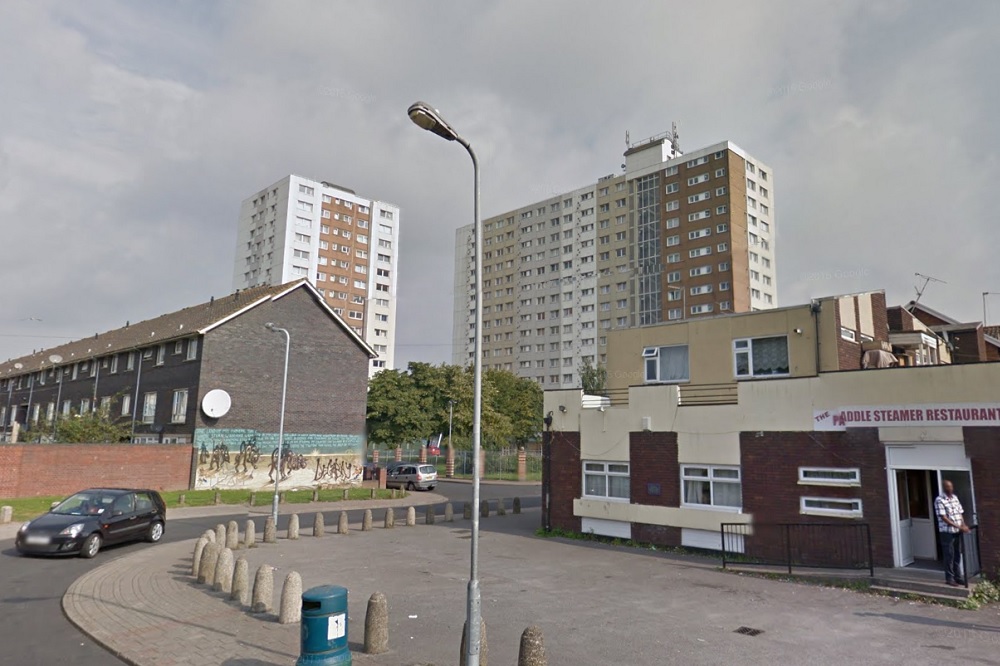
The irony is that ‘Cardiff Bay’ has become a shorthand for the Senedd and Welsh Government in much the way that ‘Holyrood’ and ‘Westminster’ has become shorthand for the political centres of governance in Scotland and England. But the actual communities that make up Cardiff Bay are largely invisible to these same liberal media commentators.
Akwugo Emejulu in “The Hideous Whiteness of Brexit” asserts that a “key argument” of Brexit was that “the working class (who were unquestionably assumed to be white) were suffering under the burden of mass immigration, which transformed the culture of their neighbourhoods and put undue stress on public services”.
This is absolutely at the heart of Brexit in Wales, with the Welsh working class used as a scapegoat to explain Wales’ complicity in Brexit by predominantly middle-class Welsh, British and English commentators.
Of course, “white” is rarely affixed to “the Welsh working class”: it doesn’t have to be, it’s often implicit.
But there is no working class in Wales without the black and minority ethnic working class. It’s impossible.
But the myth of a homogenous white working-class somehow extracted from the multiracial fabric of the Welsh working class are becoming a key starting point for explorations of Brexit and Wales - to the detriment of truly beginning to understand Wales and Brexit.
Coffeegate
An example of this was when the Labour MP Owen Smith, during his Labour leadership bid, attempt to appeal to the masses by not understanding what a cappuccino was. Upon being presented with a cappuccino, he feigned shock to the Observer newspaper as he doesn’t drink “frothy coffee”, preferring to use a mug over a coffee cup over a latte cup.
There was just something about being seen as a cappuccino drinker as a marker of cultural or class habit that Smith absolutely had to reject during his campaign to appear to “appeal” to the working class.
Commentators online were keen to bring up the long multigenerational history of Italian immigration to Wales, and particularly the valleys: the constituency that Smith, at the time, was representing as an MP.
Coffeegate was a clear example of how Owen Smith patronisingly viewed the communities to whom he wanted to appeal. It was a homogenous group of anti-elite, culturally conservative working-class voters, rather than a community of different cultural groups that had made the valleys their home.
However, conversations that talk about class as devoid from race but shaped by whiteness can create these vacuums where the “needs” and “wants” of the white working-class itself can be used as a mood and soundboard for non-working class communities.
If English and British media is disproportionately privately-educated, Oxbridge-educated and not representative of England and Britain at large, it is no real surprise that their understanding of these communities will be superficial.
But this leaves us in a position of not just having to interrogate the coverage of Wales, but also depictions of Welsh communities themselves.
Can we trust the impartiality of the London-based BBC to represent Wales as a culturally, politically and racially diverse political landscape?
And because news coverage is rarely as objective as claimed, we must also ask whose interest is it to pit black and minority ethnic people in Wales, immigrants and migrants in Wales against the white working-class Welsh communities in Wales.

Support our Nation today
For the price of a cup of coffee a month you can help us create an independent, not-for-profit, national news service for the people of Wales, by the people of Wales.
Get more trusted Welsh news
Choose Nation.Cymru as a preferred source in Google News to see more of our journalism.
