


Sun, 19th July Cardiff 23°
Nation.Cymru wordmark
Advertisement

Opinion

As the lockdown begins to ease the Welsh Government must hold back the tourism flood
By NationCymru
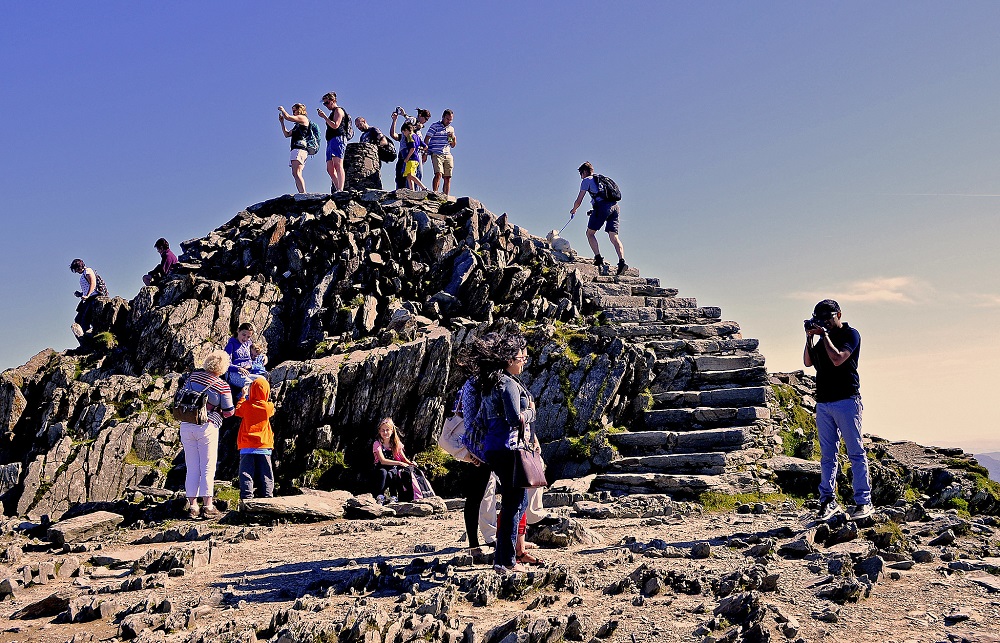
Tourism on Snowdon. Picture by Hefin Owen (CC BY-SA 2.0).

Huw Prys Jones

For those of us who have been fortunate enough not to be housebound the past few weeks, it has been a great privilege to experience the peace and beauty of Wales' countryside.

The timeless words from the Song of Solomon are especially poignant this year: “The flowers appear on the earth; the time of the singing of birds is come, and the voice of the turtle is heard in our land.”

Casting a dark shadow on this blissful tranquility, however, is the threat that any indiscriminate lifting of the lockdown will immediately lead to an inundation of tourists.

The UK's Prime Minister Boris Johnson has already briefed that from Monday the blanket 'stay at home' order will be lifted. We await to hear the Welsh Government's plans today.

But as soon as there is any freedom of movement, there is a real danger that our countryside will see levels of tourism beyond even the usual, for two reasons:

i) There will be millions of people fed up of being confined at home eager to dash to popular tourist areas.

ii) There are likely to be restrictions for foreign travel, and even if not, there will be more reluctance to travel abroad. A great many of these people will be swarming to areas such as rural Wales and the Lake District and Cornwall.

As politicians grapple with how best to ease the lockdown, it would be unforgivable to take a one-size-fits-all approach that could cause such severe risks to rural spots that have, compared to urban areas, managed so far to stay relatively free of Covid-19.

I am not advocating a different policy for Wales and England as an end in itself. But there must be adequate protection for popular tourist destinations.

France is now introducing measures to ban unnecessary travel further than 100km from one’s home. Such a proposal would also be an excellent choice within Britain, as it would help protect our countryside from such an outcome.

Of course, there is a danger that any mention of following a European example will have nationalist Brexiteer ministers in London foaming in the mouth. However, there is no reason why opposition politicians cannot be making the case for such sensible approaches.

[mid-content-banner]


Promotion

Looking further ahead, the present tranquility of the countryside should give us a pause for thought as to the kind of post-corona world we are seeking.

First of all we need to ask ourselves for whose benefit are our environment and our natural world being sacrificed on the altar of the sacred cow of tourism.

Yes, tourism does sustain viable local businesses, but many of the jobs are very low-paid. Moreover, there is insufficient local labour to do the low-paid jobs, which means many of the larger attractions have to recruit workers from outside the area. As a result benefits to the local community are often exaggerated, whilst a vociferous tourism lobby tries to stifle any honest questions.

Many of the viable local businesses will, of course, have a valid case for government assistance when the restrictions are lifted, and these can be decided on merit.

What cannot be justified, however, would be for the Welsh Government to be wasting more public money promoting Wales as a tourist destination before the pandemic is over.

There will no need for any encouragement by the Welsh Government, whose role must be to focus more on regulation and less on promotion.

Indeed, I suspect that many of the problems we faced during the weekend before lockdown were partly caused by the over-promotion of Wales as an 'empty' adventure playground where one can climb, hike and boat in perfect isolation.

Yes, we want to share our beautiful land with those who will appreciate it, but if too many come here at the same time, they will leave dissatisfied and destroy what they should be seeking to experience.
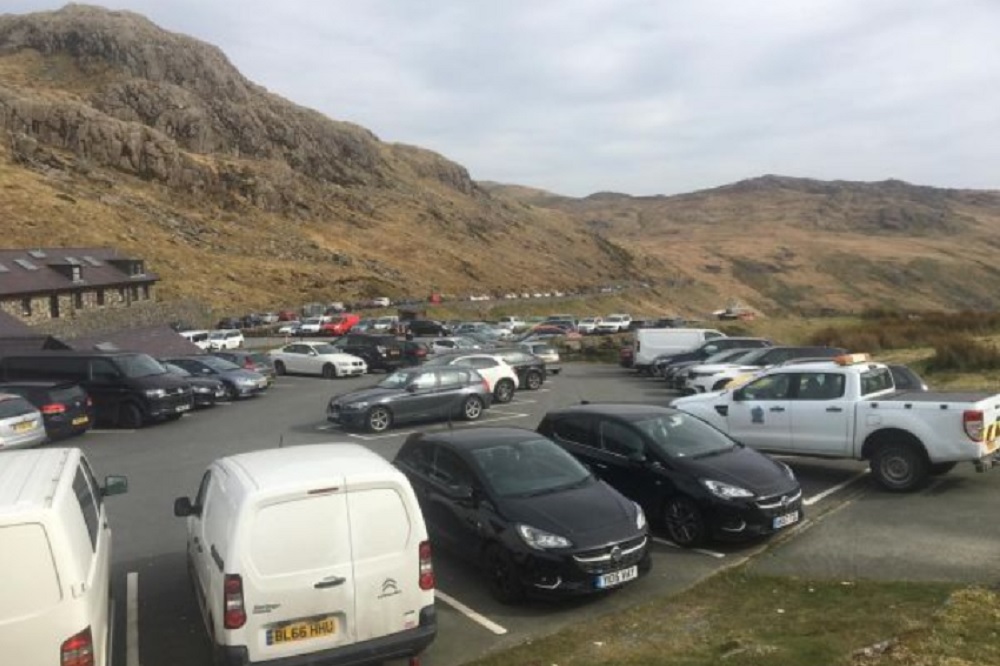
Picture by the Snowdonia National Park Authority as the crowds descended on Snowdon in March

Exploitation

One opportunity this pandemic has given us is a chance to pause and rethink our whole way of doing things, particularly in economic and environmental terms. Urban areas are already looking at fewer cars, more sustainable transport and more home working.

But this rethink should include whether we still believe an economy primarily dependent on tourism in much of the mid and west of Wales is desirable.

What we really need from the Welsh Government is a full and comprehensive audit of the social, environmental and cultural impacts of tourism, so we can make informed decisions on how we can regulate it for the future.

Our politicians and civic leaders must understand that seeing our countryside as it used to be will embolden us to demand greater respect for it. There must be no going back to the kind of volume of visitors as we saw during the last weekend in March.

Now is the time to take inspiration from the words of 19th century Welsh radical, R J Derfel, ‘Mynnwn y ddaear yn ôl’ – let us demand the earth back. Our natural world demands that we cannot and must not allow a return to the exploitation and overcrowding of recent years.

For the price of a cup of coffee a month you can help us create an independent, not-for-profit, national news service for the people of Wales, by the people of Wales.

Get more trusted Welsh news

Choose Nation.Cymru as a preferred source in Google News to see more of our journalism.

Choose Nation.Cymru as a preferred source in Google News

22 comments

jones

‘Mynnwn y ddaear yn ôl’ Dywediad yna,rhoid ias lawr y cefn. Oes, angen newid petha i dyfu'r wlad, a ddim suddo o dan dwristiad.Rhaid edrych i greu gwaith drwy'r flwyddyn yn lle y gwaith misol ma.

Reply
J.R. Thomas

Dadansoddiad rhesymegol iawn Huw - diolch.

Reply
vicky moller

I am worried by putting people into categories. Tourists consist of individuals with different relationships to the place they visit. They used to be called visitors, which implies a relationship of host and guest. I think this is an opportunity to consider our relationship to our guests. We have so much to offer them, and they have so much to offer us. But numbers comes into it. The same people returning to the same place over many years builds relationship, whereas fast and furious tourism turns them into money on legs and for them there is no care or understanding of the host community. The peace and beauty that sinks so deeply in during lockdown, makes us realise a clean world is possible, and also a caring one. So yes lets not go back, lets reframe our future. And build a love and welcome for our guests based on real relationship. If its the cars thats the issue, well that is solvable, with money and vision. But sure, lets stop flying, lets stop the global bulk trade in basics that we can produce at home, lets transform the economy and place the things that matter at its heart. Many tourists in my area are Welsh people forced away to earn a living, this is the home of their heart. Many English people feel the same. This is a relationship to build on. We plan a meeting, zoom, to discuss how to welcome safely, it is a Pembs meeting but please let me know if you can contribute usefully to it. Diolch

Reply
Rhosddu

You're right, it's certainly partly about numbers as well as attitudes of entitlement, and of course some 'tourists' will in fact be Welsh expats massaging their hiraeth, and that's a good thing. As for the unsustainable numbers, New Zealand has a tourism-management policy to control these and to prevent the kind of overrunning of beautiful scenery that we witness on Y Wyddfa whenever there's a bank holiday, and this might bear examination to gauge the possibility of its being adopted in Cymru.

Reply
Rhosddu

Yr Wyddfa. Damn!

Reply

In reply to Rhosddu

Martin Owen

It is a strategic decision of some National Park authorities to encourage people to go to "honeypots". It allows better management of both the visitor and the National Park. Because so many are on Copa Wyddfa fewer are in more environmentally sensitive areas. I would also add let him/her who has never traveled elsewhere for pleasure cast the first stone.

Reply
Jonesy

Huw, you omitted the fact that Welsh private companies involved in tourism like Coastal Cotages and private Airbnb owners actively pro oted Wales as a lockdown retreat, which is totallycrazy

Reply
Kerry Davies

It is a delicate subject for the English. The UK may well lift restrictions but the Europeans "light touch" even after lifting restrictions is still twice as rigid as ours ever was. They won't open their doors as long as we have a failed testing system and unknown quantities of infected, asymptomatic and carriers. Worst case scenario is that they close the ferries and Chunnel to protect their drivers. If they open up Wales to unrestricted tourism it may well cause much more grief on the other side of England. Mind you, going by recent experience, the governing politicians may well not even consider repercussions since most of them have never been personally responsible for anything in their pampered lives.

Reply
Royston Jones

Saturation tourism such as Wales suffers has always been unjustifiable because it brings few benefits for Welsh people and causes serious cultural and environmental damage. The writer mentions that many of the workers for the low-paid seasonal jobs have to be imported; he could have added that they're imported by businesses most of which are owned by non-Welsh people and companies. Let's face it, there's something very colonialist about tourism in Wales. That's because it was developed to serve England not Wales. And it's promoted now because it keeps money in the UK, money that eventually makes its way to London. Let's put an end to saturation tourism; let's make tourism both more manageable and more beneficial to Wales. By limiting numbers and imposing a tourism tax to be used for the benefit of the local population in the areas worst afflicted.

Reply
jones

"That’s because it was developed to serve England not Wales." So much truth in this,boils my blood! When you have the immigrants moving in,this is mostly their priority,money money,money,exploiting locals with badly paid jobs,destroying,culture and language,not even allowed to talk, your native tongue in some of these business and they think they are doing us a favor.The English do see opportunities for business and maybe were a bit behind, with this kind of thinking,but our culture and community attitudes ,influences more to maintain the status quo,maybe as nation,were not as ambitious as the English and this creates some animosity at times,but i feel ,that there is more to life than money,as this pandemic has shown .

Reply
j humphrys

Agree. I have a feeling that European and US tourists bring a fair bit of money, other than someone coming with their vans and Tesco readypacks. Welsh hotels could cater for these. We see in Majorca, etc, a desire for more middle class tourists and there is a reason for this. It's not snobbery, it's business and a desire for some peace.

Reply
Rhosddu

Yes, this is how the New Zealand system seems to work. Some places just aren't right for mass tourism; Snowdonia and the New Zealand mountains are certainly two of them.

Reply
Helen Lewis

The voice of the turtle is of course the choice of the turtle dove- practically extinct in Wales (though I did see a migrant in Eifionydd a couple of years ago), and just about hanging on in south east England. For the turtle to return we should need to adopt much more nature friendly farming practices. The State of Nature in Wales requires it.

Reply
aledgwynjob

Some decent points here from Huw, despite shoehorning his trademark hardcore Remain argument into an issue which has nothing to do with Brexit as such. Nevertheless, who can argue with his central premise that the easing of mass tourism into rural Wales has been a real awakening moment for all of us. One element which has really surfaced I feel in the midst of this unprecedented period of peace and quiet, is the realisation in rural Wales, that we are literally living alongside real treasures in the form of the beauty of our natural environment. To safeguard these treasures, we now need an honest and dispassionate appraisal of the whole tourist industry. I would go even further than that in suggesting that this problem needs to be dealt with in exactly the same way as someone would treat an addiction. Because you could argue that mass tourism in rural Wales has become an addiction for both parties. Welsh people have been the suppliers of the drug(for easy lucre) and visitors have been the buyers of the drug(for easy access). Both parties need to be weaned off the drug gradually. Yes, of course we know of the entitled and insensitive attitude of many visitors, especially during this particular period involving the virus. But, speaking personally, I'm uncomfortable with all the finger pointing at English visitors of late. We need to acknowledge that we as Welsh people have also been complicit in allowing mass tourism to have such a stranglehold over our rural economy. All options should now be considered to treat both the supplier and the buyer. Perhaps a 50 mile travel to stay measure should be introduced for a certain period of time. Perhaps local communities should be empowered by means of local referenda to decide upon how much volume of tourism they want to see each year. Perhaps, even different areas could decide when their 'tourist season' should be allowed, and stagger these so that the whole of rural Wales is not over-run at the same time every year. But if rural Wales is to be successfully weaned off the powerful drug of mass tourism, there must be a pay-off in terms of alternative employment prospects. One option would be for the Welsh Government to move certain departments from Cardiff Bay to strategic parts of rural Wales. These areas will need to be reimagined as year-long meaningful employment zones. Why not go further and designate these areas as 'treasure zones'?Where the environment is forever safeguarded against the perils of mass tourism, hand in hand with an intensive programme of creating new employment prospects for the people living in these areas. The fact that these areas are often the strongest Welsh-speaking parts of Wales can also add value to this 'treasure zone' approach. GWLAD, the new national party of Wales, will be arguing for a wholesale root and branch reform of the Welsh tourist industry at next year's Senedd Elections. Check us out at www.gwlad.org.

Reply
jones

Dwi ddim yn gwbod llawer, am Gwlad,ond pwyntiau diddorol iawn am y sefyllfa twristiaeth yma yn Gymru.Falch glywed, fod hyn yn tynu sylw, pobl sydd yn gweithio yn y maes gwleidyddol.Mae'n hen bryd i rhywbeth newid,cyn ir wlad fynd ir sbwriel.

Reply
Wrexhamian

This must become a Senedd election issue, and the next Welsh Government must acknowledge the seriousness of the problem and be willing to address it using whatever devolved powers are at its disposal. This must include funding the establishment of a real economy in those areas beset by tourism, and the transfer of some government offices to the western half of Cymru, from Ynys Mon to Penfro. This will: 1) help to strengthen the position of the Welsh language, and 2) allow local people for the first time to be realistic candidates for house buying in their own communities, by providing real jobs with a decent salary. At the same time, the burden of holiday homes can be curtailed through the Jersey model for the rural Welsh housing market, allowing local people first refusal at an affordable price. It will also mean that unnecessary new build in rural Wales can be largely avoided. There is no shortage of housing in the Welsh countryside and coastal areas; there is, however, a shortage of local Welsh people who can actually afford to buy these properties. Apologists for tourism will claim that the establishing of a real Welsh-owned economy with real jobs cannot be paid for. They need look no further than the millions wasted on the third sector social housing/homelessness rackets and the free money handed over to outside 'investors' robbing the Welsh public purse as if they were Porsche-driving benefit cheats.

Reply
vicky moller

We are planning a zoom meeting in Pembs on How to welcome visitors safely. It would be really helpful if someone or a few from here would join the discussion and if possible speak a little at the start of the meeting. This is to bring the factions together to reach shared suggestions if that is possible. People from Pembs tourism will speak a little at the start. This is to be a deliberative democracy event. It is initiated by PCSN, the network of penbs. coronavirus community response coordinators who meet weekly (zoom). We have a large meeting on community food networks on Tuesday if anyone wants to join it to see how it works give me a shout [email protected] We have speakers from NFU, Community supported agriculture, environmental regulation, the Land workers Alliance, Wellbeing economics/ a market garden campaign. They will speak briefly before going into the deliberative break outs.

Reply
Clive Checketts

Yes we need reconciliation not exploitation of the Natural World

Reply
Mon Mam Cymru

I'm sorry but a lot of this content makes my blood boil 😎. "Sacrifice on the altar of tourism". Seriously 😑. A lot of Wales suffers from rural deprivation. Tourism is an important economic lever and supports many micro, small and medium Welsh leisure and hospitality businesses . There are no other large or medium industry or businesses to employ people. The public sector is the biggest employer in many parts. I run a glamping business in Anglesey. A responsible business. Personally I think its arrogant and selfish to have a close the borders attitude to visitors and tourists. People who make comments like this in my opinion are obviously either retired, living on pensions or work/are employed in another non leisure /hospitality sector. It's a question of sustainable tourism. And responsible business.

Reply
Wrexhamian

I don't know where to begin telling you how irresponsible your comments are.Other solutions to rural Cymru's economic deprivation have been proposed in the comments section of this and other articles both on this website and others. Have a read of them. It goes without saying that small-scale, Welsh-owned tourism-based businesses will have a part to play in a more prosperous Bro Gymraeg.

Reply
Meddwl bach

I'm sorry I dont see any real tangible solutions above ?. I see commentary, perspectives and complaints. Nobody joins the dots. They simply seize opportunities to push a particular agenda, without any consideration of the broader context and implications. If you are looking for a useful engagement route for your perspectives and action. Then how about the uniquely world leading Welsh legislation "Well-being of Future Generations 2015"?!!!!!! There you will find a balanced holistic approach covered by 7 well-being goals and 5 ways of working. https://futuregenerations.wales/about-us/future-generations-act/.

Reply
E Williams

We're already wrecking the preciouses things that bring in the tourists... Scenery and space from other people. The proportion of those staying and spending are proportianlly much less than those visitng for a day. With most filling up with fuel and proivisions close to homes, driving over then driving back. Net benefit to e.g. Snowdonia?... B*g**r all... Actually, a loss.

Reply

Leave a reply

Replying to Mon Mam Cymru Cancel

I'm sorry but a lot of this content makes my blood boil 😎. "Sacrifice on the altar of tourism". Seriously 😑. A lot of Wales suffers from rural deprivation. Tourism is an important economic lever and supports many micro, small and medium W...

Comments are reviewed before they appear.