


Opinion
As the lockdown begins to ease the Welsh Government must hold back the tourism flood
Huw Prys Jones
For those of us who have been fortunate enough not to be housebound the past few weeks, it has been a great privilege to experience the peace and beauty of Wales' countryside.
The timeless words from the Song of Solomon are especially poignant this year: “The flowers appear on the earth; the time of the singing of birds is come, and the voice of the turtle is heard in our land.”
Casting a dark shadow on this blissful tranquility, however, is the threat that any indiscriminate lifting of the lockdown will immediately lead to an inundation of tourists.
The UK's Prime Minister Boris Johnson has already briefed that from Monday the blanket 'stay at home' order will be lifted. We await to hear the Welsh Government's plans today.
But as soon as there is any freedom of movement, there is a real danger that our countryside will see levels of tourism beyond even the usual, for two reasons:
i) There will be millions of people fed up of being confined at home eager to dash to popular tourist areas.
ii) There are likely to be restrictions for foreign travel, and even if not, there will be more reluctance to travel abroad. A great many of these people will be swarming to areas such as rural Wales and the Lake District and Cornwall.
As politicians grapple with how best to ease the lockdown, it would be unforgivable to take a one-size-fits-all approach that could cause such severe risks to rural spots that have, compared to urban areas, managed so far to stay relatively free of Covid-19.
I am not advocating a different policy for Wales and England as an end in itself. But there must be adequate protection for popular tourist destinations.
France is now introducing measures to ban unnecessary travel further than 100km from one’s home. Such a proposal would also be an excellent choice within Britain, as it would help protect our countryside from such an outcome.
Of course, there is a danger that any mention of following a European example will have nationalist Brexiteer ministers in London foaming in the mouth. However, there is no reason why opposition politicians cannot be making the case for such sensible approaches.
[mid-content-banner]
Promotion
Looking further ahead, the present tranquility of the countryside should give us a pause for thought as to the kind of post-corona world we are seeking.
First of all we need to ask ourselves for whose benefit are our environment and our natural world being sacrificed on the altar of the sacred cow of tourism.
Yes, tourism does sustain viable local businesses, but many of the jobs are very low-paid. Moreover, there is insufficient local labour to do the low-paid jobs, which means many of the larger attractions have to recruit workers from outside the area. As a result benefits to the local community are often exaggerated, whilst a vociferous tourism lobby tries to stifle any honest questions.
Many of the viable local businesses will, of course, have a valid case for government assistance when the restrictions are lifted, and these can be decided on merit.
What cannot be justified, however, would be for the Welsh Government to be wasting more public money promoting Wales as a tourist destination before the pandemic is over.
There will no need for any encouragement by the Welsh Government, whose role must be to focus more on regulation and less on promotion.
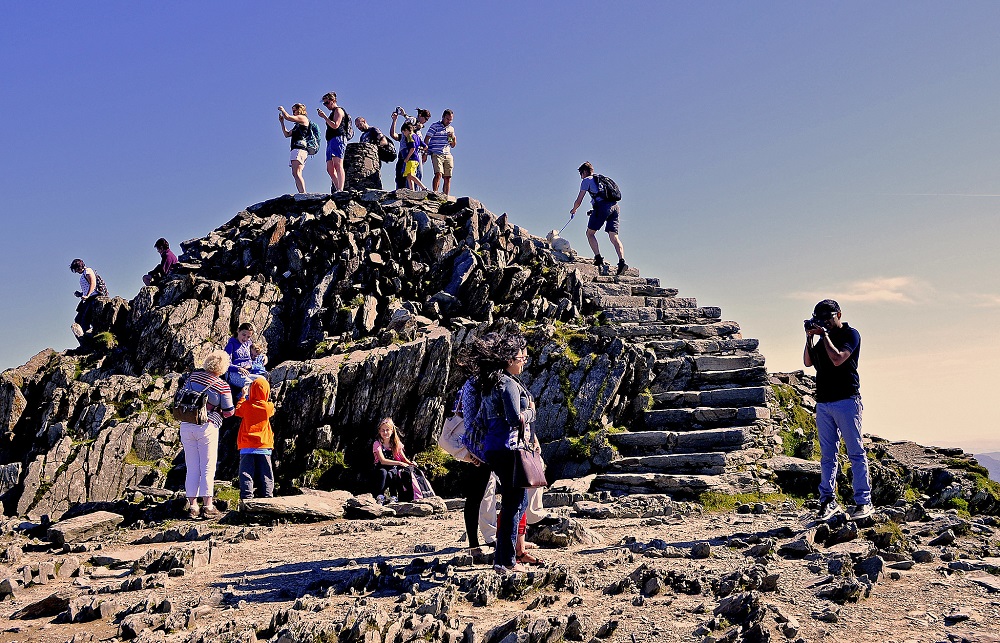
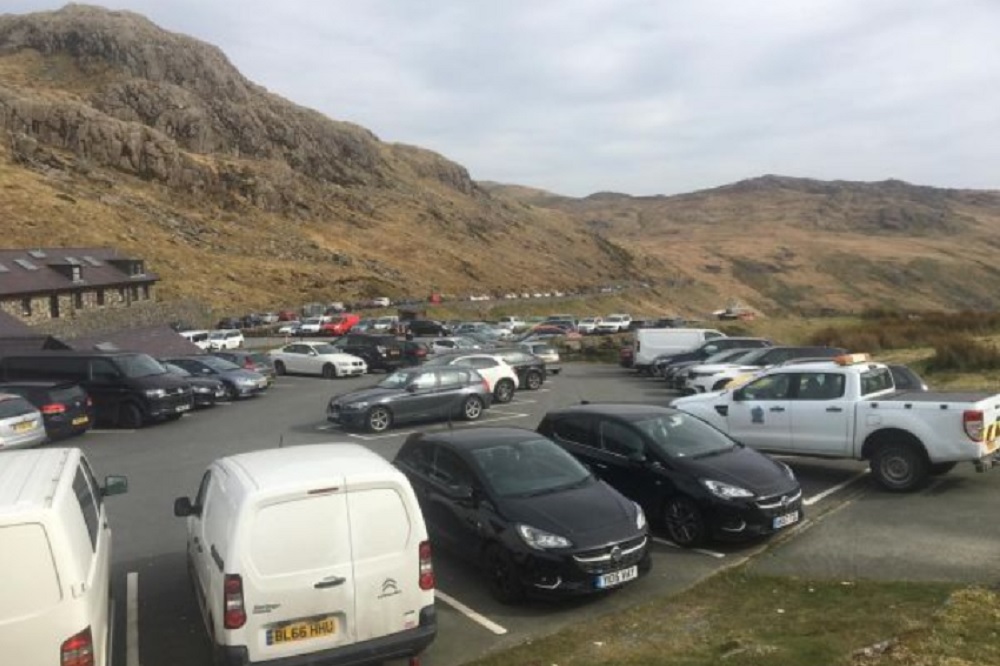
Indeed, I suspect that many of the problems we faced during the weekend before lockdown were partly caused by the over-promotion of Wales as an 'empty' adventure playground where one can climb, hike and boat in perfect isolation.
Yes, we want to share our beautiful land with those who will appreciate it, but if too many come here at the same time, they will leave dissatisfied and destroy what they should be seeking to experience.
Exploitation
One opportunity this pandemic has given us is a chance to pause and rethink our whole way of doing things, particularly in economic and environmental terms. Urban areas are already looking at fewer cars, more sustainable transport and more home working.
But this rethink should include whether we still believe an economy primarily dependent on tourism in much of the mid and west of Wales is desirable.
What we really need from the Welsh Government is a full and comprehensive audit of the social, environmental and cultural impacts of tourism, so we can make informed decisions on how we can regulate it for the future.
Our politicians and civic leaders must understand that seeing our countryside as it used to be will embolden us to demand greater respect for it. There must be no going back to the kind of volume of visitors as we saw during the last weekend in March.
Now is the time to take inspiration from the words of 19th century Welsh radical, R J Derfel, ‘Mynnwn y ddaear yn ôl’ – let us demand the earth back. Our natural world demands that we cannot and must not allow a return to the exploitation and overcrowding of recent years.

Support our Nation today
For the price of a cup of coffee a month you can help us create an independent, not-for-profit, national news service for the people of Wales, by the people of Wales.
Get more trusted Welsh news
Choose Nation.Cymru as a preferred source in Google News to see more of our journalism.
