


Opinion
Abysmal turnout shows its time to get rid of Police and Crime Commissioners
Martin Shipton
There is only one way to interpret the appallingly low turnouts in Wales’ Police and Crime Commissioner elections: as a mandate for change.
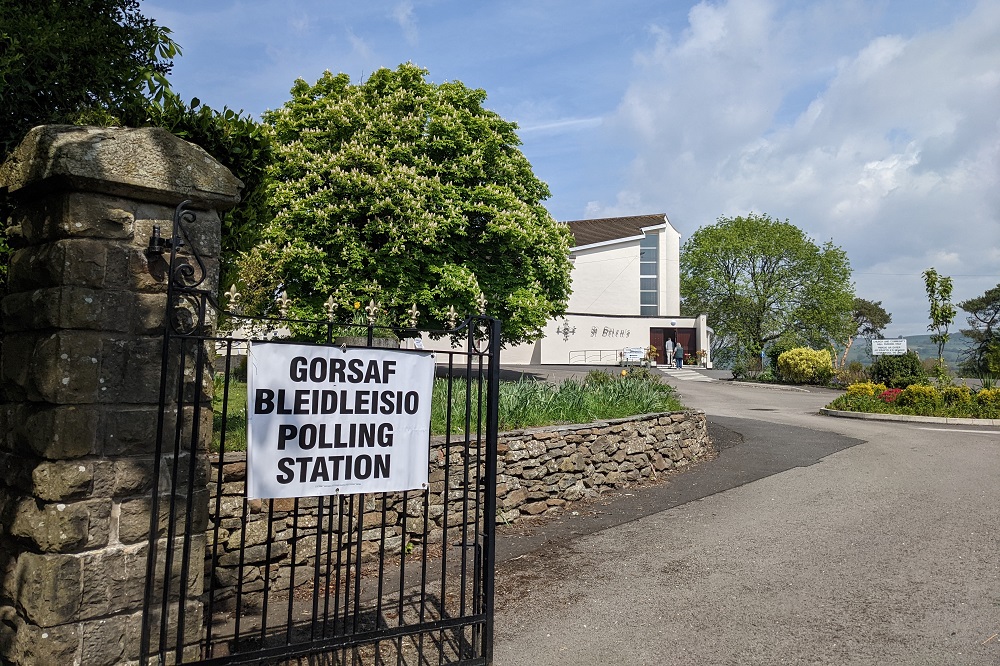
For those who haven’t checked the figures, the proportion of people on the electoral register who bothered to vote was 19.2% in the Dyfed-Powys police force area, 17.19% in North Wales, 16.58% in South Wales and 15.63% in Gwent.
With such derisory support from the public, those elected have no democratic credibility. The PCC role should be scrapped, policing should be devolved to Wales, the four Welsh police forces should be merged into one and it should be accountable to, and scrutinised by, the Senedd.
Unfortunately the UK Labour Party, which will soon be in power at Westminster, hasn’t grasped that message, as we have witnessed over the past couple of days with the display of triumphalism following their candidates’ pitiful victories in three of the four contests in Wales.
[mid-content-banner]
Credibility
The new PCC for Gwent Jane Mudd, until now the Labour leader of Newport council, complained that the election she won was “standalone”, meaning that the turnout would have been higher if another election had been held on the same day for the council, the Senedd or Westminster. But what kind of democratic credibility would be achieved by piggybacking on something else? By failing to vote, more than 80% of the Welsh public has made it clear that electing a PCC is a matter of no interest to them.
The warning signs have been around for a long time - since before the law creating PCCs was passed, in fact. I looked up a House of Commons debate dated September 12 2011, when the Tory-Lib Dem coalition government was proposing the Police Reform and Social Responsibility Bill, which established the PCC system.
Rhondda Labour MP Chris Bryant sparred with the Tory Minister promoting the Bill, Nick Herbert, who had claimed that the introduction of PCCs would greatly improve police accountability. Mr Bryant responded: “The Minister is preaching a great sermon on how everything will be transformed by the creation of commissioners, but my concern is that what he means by the word ‘local’ is not at all what is going to be brought about.
"The South Wales Police force area covering Swansea and Cardiff — two cities that have never particularly loved each other — and large chunks of the Valleys, which have a very different policing agenda from those two cities, could not possibly be constituted as a single political unit by anybody who was starting afresh. So my worry is that there will be less political accountability to local people and more accountability to one individual, who will probably be more likely to represent somebody in Cardiff and Swansea than somebody in the Valleys.
“What I have found in the past few years in South Wales Police is that although it is true that the Chief Constable is not particularly accountable, what has made the police accountable is the local PACT — Police and Communities Together — meetings, where members of the public get to know they can get in touch with their local beat police officer. It is that transformation of the police that will render policing far more effective, rather than the somewhat bureaucratic system that the Minister is setting up.
“I have never supported the politicising of the police, and I will not do so under the Minister’s plans. My anxiety is that when a politician comes along, they usually do not just want a little office in the corner; they want lots of other people to service that office. I suspect that the cost that he is allowing for now will be hideously understated by the time we have had these people in place for four years.”
More tersely, Mark Tami, the Labour MP for Alyn and Deeside, responded to Mr Herbert’s claim that the creation of PCCs was a popular move, saying: “The Minister states that this whole idea is popular. What does he base that on, because all the information I have seen indicates that the public do not want this.”
[lower-mid-content-banner]
Futility
With the benefit of hindsight, and the experience of 12 years of PCC futility, it would be interesting to know whether Mr (now Lord) Herbert retains the opinion he held in 2011.
So far, sadly, the Labour Party has shown no sign of wanting to scrap what is clearly a failed experiment in democracy and accountability - perhaps because it’s convenient to have a network of well-paid sinecures in which to shunt second- or third-rate apparatchiks.
As if the overall election turnout figures weren’t bad enough, there are pockets where it was even worse. In Merthyr Tydfil the turnout was around 12%, leaving one to speculate how low it must have been in especially impoverished areas like the Gurnos estate.
In largely middle class Monmouthshire, the turnout nudged over 20% to 21.2%, with the Gwent Tory candidate Hannah Jarvis beating Ms Mudd by 6,653 votes to 5,744 - a result that doubtless brought a smile to the face of Welsh Secretary David TC Davies, who will be defending the seat at the general election against a strong Labour challenge.
But the general level of disengagement represented by the PCC turnouts brings democracy into disrepute. It can’t be attributed entirely to the narrative of disillusionment with politics as a whole. Many people - myself included, for the first time since I’ve been eligible to vote - consciously boycotted the election because we don’t believe in the PCC role.
PCCs have no operational responsibilities - nor should they. Theoretically they are meant to hold the force to account, but as a resident of the South Wales Police area, I am unaware what this has amounted to in practice. I received no literature through my door from any of the candidates, which in itself tells you what the parties think of the PCC role.
Devolving policing
It is absurd that the UK Labour Party is against devolving responsibility for policing to the Welsh Government - a policy supported by Welsh Labour. It is even more absurd that Swansea East MP Carolyn Harris opposes the devolution of policing, when she is Welsh Labour’s deputy leader. She wasn’t able to articulate a coherent reason why when challenged by an ITV Wales journalist, simply saying: “I just wouldn’t.”
Former Bridgend council Labour leader Jeff Jones thinks the head-in-the-sand attitude of his party colleagues is counter-productive.
“They’re celebrating victories on tiny turnouts when they should be questioning why so few bothered to vote,” he said. “We’ve seen that only a small proportion of the Welsh electorate wanted to vote. This needs to be discussed at the Senedd. Policing should be devolved to Wales, the forces merged into one, PCCs should be abolished and the police should be scrutinised by the Senedd. It’s a complete no-brainer and time to end this farce.”
Of course it's a no-brainer. But will UK Labour and the likes of Carolyn Harris see it that way? I somehow doubt it.
Support our Nation today
For the price of a cup of coffee a month you can help us create an independent, not-for-profit, national news service for the people of Wales, by the people of Wales.
Get more trusted Welsh news
Choose Nation.Cymru as a preferred source in Google News to see more of our journalism.
