


Opinion
A fully bilingual Wales is possible, but we all have a part to play
Stephen Price
The Welsh saying, 'Cenedl heb iaith, cenedl heb galon' means quite simply, 'A nation without a language is a nation without a heart'.
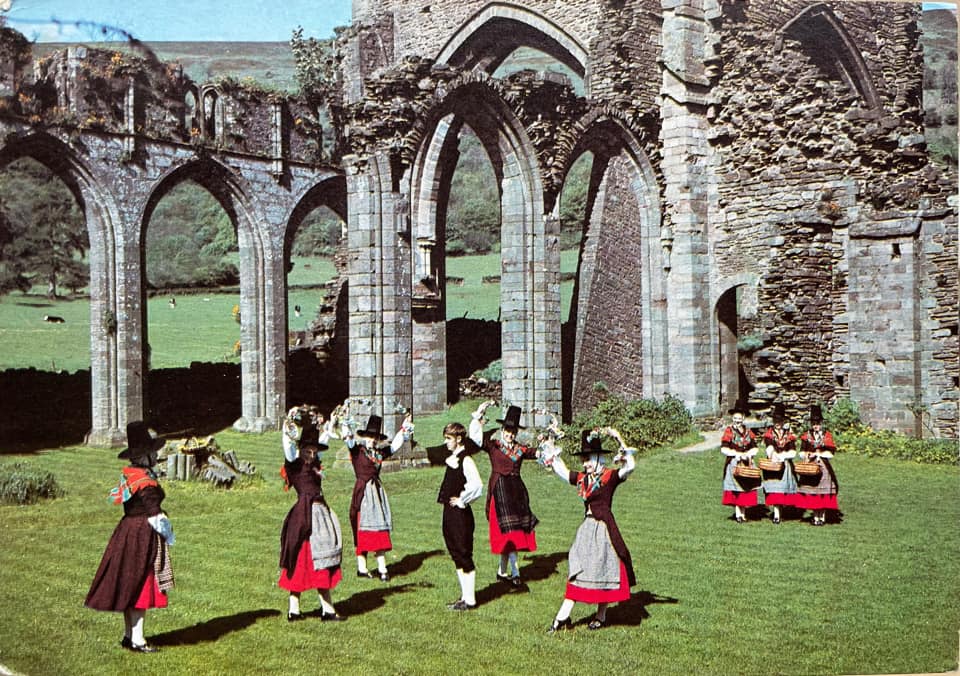
Coming from Brynmawr, a post-industrial market town in Blaenau Gwent, Cymraeg wasn't particularly present in my formative years, save for the place names and touches in school, Eisteddfodau and events celebrating the once-popular local Welsh folk dancers.
A Welsh language primary school opened in the mid-1980s, but by that time my parents had the bright idea of moving a few miles down the road to a small Monmouthshire village.
My connection to my 'beautifully bleak' Brynmawr has, however, remained strong.
Like so many parts of Wales, for the most part, Welsh was lost to Brynmawr in the late nineteenth and early twentieth century.
Chapel records show attempts to open an English language chapel to cater for the language shift caused by parents not passing on the language to their children, as well as incomers from Cornwall, Ireland and England.
The prospect of an English language chapel caused much local conflict, but as decades passed, even the historically Welsh language chapels such as Libanus and Bethesda, themselves became fully English language.
[mid-content-banner]
Sowing seeds
Welsh wasn't much on the agenda in my primary school, but seeds were sown in local Eisteddfodau, and by the time it came to choose options at GCSE back in good old Brynmawr, the nurturing (and hilariously wicked) ways of the Welsh teachers, with their focus on all the good things - culture, music, film and trips to the seaside, meant I was sold.
History we weren't taught in our actual history lessons, so focused were they on the arrival of the Anglo Saxons and nothing prior, the Kings and Queens of England, and the Second World War, was given to me by my Welsh teachers.
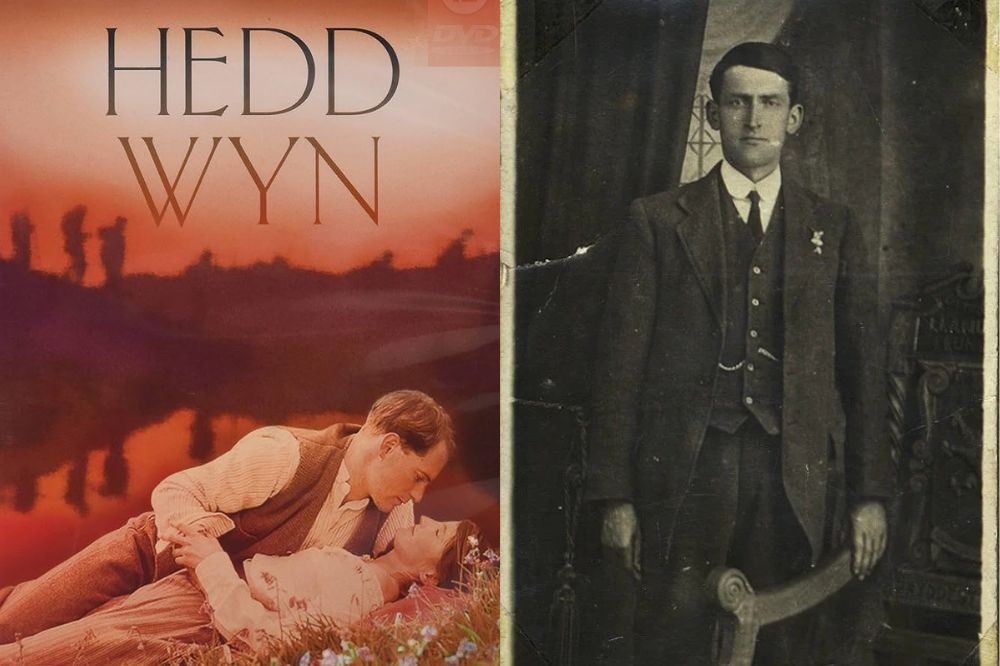
Hedd Wyn's Welsh angle on England's colonialism, the beautiful poetry and prose that didn't make the English language curriculum, the artists we'd never heard of, our unique customs and myths and legends, the Welsh Not.. These were enlightening subjects, and yet nowhere to be found in the entire curriculum at least back then.
It's our Welsh language speakers and historians who have, for the most part, kept these histories, these stories - our stories - alive.
[lower-mid-content-banner]
Welsh schooling
From seeds sown at primary school, to fantastic teachers in high school, I went on to study Welsh A-level, and then part of my undergraduate degree, and then on to night classes to focus more on speaking than academia, and in each and every class it was at best a handful of (usually!) the gays and the girls - many of whom have gone on to become teachers themselves.
And for everyone else I grew up with, who didn't study Welsh, and most people online giving their version of Welsh events, their usual retort when asked why they don't speak Welsh is generally something along the lines of 'We don't speak Welsh because our ancestors were punished for speaking it in school'.
But, as with everything in life, the truth is much more complex.
For any child punished in school for not speaking Welsh, there were innumerable parents simply not using Welsh with their children because they thought it best, they thought it progressive, they thought it the key to a better future.
Centuries of massacres, Acts, prohibitions, diaspora and second class status of the Welsh language for courts and contracts take their toll.
Like speakers of so many minority language speakers of the world, their own brutal, poor, shameful and excluded experiences were not something they wished to pass on.
Unlike those who use the oft-repeated 'I don't speak Welsh because we were punished at school for speaking it' line, I would argue perhaps controversially, that if you're of my generation or below, you don't speak Welsh because you don't (or didn't) want to, or because your parents didn't want you to.
It's a convenient excuse to not have to put any work in to right historical wrongs, to 'claim our language back', but for many many decades now, we've had the means to put this right, and we have to take accountability for who we are today, and what we're doing about it today.
I didn't go to the Welsh school in Brynmawr because my parents chose not to send me there.
I did, however, put in the time and effort to do all I could to put that right (or as right as I could, anyway).
As mentioned, my own home town has had a Welsh primary school since the 1980s, although shamefully we have yet to have a high school in the entire neighbouring counties of Blaenau Gwent, Merthyr or nearby Monmouthshire.
But provision exists nearby for students to travel out of county, and moves are being made for these counties to get the high school they both need and deserve before time (and place) runs out nearby.
A few friends of mine did just that - they got on the bus each day, and they live their lives both professionally and within their chosen communities in the language of Wales.
[lower-mid-content-banner]
A million Welsh speakers
No one is stopping us from speaking our own language today but ourselves. Indeed, our politicians, and our paid roles are actively seeking more.
A bill aiming to put into law the Welsh government's target of a million Welsh speakers by 2050 was published in the summer of 2024 - quite why they settled on one million, I'm not sure, but one it is.
Labour said its plans would help all schoolchildren have a “fair opportunity” to become “confident” Welsh speakers.
Ministers said the Welsh Language and Education Bill aimed to “close the gap” caused by children’s ability to speak Welsh varying depending on where they go to school.
The law would make “immersion” Welsh language education “universally” available across Wales.
At the time, Cabinet Secretary for the Economy, Energy, and Welsh Language Jeremy Miles said the bill’s publication was a “step towards” the government’s ambition of creating a million Welsh speakers by 2050.
"As a government, we’re committed to building a Wales where the Welsh language thrives in every community," he said.
A sea-change is occurring across our nation, whereby we are all realising our status as custodians, and waking up to not only the economic and social benefits of Welsh, but also responding to something a little more abstract, a little more personal, in that we want to right the wrongs of the past, and we want our language to not only live, but to thrive.
But in order to do so, we all have a part to play.
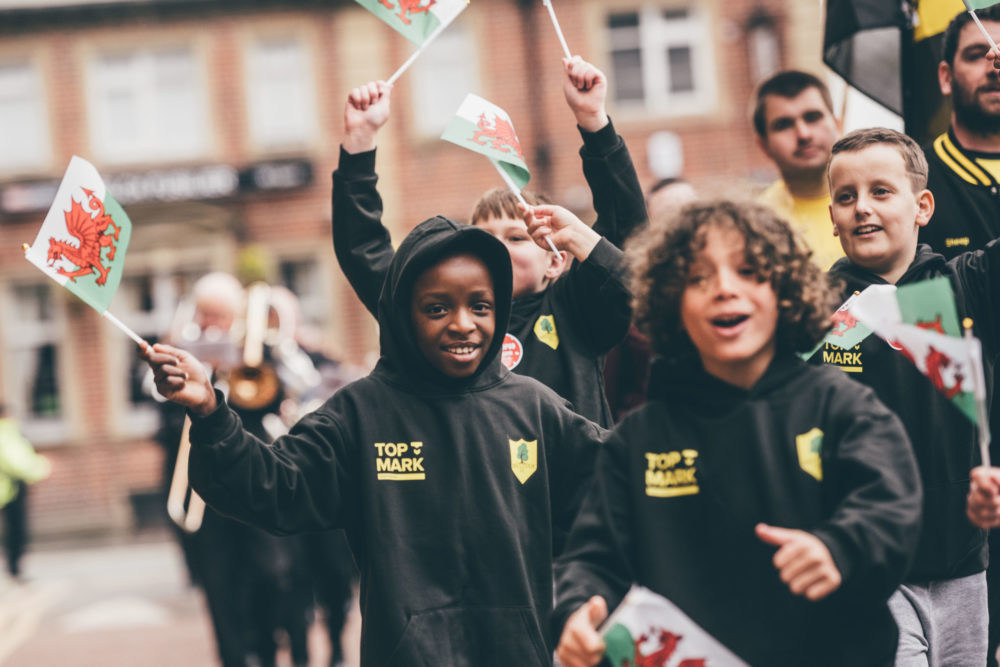
Learning a language isn't the provision of just the young at school, or pensioners with perhaps more time on their hands at at a night class. We can all, whatever our ages, start a language learning journey right now from the comfort of our own homes.
Apps such as DuoLingo and SaySomethingInWelsh are a great place to start - and each of those has corresponding Facebook learning groups where you can meet other learners and practice together.
You can also search for courses via Learn Welsh, and in the process find new friends and new communities to practice and learn with in the real world.
From there, using your Welsh in the wild, it's incredibly surprising how many people speak Welsh that you pass by or interact with in shops etc. - and all it takes is a 'shwmae', 'bore da', or 'prynhawn da' to test the water.
But perhaps more importantly than that, we have to recognise that for our nation to be truly and meaningfully bilingual, our children - Wales' future workers, thinkers, movers and shakers - need to be given the chance to speak Welsh.
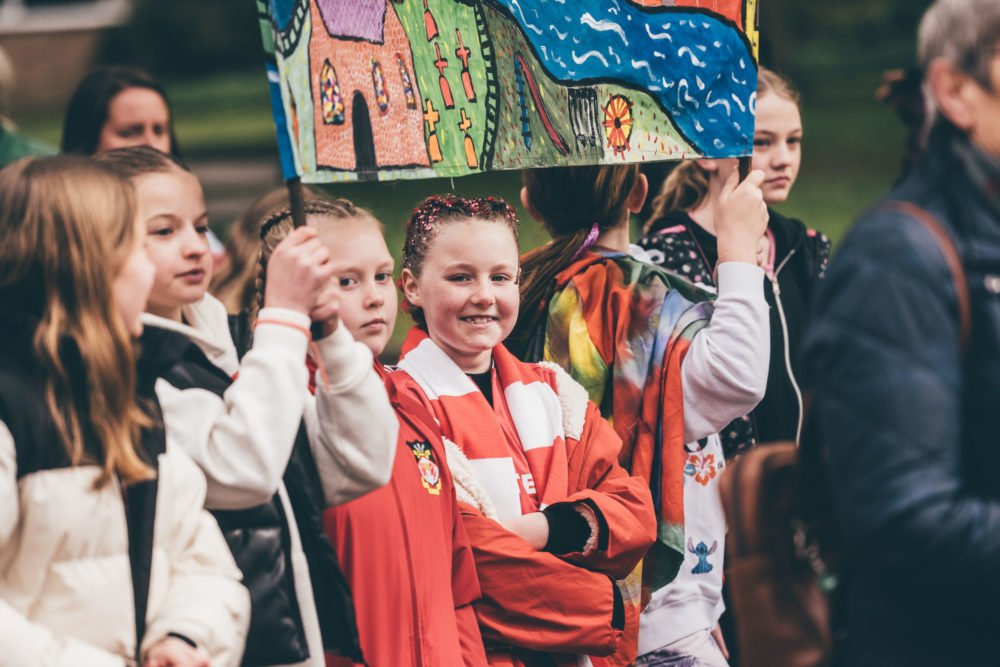
Like me, Heini Gruffudd, chair of Welsh language lobbying group Dyfodol i'r Iaith (A Future for the Language) believes that the most effective way of learning a language is through total immersion.
"You don’t get natural Welsh speakers from English-speaking schools except with some brilliant exceptions," he said.
"You only get Welsh speakers from Welsh medium schools where pupils start learning the language in playgroups.
"If you learn a language after that you’ve lost the best opportunity."
To either provide our children with, or deprive our children of, their very language, the ancestral language of Wales is on us now.
A million Welsh speakers isn't enough, if you ask me - Wales, and those in power in Wales, should be aiming for all its citizens to speak Welsh, and our nation to be fully bilingual.
We must demand wider provision of Welsh language schooling for all ages, and we should all consider Welsh medium education a must for our nation's children so that Wales' beating and vital heart, its language, can be restored.
Ymlaen!
Find your nearest Welsh language school here.
Click here to find out more about SaySomethingInWelsh.
Click here for more info on DuoLingo.
Click here for information on local Wales-based Welsh classes or London classes (Not exhaustive so please check social media and search engines for what’s on in your area)
Support our Nation today
For the price of a cup of coffee a month you can help us create an independent, not-for-profit, national news service for the people of Wales, by the people of Wales.
Get more trusted Welsh news
Choose Nation.Cymru as a preferred source in Google News to see more of our journalism.
