


Sat, 18th July Cardiff 19°
Nation.Cymru wordmark
Advertisement

Opinion

A fully bilingual Wales is possible, but we all have a part to play
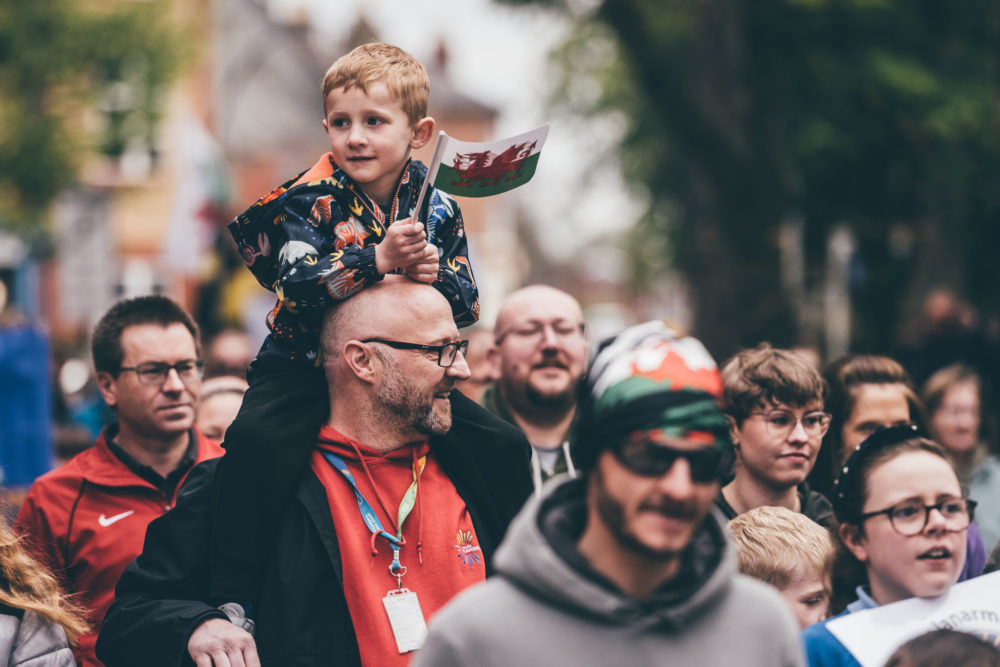
By Stephen Price
Eisteddfod Genedlaethol © Aled Llywelyn

Stephen Price

The Welsh saying, 'Cenedl heb iaith, cenedl heb galon' means quite simply, 'A nation without a language is a nation without a heart'.

Coming from Brynmawr, a post-industrial market town in Blaenau Gwent, Cymraeg wasn't particularly present in my formative years, save for the place names and touches in school, Eisteddfodau and events celebrating the once-popular local Welsh folk dancers.

A Welsh language primary school opened in the mid-1980s, but by that time my parents had the bright idea of moving a few miles down the road to a small Monmouthshire village.

My connection to my 'beautifully bleak' Brynmawr has, however, remained strong.
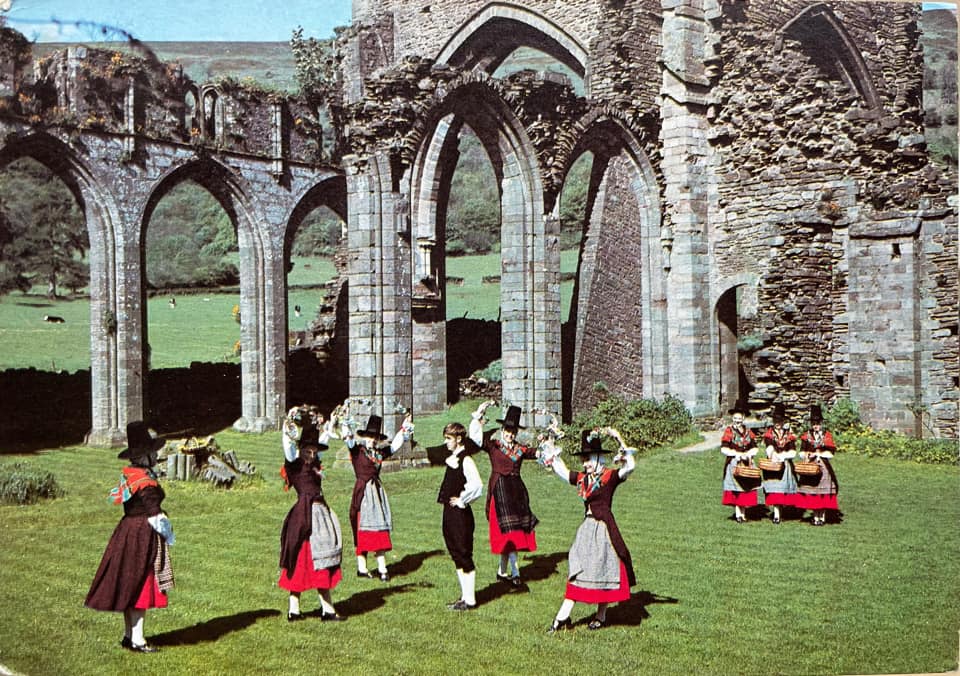
Brynmawr Welsh Folk Dancers at Llanthony Priory. Image: Steve Price

Like so many parts of Wales, for the most part, Welsh was lost to Brynmawr in the late nineteenth and early twentieth century.

Chapel records show attempts to open an English language chapel to cater for the language shift caused by parents not passing on the language to their children, as well as incomers from Cornwall, Ireland and England.

The prospect of an English language chapel caused much local conflict, but as decades passed, even the historically Welsh language chapels such as Libanus and Bethesda, themselves became fully English language.

[mid-content-banner]

Sowing seeds

Welsh wasn't much on the agenda in my primary school, but seeds were sown in local Eisteddfodau, and by the time it came to choose options at GCSE back in good old Brynmawr, the nurturing (and hilariously wicked) ways of the Welsh teachers, with their focus on all the good things - culture, music, film and trips to the seaside, meant I was sold.

History we weren't taught in our actual history lessons, so focused were they on the arrival of the Anglo Saxons and nothing prior, the Kings and Queens of England, and the Second World War, was given to me by my Welsh teachers.
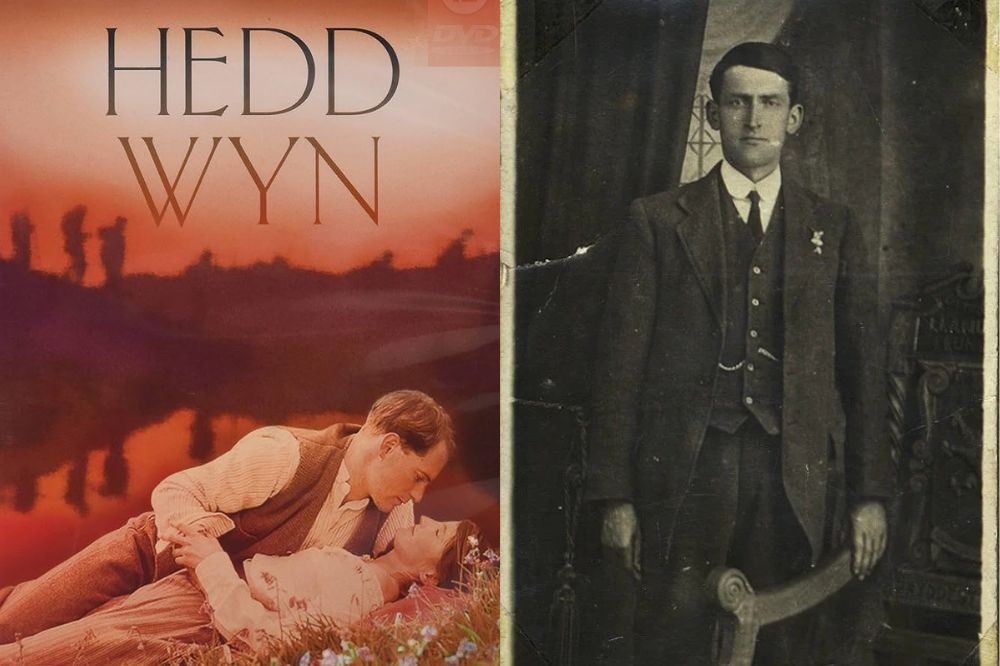
Hedd Wyn - available to watch in full on BFI Player

Hedd Wyn's Welsh angle on England's colonialism, the beautiful poetry and prose that didn't make the English language curriculum, the artists we'd never heard of, our unique customs and myths and legends, the Welsh Not.. These were enlightening subjects, and yet nowhere to be found in the entire curriculum at least back then.

It's our Welsh language speakers and historians who have, for the most part, kept these histories, these stories - our stories - alive.

[lower-mid-content-banner]

Welsh schooling

From seeds sown at primary school, to fantastic teachers in high school, I went on to study Welsh A-level, and then part of my undergraduate degree, and then on to night classes to focus more on speaking than academia, and in each and every class it was at best a handful of (usually!) the gays and the girls - many of whom have gone on to become teachers themselves.

And for everyone else I grew up with, who didn't study Welsh, and most people online giving their version of Welsh events, their usual retort when asked why they don't speak Welsh is generally something along the lines of 'We don't speak Welsh because our ancestors were punished for speaking it in school'.

But, as with everything in life, the truth is much more complex.

For any child punished in school for not speaking Welsh, there were innumerable parents simply not using Welsh with their children because they thought it best, they thought it progressive, they thought it the key to a better future.

Centuries of massacres, Acts, prohibitions, diaspora and second class status of the Welsh language for courts and contracts take their toll.

Like speakers of so many minority language speakers of the world, their own brutal, poor, shameful and excluded experiences were not something they wished to pass on.

Unlike those who use the oft-repeated 'I don't speak Welsh because we were punished at school for speaking it' line, I would argue perhaps controversially, that if you're of my generation or below, you don't speak Welsh because you don't (or didn't) want to, or because your parents didn't want you to.

It's a convenient excuse to not have to put any work in to right historical wrongs, to 'claim our language back', but for many many decades now, we've had the means to put this right, and we have to take accountability for who we are today, and what we're doing about it today.

I didn't go to the Welsh school in Brynmawr because my parents chose not to send me there.

I did, however, put in the time and effort to do all I could to put that right (or as right as I could, anyway).
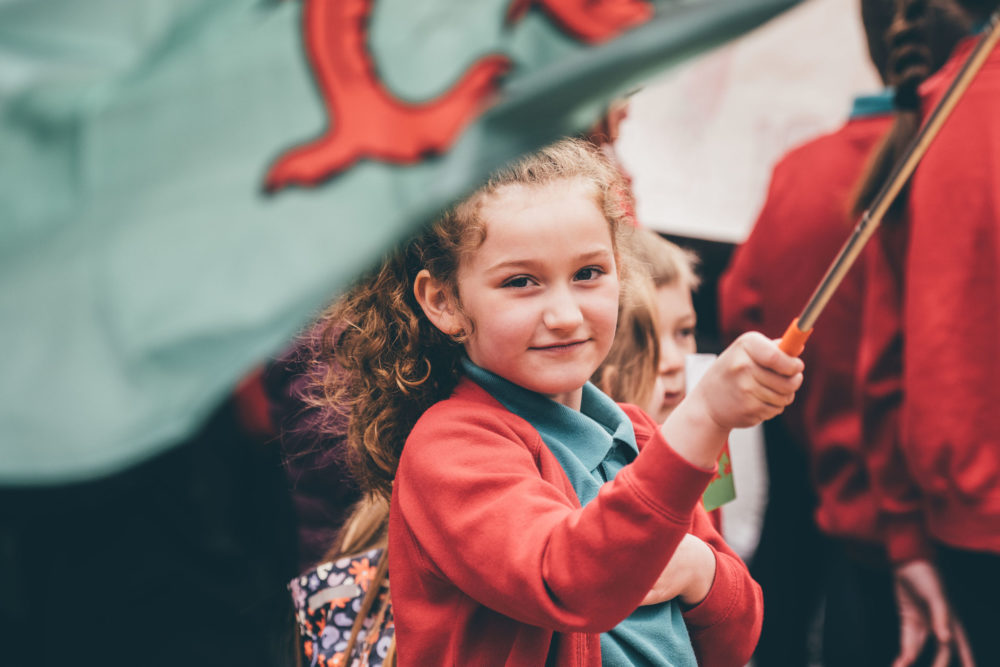
Eisteddfod Genedlaethol © Aled Llywelyn

As mentioned, my own home town has had a Welsh primary school since the 1980s, although shamefully we have yet to have a high school in the entire neighbouring counties of Blaenau Gwent, Merthyr or nearby Monmouthshire.

But provision exists nearby for students to travel out of county, and moves are being made for these counties to get the high school they both need and deserve before time (and place) runs out nearby.

A few friends of mine did just that - they got on the bus each day, and they live their lives both professionally and within their chosen communities in the language of Wales.

[lower-mid-content-banner]

A million Welsh speakers

No one is stopping us from speaking our own language today but ourselves. Indeed, our politicians, and our paid roles are actively seeking more.

A bill aiming to put into law the Welsh government's target of a million Welsh speakers by 2050 was published in the summer of 2024 - quite why they settled on one million, I'm not sure, but one it is.

Labour said its plans would help all schoolchildren have a “fair opportunity” to become “confident” Welsh speakers.

Ministers said the Welsh Language and Education Bill aimed to “close the gap” caused by children’s ability to speak Welsh varying depending on where they go to school.

The law would make “immersion” Welsh language education “universally” available across Wales.

At the time, Cabinet Secretary for the Economy, Energy, and Welsh Language Jeremy Miles said the bill’s publication was a “step towards” the government’s ambition of creating a million Welsh speakers by 2050.

"As a government, we’re committed to building a Wales where the Welsh language thrives in every community," he said.

A sea-change is occurring across our nation, whereby we are all realising our status as custodians, and waking up to not only the economic and social benefits of Welsh, but also responding to something a little more abstract, a little more personal, in that we want to right the wrongs of the past, and we want our language to not only live, but to thrive.

But in order to do so, we all have a part to play.
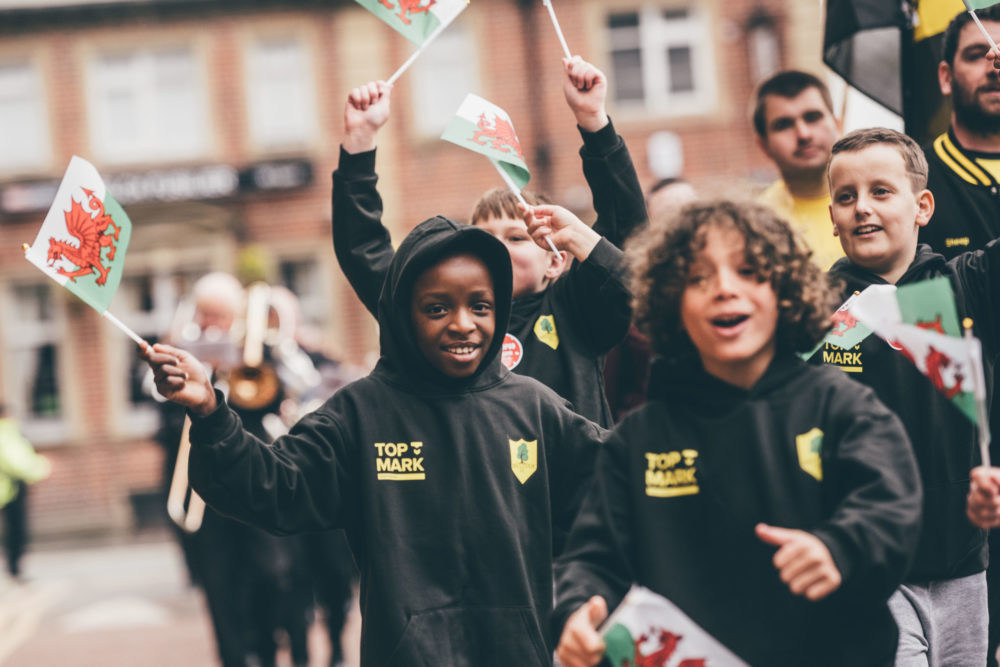
Cyhoeddi Eisteddfod Wrecsam 2025 Photographs © Aled Llywelyn

Learning a language isn't the provision of just the young at school, or pensioners with perhaps more time on their hands at at a night class. We can all, whatever our ages, start a language learning journey right now from the comfort of our own homes.

Apps such as DuoLingo and SaySomethingInWelsh are a great place to start - and each of those has corresponding Facebook learning groups where you can meet other learners and practice together.

You can also search for courses via Learn Welsh, and in the process find new friends and new communities to practice and learn with in the real world.

From there, using your Welsh in the wild, it's incredibly surprising how many people speak Welsh that you pass by or interact with in shops etc. - and all it takes is a 'shwmae', 'bore da', or 'prynhawn da' to test the water.

But perhaps more importantly than that, we have to recognise that for our nation to be truly and meaningfully bilingual, our children - Wales' future workers, thinkers, movers and shakers - need to be given the chance to speak Welsh.
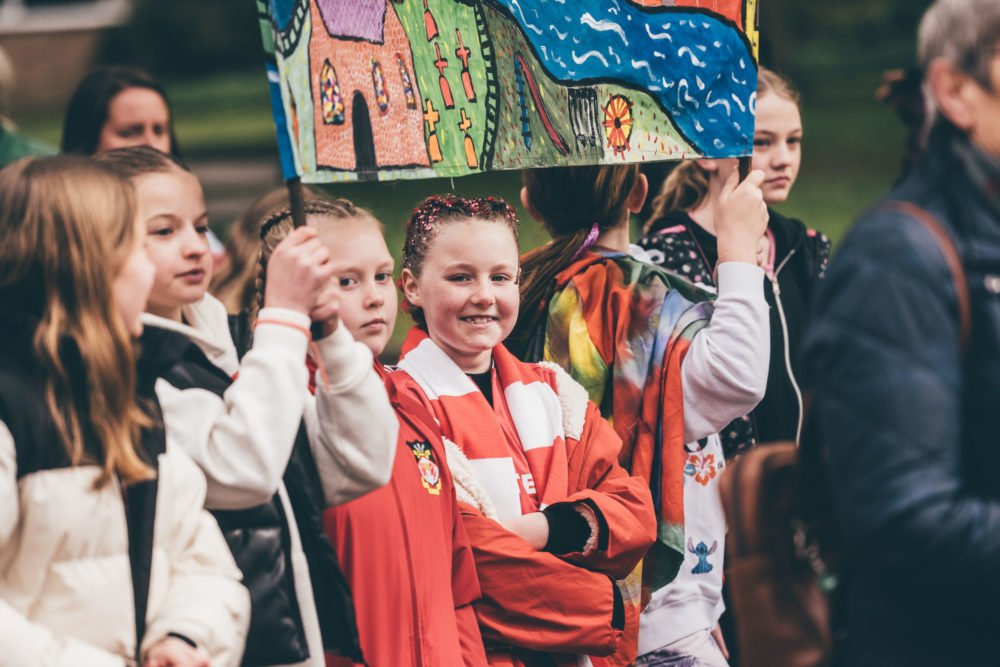
Cyhoeddi Eisteddfod Wrecsam 2025 Photographs © Aled Llywelyn

Like me, Heini Gruffudd, chair of Welsh language lobbying group Dyfodol i'r Iaith (A Future for the Language) believes that the most effective way of learning a language is through total immersion.

"You don’t get natural Welsh speakers from English-speaking schools except with some brilliant exceptions," he said.

"You only get Welsh speakers from Welsh medium schools where pupils start learning the language in playgroups.

"If you learn a language after that you’ve lost the best opportunity."

To either provide our children with, or deprive our children of, their very language, the ancestral language of Wales is on us now.

A million Welsh speakers isn't enough, if you ask me - Wales, and those in power in Wales, should be aiming for all its citizens to speak Welsh, and our nation to be fully bilingual.

We must demand wider provision of Welsh language schooling for all ages, and we should all consider Welsh medium education a must for our nation's children so that Wales' beating and vital heart, its language, can be restored.

Ymlaen!


Find your nearest Welsh language school here.

Click here to find out more about SaySomethingInWelsh.

Click here for more info on DuoLingo.

Click here for information on local Wales-based Welsh classes or London classes (Not exhaustive so please check social media and search engines for what’s on in your area)

For the price of a cup of coffee a month you can help us create an independent, not-for-profit, national news service for the people of Wales, by the people of Wales.

Get more trusted Welsh news

Choose Nation.Cymru as a preferred source in Google News to see more of our journalism.

Choose Nation.Cymru as a preferred source in Google News

26 comments

Valley girl

Agreed. All our schools should be Welsh Medium only. I think Wales Gov not strong enough to make this decision though.

Reply
J Jones

As a first language Cymru, this is either sarcastic or utterly delusional, whichever is disrespectful and damaging to the genuine efforts in promoting our national language.

Reply
Another Richard

Well said. Too much about this debate is just frivolous - not least the "million speakers" target.

Reply
Sgerbwd

Rubbish. Although we must gradually work towards all schools being Welsh medium and can't switch them all over at once, what you've said is utter nonsense and we'll get absolutely nowhere the way you suggest it.

Reply

In reply to Sgerbwd

Valley Girl

We can switch Primary pretty quickly.

Reply

In reply to Sgerbwd

J Jones

I'm assuming we're in agreement that we need a gradual progressive development of our national language, rather than being branded hypocrites with an immediate equivalent of the horrendous Welsh Not. We don't have enough native speaking teachers for those who want to learn our language, so pointless diverting these into forcing anyone who currently decides otherwise. It's about promoting the massive benefits of bilingualism and the huge national pride that native speakers enjoy.

Reply
Valley Girl

Until promoting the language but this isn’t enough.

Reply
Jones Arfon

Absolutely right. All schools in Wales should be Welsh medium.

Reply
Gwyn Hopkins

In this context it is worth quoting Thomas David (1814 – 1845) who was a Protestant Irish Nationalist: “A people without a language of its own is only half a nation. To lose your native language and learn that of an alien is the worst badge of conquest – it is the chain on the soul. A nation should guard its language more than its territories, it being a surer barrier. Should they abandon this for the mongrel of a hundred breeds called English?”  

Reply
Richard Thomas

I generally dislike stirring appeals to emotion, that's the sort of thing that got Brexit done. I'd rather we stick with the constructive. While there are excellent reasons to support languages for cultural heritage, I don't feel that what you've quoted is really worth quoting in this context. Firstly doesn't really seem to apply to Scotland, where both languages are settler languages, one from Ireland and the predominant one from England; they clearly have a very strong national identity. There are numerous other multilingual nation states or states whose main language is also the language or another country; I can think of Austria and Switzerland straight away. Thomas David himself was writing in English, and being predominantly English speaking doesn't appear to have been a hindrance to the national identity of the Irish people. It's all very stirring and emotive stuff, but it doesn't mean it actually holds up in reality.

Reply
Valley Girl

Wales has been robbed of its cultural identity and we need to use all tools available to differentiate ourselves from England and as we stand that’s the Welsh Languge. Scotland can stick with English because they already have an established identity and are different from England eg legal system, school term dates, diff bank holidays, devolved Crown Estate and a strong tourism policy and not like Wales which is classed as part of England or England.

Reply
Valley Girl

Wales hasn’t been a nation for centuries and we can address that through WM education, TV, place names,

Reply
Cymro Penperllenni

Da iawn Stephen, erthygl diddorol.

Reply
Neil Anderson

While I support the pre-eminence of Cymraeg in becoming standard along with Saesneg, I suggest we need to emulate our European or Asian cousins and become multilingual. In many places there, people commonly speak 4, 5 or more languages. We should encourage and support our migrant and other communities to preserve their languages and cultures as well. We can only gain from that diversity and the cross-cultural interchanges that are commonplace. The children of Arabic, Chinese, Spanish etc migrants could become our future diplomatic, university or medical staff, fully able to communicate with our many peoples. At the same time, our Welsh cultures need much stronger support - as much against pervading American influences as English hegemony and foreign expropriation.

Reply
Y Cymro

A bilingual Wales shouldn't be a possibility but the norm. Cymraeg is the mother tongue of Britain and we its custodian. The Welsh Government should learn from Europe where countries there are not only bilingual but multilingual. What are they doing right and we wrong.

Reply
S Duggan

The aim is nobel, but it's going to take many years to undo the bashing our language has taken by our neighbour. That bashing is still going on, even if the British establishment is no longer actively doing it, in the form of people moving to Cymru from over the border. I have nothing against that other than the fact most don't speak Welsh, will never learn it and so neither will their children. It's how our language was decimated in the first place and it's still happening. Welsh speaking schools, throughout south Wales in particular, need to be prioritised, and more needs to done to make GCSE and A level Welsh more appealing and worth doing. Welsh speaking societies, in our communities, need to become more prevalent so people have more places to go and others to meet who speak the language. A multi-lingual country is possible but we all need to work together to achieve that aim.

Reply
John Ellis

I don't want to underrate the problem to which you refer at the start of your post, because for sure it's real enough. I now live on one bit of that tenuous and hard to define border which crosses Wales, north to south, on one side of which Welsh is generally the normal day-by-day lingua franca of local people but where, on the other side, it's English which fulfils that role. Where I live, quite a lot of people are able to speak Welsh, but nonetheless English is the normal language of day-to-day communication between local folk, even between those able to speak Welsh. Whereas, less than ten miles further west from my home, people able to speak Welsh normally do converse with one another in Welsh. Communities develop habits, and in my immediate area the established local habit is to use English. Ten miles west, they use Welsh. But despite all that there are at least some reasons for optimism around the current state of the language. I recall, quite a few years back, watching Dafydd Iwan in a TV interview remembering his first ever visit to Cardiff, back in the 1960s when he was a young language activist, and observing that his first impression of that city was that he wasn't really in Wales at all, so slight was the Welsh ethos of the city which he was perceiving at that time. I too first stayed in Cardiff in that era, and I know what he meant! But if we move on half a century and more, I tink of my daughter who, having had all her schooling in my native north-west of England (to which, for family reasons, I'd returned after twenty years living and working in Wales) inevitably grew up without any knowledge of Welsh at all. However, purely by chance, her best offer when she was applying to university came from a Cardiff institution, and, like many a graduate, she stayed on in the city after graduation to build her career, fell for a native Cardiffian, prospered, and they've eventually ended up living at the 'up-market' end of Treganna/Canton. Only this week she told me that almost all their neighbours are Welsh speakers, keen on promoting the language and ensuring that their kids are fluent in Welsh. OK, almost all of them come from 'further west' and have ended up in Cardiff because they have jobs in government or the media; but Dafydd Iwan's perception of Cardiff in the 1960s as a non-Welsh city is clearly significantly less true than it once was. Moreover my daughter - a civil servant employed by a non-devolved section of government - is now learning Welsh, encouraged by her management who facilitate the language teaching in work time, not out of working hours. OK, I'm sure that there's a long way to go, and that the future of the language is still not assured. But I think that we do need to acknowledge the degree to which things have changed, and changed for the better, for the Welsh language during the last sixty years. As someone who first came to live in Wales as an undergraduate way back in 1964 and came to love the country and its people, I do still feel that there is here a national temperamental tendency to be pessimistic!

Reply
William Robson

Noble?. I made the decision over 60 years ago not to use Welsh. Did not like having it forced on me in school. Mother English , fathers family roots Bridgewater.

Reply
Neil Anderson

Oh, tsk! Scandal! What ever else has been forced on you that you now want to reject? Toilet training? Mathematics? 20mph? Compulsory attendance? Virtue and piety obviously go hand in hand. Best join us and relax - more fun that way.

Reply
Johnny Gamble

Live and let live works both ways Bill.

Reply
Richard Thomas

Unless a society places a value in something, no attempts through the education system will achieve much positive. The fastest way to ruin a child's enthusiasm for something is to teach it in school, especially if taught badly. People need to place a value in the language and to want to use it. It's worth bearing in mind that no matter what you teach in school, if a child grows up in a home which doesn't speak Welsh, it will never be their first language. I personally feel that more adult learning opportunities, to get those who have a real enthusiasm to learn are important. Get those people on board and they can use Welsh in the home so their children hear the language from birth. It needs to belong to the family, not arrive from the classroom. You could could get a Welsh language teddy bear, I got one as a christening present from my goddaughter, so she might interact with the language at least a little.

Reply
Valley Girl

All schools need to be Welsh Medium would be a great start: There is so much good happening in Wales at the moment.

Reply
Valley Girl

A very good start would be to bring back our Customs and Traditions What about celebrating Hen Galan on Jan 14thninstead of Dec 31. Differentiation from mothership is the key.

Reply
Shan Morgain

Diolch Stephen I enthusiastically support Cymru as a bilingual nation. I'd rather it wasn't all about Welsh though. Bringing up kids and adults practicing bilingual speech is research proved to enhance intelligence. So there :) For heaven's sake let's celebrate that and use it. Who doesn't want more intelligence? My second point is yet again a plea for recognotion for a more realistic assessment of how much Cymraeg? There are masses like me who can't hold a conversation but my life is threaded with Cymraeg words & phrases. That's not nothing and I demand respect as a hybrid. I have not learned Welsh due to illness limiting my life and there can be many other easons in people's difficult busy exhausting lives. It really isn't easy or straightforward to get to classes or manage 'easy' onine courses. But over the years I am managing to gradually absorb and manage more.

Reply
Garycymru

A brilliant piece, I think the "gently gently approach mustn't be forgotten. As in just making it normal to use "diolch" or "shwmae". Also, let's not forget, the more people speaking Welsh is seen as some loss of control by the UK, the UK government and the well controlled media will take every opportunity to slate anything to do with the language.

Reply
Ivan Dinsmore

There is no reason why all the people of Wales can't be fully bilingual except that they choose not to. Most Filipinos learn 3 languages, their local "mother tongue" e.g Cebuano, Tagalog, the national language and English.

Reply

Leave a comment

Comments are reviewed before they appear.