


Tue, 21st July Cardiff 27°
Nation.Cymru wordmark
Advertisement

Culture

'There were no Celts' says Guardian columnist Simon Jenkins in new book
By NationCymru
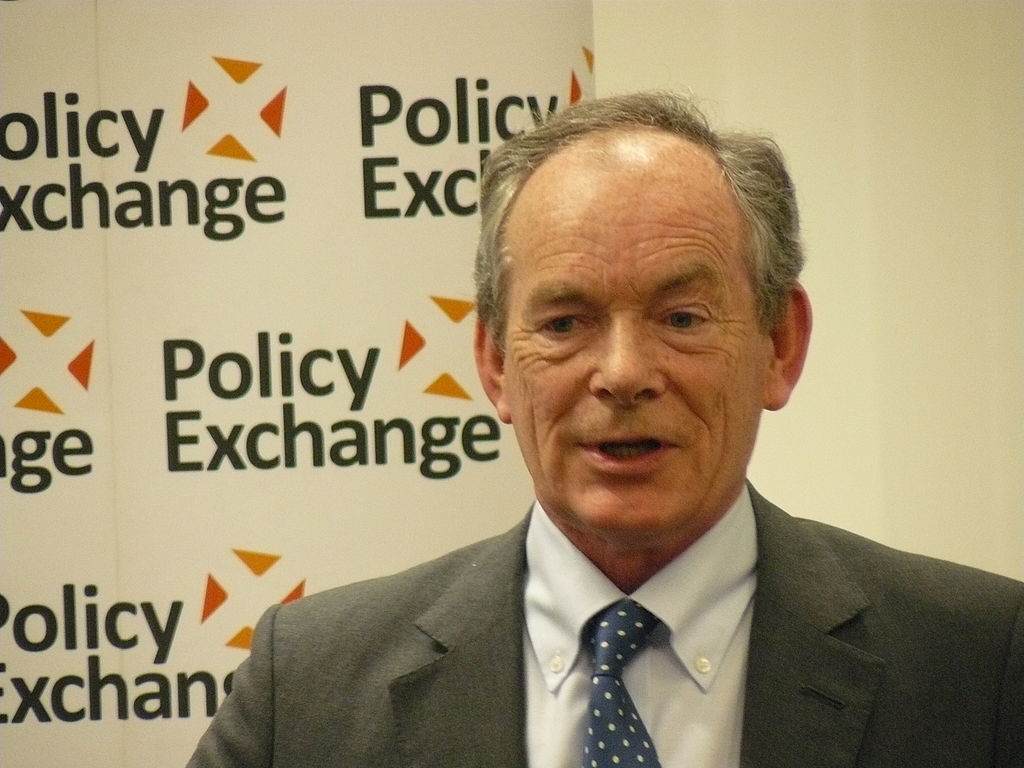
Simon Jenkins at Policy Fight Club by Policy Exchange

A new book by Simon Jenkins argues that "there were no Celts, just sociable sailors" but that it became politically advantageous for the Welsh, Irish and Scots to say that they had a political identity in common.

His book The Celts: A Sceptical History argues that there has never been a distinct people, race or tribe claiming the name of Celtic, though remnants of different languages and cultures remain throughout Wales, Ireland, Scotland and Cornwall.

Guardian political columnist Simon Jenkins argues in the book that a Celtic identity become useful as each nation had an experience of oppression under Anglo-Saxon, English then British rule, leading to the near break-up of the UK in the present day.

"My intention is to dispel the concept of a single Celtic people, language or nation," he says in the book.

"There are Ireland, Scotland and Wales, as well as Cornwall, Brittany and the Isle of Man.

"They have never in any respect cohered as one entity and I regard lumping them together as Celts or ‘the fringe’ as distorting and dismissive."

He does however argue that the people of the separate 'Celtic' nations faced oppression and that their own histories should be better taught as part of the UK.

"Britons are taught from birth the story of England, just England," he said.

"They are taught little or nothing of the ‘others’ – notably the Irish, Scottish and Welsh commonly referred to collectively as the Celts."

[mid-content-banner]

'Unite'

Indeed, it was the failure of the Welsh, Irish and Scottish to unite, first between themselves and then together, that was partly responsible for England's domination, he argues.

"By the eleventh century, under Anglo-Saxons, Danes and then Normans, England was among the earliest ‘nationalised’ states in Europe. It was an early ‘union’," he said.

"Unlike those of England, few of the clans or ‘kingdoms’ of Wales, Scotland and Ireland behaved as if they were members of a collective whole. Their efforts at self-government came constantly to grief, with rulers no sooner succeeding in briefly uniting their peoples than they died in feuds and civil wars.

"Over time, these westerners did combine sufficiently to be recognisably Irish, Scottish and Welsh, with distinctive languages and dialects. What they never did was unite against England. They did not speak a common language or acknowledge one leader."

He argues that only in the 17th century did a did scholars begin to see the isles as possessing a collective ‘Celtic’ past, largely through the
identification of a common linguistic root.

Simon Jenkins, who is half Welsh and half English, does however note that if the UK is to survive, the English centre must begin to treat the other nations with more respect.

"It must find stability and cohesion by devolving to them ever-greater autonomy through new federal institutions," he says.

"It has to change its outlook as well as its constitution."

For the price of a cup of coffee a month you can help us create an independent, not-for-profit, national news service for the people of Wales, by the people of Wales.

Get more trusted Welsh news

Choose Nation.Cymru as a preferred source in Google News to see more of our journalism.

Choose Nation.Cymru as a preferred source in Google News

49 comments

Cathy Jones

I don't need history, invented or otherwise, to know that the "union2 of the UK does not and has not ever, served the people in Cymru. Nothing will change because the English Establishment never changes... The only real change that can be made is for Cymru to become independent of any rule from the English Establishment or their outriders. End of..

Reply
Y Cymro

The attacks on Wales are coming thick and fast. Recently we have Janet Street-Porter belittling us, now Simon Jenkins saying we don't exist akin to a Holocaust denier , and yesterday had GB News attacking SNP FM Nicola Sturgeon & Scottish independence and in conversation mentioned how they were not bothered about Wales becoming independent because we were too poor and not worth it.

Reply
Glyph

Correct on all but one point. The “Celtic” label was foisted on us by the Empire to make room for the English. Prior to this, even as late as the 1700s we were referred to, albeit sometimes derogatorily as The British. So when the Empire wanted to cleanse our cultures and unify them into one global crime syndicate, they were English. We were Celts. Together were were British, now let’s get to murdering and stealing. interesting that this Englishman accuses us of claiming the unwanted nom de plume as some group victim thing

Reply
Y Cymro

Yes, correct. England & English in the past always looked to wards their Saxon fatherland Germany and why the English Monarchy are mainly of German heritage coming from the house Saxe-Coburg-Gotha. And correct again. The English in the past never referred to themselves as British until two World Wars with Germany and the rise of fascism changed their minds. It's called. Cultural appropriation.

Reply
SundanceKid

Yes, the correct term was the "Britons". But, a people sharing a common ancestry, language and culture across mainland Britain, Ireland and Western Europe did exist. The label originally came from the Greeks and Romans who identified a tribe in southern Spain called the "Keltoi" who, they surmised, were loosely related to the people of Britain and Gaulish Europe so in reality, I don't think the term "Celt" is as misleading as he describes. As you say, it was later appropriated by the English elite to describe the Welsh, Scottish and Irish as a means of "othering" them. Yet, Jenkins incorrectly claims we applied the term to ourselves to describe English oppression! Again, he is twisting facts to suit his own agenda. Interesting that he and others like him, now have an issue with the use of the word "Celt" because it has become a source of pride to the "Celtic" nations and is now a threat to his beloved union.

Reply
Andrew

Yes, the term was used to, 'other', the indigenous native Briton's by the likes of Bishop Stubs and his, 'lesser breed', pre Hitlertarian narrative. This happened at a time when a hugely unpopular Hanoverian dynasty. who had interbred for centuries were attempting to take the throne when other royals on the continent were losing their heads. In an attempt to be accepted, a Germanic master race ideology was championed, so many who now consider themselves as English were lied to so they would accept a dynasty who had no claims to this island. Many have no Germanic lineages. This persists to the present, as any archeology sites discovered are instantly discussed as being Roman Saxon or Norman before a spade has hit the ground . The old royal dynasty's had a big problem accepting that there were royal dynasty's here millennia before any Saxon set foot on this soil. The Welsh are ghosts in their own history.

Reply
Crwtyn Cemais

(please scroll down for English) Os gaf gyfeirio at eich paragraff olaf; mae'r patrwm o anwybyddu bodolaeth y Brythoniaid brodorol wrth gloddio safle archeolegol ym Mhrydain, yn gyffredin iawn i fi hefyd. Dw i'n cofio rhaglen o'r gyfres deledu 'Time Team', a oedd yn cloddio safle yn Swydd Henffordd. Safle o'r enw 'Dinmore Hill' oedd hwn. Roedd yr 'arbenigwyr' (Saeson oll, wrth gwrs) yn tybio mai efallai bryngaer o'r Oes Haearn oedd y safle. Wnaeth ddim un ohonynt holi tarddiad ac ystyr gwreiddiol yr enw 'Dinmore Hill'. Mae'n siŵr oedd y Cymry Cymraeg a oedd yn gwylio'r rhaglen yn gwaeddi ystyr yr enw ar eu setiau teledu (!), gan fod ystyr yr enw - enw hynafol - yn amlwg iddynt - fel disgynyddion ieithyddol/diwylliannol) y bobl a adeiladodd y fryngaer - sef 'Din' (neu 'Dinas') a 'Mawr' - wedi ei Seisnigeiddio tros y canrifoedd i 'Dinmore'. Dim son ychwaith gan arbenigwyr y rhaglen am y Brythoniaid - efallai wnaeth un ohonynt gyfeirio at y 'Brythoniaid Rhufeinig' , dw i ddim yn cofio. Wrth gwrs, erbyn diwedd y 3 diwrnod o gloddio, darganfuwyd ganddynt mai bryngaer oedd. ~ If I may refer to your last paragraph; the pattern of ignoring the existence of indigenous British (people) whilst digging an archaeological site, is very familiar to me also. I remember a programme from the 'Time Team' TV series, which featured a dig in Herefordshire. A site by the name of 'Dinmore Hill'. The 'specialists' (every one of them English, of course) wondered if it might be an Iron Age hillfort. None of them thought to investigate the origin and original meaning of the ancient name itself. It's certain that any Welsh speakers who were watching the programme, were yelling the meaning at their TV sets (!), as the meaning - of this ancient name - was to them, as linguistic and cultural descendants of the people who built the hillfort - obvious: 'Din' or 'Dinas' (the masculine 'dinas/y dinas' meaning fortified place/citadel' as opposed to the feminine noun, 'dinas/y ddinas, meaning 'city') and 'Mawr' meaning 'big'. The name had been anglicised to 'Dinmore' over the centuries. During the porgramme there was no mention of the British/Britons, maybe one of the archaeologists may have mentioned the term 'Romano-British' I forget. Of course, by the end of the 3-day dig, they had discovered that the site was , in fact , a big hillfort.

Reply
Andrew

Thanks for that.Yes, the establishment do not acknowledge the ancient tongue as being a LIVING Fossil, which donates who and what is associated with every place in Cymru.I am not a Welsh speaker, but I love looking in old Welsh dictionaries ( the older the better), to establish who and what each place of interest is associated with. However, it appears that so called academic types are too stupid or have not been trained to do this. Why English historians cannot do history is beyond me. I am of the view that many archeological sites across the U.K. are In fact, originally native indigenous Briton's and not Roman Saxon or Norman . The academic narrative does not account for the fact that pre Roman roads, coins, smelting furnaces and walls existed well before any Roman set foot here. The gold mines in Wales existed well before the Romans arrival, but they are referred to a Roman mines. The misleading historical narrative is never ending, but is now being challenged by some brave souls like Ross Broadstock on his live Sunday evening u tube channel entitled Britain's Hidden History. I may not agree with all of what is discussed on the channel, but it does provide an excellent explanation about how and why our history has been air brushed and deleted from the record.

Reply

In reply to Andrew

I.Humphrys

I think this could be "epistemic viciousness", where specialists, often very clever, form a kind of bubble in their field of knowledge, rejecting common sense solutions. (I will not say that snobbery comes into it, but I will think it.)

Reply
The Original Mark

Sounds about right, and perfectly points out the reason why Wales and Scotland need independence.

Reply
Arwyn

How hoplessly ignorant, anglo-centric and paternalistic ... as usual from Simon Jenkins.

Reply
CJPh

Not far off in observation but, as per usual with those who beat the Unionist drum, Miles off in conclusion. Let them speak - the more they do, the more they bolster the argument for seperation.

Reply
Quornby

It's what is now that matters. We Celts share a history of oppression that is more than enough to make us brothers and sisters.

Reply
Hell Glibson

Yet again [[following on from the Janet Teeth Porter comment recently]] these England devoted "half Welsh" types, who feel they have the right to chip in with anti-Welsh propaganda. If Simon Jenkins wants to argue that we natives have been mislabeled, as celts, that may be a vaguely interesting exercise in futile brainwashing / but the fact remains, native Britons ('celts' or otherwise) were here first, remain here, and want independence. Stick whatever ethnic on it, Jenkins, but we're off. Goodbye.

Reply
Barry Pandy

So why is it that linguists classify Welsh, Scottish Gaelic, Irish Gaelic, Breton, Cornish and Manx as Celtic languages? Is it because they've done their research and understand their subject?

Reply
Roderich Heier

The linguists classify these languages as celtic because celtic, like slavic, nordic, hellenic, semitic and many others is a linguistic term. This linguistic term is then extended and applied to the speakers of those languages.

Reply
Roderick FARR

Let's not forget Cumbrian,Barry. Cumbria(Cymru?) was the last Welsh- speaking kingdom to be swallowed up by England.How my Cumbrian ancestors must have rubbed their hands in glee late October 1066.

Reply
Carol James

Shows how little research this gentleman has undertaking that he excludes the seventh Celtic nation of Galicia. For years I attended history lectures in London where I was told about the Romans civilising the natives on the fringes - us - before the Anglo-Saxons and Normans progressed society towards the era of the English Kings and Queens and the magnificent Empire. Whenever I mentioned the Britons or Celts I would be shouted down. Little has changed.

Reply
DAI Ponty

So here goes another English Know all trying to rewrite history language and myths they do not know any better. Many years ago on holiday on the Island of Kos 2 English families having their evening meal first slagging of Greece and then talking about a certain English king as they called him my wife looking at me and told me to be quite which i could not take anymore from their rubbish. Just as we where leaving i turned to them and told them the Ancient Greeks where living in cities as far back as 1200 B C the minion civilisation the buildings in Athens where built around 500 B C they gave us mathematics science etc all when the Celts where loving in mud huts and the Anglo saxons decendents of the English living in caves in Germany and as for King Arthur legend he was a Celt fighting the ancestors of the English total arogance and ignorance to which they where a bit put back at my outburst

Reply
Maglocunos

That's the thing about the Celts isn't it 'loving in mud huts'?? Haha We need a lot more Celtic love in mud huts! .

Reply
Glyn Jones

O am gael gwireddu dyhead Armes Prydain!

Reply
hdavies15

Some research into the mental state of some of these "mixed -up" journalists who pop up in the AngloBrit MSM may be justified. Maybe some academic at a loose end could investigate whether the journalists "state of mind" derives from their roots or their conditioning by the society into which they have settled comfortably by now.

Reply
I.Humphrys

An American recently described the press of England as the worst in the West.

Reply
Adrian Meagher

If Simon Jenkins is hanner Cymro/hanner Sais he is well positioned to observe the oppression of the Welsh AND the English. In neither case is the national saint's day allowed to be a bank holiday by the powers that be in Westminster. I would be very pleased to hear Simon's take on that blatant form of oppression!

Reply
Stephen Mason

It appears Jenkins has nothing to say that hasn't already been said by others more eloquent and more informed.

Reply
Stephen Owen

Indeed I was thinking the same when I read that he had written a book about it, he is not saying anything new. As far as I understand no-one is saying that there was a single Celtic people, language or nation.

Reply
Leigh Richards

Putin tells the ukrainians they 'dont exist' 😢 - and simon jenkins tells the welsh we 'dont exist' 😢. Seems that cultural genocide is alive and well in the 21st century 😢😡

Reply
David

Simon Jenkins aka Putin aka Hitler.

Reply
Y Cymro

I think Simon Jenkins resentment masks his envy of our ancient language & culture. No doubt he's also ashamed of his Germanic roots and jealous that the real native Britons are us Cymry.

Reply
Y Cymro

I think Guardian journalist Simon Jenkins needs to do a bit more research before making such bold claims when there's evidence galore not only physical but linguistic too. The Greeks referred to the Gauls and other tribes in Europe such as the peoples of Switzerland (La Tène) & Austria (Hallstatt) as Keltoi denoting a shared heritage, culture language , who worshipped the same deities. Note: Why do the French call Wales & Welsh, not Irish or Scottish, Paid de Gales, which translates as, Land of Gauls (or Celts) because they & we spoke a shared language. And if Simon Jenkins dug a little further would know the native people of Britain spoke Hen Gymraeg & Gaul had shared heritage & language. The evidence is there. The Gauls are gone but we remain. Yma o Hyd, to quote the great Dafydd Iwan. Why do you think Old Welsh speaking tribes of the SE of Britain fled to Armonica in NW France when the Germanic Saxons invaded? Because the Gauls spoke a shared language, culture, and worshipped the same deities as said, not to mention they were also connected by trade too being geographically close to Gaul. And anyone whose often wondered why North Walian Welsh differs to South Walian is because when tribes from Hen Ogledd (Old North) were effectively ethnically cleansed by the Scotti of Ireland who invaded the North West of Britain, later founded Scotland, then either killed or assimilated the Cymry people left and the Brythonic speaking tribes called by the Romans as Picts (painted faces), resulting the Old Welsh Kingdoms of Rhedeg , Alt Clut, , Elmet, Y Gododdin now in modern NW England & Southern Central Scotland being assimilated and those peoples fled to settle in Cymru which was a cultural safe haven, in particular the North. There are manuscripts written by Welsh monk Nennius in 828ad retelling how a Northern leader Cunedda and his people came from Manaw Gododdin to establish the royal dynasty of Gwynedd. Note also: The term Brythonic was coined by Welsh historian & Celticist John Rhys in 1879 and refers to our language & culture. as Britain's. This is likely why you have differences in Welsh spoken in North Wales & South because of the influx of dialects from those various Brythonic Kingdoms of the North and why we call North Walians as Gogs and the geographical region as Gogledd (North). Need I say more.

Reply
BANAN

There will be no Simon Jenkins if he keeps this up

Reply
marc arkless

“What they never did was unite against England”, Oh yeah, it happens every time a English team steps on to a pitch

Reply
Roderick FARR

Simon Jenkins fails to mention the Celts of Cumbria(Cymru?).King Davmail,the 'last king of Cumbria' was dispossessed a few years before Hastings.Egged on by the conniving English,Viking intruders weakened King Davmail's army, which then became easy pickings for the English. 'Old Cumbrian' is very similar to Welsh but many place names here in Cumbria are clumsily Anglocised. Interesting summary,Simon,next time you visit the north Lake District think on of our proud ancestors,the Brigantes,who went on the rampage a 1000 years earlier removing Rome's iconic XX Legion totally from the face of this Earth.

Reply
Silures Prid

I’d like to point out that the XX Valeria Victrix were defeated by the Silures not the Brigantes. But Doc Johnny Balls seems to be moderating tonight so it may not stay up because he hates me

Reply
Roderick FARR

Correction accepted,all the more shame on me as I once lived in toffee-nosed Chester,historic home of Leg.XX. Modern day Devans will disgracefully inform you with glee that the Town Hall clock tower has only three clocks (where the west-facing space remains blank) because, "We have no time for the Welsh". In July 2000 A.D. at the Springfield Hotel,near Prestatyn,I felt rather like a born-again Brigante witnessing the total annihilation of the common foe,when the North Wales Boxing Team utterly destroyed the North West England Boxing Team 11 - 0 !!! Should any reader challenge my expression 'common foe,' then straight away we all know from which troublesome country you originate!

Reply
Stephen Owen

No one is saying that there was a single Celtic people, language or nation

Reply
Kerry Davies

When did the "Celtic" fringes ever claim to be one people or one nation with one language? Is that yet another strange invention of Sir Simon's ageing fevered brain? Do some reading before writing and look at things like "Six Nations, One Soul" or the laws of Hywel Dda that show the vast social, cultural and humane gulf between "Celts" and mongrel invaders. (Women's rights 1,000 years before England. etc.) Sir Simon is rapidly losing what little critical faculties he ever had and really does need to be put out to pasture now. He could take that annoying little git Neil Oliver with him.

Reply
Dave

I must say that the comments on this story are more interesting than the story. Thanks for the education folks I really appreciate it. #IndyWales because we are a clever lot, whether Celtic or not.

Reply
Stephen Owen

Very good point

Reply
Howard Edwards

Whatever we are called by authors who write in the English language, we six nations have a lot in common regarding culture and language. A case in point is language. All six languages are VSO - verb, subject, object. All six languages have similar systems of mutation. When you say "Nos da", are you speaking Welsh or Cornish? Has Jenkins done a detailed linguistic study? I don't know. I haven't read his book, but by what I've read on this strand, it looks somewhat dodgy. Perhaps he should present his research at the annual Pan-Celtic festival?

Reply
SundanceKid

They may have been called Britons, rather than Celts, but these people did exist. As he notes himself, all three countries share languages derived from a common ancestral language. Archaeogenetic studies also confirm a common heritage. Of course, Wales is a diverse country today but it serves no purpose to deny or rewrite history just because he is not happy with the direction of travel.

Reply
Stephen Owen

I am surprised any publishers would be interested in publishing such a book as it seems it doesn't say anything new

Reply
I.Humphrys

Too little, too late!

Reply
Shan Morgain

Technically this is known as the "straw man" type of argument. That is, set up a false idea, then knock it down and feel smug. There is no such claim as a united Celtic people. The term 'Keltoi' was used by early Greeks and Roman authors to describe rather vaguely defined northern European peoples. Welsh mediaeval writings called the natives of ynys hon/ 'this Island' Britons. Edward Lhuyd (1706) then recognised a family relationship between several language groups which he called 'Celtic'. It is not true we failed to successfully combine against the Saes/ Saxons, Normans, and then the English. The archaeology of the warleader of the 6thC who is remembered as 'Arthur' tells one story. The reigns of Hywel Dda and Llewellyn Fawr attest to more. So does the Glyndwr success which lasted 45 years into the 1420s and ended in a negotiated peace and pardons for the Glyndwr family. Glyndwr was betrayed by French allies in his grand design, and significantly was so successful his tale has been edited out of the histories. A key issue in the history of Celtic peoples (plural) is a different attitude. The Saes sought to unify and centralise, which ended in the domination of Empire. Celtic peoples did not generally have the same aim to centralise and unify, except when facing a common threat. Inheritance law divided large realms and lordships among a group of sons which stopped the building of long term states. Instead there was a dynamic flux of combinations, alliances, which formed as needed. To say Celtic peoples 'failed' at unity is like saying cats 'fail' to bark like dogs. Howsomdever I dream of a Celtic Federation - which would flourish for a time and then give way to a different type of alliance.

Reply
Chronos

Anglo-Saxons, Danes and Normans co-operating? They were at each others' throats and setting each other up as figurehead monarchs whilst we Celts were unified by a common struggle to retain territory. There was treachery, of course - every society has its pariahs - but to dismiss a common culture as imaginary is not only ridiculous but insulting. How about we stop trying to re-write history in an effort to maintain the vassal status of the Celtic nations?

Reply
Richard

There is no doubt Simon J has been one of the few voices in ‘ Fleet st ‘ to stand in Wales’ corner on most issues. The attachment to the land of his farther gave him a useful link to draw from. Very much in the moderate David Melding mode of a federal UK his views resinated in the Walea of the turn of the centuary. Wales however of 2022 is a a vey different place. More diverse and more secure in its identity and future. Simon may well be best advised sticking to the ‘ day job ‘ rather than seeking to use an interesting set of views into historical fact.

Reply
George Bodley

I'm afraid he's right there are no Celts in Britain see the research of professor John collis et al as well as the work of Graham Robb and while your at it the research of Peter James et al wake up khumry and read the real history of your Nation

Reply
gar jones

Well said mr Bodley - there was never ever any invasions of any celts to briton or ireland, just peaceful waves of immigrant families like we have today which were subsumed There is little evidence that angles, saxons, or viking left any trace in our dna. Myths of ireland written by 7th century monks with a Cristian agenda seized upon to gain a spirit of irishness. Nowhere is the word celt recorded. The majority of the people of these islands share an common indigenous gene. We have been manipulated to be kept apart, to keep us all enslaved and to unknowingly support the cravings of thousands of years of successive elites.

Reply
Rhobat Bryn Jones

The gentleman doth protest too much methinks. No-one has every argued that the Celts were a single homogenous people. But has he never heard of proto-Celtic, the forerunner of the six Celtic languages. Jenkins is a unionist and seems to have been panicked by the fact that, of the four nations of the UK, two of them are headed by parties who want to bring the Union to an end, Scotland and Northern Ireland. Jenkins says that England needs to treat the other nations with more respect. That's what we've been saying since the 1960s and look where we are.

Reply

Leave a reply

Replying to David Cancel

Simon Jenkins aka Putin aka Hitler.

Comments are reviewed before they appear.