


Sport
Phil Bennett obituary: Twinkle-toed outside-half who starred for Wales and the Lions
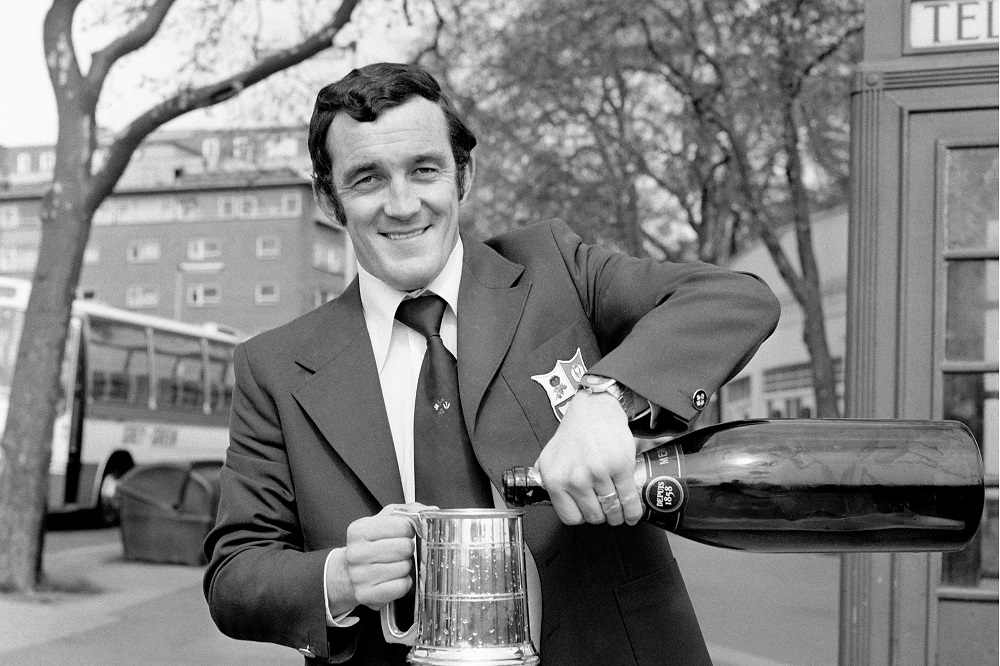
Phil Blanche
Whenever the word sidestep is uttered in rugby union circles, the dancing feet of Phil Bennett are more than likely to be part of the conversation.
Bennett, who has died at the age of 73, was a twinkle-toed outside-half who sparkled for Llanelli, Wales and the British and Irish Lions – all of whom he captained with distinction.
Born in the Carmarthenshire village of Felinfoel on October 24, 1948, Bennett’s father Les worked in the local steelworks until he suffered an industrial accident.
His mother Mary worked at a car-pressing plant to make ends meet as the young Bennett and step-brother Oliver heard Les recite tales of his beloved Llanelli RFC.
Bennett was often sickly as a child and his father was told on one hospital visit that his diminutive son would “never have the physique to play rugby”.
So football seemed a better option and Bennett’s performances for Llanelli Schoolboys drew admiring glances from several clubs and a contract offer from Swansea Town.
However, Bennett chose to play rugby with his friends at Felinfoel Youth and soon developed under the coaching genius of Carwyn James at Llanelli.
Bennett made his Wales debut in March 1969 against France in Paris, replacing the injured Gerald Davies to become the first Welsh substitute in international rugby.
He played in several positions, including full-back and centre, in those early years, with his path to his favourite outside-half spot blocked by the brilliant Barry John.
But John’s shock retirement in 1972 at the age of 27 allowed Bennett to fill the most revered of Wales shirts – the number 10 jersey.
[mid-content-banner]
'Greatest try'
The most memorable of Bennett’s 413 appearances for Llanelli – for whom he scored 2,532 points in 16 seasons – came on October 31, 1972 when New Zealand were famously conquered 9-3 at Stradey Park.
Welsh entertainer Max Boyce’s tribute recalled “how the pubs ran dry” in the west Wales town after that victory, and he name-checked Bennett as one of the players “all the little babies in Llanelli” would be christened after.
In 1973, playing for the Barbarians against New Zealand at Cardiff Arms Park, Bennett produced probably the most famous three sidesteps in the history of rugby.
Recovering the ball near his own try-line, Bennett evaded four All Blacks to start the move which led to Gareth Edwards’ length-of-the-field score. It has since been dubbed ‘rugby’s greatest try’.
Bennett’s form earned him selection for the Lions’ tour of South Africa in 1974, and he was at the heart of what was regarded as the greatest rugby tour in history.
The tourists won 21 of their 22 matches and the Test series 3-0, with one game drawn, and the squad became known as ‘The Invincibles’.
Bennett, fondly known as ‘Benny’ throughout rugby, scored 103 points on the tour, including a breath-taking sidestepping solo try from deep in the second Test.
His importance to the Lions cause was so great that, after picking up an injury, skipper Willie John McBride, the second row strongman from Ireland, literally carried him around for several days to stop him going home.
Punishing
Bennett played a key role in Wales’ 1976 Grand Slam success and became captain after Mervyn Davies suffered a brain haemorrhage while playing for his club side Swansea.
Although mild-mannered and thoughtful, Bennett’s pre-game pep talk before a Five Nations match against England in Cardiff in 1977 stirred Welsh passions and passed into rugby folklore.
“Look what these bastards have done to Wales,” Bennett said. “They’ve taken our coal, our water, our steel. They buy our homes and live in them for a fortnight every year.
“What have they given us? Absolutely nothing. We’ve been exploited, raped, controlled and punished by the English – and that’s who you are playing this afternoon.”
Bennett said later he had given the speech because he had found it difficult to “say something new” to his team-mates.
He was named captain of the Lions’ 1977 tour to New Zealand, but it was to prove an unhappy trip.
The punishing itinerary was over three months long and New Zealand had one of its wettest winters on record. The All Blacks won the Test series 3-1.
Wales won the Grand Slam again – their third such triumph in the 1970s – under Bennett’s captaincy in 1978, and he marked his final game in the 16-7 Championship-sealing victory over France with two tries.
Bennett retired with 210 points in 37 Tests – 29 for Wales and eight for the Lions.
He was awarded an OBE in 1979 for services to rugby and inducted into the World Rugby Hall of Fame.
Bennett continued to work for Carmarthenshire County Council and was a respected newspaper columnist and broadcaster on Welsh rugby.
He was also president of his beloved Scarlets and, in April 2022, a statue was unveiled in his honour at Felinfoel.
Bennett is survived by his wife Pat and their two sons Steven and James. He was pre-deceased by his baby son Stuart.
Support our Nation today
For the price of a cup of coffee a month you can help us create an independent, not-for-profit, national news service for the people of Wales, by the people of Wales.
Get more trusted Welsh news
Choose Nation.Cymru as a preferred source in Google News to see more of our journalism.
