


Opinion
YesArfor? If the Welsh Government won’t act to save our communities, it may be time to demand further autonomy
Ifan Morgan Jones
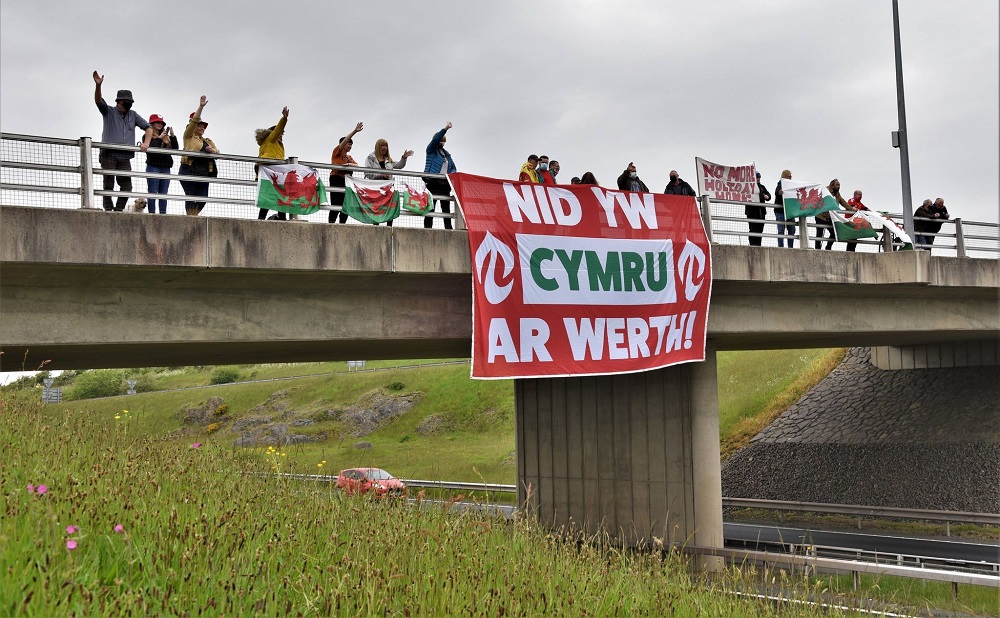
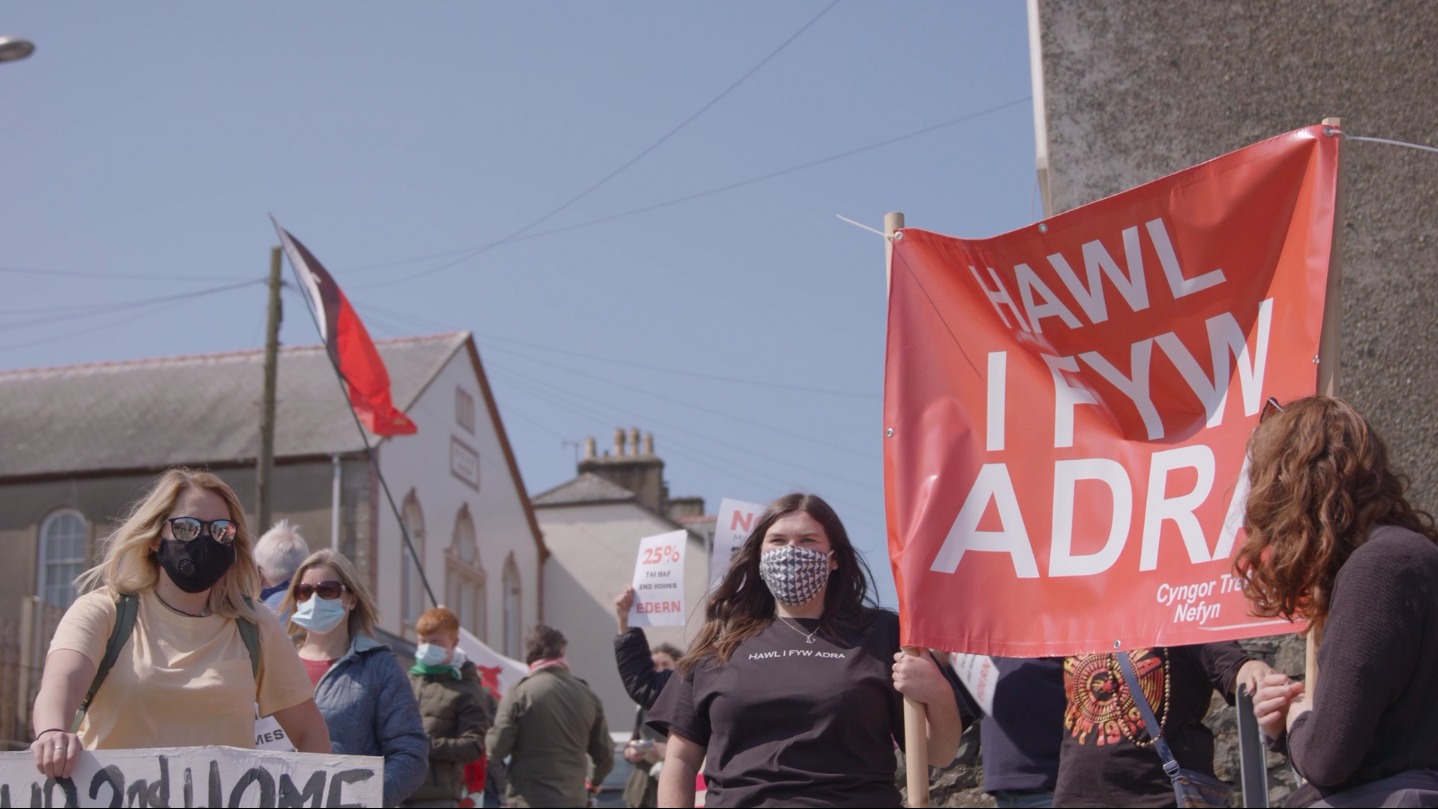
It’s hard to overstate the existential crisis facing our communities in the west and north of Wales at the moment.
This morning the story of one community in Pembrokeshire where only two of 50 houses are not second homes has shocked readers.
But such a future seems to face communities across the rural north and west of Wales, and not just seaside areas where the current problem is most acute.
Just in my own corner of Ceredigion – 10 miles inland - houses that four years ago were selling in the £200k bracket are now firmly in the £300k bracket.
In an area with low wages, a housing market that was previously unaffordable to all but the highest earners is now essentially inaccessible to anyone who hasn’t made their money elsewhere.
Me and my partner were lucky enough to hop on the housing market just after the 2008 crash when it was possible to do so for a couple with a job each. My own children, if things carry on as they are, have essentially no hope of ever affording property here and will be turfed out of their own community.
This is an issue across the country of course but in this part of Wales there is a crucial cultural issue too. These are the only communities where Welsh remains a community language.
The Welsh Government can strive to reach 1 million Welsh speakers, but without Welsh speaking communities the language faces a bleak future as something many can speak but most very seldom have the opportunity to do.
It isn’t simply the invisible hand of the market at work here and something that government cannot do anything about.
In fact, the Welsh Government’s own measures seem to have contributed to the issue. A recent report showed that its Help to Buy loan was mostly taken advantage of by those with an average household income of £40,000+.
While there may not be one single bullet solution to the problem as the First Minister says, there are a number of bullets that can be fired to start off with – including Plaid Cymru’s own five point plan.
No one is saying that there are easy solutions. But the main issue is that the Welsh Government just doesn’t seem to be in any hurry to get to grips with the problem, which has been ongoing for decades.
The situation we find ourselves in now isn’t a shock: These communities have been like boiling frogs for decades, it’s just that the Covid crisis has suddenly turned up the heat and made everyone sit up and take notice.
Even before the Senedd election, a petition calling on the Welsh Government to act was dismissed because “enforcement would be really difficult and create uncertainty”.
I’m also concerned that there may be more than a hint of ideological antipathy by the Labour Government towards these communities, too. It was Mark Drakeford himself who described the Welsh speaking heartlands as “Poujadist” – conservative and reactionary - as recently as 2012.
If the Welsh Government just fundamentally does not recognise the problem as one that needs an immediate political solution, what is to be done?
[mid-content-banner]
Peripheral
One solution might be to insist on a measure of autonomy over matters such as the language, housing and the economy for this part of Wales.
There are good arguments for Wales to adopt a more regionally devolved model anyway. There is no good reason why we need to ape the UK-model of concentrating all the political power in one part of the country.
As economist Prof. Calvin Jones pointed out: “The economic structure of post-industrial South Wales is wholly unlike that of still-industrial North East Wales with different (and completely separate) labour markets, skills needs and geographic orientations. Anyone who works often in North West Wales knows it is economically (and to some extent socio-culturally) another country.”
In that same article he argues for real devolution from Cardiff to the regions of Wales. He points to the wealthy Basque country where powers are devolved to three regions and 250 municipalities.
This devolution of powers to the regions would be an opportunity to kill two birds with one stone, as there is little disagreement that Wales is currently overrepresented at a local authority level.
We have 22 councils, which are far too many. Wales would do perfectly fine with four or five more powerful Swiss-style cantons: Cardiff Capital Region, Swansea City Region, North and West, and a North East regions.
This is a plan that would also crucially have support at a UK Government level to bring about. After all the Conservatives have recently been going on about the need for ‘true devolution’ to empower Wales at a local level.
Yes, the Conservatives’ line of argument is on one hand a rather transparent attempt to undermine the Welsh Government. But on the other they do have a point that parts of the north of Wales in particular feel politically peripheral to Cardiff.
Ultimately, all the arguments that apply to devolution for Wales – that the central government is politically unrepresentative and has little understanding of peripheral regions, also applies to parts of Wales too. Labour’s complete dominance is based on a vote which is mostly geographically concentrated in one part of the country.
The rural west of Wales is, at a Senedd and Westminster, almost a Labour-free zone – represented only by a few list Senedd members.
The Welsh Government may well not be keen on further devolution – for the exact reason that the UK Government isn’t keen on the Welsh Government. No one likes giving power away. But ultimately, like devolution itself, if enough voters get behind the idea, they don’t have much of a choice.
Semi-autonomous
One idea put forward by current Plaid Cymru leader Adam Price in the past – but subsequently little talked about – is that on an Arfor region.
It briefly flickered back into life at one point a few years ago due to confidence and supply deals between Plaid Cymru and the Welsh Government.
Is it time perhaps now to take it a step further, with Arfon becoming a semi-autonomous region within Wales with some powers over housing, the economy and language?
Is it time for YesArfor?
This is not, of course, an argument for an independent north and west of Wales. It isn’t an argument for a greater independent Gwynedd. That would be daft.
Wales should remain a single political unit and as many powers as possible should remain at our national Parliament and our national government.
But with devolution now on a more stable footing after 20 years, perhaps now is the time for Wales to see some of the decentralisation that is so common in other European countries, and away from the hyper-centralisation that so often characterises UK politics.

Support our Nation today
For the price of a cup of coffee a month you can help us create an independent, not-for-profit, national news service for the people of Wales, by the people of Wales.
Get more trusted Welsh news
Choose Nation.Cymru as a preferred source in Google News to see more of our journalism.
