
Opinion
Yeah but no but

Ben Wildsmith
Nigel Farage’s march through the neglected backwaters of English politics gathered pace this week and it seems that Reform UK’s showing in local elections, along with its by-election victory in Runcorn has finally brought home the scale of threat the party poses to the status quo.
Most of the councils that were up for election had Conservative incumbents and, unsurprisingly, Kemi Badenoch’s party performed badly enough to raise questions about its ongoing viability. Labour also lost out to Reform, however, and saw its 14 000 majority in Runcorn, the 17th largest in the UK, overtaken, albeit by a mere six votes.
It’s hard to see where the Conservatives might fit into a political landscape like this, as Reform tick so many of the party’s traditional boxes whilst, for the time being, remaining untainted by historical grievance. Farage’s outfit are the Tories only marketed more competently and without the criminal record.
[mid-content-banner]
Dire warnings
Labour, meanwhile, finds itself in an extraordinary position. Despite enjoying a huge parliamentary majority, it has managed, in less than a year, to lose control of the political narrative.
In the run up to the elections, Labour’s social media messaging consisted almost entirely of dire warnings about Reform.
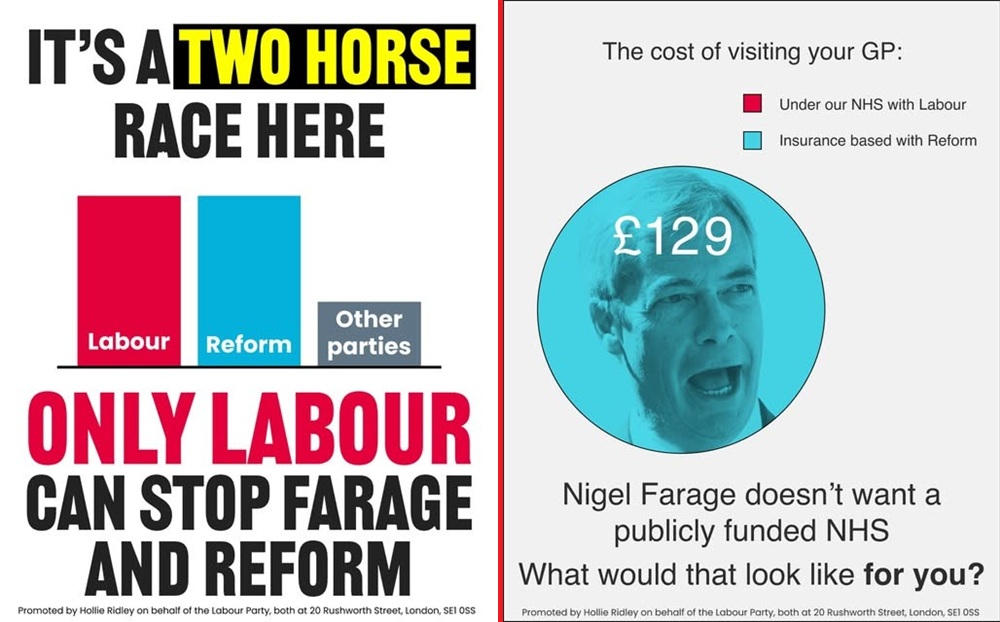
After the results came in, Keir Starmer responded by assuring us that he ‘gets it’. According to the PM, the message the voters have sent is that he should keep doing exactly what he’s doing but do it faster. He prefaced this with a list of excuses he ‘could’ have made for losing, were he not the stand-up guy he is.
Despite saying all the excuses in a clearly memorised list, he clarified that he *wasn’t* saying that. ‘Yeah but no but yeah but’ to quote Vicky Pollard.
From a Welsh perspective, the chaotic potential of next year’s election is unavoidable.
Labour canvassers in areas that fell to reform report that two issues dominated their doorstop interactions with voters: cuts to the winter fuel allowance and potential changes to the qualification for PIP.
[lower-mid-content-banner]
Misgivings
Baroness Morgan is reported to have misgivings about UK Labour’s approach to benefits. She requested a breakdown of their projected impact on Wales but, having received it from Liz Kendall, is yet to issue a public opinion on the matter.
In the wake of last week’s elections, any effort to distance the Welsh branch of the party from these policies risks being lost in a general backbench clamour to force a change of direction on the leadership. If the First Minister is minded to but some red water between the Senedd and Westminster, she will need to do so immediately.
Frankly, though, moves like this are likely to be distrusted by an electorate that has become jaded by everything the traditional parties do. If Labour belatedly concludes that cruelty is not the electoral winner it assumed, its change of direction will be seen as more opportunism from a party that is ideologically unmoored and removed from life as most of us live it.
Diversity officers
Reform UK will face its own problems now. Instead of lobbing grenades from the sidelines, it will have to run councils and mayoralties. An early indication of how that might go came when Andrea Jenkyns, newly elected as Mayor for Lincolnshire, vowed to fire all the authority’s diversity officers.
It turns out that Lincolnshire doesn’t have any diversity officers. A few years of this from Reform’s slate of untested operatives will at least give the party’s opponents something to lob back in their direction in future polls.
At root, though, the appeal of Reform is negative. It is a repository for the justified rage of voters who have seen their living standards eroded by 40 years of neoliberal economics. Whilst that has been a global trend, the UK has seen its society transformed more dramatically than comparable nations, not least because Labour has acquiesced so utterly to the economics of its supposed opposition.
Recent elections in Canada and Australia have seen the electorate change course in response to the behaviour of Donald Trump on the international stage. Despite predicted victories for conservative parties, those nations returned power to the soft left as a matter of national principle.
Mark Carney and Anthony Albanese were elected to take a stand against Trump and to express a national ethos for their nations internationally. Whilst Canada and Australia have their own problems, they have not been run so unjustly as to have created a nihilistic electorate yet.
Distrust of UK politics is so rife now that any appeal to a national ethos would be met with derision.
In Wales and Scotland, though, a different type of appeal can be made.
A case can be mounted that the UK as an entity is hopelessly wedded to the economics that have ravaged America and led to the rise of Trump. Wales, though, can be posited as having a different tradition, a historical narrative of solidarity through necessity.
If the destructive appeal of Reform is to be resisted here it will be by contrasting Wales with England, and Baroness Morgan has left it rather too late to manage that.
Support our Nation today
For the price of a cup of coffee a month you can help us create an independent, not-for-profit, national news service for the people of Wales, by the people of Wales.
Get more trusted Welsh news
Choose Nation.Cymru as a preferred source in Google News to see more of our journalism.
