


Wednesday, 15th July 2026 Cardiff 26° · Clear sky
NationCymru A news service by the people of Wales, for the people of Wales.

Opinion

Why we need a National Gallery of Wales
By Mark Mansfield
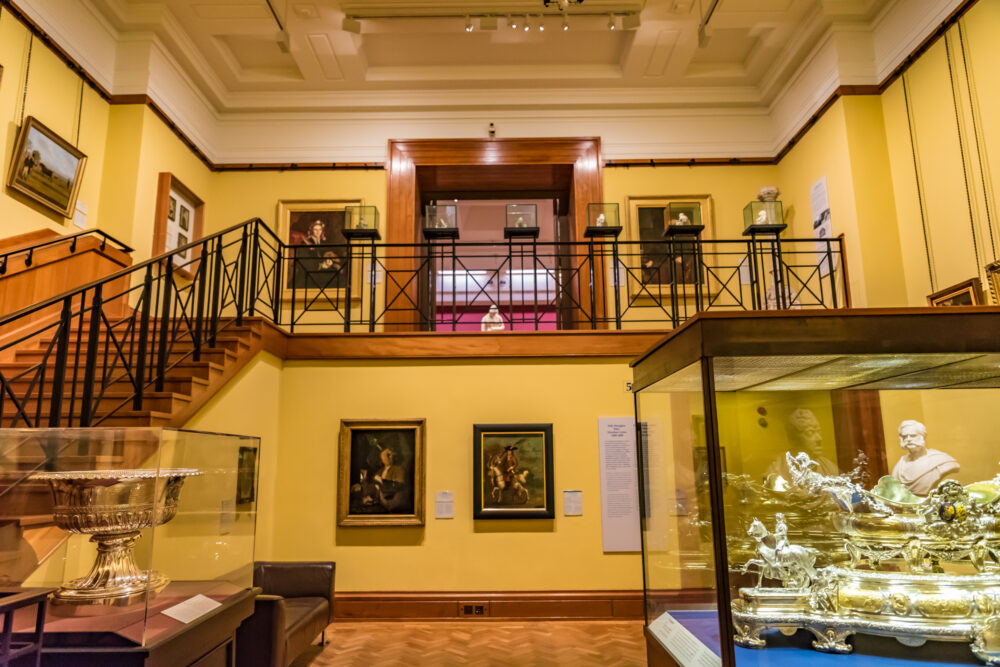
National Museum Cardiff. Photo Takashi Images

Desmond Clifford

Uniquely among the capitals of the British Isles, Cardiff has no National Gallery. In each of London, Dublin and Edinburgh such a gallery is at the centre of the nation’s identity and, into the bargain, attracts thousands, if not millions, of visitors. In Wales, something’s missing.

Wales has a National Museum which serves the dual purpose of butt-joining the nation’s treasures - the museum artefacts, and its art collection. It’s a wonderful institution in many ways.

Among other treasures, it houses the magnificent Davies Sisters collection, which transformed the Museum in the mid twentieth century to international standing.

A museum is not an art gallery. Museums curate artifacts which illuminate history. In the very best sense, a museum looks backwards. An art gallery has an entirely different function. Art, no matter when it was conceived, is alive and projects forward. It invites us to see and reflect on the human condition.

A National Gallery says something about who we are, both in the “here and now of us-in-Wales”, but also about the “all-of-us-everywhere”.

Quite recently I spent a morning at the National Gallery in Dublin. It tells Ireland’s story, for example, through the collection of Jack B Yeats and art associated with St Patrick. The most popular work in the museum is the thrilling Caravaggio painting The Taking of Christ (the incredible provenance of which deserves a book all to itself).

It seems strange that Wales doesn’t have a national gallery standing alongside the other cultural institutions developed through the twentieth century.

There’s no obvious reason for this. It’s a gap in the nation’s cultural landscape.

I was switched onto this topic by a recent John Barnie essay in New Welsh Review (#137) reviewing the “No Welsh Art” exhibition mounted by Peter Lord at the National Library in Aberystwyth. The exhibition is finished but I thoroughly recommend John Barnie’s essay.

Priority

The main reason Wales doesn’t have a National Gallery is that no one’s ever been bothered enough to make it happen. The arts authorities and Welsh Government have never made it a priority.

If you look at galleries elsewhere, many were founded originally by super-rich benefactors and Wales has had fewer of those. There are campaigners, to be sure, and no one has done more than the admirable Peter Lord.

Literature in Wales, both Welsh and English, benefitted from communities of motivated “literary entrepreneurs”, but visual art has had nothing like the same organised energy behind it. It’s also expensive.

Quite a lot can be achieved in literature with modest sums while a new museum, for example, is a substantial commitment. Without a large philanthropic community, investment falls on public bodies and the government. The first step, though, is ambition.

Culture

Let’s reflect on the first 25 years of devolution. So far as culture is concerned, the scorecard is mixed but, ultimately, underwhelming. In fairness, there has been some progress. Creative Wales, established by the Welsh Government, does good work.

Wales has undoubtedly grown as a centre for film and TV production, building on the track record of our television companies (BBC Wales, S4C, ITV Wales) and their network of independent producers, alongside powerful and dynamic operators like Bad Wolf.

“Mr Burton”, directed by Marc Evans, demonstrates top-drawer excellence; if a better film was made in Britain this year, then it passed me by.

Other areas have fared less well, with piecemeal provision. The debacle surrounding the National Theatre was depressing and Michael Sheen can hardly be expected to carry that weight forever.
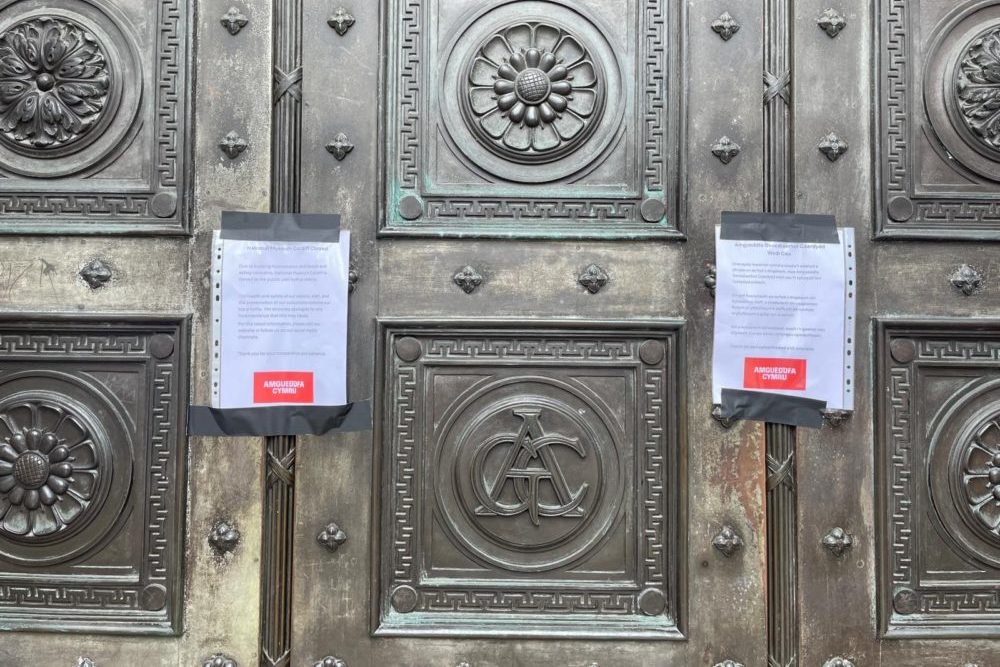
Signs posted to the doors of the National Museum after it was closed at short notice. Photo Mark Hutchings

Affordability in government is about choices. The National Museum has struggled to keep its doors open because of a leaky roof; instability like this makes it hard to laud the Welsh Government uncritically as guardian of the nation’s culture.

Ireland provides a reasonable comparator. The Irish Arts Council is allocated 384million Euro next year while the Welsh Arts Council will get around £42m-ish (bundling revenue and capital together).

Some caution is required with comparisons – they’re not like-for-like - but even so, the disparity is obvious and hardly suggests Wales is fully stimulating a key area of natural comparative advantage.

Ireland woke up decades ago to the importance of using its cultural offering as both an economic driver and a source of small-nation soft power.

It would be unfair to characterise successive Welsh Governments as philistine, but thus far, they’re treading in the lowly foothills of culture’s significance.

Transformational

A quantum shift is required. For the most part, Creative Industries provision in the devolution era has added incrementally and modestly to what it inherited, but there has so far been no transformational reprioritisation.

It is sometimes said that Wales lacks depth and variety of tradition in the visual arts.  I really don’t accept this. For historical reasons, Wales generated less art than some parts of Britain, largely because of the scarcity of rich patrons and a sustaining bourgeois class, but the tradition of Welsh art is very visible and amply contextualised by Peter Lord and others.

The issue isn’t No Welsh Art, but the absence of a proper place to put it. A National Gallery for Wales.

Here’s my proposal.

The National Museum stands alongside Cardiff City Hall on the Cathays Park estate, the grand legacy of the world’s one-time coal capital. These days the City Hall is essentially a wedding venue. Nothing wrong with that, but it’s a scandalous underuse of the country’s finest public building.

Once, the City Hall could have been the home of Senedd Cymru. I remember the arguments very well; an intransigent city council had great plans for the building. Here we are 25 years later with nothing going on except sweeping up confetti. It’s a building in need of rescue.

My proposal is that the City Hall become the National Gallery of Wales.  The building’s a work of art all by itself. The art currently in the Museum next door should form its foundation collection but that’s only the tip of the iceberg. There are thousands of pictures in the vaults of Welsh galleries unseen by the public – a cultural scandal.
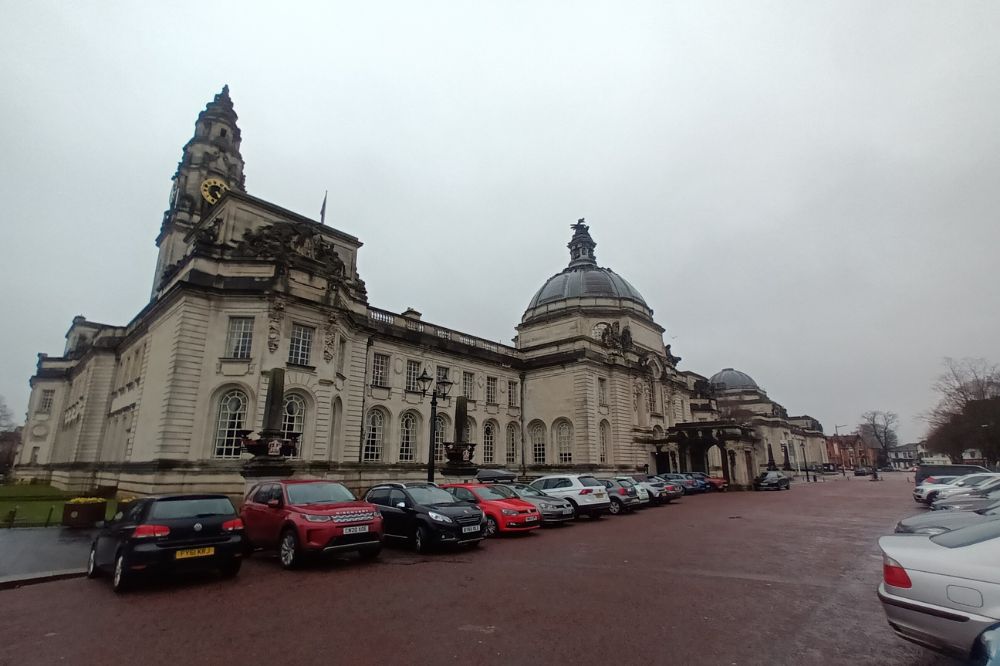
City Hall in Cardiff. Photo Ted Peskett.

There are large Kyffin Williams landscapes hanging in the Welsh Government building in Cathays Park hidden from everyone except the cleaners and security-guards; put them in the gallery. The contents of Peter Lord’s No Welsh Art exhibition; put them in the gallery.

Exhibitions

Think of the exhibitions that could be attracted to a properly functioning National Gallery of Wales.

I see Ireland’s National Gallery is attracting these exhibitions over the next year: Picasso, Turner, Blake, European Drawings and Hilma af Klint, the outstanding Swedish surrealist. I’ll likely buy a plane ticket and a couple of nights in a Dublin hotel at some point to see one or two of them (Hilma af Klint as my top priority).

Ireland’s national gallery opened as a private venture in 1864 with a stock of only 112 pictures (for comparison, the Davies sisters bequeathed 260 works to the museum). The art tradition in Ireland was hardly any better than Wales, yet today the gallery stands very fair comparison with most medium/ small countries in Europe.

Wales already has the art stock in the Museum, it just needs to be rehoused next door.

This, in turn, would allow the National Museum free rein to regear itself with a specific museum focus curating the nation’s past. There is so much more it could do if it were liberated and resourced properly.  We need to empty the vaults and get Wales’ art and artefacts circulating around the country.

It would be uplifting to see some vision on Creative Industries in next year’s election manifestoes, with Big Thoughts rather than tinkering.

In the Plaid Cymru Co-operation Agreement with the Welsh Government, the idea of a Contemporary Art Gallery of Wales was floated. It was a great idea but put the cart before the horse. Start with a proper National Gallery, then the Contemporary version – that’s the right order.

Cyfarthfa Castle

There’s a perfect home for the Contemporary Art Gallery at Cyfarthfa Castle in Merthyr – where better?

Currently the populous Valleys, the region which generated the bulk of Wales’ wealth, houses no national cultural institutions (though Blaenavon’s excellent Big Pit forms part of the Museum estate).

I’m not ducking the fact that all this costs proper money.  The key is for the Welsh Government to see Creative Industries as an investment, not a sunk-cost burden after everything else has been paid for.

It will bring visitors, create jobs, build education and promote Wales.  Cardiff has developed as a centre for sport, entertainment and culture; a National Gallery would add handsomely to the offer.

The city has genuine potential to become one of the great culture and entertainment centres, not just of Britain, but Europe.

Whoever forms the next Welsh Government shouldn’t just mind the shop they inherit.  They should shape things, build the nation’s institutions, put Wales on the map. Over devolution’s first 25 years, the score card on culture is mixed but on the timid side, modest rather than transformational.

Governments have continued to see culture as cost, not investment, while they’ve spaffed millions on pointless, failed “economic” projects which were never much more than hopeful punts.

It’s time to see culture as an industry and economic priority, and a National Gallery for Wales as one of its pillars.

For the price of a cup of coffee a month you can help us create an independent, not-for-profit, national news service for the people of Wales, by the people of Wales.

39 comments

Susan Davies

Started this article not seeing the need for splitting off the museum's galleries, but quite swayed by the arguments now! Several years ago, I recall the museum relaunching its art spaces and positioning itself as the de facto national gallery. Nowadays, it's in a rather more sorry state with progressively more rooms seeming to have been shuttered over the years as the building deteriorates. It would be magnificent to see a proper Welsh national gallery whether in City Hall or another location in Wales. (Cue traditional north v south debate?!)

Reply
Tony Burgess

A National Gallery of Wales should in Aberystwyth.. it is the UNESCO city of Culture and Literature… it would also be a perfect fit in the town which already hosts the National Library and importantly Aberystwyth is centrally located in Wales..

Reply
Lyn E

Aberystwyth is not centrally located. It's on the edge, far from where our population is concentrated and with poor public transport links. Maybe a National Gallery should not be in Cardiff but renovating Cyfarthfa Castle to show both more of its own collection and other art from the past quarter millennium would be a great idea.

Reply
Charles Coombes

Always the South!

Reply

In reply to Charles Coombes

Lyn E

A fair comment. One reason I said perhaps not Cardiff. There was a proposal for a virtual contemporary art gallery across 8 locations, 4 in north Wales (I think) but none in the south Wales valleys. Artes Mundi has now spread out from Cardiff. But if there were a single National Gallery, it should be in an easily reachable location for most of the people of Wales.

Reply
Mab Meirion

Thanks for reminding us here in the middle of the country, perhaps you could add poor health provision and send it in an email to the Senedd... You could say the capital is in the wrong place, it is certainly on Cymru's southern edge... They should teach more Welsh geography as well as Welsh history in Welsh schools...

Reply
Mab Meirion

Absolutely right, it should be in Aber...

Reply
Fanny Hill

Tawe?

Reply

In reply to Fanny Hill

John Young

Good call. There is an argument that if it is one site then it should be easily accessible to the majority of Welsh people. So logically that means South Wales (sorry). And the automatic response from so many is that it has to be in Cardiff because that's what everyone else does, they put these things in the Capital. Because everyone else does it doesn't mean that Wales has to do it. I hope people in the hierarchy of Plaid Cymru are reading this. The MS's i've spoken to have confirmed that a Plaid government in the Senedd will be ensuring a rebalancing spread of investment away from the South East to the rest of Wales. This would be a fantastic start if (when) they win next year's election. There are just two places in the South that could sensibly accommodate it. That's Swansea and Cardiff. The OP says it would generate millions of extra visitors every year and give a huge boost to the economy. So which city's economy needs that boost ? Almost everything has gone to Cardiff over the years which has seen the city already benefit from hundreds of millions of visitors over time. And it continues to benefit from those investments. The logical answer is Swansea.

Reply
Mab Meirion

There must be an office for the things Cardiff haven't got yet...

Reply
Derek

History and art deserve different buildings. Indeed contemporary and traditional art also deserve different building. So let's have two more and put them somewhere visitors wouldn't normally visit. I propose Port Talbot and Rhyl.

Reply
Mike T

More buildings, more money. I'll get some from the tree.

Reply
Derek

Presumably it can come from the same tree that allowed DCMS to throw £47 million of free cash at the British Museum of Thievery in 23/24.

Reply

In reply to Derek

Mike T

One of the greatest museums in the world that has preserved many artefacts that would have otherwise been destroyed.

Reply

In reply to Mike T

Derek

I once heard a Tory complain that if they sent everything back there would be nothing left which reveals what they really think about British history.

Reply

In reply to Derek

Mike T

Back to whom? The people who didn't want the items in the first place? Thankfully, we stepped in to save them.

Reply

In reply to Mike T

Derek

Which usefully filled a museum that would otherwise be forced to tell the real story of this island, however embarrassing it may be to some.

Reply

In reply to Mike T

CapM

Admit it Mike. The 'T' stands for Troll

Reply

In reply to CapM

Johnny

It could also stand for Tory Party HQ Troll

Reply

In reply to Johnny

Mike T

Not at all. Was just defending the superb British Museum. The Terracotta Warriors exhibition there a few years back was one of the most extraordinary things I've ever seen. I was also questioning why on earth we would build a new (multi million pound) national art gallery in Port Talbot etc (as suggested) when we could repurpose the National Museum in Cardiff for much less.

Reply

In reply to Mike T

CapM

The comment of yours that you're defending was 'Back to whom? The people who didn’t want the items in the first place? Thankfully, we stepped in to save them.' The Terracotta Warriors exhibition is irrelevant to your original comment. Unless you think we stepped in to save the statues and have held on to them against China's wishes.

Reply

In reply to CapM

Mike T

Yes, my original comment is also true. Lots of those artefacts would have been looted or flogged onto the black market if we hadn't preserved them. Look at what happened recently in Iraq, Syria etc not to mention the Taliban blowing up the statues at Bamiyan etc. That wonderful museum preserves antiquities so that people from across the world can enjoy them, rather than seeing them destroyed. I cannot say that not a single one came by non-nefarious means hundreds of years ago, but I'll take that as the alternative is usually cultural descration. Therefore, I would say the British Museum - and others like it - are more a force for good than bad.

Reply

In reply to Mike T

Egon

If that's the honourable intention why not return the artefacts once it's safe to do so? The freed up space can be used to tell the real stories of this island, such as how the Barbarian invasion turned a highly civilised post-Roman British culture, where everyone on this island enjoyed fine buildings with plumbing, saunas, education, proper roads, lasagne and fine wine into five centuries of the dark ages. For me that's a mystery I'd like learn more about, wouldn't you?

Reply

In reply to Egon

Mike T

I'm not sure, given the state of the world, that it would ever be safe. The ME, for example, is as crazy as it ever was and they'd just be lost forever. Sad, but true.

Reply

In reply to Mike T

Egon

Is this your idea of safe? https://www.bbc.co.uk/news/articles/cpegg27g74do "British Museum gems for sale on eBay"

Reply

In reply to Mike T

CapM

Is your comment true for keeping the Mold gold cape in the British Museum? Whether yes or no what are your reasons?

Reply

In reply to CapM

Mike T

Yes, as I suggest that they will have the best experts in the world when it comes to preserving it and being in London would afford the opportunity for most people from across the world to see it. I would suggest that it could then be leased out to Wales on a regular basis too. This is a similar approach to many collections around the world. The cape is, of course, is not just Welsh history, it's the history of the whole of Britain given its (Bronze) age too.

Reply

In reply to Mike T

CapM

It's made of gold. Only platinum is less reactive It needs negligible preserving. In the London museum it has to compete with very many other treasures for attention. As a result although the museum has many visitors they spend on average very little time standing in front of the cape. The cape would be the main attraction in a museum in Cymru and a national icon so would have a much higher profile internationally and of course many more merchantising opportunities and increase visits to Cymru. It's like you don't want us to generate income. The hard financial argument alone trumps any argument based on a sentimental attachment to the Empire's Mother of Museums in London.

Reply
Mab Meirion

Manod Quarry, if it was good enough for the National Gallery...

Reply
John Glyn

This is more necessary than ever so we can sort out the current confusion as regards what exactly is meant by our 'national museum'? We need a dedicated 'National Art Gallery'. And we need a dedicated 'National Museum' - housing a permanent exhibition dedicated to 'telling the story of our nation'. Both these buildings should be located in the capital. These things are the norm in all other self respecting countries.

Reply
Geraint

Was in the National Gallery on Saturday looking at the French Impressionist collection. One of the attendants mentioned it was the largest collection in the World outside Paris and only 2% of the collection was on display.

Reply
Ianto

As far north as Merthyr, eh?? Careful Desmond. How about the magnificent Plas Glynllifon outside Caernarfon?

Reply
Fanny Hill

Brilliant idea, but given some of the comments on here a venue appears to be a bit of a problem. I’ve got a couple of bare walls in my front room going spare. I’m happy to help out on a regular basis. Pre Raphaelite school preferably. Oh, and I draw the line at performance artists, definitely not having any of those. Nor those P**s artists from the Reform school

Reply
Fanny Hill

Philistine

Reply
Mike T

That could be construed as a little (ahem) 'stereotypical' I'm afraid. There is much evidence that the Philistines had a cultured society and have generally suffered bad PR as they were the enemies of the ancient Israelites. There are also those that see them as the ancestors of the Palestinians.

Reply
Marc Evans

These arguments have been made so many times (mostly by Welsh artists) and, at best, only ever partly acknowledged, even by Government in Wales; (the 'UK' government happily supports a panoply of 'national' institutions in and of England) and even public bodies ostensibly upholding the arts of Wales have only shown interest when they could directly benefit. The National Museum of Wales was indeed gifted an incredible outward looking collection of international art but it was then put inside a conch shell of great house 'heritage' art and curated as if a provincial offshoot of one of the National Trust's collection of English stately homes, with their 'Grand Tour' and 'Family portraits' definition of High Culture. Welsh art was, and to a degree still, is relegated to the rôle of cap doffing bystander, just as our history was (and still is) told as a weak reflection of England's perspectives on 'their' invasions, royalty, empire, social order and legislation. The NMGW has never offered us a continuous telling, through Welsh-centric curation and narrative, of Welsh history or arts (aside from the geology of Wales, and not counting the valuable but Victorian ethos zoological museum of stuffed flora and fauna). Even our collections of ancient crosses and Celtic coins have been 'disappeared'. Worse, it lacks a roaring national strategy for the acquisition of Welsh art. Why do we almost always need a public appeal to acquire and present the generous gifts of major Welsh artists' estates (including photographers) and soon to come, the lifeworks of our multi-media and digital artists? And what about a wider buying (and display) policy for contemporary Welsh artist that might even enable career sustaining support? The National Library of Wales is doing a far better job than NMGW, albeit increasingly, if not lethally, with hamstrung resources. But these are passing shows. The Peter Lord collection and exhibition (once only and now finished) cast a light on what we're missing (and what students of all ages, as well as visitors, researchers and our international profile are missing too). An equally excellent survey of Welsh landscape art was presented at NLW in the shadow and literally on the back of the exceptionally rare 'visit' of a single UK 'national' jewel, a Canaletto (The Stonemason's Yard). The 'star' of the show departed from its brief sojourn in the sticks, while our crown jewels returned to their wee small corners, government cellars and private parlours. This mighty hole in our cultural resources seems to be (mis)treated as casually as do UK PM's (of whichever political party) consistently reject our quiet pleas for a St. David's Day Bank Holiday, while contemplating, with that easy indifference of their class and power privilege, unilaterally imposing 'national' holidays on us such as Trafalgar Day, Union Day and Army Day. It's time for the political parties of Wales to do better than the current geographically distributed scattering of bread on the waters (Welsh Labour government's present policy) which is not fit for purpose in national and international impact, strategic resource and intent, and Welsh self-respect and pride. We all deserve better.

Reply
Charles Coombes

While we might need a National Gallery. Let's getbrud of poverty first

Reply
Derek

You don't solve poverty by throwing away culture and history. Who told you that?

Reply
CapM

'Let’s getbrud of poverty first' Good thinking England has a national gallery because poverty has been eradicated there. Well done them. Perhaps you could ask them to teach us how they did it CC.

Reply

Leave a reply

Replying to Mab Meirion Cancel

There must be an office for the things Cardiff haven't got yet...

Comments are reviewed before they appear.
