


Opinion
Why we need a long term plan for Wales' national infrastructure
Gwern Gwynfil Evans
The recent announcement that the Senedd will, at last, be expanding was very welcome. The Senedd has long been in need of expansion to provide better and more comprehensive scrutiny of decision making if nothing else.
But this also feels like another sign that Wales is continuing to reassert its nationhood. A process that has been gathering momentum politically and culturally over the past decades.
Not so economically. There has been much written, of course, about the foundational economy, circular economies, the need for private sector investment and growth to create a vibrant Welsh economy. Even some progress in reducing the role of the public sector as the central pillar of the Welsh economy.
But the reality remains that the south of Wales is tied to the West of England and the Southeast of England, across the M4 to London, whilst the north of Wales is similarly tied to the English North and Midlands.
While this remains the case any attempt to carve out any kind of distinct national economy over which we can assert some control will struggle. The sparsely populated ‘green desert’ of central Wales creates a very physical barrier to a broader-based interconnected Welsh economy, foundational or otherwise.
It is worth rehearsing the logistical challenge:
By road from Cardiff, London is as close as Aberystwyth (and a far easier drive even though the distance is half as much again), Wrexham will only take a little longer to get to from Cardiff but you will have to drive most of the way on the English side of the border, especially if you want a smooth journey. Cardiff to Bangor will take almost twice as long as the drive to London and it is tortuous. By rail or bus journey time comparisons are even less favourable.
Everyone in Wales knows this well enough and we have simply come to accept it. Here lies the challenge. We can not have a strong foundational Welsh economy until Wales has a reasonably effective national infrastructure. The new clarity of our political identity is wonderful to see, the growing awareness and appreciation of the very distinct cultural identity we have always had is long overdue. But until we can properly connect our centres of population with a national infrastructure we will always be economically disjointed.
[mid-content-banner]
Cohesion
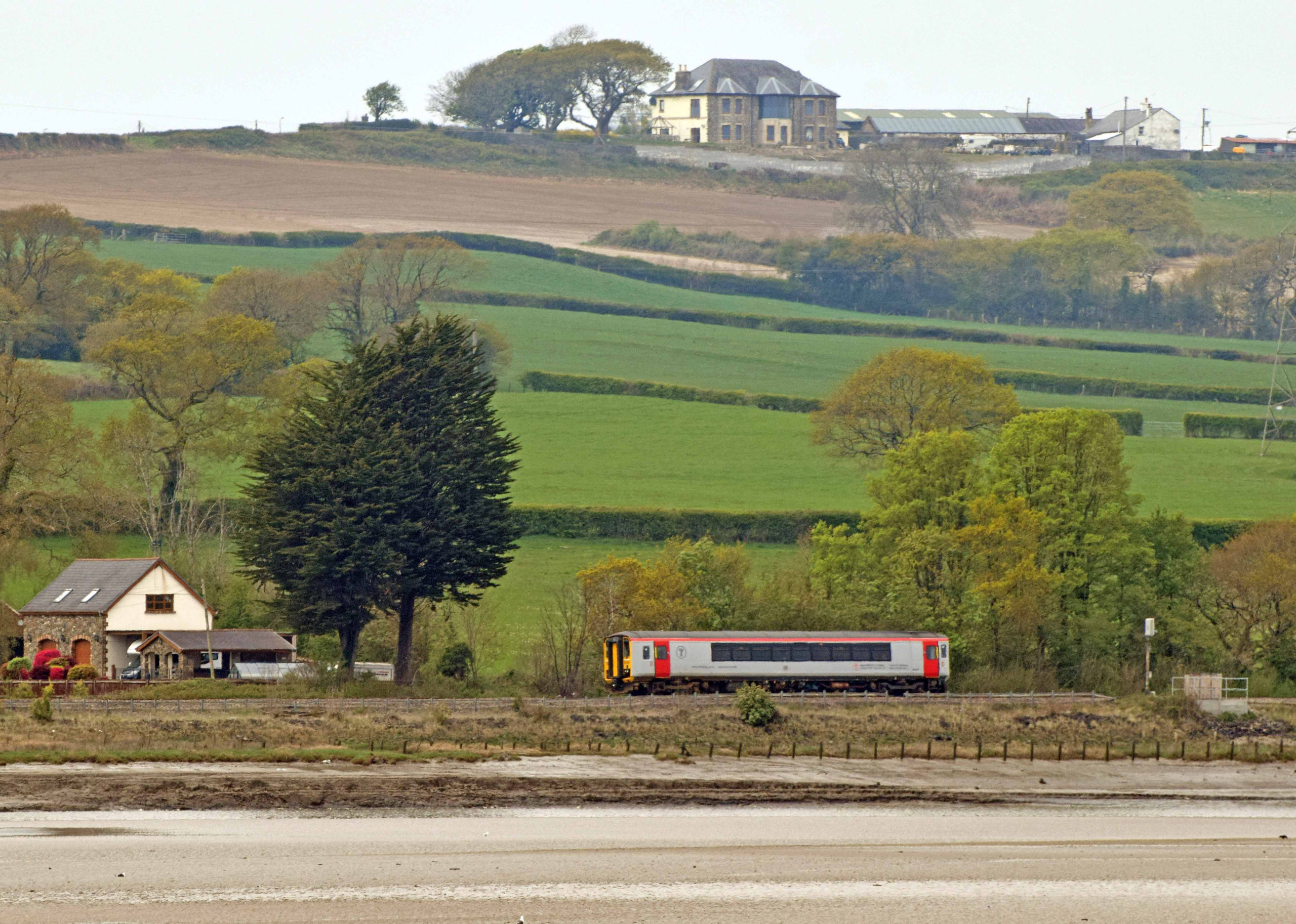
Like all of the straightest, fastest roads in Wales our railways reach into the country like fingers from an English hand – the North/South connection very visibly missing.
Changing this will require huge investment in road and rail. From the point at which the A470 leaves the Beacons there are no obvious arteries through which to reach the rest of Wales easily and quickly. The terrain is challenging certainly but fast, straight roads are achievable, and railways can be built.
Environmental concerns are rightly being given huge prominence in Wales. New roads do lead to more traffic, building infrastructure has environmental costs, but an interconnected Welsh economy needs that traffic to exist, grow and thrive. The current emptiness of the ‘green desert’ will become less empty simply by being part of a main thoroughfare. Ease of access will increase its appeal as both a leisure and business destination. Movement within Wales, rather than outward into England, will increase significantly.
No doubt leisure travel from England into the currently harder to reach (but beautiful) parts of Wales will also increase, and will not be welcomed by all, but for Wales’ long term cohesion as a political, cultural and economic entity that is something we should be prepared to accept and welcome.
Above all, as our broader sense of nationhood continues to grow and unify the people of Wales, across many of the traditionally perceived linguistic and regional barriers, we will need economic cohesion to match our political and cultural re-emergence.
Precedent
Making up more than 30% of Wales by area with less than 10% of its population, the central massif and coastline of Wales is relatively easy to sideline and ignore politically. Economically Wales does so at its peril – its geography creates a fundamental weakness in the foundation and development of a strong Welsh polity.
It does not matter that plans to create the infrastructure needed may take 50 years or more to implement, what matters is that strategically this becomes a clearly stated goal with broadly based long term political support - the plan and the intent must exist before there can be any hope of fulfilment.
There is precedent for Wales in long term planning, culturally in the target of one million Welsh speakers, initially a goal without a policy framework, over time this has seeped into policymaking and become an increasingly prominent guiding principle across the board.
More broadly, the innovative Wellbeing of Future Generations Act has also shown that Wales can and will take the long term view.
That long term view must also now be applied to our transport network. We need to ask, not just what kind of transport network Wales' population needs today, but how can we build a transport network that creates the kind of Wales we want to see decades from now.
Support our Nation today
For the price of a cup of coffee a month you can help us create an independent, not-for-profit, national news service for the people of Wales, by the people of Wales.
Get more trusted Welsh news
Choose Nation.Cymru as a preferred source in Google News to see more of our journalism.
