


Opinion
Why the Plaid-Labour deal makes sense for both parties as Welsh devolution circles the wagons
Ifan Morgan Jones
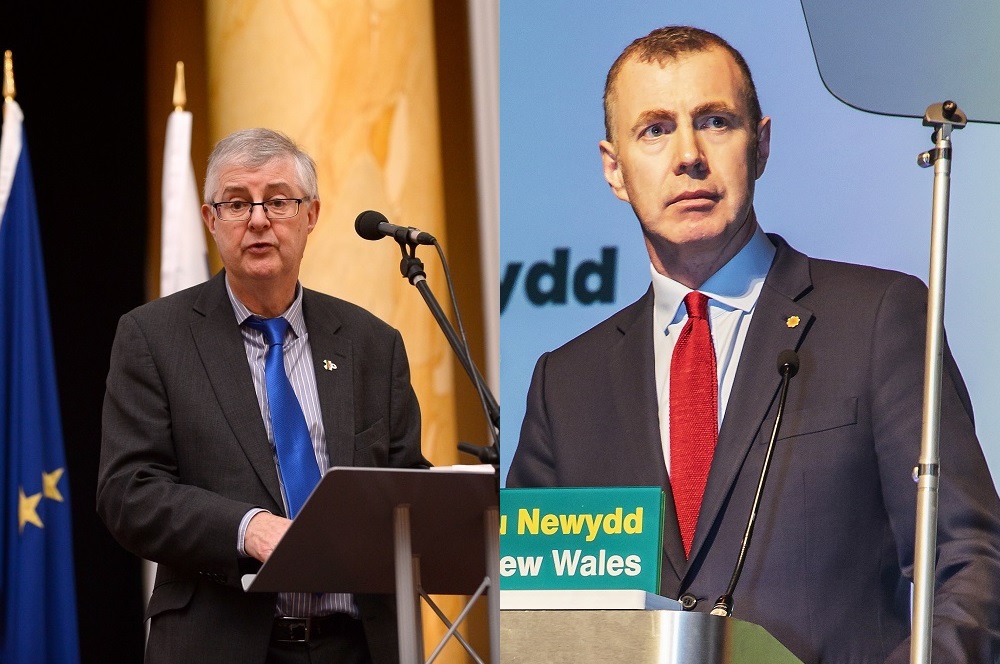
‘Vote Labour, get Plaid. Vote Plaid, get Labour,’ said one Conservative Senedd member in reaction to the confirmation that the two parties had come to a co-operation agreement.
The problem with this as an attack line is that I suspect that many voters from both parties would think, ‘yes, fine?’
It’s not fair to say that Plaid Cymru and Welsh Labour are interchangeable. Even as Welsh Labour have shifted in favour of more autonomy for Wales, Plaid Cymru have shifted too towards full-throated support for independence.
But on the main animating issue of Welsh politics today – the attempted post-Brexit roll-back of devolution by the UK Government – both sides find themselves very much on the same team.
As a result, this co-operation agreement can be interpreted as Wales’ political institutions circling the wagons.
Many of the measures within it, from enlarging the Senedd, a new media authority, tackling the housing crisis, and developing north-south transport links, are aimed at developing or at least stopping the dissolution of Wales as a distinctive and more integrated cultural and political sphere.
It is nation-building. And national institutions nation-build at least partly as a defence mechanism. At the most basic level, if you’re the Welsh Parliament then you need a Wales to exist to justify your own existance.
The ironic side effect of the Conservatives’ ‘muscular unionism’ might well be to speed up this process, where Labour may well in the past have been more reticent.
I thought Mark Drakeford’s reported comment that “the content of the agreement was entirely in keeping with Labour’s principles, although Plaid would no doubt wish to claim the credit” was quite telling in that regard.
That is, these were things many Labour Senedd Members would have liked to do anyway but without the need for an agreement with Plaid may have been difficult to justify to the more unionist and devosceptic Westminster wing of the party.
Plaid Cymru weren’t quite pushing at an open door but one that was definitely left unbolted.
[mid-content-banner]
Distant
Of course, Plaid Cymru want to nation build because being a nationalist party is their USP.
Labour however see no realistic prospect of being back in power at Westminster in the very near future, and are also under increasing attacks on devolution from a hostile UK Government. From their point of view, entrenching the Senedd and Welshness along with it makes sense too.
The argument against such an agreement from Plaid Cymru’s point of view is that these kinds of agreements hurt the smaller party, as the larger party takes credit.
As an example of this some point to the Conservative-Liberal Democrat coalition of 2010-15 and Plaid and Labour’s own One Wales Government of 2017-2011.
But I suspect that the idea that the smaller party always suffers is largely a myth. What harmed Plaid Cymru in 2011 wasn’t that they were in coalition with Labour, but that Labour were suddenly out of power at Westminster.
Being in power in Wales but not Westminster then allowed Labour to take on Plaid Cymru’s previous mantle as the local defence against a distant and neglectful central state.
From Plaid Cymru’s point of view, this is a dynamic that is unlikely to change until – if it ever happens – Labour form another Westminster government.
In the meantime, to a large extent, Wales has two national parties – Plaid Cymru and Welsh Labour – with a mutual interest and from their and their supporters' point of view they might as well work together to get things done.

Support our Nation today
For the price of a cup of coffee a month you can help us create an independent, not-for-profit, national news service for the people of Wales, by the people of Wales.
Get more trusted Welsh news
Choose Nation.Cymru as a preferred source in Google News to see more of our journalism.
