


Tue, 21st July Cardiff 27°
Nation.Cymru wordmark
Advertisement

Opinion

Why the narrative of Wales being too poor for independence is false
By Emily Price
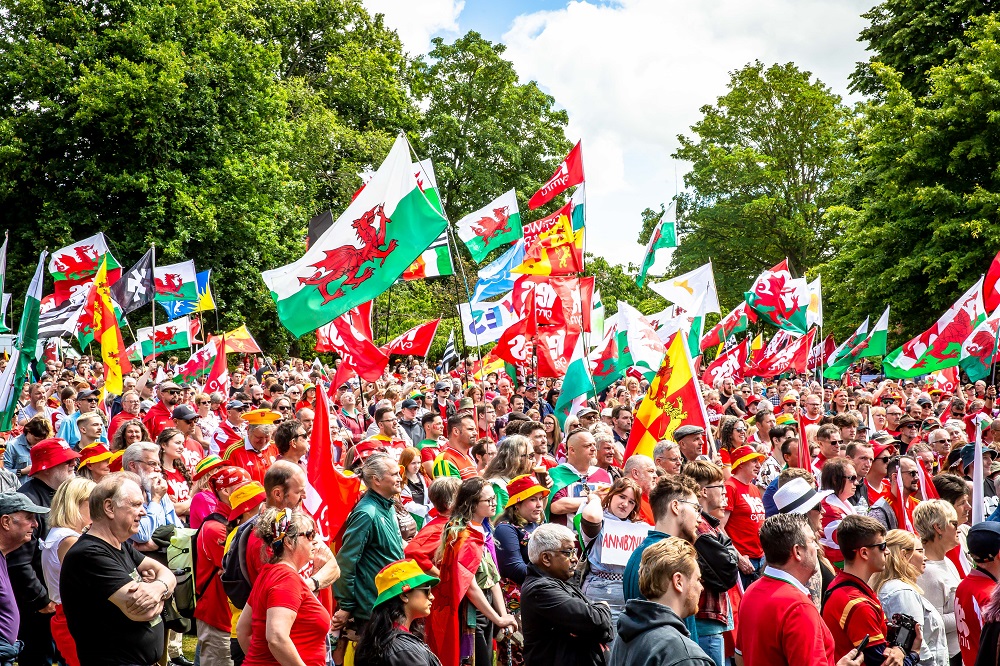
Picture by YesCymru

Elfed Williams - YesCymru Director

The economic case against independence is infected by old thinking.

It has long been assumed, largely without challenge, that Wales is simply too small, too weak and too poor to make its own way in the world.

It follows from this attitude that we are doomed to eke out a living, subsisting and dependent on Westminster subsidies and being told what to do by the London establishment is an intrinsic part of the bargain.

The price of being a perceived subsidy baby is obedience.

Therefore for the most part we do not get to decide our own taxes or our own economic policy. We do not get to decide how swathes of our economy is regulated or how the benefits system operates. We are not in control.

Want taxes to be fairer? Tough. Want the benefits system to be less punitive? Ditto.

[mid-content-banner]

Independence 

This state of affairs suits the Westminster establishment just fine. Indeed, it works hard to keep it this way. Its minions proactively tell us in Wales that we will never make it on our own. This message has been rammed down our throats for generations.

What they essentially argue is that as a country we would not be able to afford to pay our bills if we were to become independent.

A favourite trick of the establishment to back this up is to point to the deficit.

Now, the deficit is the difference between how much money brings in through taxation and other means, and the money it spends, on things such as public services.

According to previous figures from the Office for National Statistics (ONS) the deficit Wales would incur on day one of independence would stand at £13.5 billion.

However groundbreaking research by Professor John Doyle of Dublin City University strongly suggests that figure is highly misleading.

He concluded the fiscal gap – the difference between raised revenue and government expenditure – would actually be closer to £2.6bn.

Dr John Ball former lecturer of economics at Swansea University would argue the difference between expenditure and revenue would be even smaller.

Taxation

Prof Dyle bases this on the 2019 estimate of total Welsh economic output standing at £77.5bn. This means the deficit would be equivalent to just under 3.4% of GDP, which is a perfectly sustainable figure for a nation-state to manage.

It compares with an average fiscal deficit of 3.2% across all OECD countries in 2019.

To put this in context, the figure is also lower than the UK’s deficit in the financial year 2023/24, which stood at £121bn and is equivalent to 4.4% of GDP.

Yet nobody argues that the UK is too poor to be independent and should therefore be ruled from Paris or Berlin.

For decades Westminster has hidden how much money Wales really has through misleading accounting practices

When it comes to taxation, Prof Doyle argues some of Wales' tax receipts, such as for corporation tax may be underestimated.

This is because many companies operating in Wales are headquartered outside the country. The money these companies make in Wales isn’t necessarily reported in Wales.

He also suggests an independent Wales could also make savings in a number of areas. One area where Wales could spend much less is on defence.

Pensions

It is highly unlikely that an independent Wales would continue forking out for the hugely expensive Trident nuclear missile system.

Then there is the issue of pensions. In 2018-19 the UK government spent £5.9bn on pensions in Wales.

While it is true that the pension liability would be a matter of negotiation post-independence, Prof Doyle has argued that it is logical for Wales to insist that the UK government should continue to pay the pensions of people in Wales who have contributed to the public purse in taxes and social insurance contributions.

After all, most people in those circumstances would only be getting back the money they have paid in.

When it comes to the question of whether an independent Wales would take over a share of UK public debt, Wales would not necessarily have any obligation to do so.

On top of all this, Prof Doyle also that the fiscal gap Wales would inherit could be closed by a combination of relatively modest economic growth, and changes to tax policy.

Ambition

The whole point of independence is that we can chart our own course. We can do things our own way. We don’t have to shackle ourselves to the failed economic policies of the past that have decimated our communities and stifled our ambitions.

A viable independent Wales is possible. Not only that, it is highly desirable because it’s the best chance we have of ensuring that our people prosper and flourish.

The Westminster establishment hides our money from us, refuses to properly invest in our communities, and then tells us we’re too broke to be independent.

When Wales frees itself from the false narrative that has been peddled we can write a very different story.

For the price of a cup of coffee a month you can help us create an independent, not-for-profit, national news service for the people of Wales, by the people of Wales.

Get more trusted Welsh news

Choose Nation.Cymru as a preferred source in Google News to see more of our journalism.

Choose Nation.Cymru as a preferred source in Google News

48 comments

Rhufawn Jones

Yeah that's what the abusive husband says - "you'll never survive without me" - whilst simultaneously controlling the finances. Walk away, Cymru Fach. Walk away

Reply
Garycymru

Referring to this as a Union is like locking a woman and her children in a basement and calling it a family. The worst part of the myth being peddled, is that the actual people who should know better, blindly regurgitate the lies like good little Robots.

Reply
Jeff

Depends on who will and how will they be leading. At the moment I want to see more engagement from the politicos across the board or we end up with a one trick pony in charge. You need to carry the people with you, not dragged.

Reply
Adria

It’d be nice to get a clear definition of what will be considered ‘fairer’ taxes, and who gets to decide. Also, which pensions are we talking about negotiating here, and does it include public sector pensions?

Reply
Dai Ponty

You here it from English people all the Time WE KEEP YOU and English people believing that if there was a vote for them to ditch Wales out of the Disunited Kingdom they would vote because the English media tell them a pack of lies and they believe it and my answer to it is IF ENGLAND KEPT WALES THEY WOULD HAVE GOT RID OF US ALONG WITH SCOTLAND AND NORTHERN IRELAND fact is the 3 Celtic nations keep england we have never been treated in this God foresaken union we must get out with a sense of URGANCY

Reply
End the UK

I do laugh, when the English move here, they see how bad they wrecked Cymru. Also, I just say to those in London, "I can show you in one map how bad it is in Wales" they say go on, I just show them Google maps and the road network and it shows only two major roads and they both leave Wales

Reply
John Ellis

'It has long been assumed, largely without challenge, that Wales is simply too small, too weak and too poor to make its own way in the world.' An oft-repeated imputation, for sure, but one which as a lazy generalization can be readily dismissed; you only have to look at that small surviving relic of the 'Holy Roman Empire' Luxembourg, which is one of the most prosperous countries in Europe. Denmark's pretty small too, but seems to do well enough. And, closer to home and with something of a similar history to our own here in Wales. there's the Republic of Ireland, whose citizens now have a better average standard of living than folk in the UK do - or so I read just a year or so back. But on the other hand it took Ireland fifty pretty lean years to achieve that fortunate status. I wonder whether folk living in Wales would be willing to endure quite a few years of difficulty in order to achieve - hopefully - what Ireland now enjoys?

Reply
Padi Phillips

It took the Irish republic half a century to begin to provide a decent standard of life for its people due to a combination of economic colonisation from Britain due to the Irish pound being linked to sterling until 1979 and a government that was ultra conservative in terms of the economy. It wasn't until Ireland joined what became the EU in 1973 that its economic fortunes started to improve. For Wales, I think the Nordic model is one that would be my preference, which is particularly aposite for the times in which we live.

Reply
John Ellis

Having visited Ireland on numerous occasions - the first time being 1974 just after both the UK and Ireland had joined the EU - my impression coincides completely with what you say here in your post. My second visit to Ireland was in the summer of 1980 when the difference, only six years later, had become palpable. I recall commenting on this swift change to a farmer in western County Cork, who attributed it, at least in the agricultural sector, to having become part of the Common Market.

Reply

In reply to John Ellis

Padi Phillips

Ireland benefitted massively from joining the EEC as it was heavily reliant on agriculture and the EEC was keeping farmers very happy at the time with huge grants that led to massive over-production. Membership allowed Ireland's farmers to modernise and invest in their farms. One big difference between Ireland and Wales was represntation at EEC/EU level, with Ireland having far more Euro MPs than Wales, despite the populations not being that different. Ireland has 13 MEPs, Wales had four.

Reply

In reply to Padi Phillips

John Ellis

Agree absolutely - that was very much my impression too.

Reply

In reply to John Ellis

Julian Norman

So we swap our dependence on Westminster for dependence on Brussels !

Reply

In reply to Julian Norman

John Ellis

Still we get the same tired and weary mendacious Brexiteer blather! The difference between Westminster and Brussels is that we're all formally and legally subjects of 'the Crown in Parliament' in respect of the former, whereas the UK was a participant in respect of the latter. And, moreover, as one of the larger member states we had the additional clout which resulted from sheer size, an advantage which politicians of a previous era like Thatcher and Brown were adept in utilizing.

Reply
Dr John Ball

For some time now I have been working on a book that demolishes the myths. I very much hope to see it published later this year or early 2025. In the meantime I am happy to continue my talks to any Yes Cymru group - or any else!

Reply
Jones

That’s good to hear, I apologise, it seems that I’ve missed the news that they’d commissioned you to produce a book on it. Shall look forward to its publication.

Reply
Dr John Ball

Just to clarify. To write this book has been an ongoing personal project. I am tired of the lies, half truths and dodgy statistics and hopefully this will put things right. I should point out that it has not been officially commissioned by Yes Cymru, nevertheless I am sure that Yes Cymru members and supporters will find it informative.

Reply
Neil Anderson

John, I shall be particularly interested in your answer as to why a post-independence government in Cymru should keep the pound and not want to control all the monetary and fiscal levers that most countries have...

Reply
Dr John Ball

You've peddled the independent currency argument for some time. Buy my book!

Reply

In reply to Dr John Ball

Neil Anderson

So your book isn't going to be about real independence then?

Reply

In reply to Neil Anderson

Dr John Ball

I was in two minds to reply. This was a cheap shot. The difference with your fairy tale economics is that this is about reality. I don't take offence easily, but unlike you I have been a nationalist all my life and always believed - and worked for - independence. Where were you?

Reply

In reply to Neil Anderson

hdavies15

What's your preference ? the Euro ?

Reply

In reply to hdavies15

Neil Anderson

Thanks for your query, hdavies15. First, I don't favour an independent Cymru joining the EU. But certainly the single market and the customs union. I'm inclined towards Schengen, but would want to learn more. Second, I favour real independence, with sovereignty invested in our people. We can do it better ourselves, removing the uncertainty and risk that goes with the decline of England, its failing union and its environmental and social mismanagement. Third, having witnessed the bullying of southern European states by the EU and the asset-stripping, of Greece especially, that followed, I do not favour joining the Euro. I favour our own currency, our management of our economy and the priority we would give to all people and to democratic reform. Finally, Cymru has its compact size and relatively small but highly talented population very strongly in its favour. We contain a range of vibrant cultures within our borders. We would succeed. My objectives for our country are freedom, equity and peace. Globally, we would act as solution multipliers. We would flourish.

Reply

In reply to Neil Anderson

Neil Anderson

The analog of Greece and the Euro is of course, Cymru and the pound.

Reply
Riki

Yeah, Wales should keep the Great "British" pound. England should have to change its currency or on independence drop the term British from the pound.

Reply
Linda Jones

Totally agree with this article. Wales needs to free itself of Westminster and it's narrative. I look forward to the day when Wales is free to make it's own way in the world, when the money made in Wales stays in Wales and when we start charging England realistic prices for all the electricity and water we supply them with.

Reply
John Ellis

I'm inclined to agree with your general drift, on the current evidence. But I just recall that at the end of the 19th and the very beginning of the 20th centuries pretty much the same arguments were adduced against Irish independence, but, eventually, it still happened.

Reply
Padi Phillips

The same could be argued for Norway, and probably also Finland and certainly the Baltic States in the early 1990s when they declared themselves independent of the Soviet Union. Economic are obviously important, but other factors too influence decisions on whether to be independent or not. It made more economic sense for the 13 colonies in North America that declared their independence from Britain in the late 18th century to remain as colonies than to go it alone, but there were other considerations beyond that. Ditto Ireland and all the other former colonies of Britain.

Reply
John Ellis

I agree with you pretty much completely on the significance of 'other considerations' beyond the economics of the idea which influenced the movement for independence in the countries which you cite. Certainly in the case of Ireland there was a widespread and lasting public resentment towards the lived reality of British rule which seemed to carry most of the population through the economic difficulties which the country experienced during the early decades of independence. Having lived quite a bit of my adult life in Wales since I first moved here in the mid-'60s, there's certainly indications of more general dissatisfaction with the old political status quo than was the case, say, fifty years ago. But enough for a majority to be willing to hazard the uncertainties of independence? As yet, I don't see enough signs to suggest that to be the case..

Reply
mike hedges

Does Russia still pay Baltic state pensions

Reply

In reply to mike hedges

CapM

i don't know. Do you? Or are you pointing out the parallel between the relationships. USSR - Baltic states England - Cymru & Scotland.

Reply
Another Richard

Not Finland, which was autonomous long before formal independence in 1917, with its own Parliament, currency, military, education system and so on.

Reply

In reply to Another Richard

Padi Phillips

It could be argued that all the Soviet republics were 'autonomous' but the reality was somewhat different. Norway was autonomous, but when they went for full independence from the Swedish crown in 1905 the Swedish army was mobilised, (as was the Norwegian army) but Sweden's mobilisation was thwarted by the Swedish trade union movement which went on strike.

Reply
Neil Anderson

Yes, of course, Cymru could and should be independent. But it really depends on how independent the people of Cymru want to be. Do we want to retain the wholly discredited new-liberal capitalist model and the poverty it engenders, membership of NATO and the EU, nuclear power stations, armaments factories, the Anglo-Graeco-German monarchy, foreign-owned banks, absentee ownership of our land and other assets, the appalling mismanagement of our society and the economy etc? Not to forget the sacrifice of our environment. If so, what's the point? The first priority is for our citizens to better understand how the economy works (which Reeves and co do not) and how we can make it work for us and our country. That would require us doing things very differently. We would realise that we do not have a tax and spend economy, but a spend and tax economy (the direction is important). That we depend on a healthy public sector to ensure that the private sector can flourish. That there is no such thing as taxpayers' money. That the national debt is a good thing (for stability, liquidity etc) and we shouldn't obsess about it as they do in England. In fact, Cymru will need to create its own national debt on independence - which will help the reconstruction of our schools and hospitals for a start. We will need to focus less on the meanderings of the Distraction Broadcasting Corporation, and create our own independent media. The 'fiscal gap' matters little, whatever size it is. While we should reduce our reliance on exports and imports (even the UK - that 'great' trading nation - is moving towards self-sufficiency, albeit slowly), the emphasis must shift towards Gross National Wellness. GDP growth is not sustainable and probably not achievable either. In a presentation to the YesCymru conference in 2023, I outlined what independence could offer... •       enhanced pensions, benefits and wages – the generous state  •       human rights, democratic reform, referenda •       joining the UN, ECHR, ECJ, customs union, single market •       a social and educational environment conducive to healthy personal development •       a major retrofit and upgrade programme for housing •       degrowth policies for energy, food production, housing, transportation •       upgraded hospitals, schools, care homes •       free childcare and lifelong education •       reversing the privatisation of key public services •       strengthen employment rights, trade unions •       provide debt relief, eliminate student debt •       reform the justice and penal systems •       3 x 7h + 5h community work for 44 weeks a year for 30y >> full pension + supplements  •       permit home cultivation of cannabis pending legalisation, regulation and taxation of all drugs •       adopt a pro-active policy towards peace, nuclear disarmament, internationalism, climate change, justice, equity •       introduce a supplementary internal currency •       ‘Welsh land in Welsh hands’/nationalisation •       guarantee minimum incomes Can we afford it? Of course we can. As Keynes, the greatest economist of the 20th century, said anything we can apparently do we can afford (BBC 1942). Better ask, can we afford not to to leave this dysfunctional union?

Reply
Neil Anderson

In the paper, I also proposed some strategic priorities post-independence... FOOD - no one hungrySHELTER - no one sleeping roughINCOME - adequate wages, pensions and benefitsHEALTH AND CARE - free access to health and related servicesEDUCATION - lifelong education for all Ask yourself, can you imagine either the UK Labour Government or its local mini-me, offering these, let alone achieving them? We need governments that meet real needs, not ones that merely cater to the wants of the already well-endowed or the interests of Big Business.

Reply
Ash P

I would love nothing more than independence for Cymru, making the decisions that are right for us as a country not the UK as a whole allows for us to be much more specific in the course we set ourselves for the future. However, my big worry is the leadership required to take us in that direction. Looking at how Welsh Labour have done since devolution makes me worry we'd have an inept bunch in charge, and have a good chance of bungling it. But you know what, with the start Labour has had taking over from the Tories, I think now is the perfect time to start a drive for independence.

Reply
Padi Phillips

We tend to get the politicians we deserve, in which case it might be an idea to really consider our options more when it comes to vote.

Reply
Barry Bosman

This is another of the myths, that the current political leadership would be the same leadership that ran an indie Cymru. Different political jobs attract different types of politicians. Those happy to decide when your bins are collected are not the same as those who want to negotiate world peace. This is why devomax is needed, whether you support independence or not. More power in Cardiff Bay will attract more ambitious politicians, in many cases from the diaspora who had to leave to satisfy their ambitions.

Reply
Rob

The Welsh Labour mafia are just as guilty in holding Wales back as the Westminster establishment. Now that Labour are in power on both sides of the M4 there is no excuse for them not to push for the full devolution of wealth creating powers, and economic development. Wales needs capital growth, white collar jobs and not just manual labour and call centre jobs. But then its not in their interests to do that, because they want voters to keep on blaming all their woes on the Tories.

Reply
Barry Bosman

Of course pensions would continue to be paid by the government who collected the contributions. No-one suggests the liability for UK citizens who retire to Spain should transfer to the Spanish government.

Reply
Cwm Rhondda

Can we afford not to be independent? Since I first voted in 1979 successive British governments (especially Tory ones) have underfunded our public services, dramatically increased the numbers of children living in poverty, and damaged communities across Cymru. In Cymru we lack the knowledge (and interest) in what has been done to us over many years. We are complicit in our own demise (the Welsh Labour party are most guilty of this complicity). It is only a matter of time before the Tories and their entrenched marketisation beliefs are re-elected in Westminster. We need to leave the union NOW before more damage is done to our country!

Reply
Garycymru

Exactly right, Welsh independence is more a damage limitation exercise. Financial aspects aside, Britain has turned itself into an international laughing stock on the world stage. It's grossly unfair that Wales has to be dragged along with their image.

Reply
Padi Phillips

In which case the Tories have won because entrenched marketisation has been economic orthodoxy since Thatcher came to power in 1979. It's very clear that the current Labour government in Westminster follows a the same economic philosophy, which is why children still starve and pensioners are about to freeze.

Reply
Johnny Gamble

It's hypocritical to mention a debt of an Independent Cymru when the current UK National Debt is £2,720.8 Billion. Churchill and others were vehemently opposed to Home rule in Ireland but it happened, plus since then has The ROI ever wanted to rejoin its former Union!

Reply
Mark

All the Republic has done is swap being controlled and economically propped up by London with being controlled and economically propped up by Brussels.

Reply
Riki

The difference being the irish chose to join that union, a union inwhich they can leave. When did Wales have a vote to join any union?!

Reply
Johnny Gamble

That may have been the case with the Free State in 1921 yet Eamon De Valera immediately withdrew from the Commonwealth, renamed the country Eire and began the process of removing all English influence. Whatever the rights and wrongs of the EU at least the ROI have had the good sense of staying out of the NATO war machine and the only overseas role their military play is as peacekeepers for the UN

Reply
End the UK

Time to be at the trade table and cut out the middle man

Reply
Joyous

Yes, but when we look at the decades that Wales was subsidising the rest of Britain when it had flourishing coal and slate industries, before they killed the industry here, they actually owe Wales billions.. they took that money and reinvested it in shoddy old England, and not here in Wales where it belonged...

Reply

Leave a reply

Replying to Ash P Cancel

I would love nothing more than independence for Cymru, making the decisions that are right for us as a country not the UK as a whole allows for us to be much more specific in the course we set ourselves for the future. However, my big worry...

Comments are reviewed before they appear.