


Wednesday, 15th July 2026 Cardiff 26° · Clear sky
NationCymru A news service by the people of Wales, for the people of Wales.

Opinion

Why is Labour killing its own creation?
By Mark Mansfield
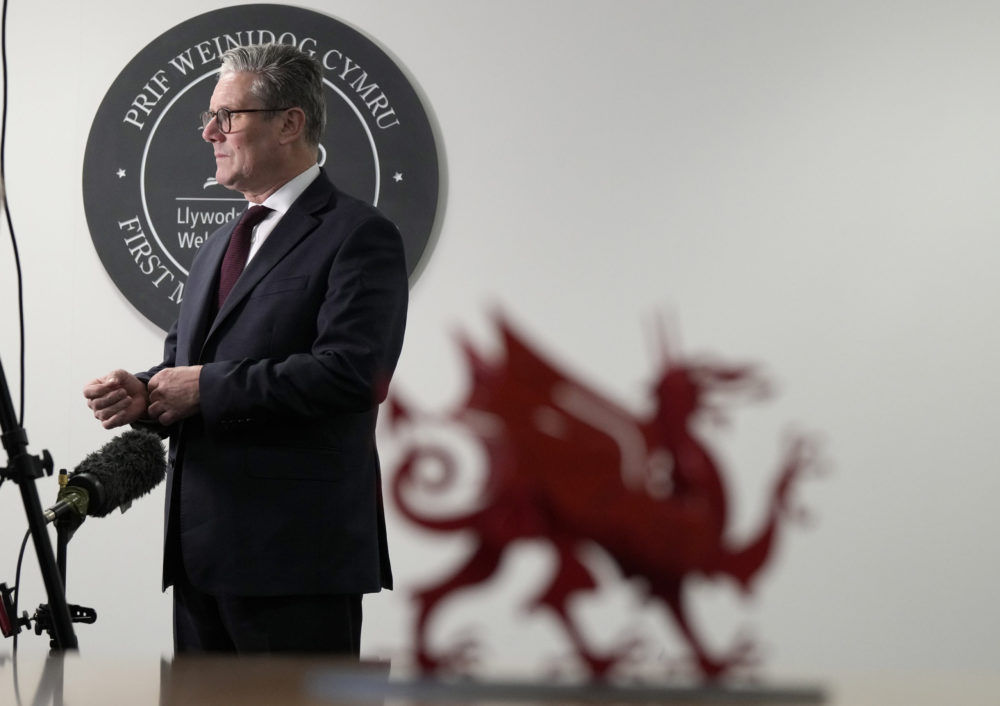
Prime Minister Sir Keir Starmer speaks during an interview at the Senedd, in Cardiff, during his tour of the UK following Labour's victory in the 2024 General Election. Photo Alastair Grant/PA Wire

Desmond Clifford

It may be that time’s up anyway, but Labour’s doing everything it can to lose the next Senedd election. Bored, undermined, divided, Labour has pointed the aircraft’s nose towards the ground and activated the autopilot.

For 25 years Rhodri Morgan, Carwyn Jones and Mark Drakeford led devolution with proper autonomy, both from the UK Government and the UK Labour Party. The craven surrender of that tradition and the docile embrace of branch-status in a UK Labour party which staggers in its ignorance and contempt towards Wales has been painful to witness. As Alun Davies MS noted in the Senedd, Welsh Ministers have been humiliated by their own Whitehall colleagues.

I salute the 11 Labour Senedd Members who wrote to Keir Starmer asking he respect devolution. But crikey, how did we get here? The Welsh party asking the UK party and government to honour its own creation?

The First Minister “raised” the matter with the Prime Minister at Chequers. I don’t doubt it but, just occasionally, a fist smacked on the table is the right approach.

Let’s give him benefit of the doubt. It may be that Starmer blundered, ignorantly but without malice. If so, the smacked fist would jolt him back to understanding, especially when the First Minister spelt out how she is undermined by, of all people in the world, the UK Labour Government.

If Starmer didn’t blunder, but acted with deliberation, the table-fist would serve as a gauntlet and signal that the Welsh Government will not lie prone while HMG walks all over it.

It’s easier to explain the Higgs Boson particle, or the properties of dark matter, than the unravelling of Welsh Labour this last year or two.

Drakeford left the shop in good order when he stood down as First Minister exactly when he said he would. His ratings were down a little on the Covid high point and the strong election result he delivered in 2021, but nothing beyond a routine mid-term range.

Vaughan Gething could scarcely have hoped for a stronger legacy on which to build. A pragmatic co-operation agreement with Plaid Cymru had delivered three budgets and Senedd Reform. Manifesto delivery was well in-hand. A UK Labour Government was in view. The Commission on the Constitutional Future of Wales provided a text for the parties to draw on and a near-term agenda for the Welsh Government and its incoming UK colleagues.

Gething proved deficient in the quality that matters most in a First Minister: judgement. He alienated many party colleagues before the leadership contest was even finished and, as First Minister, he quickly alienated the Senedd.

He should have resigned with dignity, as Alun Michael did, the day he lost the confidence of the Senedd.

Instead, he lingered without credibility or purpose, driving a widening wedge among his Labour colleagues and went only when resignations forced him out. His legacy is a gaping hole below the waterline and a sinking Welsh Labour Party.

Jeremy Miles

Jeremy Miles was going to stand again for the leadership, then didn’t. Now he’s leaving the Senedd altogether. After Drakeford, he was head and shoulders above the rest and their last chance to reverse fortunes. His departure is Labour’s loss.

Eluned Morgan was persuaded to grasp the chalice. She acted dutifully in what she saw as the best interests of her party. No glass ceiling was smashed, she wiggled through a cracked windowpane and a footnote will record she was elected neither by her party nor the public.

That limited sense of mandate is part of her difficulty in office.

The Welsh Government was inexplicably unprepared for the election of a Labour UK Government. There was no statement of ambitions, no list of Conservative wrongs to be righted, no plan for safeguarding and developing devolution. Nothing. It seems Keir Starmer gave scant thought to a Labour victory either.

I repeat: “inexplicable” is the word.

Any suggestion that constitutional practice matters is airily dismissed by the Welsh Government, in contrast to its backbenchers. The First Minister predicts a Plaid Cymru government will “whine” constantly about the UK Government. Why is this a criticism?

Whined

The Welsh Government whined for 14 years solid about the Tories. The First Minister ought to be whining herself. The UK Government’s systematic undermining of the Welsh Government is costing Welsh Labour votes and is one reason why they’re doing so badly. This is obvious to everyone except Keir Starmer and his Welsh proxies.

Only a couple of years ago Labour was celebrating one hundred years of electoral success in Wales (what’s the Welsh for hubris?). A century of support, unprecedented in European democracy.

For what reward? Side-lined by a UK Government taking Wales for granted, a land of limited options, a political dependency. There’s nothing a political party loves more than a client community and, with England’s Red Wall now so unreliable, Keir Starmer thinks he’s found one.

He feels free to parachute crony candidates into Welsh parliamentary seats.

He foisted on Wales the worst Secretary of State since John Redwood. Jo Stevens appears clueless about the country whose name features on her office’s brass plate.

There is no credible voice for Wales in the UK Government; small wonder they’re so ill-informed and prone to misjudgement. Nearly two years in, there’s no sign that the UK Government has the slightest interest in Wales or even basic respect for it. This would matter much less if they honoured their side of the devolution settlement.

Recently the UK Government has been using something called the United Kingdom Internal Market Act (UKIMA) to force its will in Wales. UKIMA was a piece of legislation introduced after Brexit to enable the Boris Johnson government to snatch powers which should correctly have transferred from the European Union to the Welsh Government and Senedd.

The Welsh Government opposed it tooth and nail. So did the Labour Opposition in Westminster, whose Shadow Minister for Brexit was – you couldn’t make this up - Keir Starmer.

Animal Farm

Remember the farmyard at the close of Orwell’s Animal Farm? “The creatures outside looked from pig to man, and from man to pig, and from pig to man again; but it was impossible to say which was which.”

It’s tragic. Devolution was conceived and delivered by Labour. People forget, but it was a struggle. The Ron Davies-Peter Hain-Win Griffiths-Rhodri Morgan generation fought hard to get devolution on the agenda and to keep it there.

Rhodri Morgan saved the project from early death and gave Welsh devolution personality, standing and self-respect. He created Welsh Labour when the word “Welsh” meant something. The divisions of today and the chasm between Labour’s Cardiff Bay cohort and its Whitehall should-be-colleagues speaks of tensions many believed were nailed years ago.

The actions of Starmer’s administration, and the Welsh Government’s tepid acquiescence, demonstrates with disillusioning clarity that Welsh Labour no longer has the desire or the will to defend devolution.

Increasingly, Welsh Labour is two parties. The split that matters isn’t left or right, but between those who believe in Wales and those who don’t.

For those who really believe in Wales and devolution, Labour has become a cold house.

How did it come to this?

Why did the party which had so much throw it away so cheaply?

For the price of a cup of coffee a month you can help us create an independent, not-for-profit, national news service for the people of Wales, by the people of Wales.

25 comments

Alwyn Evans

The Labour Party in power in Westminster is a hollow shell of the Socialists who used to fight for the working man. Aneurin Bevan would turn in his grave. To see Starmer accepting and fiddling with Brexit, that has ripped the guts out of anything Britain ever stood for is to see a straw man leading a leaderless party. And this while the Wolves of Reform worry at the carcass of UK, and Welsh Labour flap impotently at the margins

Reply
Iain

The vote only asked about leaving the political union. Leaving the economic partnership in a pitiful attempt to rebuild the empire was a political choice of the Johnson administration.

Reply
Smae

Slightly more nuanced than that... the EU said "You want the economic union, you have to take the political union too", UK said "not worth it." There was to be "No cherry picking" this is a direct quote from French Brexit negotiator Michel Barnier. Who fought tooth and nail against the UK having some of the benefits but none of the costs as they put it. Brexit means Brexit, May's favourite slogan, simply meant there was to be zero political union, while she walked that back in favor of getting at least some economic benefit, she was unable to get this past parliament who vehemently voted down such an arrangement because they didn't want any political union. Thank Labour :D.

Reply
Smae

You say this but Labour has never actually been pro-EU. It was anti-EU when we joined (despite the application being under Harold Wilson. Hugh Gaitskell was not a fan at all. In fact Labour only supported the EEC and not the federalization of Europe known as the EU.) In the 1980s Labour campaigned, per its manifesto to take the UK out of the European Community. This manifesto commitment eventually gave way to using the EU as a protective shield against Margaret thatcher, i.e. subverting British democracy by using outside forces. Even Tony Blair, outwardly pro-EU but actually he wanted "pro-market" stuff calling specifically for the EU to be a Superpower but not a Superstate. So no Aneurin Bevan would not turn in his grave, he will have been horrified we joined, because he campaigned on an anti-EU manifesto.

Reply
David J.

I would like to think that Bevan, were he alive now, would look at the present situation and agree that leaving the EU was the most stupid thing any country has done since Operation Barbarossa.

Reply
Alwyn

I agree with the overall sentiment of the article. Especially, I can't see any reason why labour can't justify it stance on not pursuing further devolution; starting with railway infrastructure, crown estate and justice. I can see reasons why they wouldn't, but a labour government can't remain silent on the issue. However one aspect missing from the article is the consideration that England overall performs better on healthcare outcomes, education results and economic productivity compared Wales, despite us having more spending per capita. Clearly we face challenges in outcomes like demographics, healthy life expectancy, cost of delivery etc - but fundamentally we lag consistently in areas that we have devolved. This is rarely disgust in these types of articles. Maybe the title of the article should be 'why is labour (and former coalition partners) not doing more with it's creation?!'

Reply
Smae

Labour can't justify it, but... I can. "We don't have the time, we're busy fixing the chaos created by the last tory government, we'll get around to it when we get around to it." They haven't altered the current deal, they've simply enforced part of it (i.e their right to intervene in the national interest).

Reply
David Richards

An appropriately coruscating analysis of the contempt the current uk labour govt has for Wales and for devolution. That said i think Desmond sees the early years of Labour's role in devolution thru somewhat rose tinted spectacles. Those of us involved in the 97 referendum campaign will recall there were plenty of labour activists and branches who sat on their hands and were nowhere to be seen during the 6 week campaign leading up to September 18th itself. And while the likes of Ron Davies, Rhodri Morgan, Leighton Andrews (and Peter Hain) did their best to rally labour supporters behind a Yes vote there were plenty of Labour MPs in Wales who did their best to engineer the same act of sabotage that had been carried out by the likes of Kinnock on the devolution referendum of 1979. Theres also the not insignificant matter of Labour - both at Westminster and in Wales - kicking the recommendations of the 2004 Richard Commission on further devolution into the long grass. Fact of the matter is so called 'Welsh Labour' barely exists and the party in Wales has always been little more than a extension of Labour in England - it is labour's 'branch office' in Wales. Hence it has always and will always place the interests of labour at Westminster above the interests of Wales (with Jo Stephens current pathetic tenure as Welsh secretary a painful reminder of this truism). While UK Labour's repeated public humiliations of poor Eluned Morgan have been toe curlingly embarrassing to behold. If you value Welsh devolution - and if you want it to go further - then vote Plaid Cymru next May it really is as simple as that. Indeed - with the frightening rise of the xenophobes of reform - it may actually be a case of voting plaid cymru to ensure the survival of welsh devolution itself

Reply
Andy w

The issue with Starmer performance is not just confined to the relationship with Wales. London based organisations focus on race-to-the-bottom procurement and incentivize their staff through bonuses to pay the least, even if the suppliers enter bankruptcy and staff are paid poverty wages. London has massive industrial relations issues. British Airways supply chain staff are paid minimum wage and get no sick pay https://www.unitetheunion.org/news-events/news/2025/december/british-airways-cleaners-at-heathrow-to-strike-over-low-pay-this-christmas Will Unite keep funding the Labour Party? Maybe in 2026 Starmers issues will get much worse - the Birmingham unions are not happy https://www.birminghammail.co.uk/news/midlands-news/how-birmingham-bins-strike-unfolded-33136247.amp

Reply
Smae

And yet... checks notes... London usually votes Labour.

Reply
Felicity

How did it come to this? Cronyism, and a critical lack of Welsh Labour talent after Mark Drakeford stood down.

Reply
Smae

Vikki Howell, Eluned Morgan... basically the only real talent left in Labour (in Wales). There is a certain problem. However, the problem is that the basically have nowhere else to cut their teeth, so what are we expecting from fresh faced inexperienced politicians who might not have a clue how to run a bread shop in a bakery. We really need more Mayors... Actual job for 5 years minimum (not Civil Service though this would also be useful) -> Councillor -> Council Leader (at least a member of the Cabinet) -> Mayor -> MP/MS-> Cabinet Member (preferred) -> First Minister/Prime Minister. Then maybe we'd see some real experienced talent. Of course we might need to change some pay scales around to make this work. This would also rule out having "young" MPs... so there would need to be something in place to provide representation. At the moment our current approach is throw gallons of mud at the wall and see if a couple of fluid ounces stick.

Reply
David J.

What are the odds on Eluned Morgan joining Plaid, if not after the Senedd election, then after the next general election, when labour will most likely be trashed? I believe she has the best interests of Cymru at heart, but it will take a while for her to see the light.

Reply
Brychan

The second referendum on full law making powers was in 2011 and the result was 63% in favour and 36% against. That in anyone's book is a landslide. The problem the Labour Party has is they don't like it in London and those in Wales have done nothing with that mandate, in fact surrendered it.

Reply
Ozymandias

A few key points are being blurred together here. The 1997 Welsh devolution referendum was pre-legislative: it was held specifically to authorise Parliament to pass the Government of Wales Act 1998, and was therefore treated as binding in practice. Brexit, by contrast, was explicitly advisory and non-binding in law; Parliament remained sovereign and chose how to act on it. So comparing the two purely on turnout or majority misses a crucial constitutional difference. Narrow margins are also nothing unusual in UK constitutional change. More importantly, devolution has since been reaffirmed repeatedly, most clearly in 2011, when voters backed full law-making powers by a large margin, and again in 2020 with the Senedd’s renaming. That suggests consent strengthened once people saw how devolution actually worked. As for the politics: I don’t know your allegiance, but the framing here is unlikely to come from the left. At best it sounds like a Conservative critique; more likely it mirrors UKIP/Reform rhetoric. That’s relevant because those movements have their own poor track record; parties that rarely governed, offered simplistic slogans instead of workable plans, and were repeatedly criticised for misinformation and internal chaos, with persistent questions raised about funding, influence, and attitudes to UK institutions. Finally, pinning Wales’s current challenges on “socialists” or the 1997 vote ignores the reality that for much of the last 30 or so years Wales operated with limited powers, under sustained funding pressure, and within constraints set at Westminster. If devolution were truly the disaster claimed, voters have had multiple democratic opportunities to reverse it and consistently chose not to.

Reply
Iain

If you're going to ignore more recent results why don't you remember that 67% voted to stay in the common market in 1975?

Reply
Smae

Distinction, common market was not, is not the current EU. Which we were never asked about.

Reply
David J.

You obviously have not read the Treaty of Rome. The first paragraph of that document corrects your misunderstanding. You were informed, you just didn't listen.

Reply
Iain

Destruction and self-harm is an Anglo-Saxon trait.

Reply
David Hughes

It,s utterly nauseating what this latest bunch of so called Politicians have allowed to happen to our Wales,we must never forgive or forget this,I cannot wait for their demise,come on Plaid Grens and whatever else it takes to get us what we need,along with Independence.

Reply
Undecided

I agree with David Richards’ comment about a rose tinted assessment of the early years of devolution. There was a real opportunity to reform public services during that period (and the money to do it); but Welsh Labour flunked it, pandering to interest groups and their own preference for virtue signalling, never believing that the electorate would eject them. That was when the rot set in.

Reply
Jn jones

I think what’s missing here is the extent to which we have had a devolution of government, but not a corresponding devolution of politics in the minds of a significant number of people. Let’s face it, for all the many areas to criticise, Welsh Labours polling and local results where ticking along just fine until Labour came to power at a UK level and the popularity of that government then tanked. Same in Scotland, go to July 4 2024 and people were talking up Anas Sarwar as FM- they’re not anymore it’s fair to say. Though not in Gov in Wales the Welsh Conservative have the same problem, nothing their own spokesman say matters at all. When Boris Johnson’s Gov was popular in Wales (and it was) then they were doing fine, when that ceased to be the case; their polling collapsed too. I don’t really agree that Carwyn and Drakeford distancing themselves from the UK gov was much of a feat when labour where in opposition and I’m not sure it matters all that much now. For instance, Whilst I’m sure that the signatories of the recent letter from Labour MS’s was principally sincere. It was politically nonsensical. What did they achieve, but to transform an issue that most people aren’t all that interested in (constitutional wrangling over a minor regeneration funding) to one with much more salience which is political infighting and perceptions of chaos at the top. Embarrassing both their leaders on the way and delivering nothing.

Reply
william stephens

This piece reads not as an audit from outside the temple, but as a lament from deep within it. Des Clifford was not a detached observer of Welsh devolution, he was Carwyn Jones’s chief bag-carrier. The First Minister who elevated the deflection of blame onto Westminster into a governing art form. Clifford’s analysis predictably inherits this trait and thus never asks the central question. Namely, why did those of us embedded in the system for two decades so profoundly misjudge the scale and persistence of institutional failure? Performance did not suddenly collapse. It eroded slowly and visibly but was rationalised away at every stage by the same people now writing elegies for a lost golden age. The claim that the shop was left in good order under Drakeford is risible. The evidence is overwhelming. Catastrophic PISA rankings, massive NHS waiting lists, repeated failures to reform local government, an economy permanently on life support. Worst of was the steady expansion of a bloated stakeholder state from the voluntary sector to universities that consumes huge resources while delivering diminishing returns. This was not misfortune. It was design failure. As ever, the rot is personalised and conveniently located. Vaughan Gething is cast as the point of collapse. Certainly, an inadequate politician, but also a useful scapegoat. This sleight of hand allows the wider system to escape scrutiny. The problem was not a single leader or a single moment. It was a governing culture that confused process with progress, consultation with competence, and moral posture with delivery. Any serious analysis must go back across the full 25 years and acknowledge that devolution was not abruptly killed after Gething’s defenestration. It was slowly strangled by bland managerialism (copyright Eluned Morgan), autonomy without self-criticism, and a political culture that mistook permanence for success.

Reply
Undecided

Spot on. The question now is whether an incoming Plaid government really has the courage (not the rhetoric) to correct the design failure. If they don’t they will become very unpopular very quickly by offering more of the same. I don’t know whether they have that courage as there are vested interests in the stakeholder state who will bitterly resist change.

Reply
Smae

Do I hop on the caravan here or play Devil's Advocate... hmm. I'd like to say that Kier Starmer is a micromanager and doesn't support Welsh Devolution and doesn't want to engage with the Senedd but... the evidence is largely to the contrary. It is true that Wales is not getting what it was promised, it is true that Wales has been shafted repeatedly... often being asked to pick up the bar of soap. Yet, and yet... it's also true that Wales has received a bigger funding settlement per capita than under the Tories. It's also getting more of the 'EU match' funding (albeit nowhere near all of it) than under the Tories. I guess sticking what'shernameagain... as the Welsh Secretary was not the smartest move as she's more keen on being a team player and not rocking the boat than managing her office appropriately. Starmer has advocated for more devolution of Welsh powers, and reinforcing those that have already been given... despite the Pride in Place scheme undermining this, providing a heap of controversy. While the Senedd has had zero say in this and funding has been reallocated, the pride in place scheme is a National project. It's worth noting that Wales hasn't been specifically targeted, Scotland has also seen some funding re-directed and it's also grumbling about the decision making being taken out of its hands. Despite all the powers devolved to Wales, these are not Sovereign powers and the UK government retains the right to intervene to ensure consistency particularly in a national project. Parliament is sovereign and Kier Starmer is the Prime Minister of the United Kingdom, not Westminster, not England but the United Kingdom. In the grand scheme of things, this 'intervention' is a small one. Despite a chunk (a small chunk) of funding being taken away from the Senedd, Wales is seeing an uplift in funding overall, for what at the moment looks like a vanity project.... but is it actually an Anti-wales project? No. Pride in Place actually empowers communities at the neighbourhood level, basically skipping the middle men of councils and Senedd, giving communities themselves the right to say where they want funding to go. Whoever Kier Starmer's media team is, probably needs a swap because they're not getting out the right messaging (or the media is purposefully distorting just about anything and everything). Is Kier Starmer a bad prime minister... not nearly as bad as the polls suggest (which is unsurprising in a largely tory UK, UK generally elects more Tory or Right governments than it does left ones.) It is worth noting that according to Yougov most people regard Kier Starmer as either Left Wing or Very Left wing, with the latter becoming more prominent in recent months. It's also worth noting which papers are consistently hounding Kier Starmer and saying that he cannot govern. He's certainly had his fair share of car crashes, from trying to make disabled and sick people poorer, to cutting the Winter Fuel allowance and so on. Were these decisions he wanted to make or were they made by consensus in the Cabinet office of "wtf can we do to close this deficit?" It's not as if he could just turn the UK economy on a dime and upend all the orthodoxy on a whim. Had Kier Starmer gone the Liz Truss route and decided "tax big business to the hilt, tax wealthy people to the hilt, increase minimum wage to the real living wage by next april"... the economy would have simply crashed and burned as it did with Liz Truss, which we're still seeing the aftershocks from. I'm trying to think of anyone who could manage this any better. Kemi Badenough(sp?), Farage? Which current political leader could actually do better than Kier Starmer? I can't think of one, Rhud wouldn't even be able to command a government in Westminster. While we might give Labour a trouncing in by-elections and so on... come election day... do you want Farage or Starmer as your prime minister? Those will be the choices (or possibly Andy Burnham we'll see how that goes though!). It's not like Scotland who has 57 constituencies, Wales has about 38. Plaid doesn't target seats in England or Scotland.

Reply

Leave a reply

Replying to Ozymandias Cancel

A few key points are being blurred together here. The 1997 Welsh devolution referendum was pre-legislative: it was held specifically to authorise Parliament to pass the Government of Wales Act 1998, and was therefore treated as binding in p...

Comments are reviewed before they appear.
