


Wed, 22nd July Cardiff 21°
Nation.Cymru wordmark
Advertisement

Opinion

Why I'm opposed to using STV as a voting system in Wales
By Emily Price
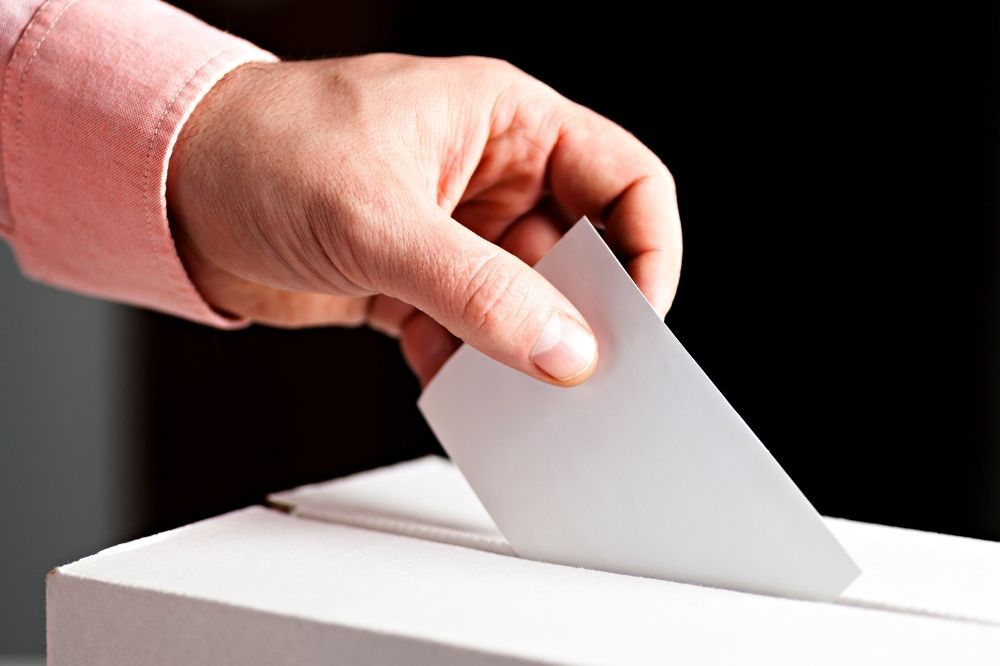
Voting ballot box.

Mike Hedges - MS for Swansea East. 

Single transferable vote (STV) is an electoral system promoted by many in favour of a form of proportional representation.

It's the electoral system used for Scottish council elections and election to the Irish parliament, the Dail.

It works by voters ranking candidates - instead of placing crosses next to their favourite candidates, voters are asked to rank as many candidates as they wish in order.

When electing more than one candidate by STV, the system becomes complicated but with only one candidate being elected it is the alternative vote system.

Under STV, each voter casts a single vote in an election that elects multiple winners.

Each elector marks their ballot for the most preferred candidates and then also marks back-up preferences.

A vote goes to the voter’s first preference, but if the first preference is eliminated, instead of being thrown away, the vote is transferred to a back-up preference, with the vote being assigned to the voter’s second, third, or lower choice if possible.

The greatest weakness of STV is that you have to guess how many seats you can win when nominating candidates.

The last choice a voter makes has, if all their higher preference candidates have been eliminated, the same value as another voter’s first choice.

[mid-content-banner]

Seats

In the Irish General election of 2020, Sinn Fein, despite receiving the most first-preference votes nationwide did not win the most seats.

Despite beating Fianna Fail by 535,995 to 484,320 they ended up with one seat less. It took 12745 votes to elect each Fianna Fail member but 14476 to elect a member of Sinn Fein.

Irish journalist John Drennan described it as the 11 seats that Sinn Fein left behind because they did not have enough candidates.

They guessed wrong on the number of seats they might win but if they had guessed wrong the other way, they would also have had less seats.

So STV is less a proportional system but more a skilled guessing game where getting it wrong can mean less seats than you should proportionally get.

Is it any surprise that in Scotland they use it for council elections but have decided not to use it for the Scottish Parliament elections.

If you visit Scottish council websites, you can see how large the council seats are in area and below is an example of a council seat in the highland’s council area.

Of the 21 wards in the Highland council area, Wester Ross, Strathpeffer and Lochalsh is the example par excellence of the size of council wards needed in rural areas under STV.

Not only is this the largest electoral ward in the UK, it is, by itself, larger in area than 27 of Scotland’s 32 councils.

It accounts for almost a fifth of Highland council’s entire area and has been compared in size to Trinidad and Tobago.

This huge ward can be thought of as a triangle with points at Strathpeffer, a bit beyond Ullapool, and Kyle of Lochalsh.

Vast

These are the largest settlements in the ward, but still only account for about a third of the population, with the rest scattered widely across that vast area.

If this is the size of a council ward just workout how large STV Scottish parliamentary constituencies would be in the Scottish Highlands.

Then there is the population needed for these wards to allow STV to operate effectively.

Glasgow ward 1 Lynn has a population 30,000, this is 2/3 of the population of the Aberconwy Senedd constituency.

Turning to Glasgow Govan where four candidates were elected with Labour topping the poll with 1520 votes, the SNP coming second and third with 1110 and 1096 votes each and where the green candidate edged out the second Labour candidate who had 572 first preference votes to win the fourth seat.

Whilst the SNP efficiently got the first preference for both candidates very close to each other, Labour did not and thus despite easily topping the poll ended up with only one of the four seats.

The system involves members of the same party fighting against each other or parties just accepting one seat each in three member wards.

This is true of council elections across Scotland where can we win one or two seats has to be decided, but if you go for two or three you may end up with one unless your voters vote efficiently as happened in Govan.

As was shown in the republic of Ireland STV is not proportional and winning the most votes does not get a party the most seats.

STV needs to cover large geographical areas and needs large populations. It makes it more difficult for constituents to know candidates and involves guessing the number of seats you are going to win.

This system is a poor way of electing candidates which is why I am opposed to using STV as a voting system in Wales.

For the price of a cup of coffee a month you can help us create an independent, not-for-profit, national news service for the people of Wales, by the people of Wales.

Get more trusted Welsh news

Choose Nation.Cymru as a preferred source in Google News to see more of our journalism.

Choose Nation.Cymru as a preferred source in Google News

16 comments

David Smith

Thanks Mike, A well reasoned case opposing STV.

Reply
David

Mike now, give a case for the fairness of FPTP.

Reply
Mawkernewek

Was looking forward to hearing what system he prefers but then the article just ended.

Reply
Annibendod

Exactly the point. As is so often the case with the gentleman in question, he criticises what would be an improvement on the status quo without ever suggesting an alternative improvement. In the end, all Labour offers is the status quo.

Reply
Mike Hedges

I answered that in September in Nation Cymru

Reply
Mawkernewek

Only if you are a politics geek who already knows that the D'Hondt method implies the use of closed party lists.

Reply
Simon Davies

I read your September article. You do not suggest a replacement for the unfair undemocratic FPTP. You just want voters in marginal constituiencies to have the power to elect or kick out or governments. You only have to offer policies to appeal to these voters. Everyones votes and views are not equal with FPTP. Makes it easy for Labour and Tories to win elections with a minority of votes both parties right wing extremist parties. Keir Starmer and Richie Sunak English Nationalists.

Reply
Ernie The Smallholder

No electoral system is perfect. The party list system that I understand the Labour party wants is better than the Belarus system of FPTP but only just as it puts too much power in the hands of centralised party bosses and disadvantages independent candidates removing power from electorate to place preferences. The Single Transferable Vote system (STV) supported by Plaid Cymru / the Liberal democrats / Green Party / SNP / Sinn Fein puts the power of ordering the party candidates in the hands of the electorate according to individual preference. STV also does not exclude independent candidates. There can also be a 'Reopen Nominations' option to indicate further rejections. We know the Conservatives want to keep the Belarus system. It is clear therefore the STV system is best for democracy and that is why it is recommended by the Electoral Reform Society.

Reply
Annibendod

Da iawn. A very good response.

Reply
Mr Williams

Interesting argument. My suggestion is to use the Supplementary Vote system (like the former system used for electing PCCs). Having much smaller constituencies electing a single member each, who must get above 50% of the vote would, in my opinion, ensure the local-level link between the member and his/her constituency, thus improving local accountability. It would be interested to hear other people's opinions on this. What is your opinion on that voting system, Mr Hedges?

Reply
Geraint

I'm not too sure how helpful the Govan result is without knowing more about the context of the seat. It could well be the winning Labour candidate was extremely popular and the other Labour candidate was not so highly regarded or was new and not that well known. The two SNP candidates were seen to be a lot better than the second Labour candidate by the electorate and so were elected. In these council seats a candidate's local history can be very important. I have seen results under the current FPTP system in a multi member ward there is a runaway victory for a candidate for one party and the other two or three candidates for another party have won the rest of the seats and the top candidates party's other candidates have not been elected. In the Carmarthenshire 2022 elections two Labour candidates were defending their seats. The electors had seen both candidates in action for five years. The electors returned one Labour candidate with 606 votes and then elected a Plaid candidate with 548 votes. The other Labour candidate received 426 votes and lost his seat. You can have a variety of reasons why voters cast their votes and I get the impression that Mr Hedges feels that because Labour did well with one candidate in Govan all those votes belong to his party, but voters are smarter than that and their votes belong to them.

Reply
Steve Woods

As a sitting MS, the author has a vested interest in maintaining the status quo.

Reply
John Brooks

Any voting system that does not operate on the basis of 1% votes gets 1% of the seats is not PR. To those who dislike closed lists reflect on the position that voters do not really want to get involved in ranking candidates. One election one X. Closed lists do not prevents I dependant candidates or those from small parties.

Reply
Near Bangor

I must have read hundreds of articles on STV, and I have never, ever heard anyone say that 'guessing the number of candidate to field', was an issue.

Reply
Denis Mollison

This article presents six arguments against STV, none of which holds much water: (1) one example where a party (Sinn Fein in an Irish general election) lost out through putting up too few candidates. That's a pretty unusual occurrence, and you can't blame the system for the party's miscalculation. (2) On the basis of this one example he claims that in the republic of Ireland STV is not proportional. To the contrary, data for all Irish elections since 1950 show that their STV system, together with that of the Northern Ireland Assembly, has been significantly more proportional than any of the other PR systems used in the UK, and especially than MMP as used in Wales, where Labour have on three occasions won 50% of the seats with between 36 and 37 % of the vote. (3) a claim that STV is a guessing game because a party can lose out by putting forward too many candidates. I've looked extensively for examples to support this suggestion and found none, so I think it's just a myth. I'll be very interested if anyone has any clear example to support it. (4) "in Scotland they use it for council elections but have decided not to use it for the Scottish Parliament elections" This is not true: there has been no Scottish parliamentary discussion or decision on whether to change their electoral system to STV - something they have only had power over since 2016. A change to STV remains the policy of the main party in government, the SNP, and is what they propose for an independent Scotland. Meanwhile in Wales there has been much discussion of changing from the present MMP system, with the Senedd's independent McAllister Panel recommending STV. (5) The example of the 2017 election in Glasgow Govan is an interesting one, but provides no argument against STV. First, Mike omits to mention that there was a third SNP candidate, so that the totals of first preference votes were 44% for the SNP, and just under 32% for Labour; nor does he mention that Labour's second candidate was initially in 7th place behind that third SNP candidate, the Conservative and the Green. From first preferences it was clear that the SNP would easily win two seats and Labour would easily win one, with the final seat a close contest between Labour, the Conservative and the Green. You can follow the details of the count at https://www.macs.hw.ac.uk/~denis/stv_elections/SC2017/Glasgow/Govan/index.html [It's interesting that under slightly different STV rules Labour would have won that last seat, but that just shows you how close the contest was.] (6) the example of one (of several) very large council areas in Highland Council in Scotland. This example actually cuts the other way. If the electorate are happy with their representation - as I think they generally are - in Highland, which is 20% larger in area than the whole of Wales but with less than 8% of the population, this is strong evidence that wards being too large would not be a problem in Wales.

Reply
Tom Monto

if a party does not nominate enough candidates under any system, the party will be shortchanged. under STV, each party knows they will take only the same share of seats as their share of votes so based on that expectation, they narrow their nomination to only what they expect plus one or two more in a typical district. if a party does much better than they expect, they can lose out. But that scientific forecast of seats won is possible only because STV is scientific. Under FPTP, every major party runs a candidate for every seat, hoping to get one of those lucky breaks that happens randomly. BUT - the use of ranked votes means a party does not suffer if it over-nominates. In Malta both main parties nominate as many as twice the seats in the district. But in first count, you can pretty well see how many seats each of those parties will take in the end.. It then becomes two separate contests to see which candidate of the party is more generally popular, to take the party's seats in the district tht have not been won in the first count. Comparing party seat share taken to first-preference vote share overlooks the benefit of ranked votes. That is - if a voter likes a smal party he or she has liberty to vote for whom they truly support (no strategic voting). If that small party does not take a seat in the district, the voter has consolation that their vote may be transferred to be used to elect someone of a larger party still favoured by the voter even if not his/her first choice. Those transfers skew the proportionality based on first-preference votes, as a party might take more votes later than their first-count share. large districts under STV are seen as presenting obstacle but in cities, a mayor reprsnted a whole city. if one person can do the work of representing a whole city, then why not 8 or 12 or 16? In Canada a typical single-member riding in the provinces is 16,000 sq. kms. with many much larger than that. 13 Canadian ridings are each larger than four times the size of the Scottish Highlands The Highlands are represented by one UK MP by the way -- a single member is expected to represent all that area. if one person can represent that much territory, then surely 15 can represent the area between them. Vast districts are not a problem judging by the size of single-member ridings in use now.

Reply

Leave a reply

Replying to Steve Woods Cancel

As a sitting MS, the author has a vested interest in maintaining the status quo.

Comments are reviewed before they appear.