


Opinion
Why are Wales' young people less likely to come forward for the vaccine - and what can be done?
Dylan Jones, Lecturer in Biomedical Sciences at Bangor University
One of the major success stories of the Covid-19 pandemic has been the development and rollout of several highly successful vaccines. The names of these vaccines have become household names in a way that precious few discoveries have never been.
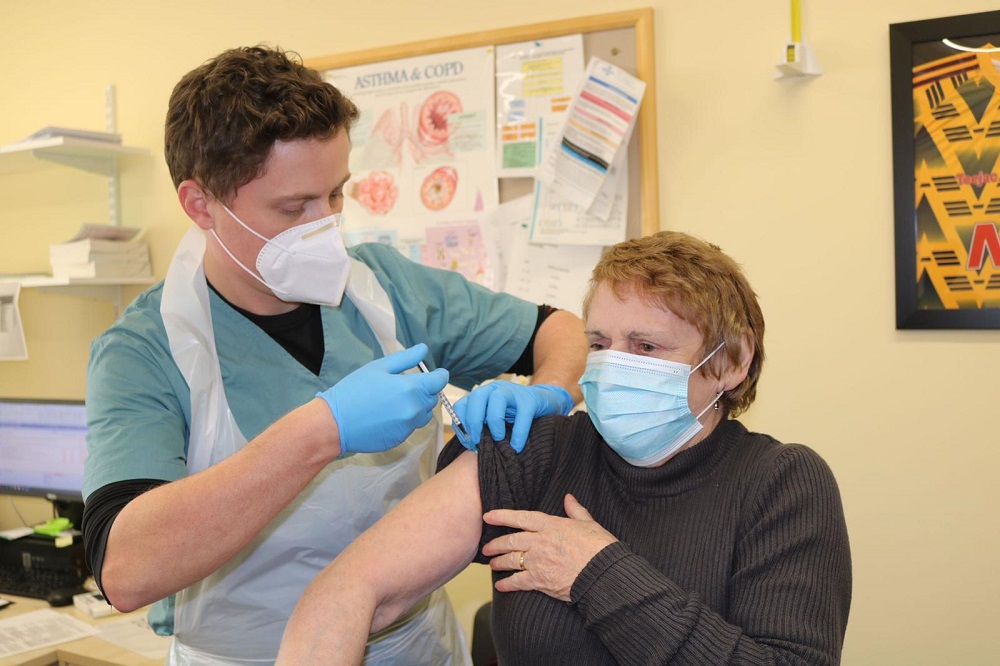
Since the first vaccine was approved for the UK in December 2020 a mass-vaccination campaign in Wales has seen over 4.4 million doses of vaccines administered giving a degree of protection to 84% of the adult population.
84% of the adult population is a phenomenal number and by ensuring so many of our people have a degree of protection has begun to have a rapid impact on the number of hospitalisations and serious illness because of the virus.
The statistic however does hide some significant differences between age groups which is a cause of some concern. For example whilst 80.5% of those aged 40-49 have received both doses of vaccine, only 62% of those aged 18-29 have received both doses.
Why should this be a concern? Whilst the risk of severe disease and death is relatively low in younger individuals, the risk still exists. Indeed, we are starting to see an increase in the number of young people who are now presenting with the virus and now over a third of positive cases are in people under the age of 30.
Why are we seeing such a discrepancy in vaccination rates? This is a difficult question to answer fully but scientists have a system known as the 3 Cs to try and understand why vaccine uptake can vary in a population.
[mid-content-banner]
Misinformation
The first of the C’s is confidence. Confidence in the science behind the vaccine, confidence in the doctors who treat those who are ill and even confidence in the institutions which test and assess the vaccines are safe.
Unfortunately, this confidence can be damaged in many individuals by lies and half-truths spread from person to person increasingly by social media.
Whilst many would argue that social media is a force for good in allowing old friends and family to stay connected, it is undoubtedly true that social media has a dark side. It is far too easy to post deliberate misinformation on social media platforms which can then be spread simply with a click.
Given how social media works, once an individual has shared some anti-vax material, they are more likely to be shown more such material due to the algorithms that do their best to ensure we spend as much time on the platform as possible. This is how the so-called echo chambers start.
It is evident that social media companies are reluctant to police such material on their platforms so perhaps it is time that Government reviews legislation to ensure that action can be taken to persuade the companies to reduce the torrent of misinformation that is shared.
Convenience is the next factor to consider, or more simply how easy is it to get vaccinated? One of the striking features of the Covid-19 vaccine is simply how easy it is to get. The opening of mass-vaccination centres that were open early and closed late and the number of walk-in style appointments have made it easier for those who work, care or may be in full-time education to get vaccinated.
Another major tick in the convenience box, which I think we often take for granted, is the cost of the vaccine to us as individuals - namely £0. This means the vaccine is affordable to all and that no one should face the indignity of being priced out of medical care.
Risk
Perhaps the C that is most relevant when questioning the vaccine uptake in the young is complacency. Covid-19 has been sold by many as a condition that only causes serious disease and a risk of death in the elderly.
Whilst it is true that a significant proportion of those who have died of the virus have been elderly, this does not mean there is no risk for younger individuals. This misunderstanding can be deepened by an individual’s view of themselves as being fit and healthy and therefore more likely to be able to fight off any infection. This is where strong, positive messages are required to highlight the benefit of vaccines for all ages.
Added to this we have had the tales of adverse effects such as blood clots after the vaccine which has made many people believe they would rather risk the virus than risk the vaccine.
There is a lesson here on how relative risk is communicated to the people, it is vital of course for confidence that we be open and transparent.
But it is just as vital that we explain how likely anyone is to experience these adverse effects so that people can make an informed decision.

Support our Nation today
For the price of a cup of coffee a month you can help us create an independent, not-for-profit, national news service for the people of Wales, by the people of Wales.
Get more trusted Welsh news
Choose Nation.Cymru as a preferred source in Google News to see more of our journalism.
