


Opinion
Whose flag is it anyway?
Rocio Cifuentes, Children’s Commissioner for Wales
As Children’s Commissioner, I’m fortunate to do a lot of travelling across Wales to meet with and hear from children.
It’s a part of my job that I enjoy; children are invariably fun and energising to be around, and I also get to enjoy the varied landscapes which Wales has to offer. Recently though, there has been a notable addition to this landscape: an increasing number of flags.
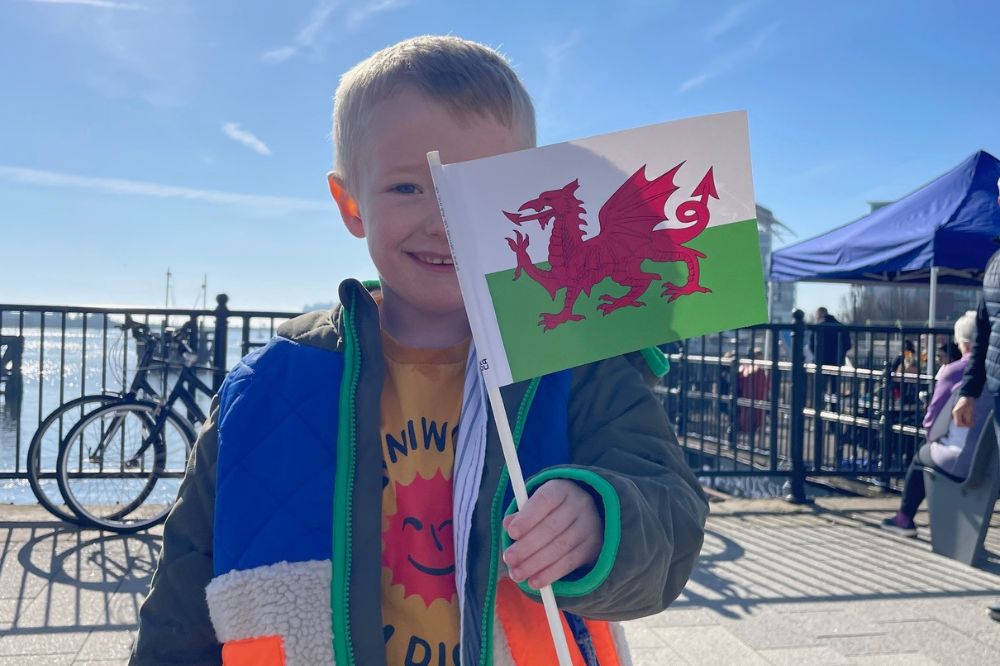
As someone welcomed to, and given sanctuary in Wales, the Welsh flag – Y Ddraig Goch - has always symbolised, for me, the unique aspects of Welsh culture: its language, its passions, and its inclusivity.
And yet, I don’t think this is what the flags hung recently on motorway bridges and lamp-posts are meant to mean now.
[mid-content-banner]
Anti-migrant
It is clear that in the current context, flags are being used to proclaim a type of nationalism which is defiantly not inclusive and actively anti-migrant … ‘you are not welcome here’ is the message they seem intended to deliver.
This is both immensely sad and incredibly frightening.
And while the ugly shift in the national mood seems to have happened quickly, there have been signs of increasing anti-immigrant and racist sentiment for a while now.
Two years ago, my office published a landmark report titled: "Take It Seriously: Children's Experiences of Racism in Wales." We spoke to children and young people from all over Wales from ethnically diverse backgrounds. What they told us was powerful—but also painful.
They told us that racist bullying was common—and often dismissed as ‘banter’, but that when they did speak up about experiencing racism, they were often not believed, and nothing happened. We also heard that children from refugee, migrant or asylum-seeking families felt othered, treated as outsiders in schools, even years after arriving.
In recent weeks, I have been thinking back to those children who took part in our work, and it devastates me to realise that since then things have got worse not better, and I wonder how those children are feeling now.
[lower-mid-content-banner]
Rising hostility
For we seem to be in a time of rising hostility and shrinking empathy. Constantly, we hear negative headlines about immigration and asylum, some politicians using dehumanising language and social media seems to have a limitless ability to inflame and stoke fear and division. And we know, don’t we, that language bears consequences, so where does this end?
Here in Wales, we’ve seen refugee and ethnic minority charities being targeted with abuse after untrue accusations were spread online. And very sadly, we’ve seen groups attempt to hijack community concerns around housing or schools, turning them into anti-immigrant protests.
This hostile climate matters, because children hear it. They absorb it. And for children from migrant, asylum-seeking or ethnic minority backgrounds, it can send a clear message:
“You don’t belong". And even ‘you are not safe”.
Yet they are not the only victims. There is clear evidence that children and young people are also being drawn into far-right extremist groups in Wales, and this is something I was raising the alarm on in my previous role, over a decade ago.
Protected
All children have a right to be safe, to be protected from harm, and the right not to be discriminated against. These are rights enshrined in the UNCRC, which the UK and nearly every other country in the world has signed up to, and Welsh Government has formally adopted as the basis of policy making in relation to children and young people.
They also have a right to information. We need to do better to give our children the ability to differentiate real news from fake news, the understanding of why people may migrate to another country, and the compassion to care. The education of children in Wales should ensure this.
Because history has shown us what happens when we scapegoat and dehumanise minority groups. We all said ‘never again'; but it seems very much like it is starting to happen again… and it’s terrifying. And if I am feeling scared and vulnerable, with all of the privilege that my age and role entails, I invite you to consider how a 7 year old might feel.
So, I would like to see and hear louder voices calling this out, reaffirming their solidarity with vulnerable groups,.. and protecting the Welsh flag as a symbol of hope, resilience and welcome.
Because I want to see a Wales where every child feels they are safe and they belong.
Support our Nation today
For the price of a cup of coffee a month you can help us create an independent, not-for-profit, national news service for the people of Wales, by the people of Wales.
Get more trusted Welsh news
Choose Nation.Cymru as a preferred source in Google News to see more of our journalism.
