


Opinion
Where is Wales’ Braveheart? Why the world still ignores Owain Glyndŵr
Antony David Davies
Look across these islands and watch how their legends blaze across the world’s screens.
England has Robin Hood forever loosing arrows through Sherwood. It has King Arthur — riding from Camelot in film after film, so deeply woven into global myth that few even ask where he truly came from.
Scotland’s banners crackle with Braveheart and Rob Roy, turning rebellion into worldwide spectacle. Ireland has Michael Collins — revolutionary, tragic, immortalised by Hollywood.
And Wales?
Wales, land of song and stone, of poets, preachers and fierce hearts, stands strangely silent.
Why is there no great cinematic epic — from Hollywood or even Britain itself — telling the story of Owain Glyndŵr?
For all the quiet brilliance of Welsh drama in recent years, nothing has yet dared to tell this story at scale — and that absence echoes louder with every passing year.
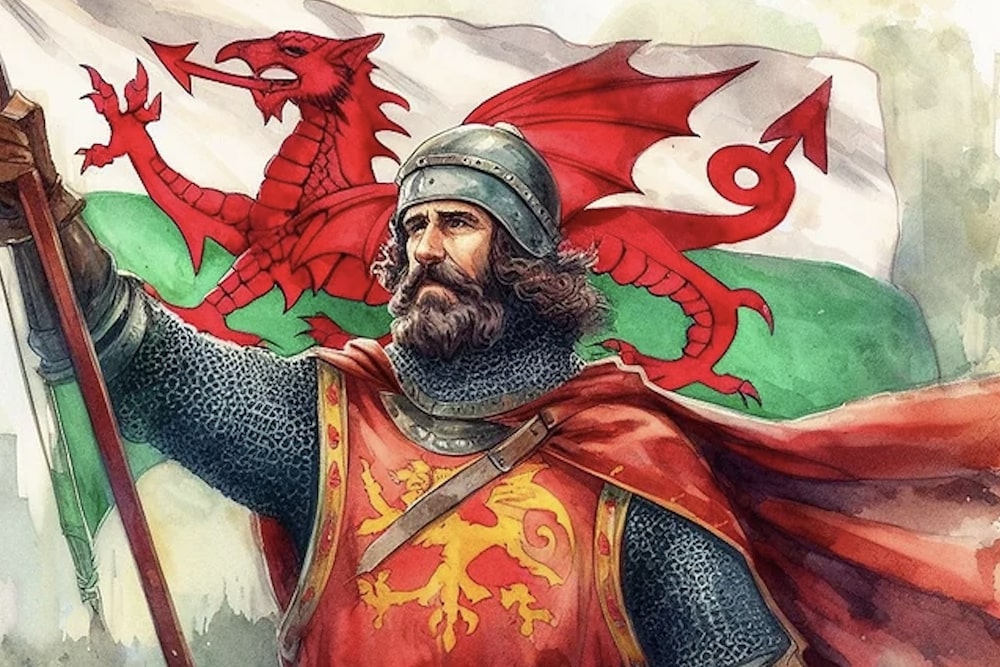
Here was a man who rose from the wooded heart of Wales to be crowned Prince of Wales. Who united quarrelling lords and humble farmers under a single banner. Who torched the Marches, laid siege to mighty castles, and dreamed of a parliament, a university, a church free of foreign bishops. For nearly fifteen years, he defied the greatest power in Europe. And then — almost miraculously — he vanished into legend, never captured, never betrayed, leaving only the prophecy that he would return when Wales most needed him.
[mid-content-banner]
Castles ablaze
Picture it on screen: thunder rolling over Glyndyfrdwy as Owain lifts his standard. English armies inching through rain-drenched valleys, harried by guerrilla raids from hawthorn hedges. Castles ablaze against black skies.
A defiant parliament by candlelight at Machynlleth, forging a Welsh future in whispers and wax. And in the final haunting frame, Glyndŵr slipping into the forest, his cloak swallowed by the trees, flames of English garrisons still licking the horizon behind him.
This is a story made for cinema — wilder, sadder, braver than anything yet told.
So why has it never been filmed? Why should Wales always be the chorus in someone else’s epic — and never the hero?
Meanwhile Arthur — whose roots lie not in England at all but in the soil of Wales — rides on, decade after decade, cleansed of his origins. The earliest Arthur was a Brittonic war leader, fighting Saxon invaders on behalf of the ancestors of today’s Welsh. He sprang from the fierce, beautiful lines of early Welsh poetry, and from the enchanted hills of the Mabinogion.
But Arthur was taken. Claimed by Norman kings desperate to drape themselves in legend, by Tudors eager to weld England and Wales into a single story, by Victorians who polished him into a chivalric English Christ-figure. Wales gave Britain its greatest myth — and watched it be repackaged as someone else’s birthright.
[lower-mid-content-banner]
Irony
And the irony deepens. Wales — the very cradle of Arthur’s legend — has been used again and again as a filming location for his cinematic reincarnations. From the valleys to the mountains, our landscapes have played host to a version of Arthur scrubbed clean of his Welsh identity — an Anglicanised king draped in English myth.
Our hills are good enough for their legend, but not, it seems, for our own.
We supply the scenery — while others steal the soul.
And so Glyndŵr, who actually lived, who bled and burned for the idea of a Welsh nation, stands in silence.
Why? Is his rebellion too unsettling, his cry for a free Wales too awkward for a British film industry still wedded to old, comfortable myths? Or does the world simply not look to Wales for heroes — content to see us as a choir, a rugby team, a pretty green backdrop to someone else’s legend?
This silence is dangerous. Films like Braveheart or Michael Collins didn’t just entertain — they rewrote how nations see themselves, and how others see them. They gave their people new mirrors, new reasons to walk taller.
So where are our mirrors?
Epic
A Glyndŵr epic could do more than move hearts — it could lift Wales onto the world’s screens, boosting global curiosity, cultural respect, and tourism. It could become a permanent feature of school life — a film children watch year after year, seeing in Glyndŵr not just a rebel, but a leader, a visionary, a true Welsh hero. It would give us — finally — a story we could hand down with pride, a legend we wouldn’t have to borrow or explain away.
Where is Wales’ epic?/
Where is Glyndŵr — our thunder, our heartbreak, our unconquered dream — striding across cinema screens?
It is time Wales stopped waiting meekly.
Time for our writers, our producers, our leaders — and every one of us who cares about this small, fierce nation — to stop treating our stories as footnotes.
To demand that Glyndŵr’s saga is finally told with the raw power it deserves.
Because when a nation lets its heroes fade into silence, it loses more than history.
It loses a piece of its soul.
Wales must not live forever inside someone else’s myth.
It is time to rise, claim our stories, and show the world that the Men of Harlech still stand — unbroken, unbowed, and ready at last to be heard.
Antony David Davies FRSA is a historian of Welsh upland communities, author of Old Llyfnant Farming Families, with deep family roots in Montgomeryshire.
Support our Nation today
For the price of a cup of coffee a month you can help us create an independent, not-for-profit, national news service for the people of Wales, by the people of Wales.
Get more trusted Welsh news
Choose Nation.Cymru as a preferred source in Google News to see more of our journalism.
