


Wednesday, 15th July 2026 Cardiff 27° · Clear sky
NationCymru A news service by the people of Wales, for the people of Wales.

Opinion

Where does devolution end?
By Emily Price
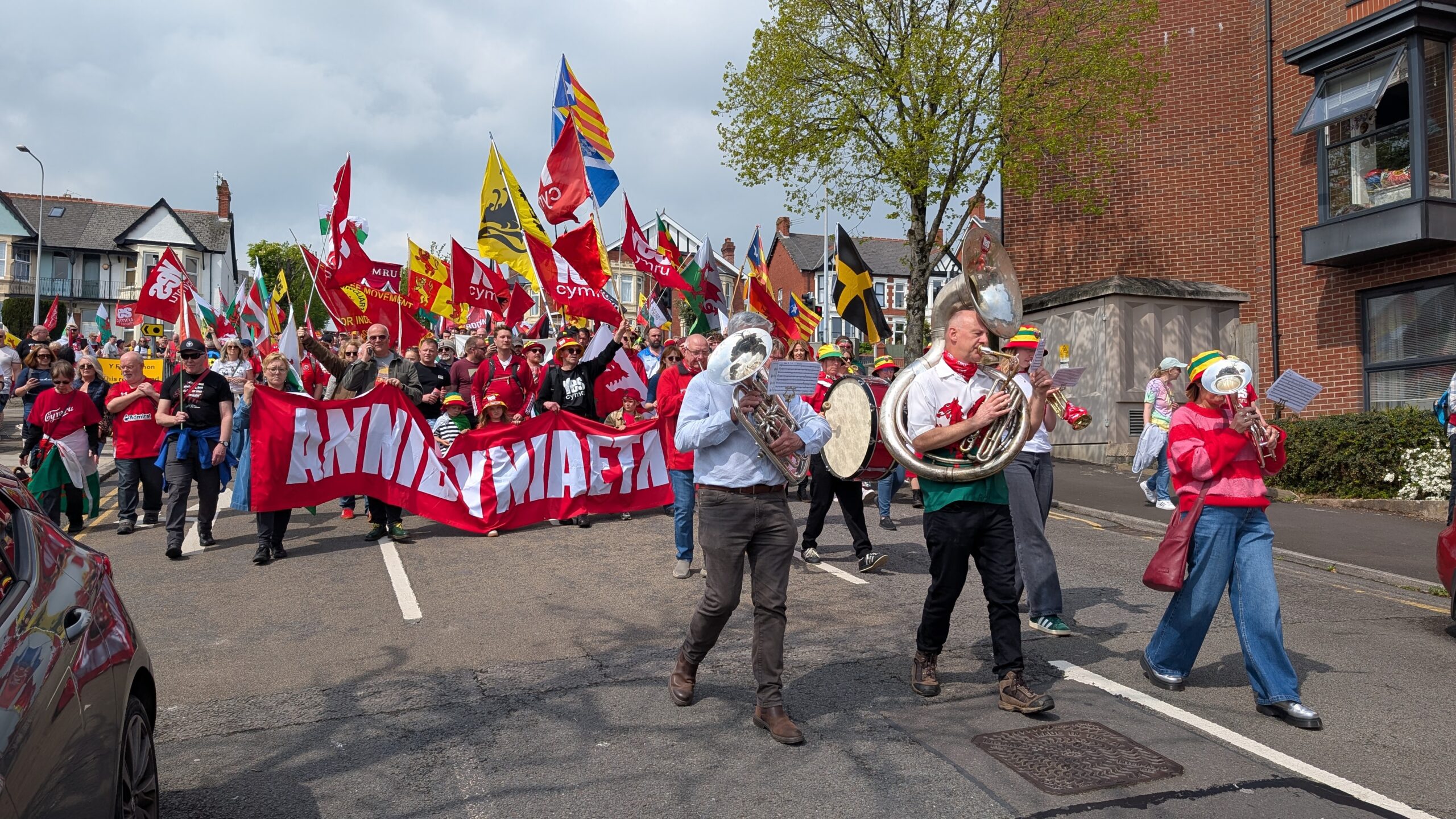
Marchers supporting Welsh independence in Barry

Mike Hedges - MS for Swansea East

Plaid Cymru’s policy is one of salami slicing to independence. Summed up by devolve, devolve, and devolve until there is nothing left to devolve.

Adam Price when leader of Plaid Cymru said: "Plaid Cymru has a simple answer to the challenge posed by Westminster, and that is independence."

Please ignore that Wales is financially a net beneficiary of the union. We know that because David Phillips of the IFS has estimated Wales is a net beneficiary of the union by between 12 and 15 billion pounds a year.

If Wales keeps its revenues, funds its own public spending, and then makes a population-based contribution to the UK-wide situation, at least as it stands, that would lead to a large fiscal deficit for Wales.

Also, according to David Phillips of the IFS, the most recent estimates from the ONS suggest that public expenditure in Wales is about 10 per cent higher than it is across the UK as whole. This despite raising substantially less money per person.

We also know small countries do not have the economic strength to weather financial storms. For example in Iceland between 2008 and 2010 a catastrophic financial crash occurred.

It involved the default of all three of the country's major privately owned commercial banks in late 2008, following problems in refinancing their short-term debt and a run on deposits.

Relative to the size of its economy, Iceland's systemic banking collapse was the largest of any country in economic history. The crisis led to a severe recession.

The Conservative policy is this is the end of the devolution journey. Even opposing the devolution of policing that has already been devolved to some English mayors as well as Scotland and Northern Ireland.

This is written by someone who believes in devolution but not in Welsh independence. We have had several devolution settlements for Wales, and we are no closer to a long-term settlement than we were before the first.

Responsibilities

In the UK, we have seen different devolution settlements for Wales, Scotland, and Northern Ireland, as well as different responsibilities devolved to London and some of the larger city regions of England.

We have what is meant to be a reserved powers model in Wales, following the most recent settlement, but the host of reservations within supposedly devolved areas makes a mockery of such a definition.

Since leaving the European Union, there is now a new battle to get devolved to Wales those powers repatriated to Britain in wholly devolved areas.

If the settlement had been a comprehensive reserved powers model, then this would not have arisen as nothing being repatriated would be on the current reserved list.

There are the obvious areas that need to be held centrally within a devolved structure such as defence, foreign affairs, national security, currency, interest rates, overseas aid, immigration, driver and car licensing, central bank, and National Insurance numbers.

Discussion

If those areas are devolved, it is called independence rather than devolution. But there are those areas that are worthy of discussion over whether they should be devolved or set centrally, including:

*State pension age and amount. Should we have one for the UK or should each jurisdiction set its own? How would that work with movement between England, Wales, Scotland, and Northern Ireland?

*Should we have one unified social security system, or should each jurisdiction be able to set their own contribution levels and payments? Same issues as above.

*Should alcohol and tobacco duty be the same to avoid cross-border movement? Should there be UK taxes to pay for the centrally funded items, with all other taxes devolved and collected locally? Similar to state and national taxes in the USA. How will financial support from the wealthier to the poorer regions be organised and maintained?

Not everything needs to be devolved to Wales, Scotland and Northern Ireland or the English city regions at the same time. What we should have, is a list of items that are available to be devolved with each parliament and mayoral area needing at least two thirds of members voting in favour before the area is devolved. This is what happened in Northern Ireland when policing was devolved.

'Big bang'

This approach avoids "big bang" devolution, where control of everything is passed on one day, while still allowing for matters to be devolved as the parliaments are ready for them and funding is agreed.

The advantage of this is that it sets an end point of the devolution journey outside of creating new countries and allows each to move at a pace it is comfortable with but with a common endpoint. Asymmetrical devolution has not worked.

Other countries such as Germany and the USA have the same powers devolved. Each US state has the same powers and responsibilities no matter its size and the same with each German Lander.

Devolution in Wales does not have to end in Cardiff. Devolution within Wales is possible to the four regions of Wales and councils.

Which powers would be better devolved to local authorities also needs to be discussed and decided. The 20th century was almost a one-way movement of control away from local councils including water, further education, and policing. The question surely should be where the best decisions will be taken for the local population.

Devolution in Wales is a journey, but it must not be a journey that only ends in Cardiff. For true devolution, powers will also need to be devolved to the regions and councils of Wales.

For the price of a cup of coffee a month you can help us create an independent, not-for-profit, national news service for the people of Wales, by the people of Wales.

71 comments

Smae

Oh look, a unionist. Yes it is true that Wales would be in a fiscal deficit, however, this isn't a problem of Wales' own making. This is a problem created by Westminster. It started from when Wales was first invaded and England's various attempts to wipe out Wales and its people. Then its repeated mugging over the years, from when the mines were forcibly shut, to the railway lines being decommissioned, to preventing it from getting opportunities, HS2, drowning villages to purely benefit England. There are people even saying that creating the Senedd was a mistake because it's not returning value for money, it's not properly investing. The truth is, it can't properly invest, it can't raise money because of all the restrictions Westminster places upon it. Furthermore, this current Labour government has zero interest in letting Wales manage its own affairs, with Westminster salami slicing away the powers it had devolved. See Pride in Place. Conclusion then, on the face of it, if we're just looking at the spreadsheet, the UK is fantastic for Wales, no questions asked... dig a little deeper and suddenly the UK is the ball and chain holding Wales back, preventing its development and creating a trap where it is fiscally dependent. In any other context, this would be considered "Financial & Coercive Abuse", a relationship where we would tell the partner to cut their loses and go to a Refuge, instead of being gaslighted every five seconds. To be clear, the more devolution the better, not everything in theory needs to be devolved, we can work together on defence. Absolutely I think we should have independent pensions and we should treat England like it treats any other foreign nation (anyone claiming a Welsh pension that doesn't live in Wales see their pension rate frozen). We absolutely need our own Social Security rates because Wales clearly has vastly different needs to those of England. There is no reason not to be able to set Tobacco, Fuel, Alcohol and what not duties independently. Half the time such things never even see England. the UK honestly only needs to be looking at Defence and International affairs. Domestic arrangements can be left to the constituent parts. It would be great for England to get its own devolved Assembly. The more devolution the better!

Reply
Mike

Good response too.

Reply
Gary225

This is the sort pf debate we need. I don't happen to agree with Mr Hedges since he takes the status quo as a fixture, and things can be changed. Wales will have different priorities, different costs and different incomes and no desire to be aworld power. The fact that Iceland had a bad time 17 years ago doesn't mean we would make the same mess up. But we need to understand each other so good on you, Mr Hedges. And let's travel the same devolution road until our paths diverge.

Reply
Richard Jenkins

This whole argument is based on a false premise garnered from a dodgy accounting exercise called GERW. We know it’s made up of mystery guestimates & arbitrary apportionment of costs. For instance an independent Cymru wouldn’t be paying £1.8 Billion in defence costs! That’s twice as much as Ireland! We wouldn’t be paying the 22% of our OAPs who are English! That’s around £1.8 Billion. Or the£2,.2 Billion we pay as interest on the Westminster debt! Or the £1.25Billion English retirees cost our NHS! Or their £1/2 Billion care costs. The list goes on & on. Stuff we just wouldn’t be paying in an independent Cymru. We don’t actually pay any of this of course! It’s all just made up fantasy figures used to perpetuate the silly Quisling feelings of Mike Hedges & his unionist ilk who choose to let 543 English MPs decide our fate of our 32 MPs & our nation! Gwarthus! Shame on you!

Reply
Smae

In defence of the GERW... it is truly impossible to determine how the costs will be decided, that will involve high level discussions and lots of horse trading. I assume they did the best they could on other similar events. I'm not sure why you think we wouldn't be paying defence costs and 1.8 sounds on the face of it ridiculously cheap. Countries need to defend themselves, every 'pacifist' nation/state has discovered this, or they need to be defended by others... they always end up paying one way or other or they are wiped out. Ireland in 2024 spent about 1.24bn Euros on defence and it is the lowest spender of the European nations. Ireland have pledged to spend a lot more money on defence. OAPs living in Wales will not be deported back to England. This is not England, what kind of racist nonsense is this? So naturally we will be paying for them. With that said, English retirees that come over to Wales... typically are able to do so because they have money and they are far more likely to spend their extra disposable pension (saved from not having to spend as much in England) into our communities. The same goes with healthcare and social care, we're not just going to turn people away who are living in Wales just because they were born somewhere else.

Reply
Alwyn

Thank you for reasonable comment. Impossible to say on so many issues. Need heart surgery in north wales?- maybe we need to spend 300 million on new centre or will we be expected to pay for private care in England? Have a talented 18 year old wanting world class higher education?-thats 48k p.a. international student fees at Oxford. Hundreds of other examples. Gerw is the most robust calculation. Clearly flaws, but hey hi, it’s impossible to have something flaw free given complexity and uncertainty. I love how everyone has their own view on what independence is - ‘we won’t need this’ - just like brexit, everyone has their own view so in the end no one is happy!

Reply
Steve D.

In saying that Costa Rica has had no army since 1989, so defence doesn't need to cost an arm and a leg. Also we could spend a billion or even more and it wouldn't be enough anyway - unless Cymru is part of some sort of defensive organisation - it's would stand little chance if invaded. The money would be better spent on improving the quality of people's lives.

Reply

In reply to Steve D.

Smae

On the face of it, this is true, Costa Rica has no 'standing Army'... although it has suspiciously large spending on say the Public force of the Ministry of Public Security... and the Unidad Especial de Intervencion (UEI) and uses equipment that any third world army would be proud of, including M4 Assault Rifles, Remington sniper rifles, M60 machine guns, and M79 grenade launchers. I can't see how a grenade launcher is that useful in catching the usual criminals... But you're also right, Cymru would stand little chance alone, so it would have to be part of something like NATO or the EU's army (whenever that gets off the ground). Both organizations would demand some sort of tithe and the tune of about 1.24 bn sounds about right.

Reply
Llew Gruffudd

In defence of GERW. As 95% of the data in GERW has no definable audit trail and is not arrived at by normal accounting process, it is impossible to say that the figures are correct and yet they are used to define Wales financial position. With regard to the defence figure allocated to Wales, it makes Wales the highest spender per capita and as a proportion of GDP Europe. You quote Ireland, but that has almost twice the population of Wales. As for pensioners, of course those now resident in Wales will be free to remain, however this migration to Wales will need to have a different arrangement after independence as in spite of your quote, they are an increased cost to the Welsh health and social care system in addition to the state pension.

Reply
Mike T

Why wouldn't we be paying for English people who are living here? Would we kick them out or would we be charging fees to the UK government? If the latter then we be charging other nations that have people living in our country?

Reply
Greg

Does Spain pay the pensions of migrant retirees?

Reply

In reply to Greg

Mike T

So you would chuck them out? Even if they've lived their lives here? Unless they have vast private pensions, private health are etc then they're gone? All those people who love our country, may have given birth to Welsh people, married Welsh people etc. Bit harsh Greg.

Reply

In reply to Mike T

Greg

They're free to stay but their state pensions will be paid from the same office in Whitehall that took their NI subs.

Reply

In reply to Greg

Mike T

Decent answer. Many more layers to it of course. Gracious of you. As long there are no dawn raids to get Philys and Harry out of the care home and over the border to Shrewsbury then that is a start.

Reply

In reply to Mike T

Greg

If you'd answered the question "does Spain pay the pensions of migrant retirees" you wouldn't have sent yourself down a rabbit hole although I wonder if it was a rabbit hole you were keen to explore.

Reply

In reply to Greg

David J.

What about english immigrants like myself, who have lived here for 25 years, am now retired but have contributed massively to the Welsh economy during my working years (money I earned working for an english organisation that I spent in Cymru). I do not own property so I am not depriving anyone of a home, I am a Plaid member and I totally support independence. I also continue to improve my knowledge of Cymraeg, having begun to learn it before I came to live here. Furthermore, I have given my blood to Cymru, literally; 50 donations to Welsh Blood since I first arrived, and I hope to continue to donate for the rest of my life. If you want to kick me out or make me go cap in hand to the english for my state pension (my only income as I cannot get a job due to my age, despite many applications), then please let me know now, so I can reassess what I am fighting for, when I fight for independence.

Reply

In reply to David J.

Greg

Translate your circumstances to Spain and you'll have the answer. If the majority of state pension contributions were paid with a Spanish postcode you'd expect Madrid to pay a state pension. If the majority were paid with a UK postcode you'd expect London to pay up. The point is about fairly reducing the fiscal deficit, not which rugby team you supported.

Reply

In reply to Greg

David J.

Pensions are not devolved, so your reply is nonsense. The point I make is that it will not be easy to decide who "deserves" to live here (retired or not) and who does not. Fortunately you won't be one of those who gets to make that decision. By the way I hate rugby; does that disqualify me as a supporter of Welsh culture?

Reply

In reply to David J.

Greg

This thread is about independence, and this point is about who foots the state pensions bill of retirees living in an independent Wales. It's got nothing to do with people "deserving" to live here. It's got everything to do with those arguing that independence isn't affordable because of a deficit calculation that lists state pensions as a liability.

Reply

In reply to David J.

John Ellis

Sounds a bit like me. I'm English born, but have spent almost half of my adult life living and working in Wales. I've sought to learn Welsh for years, and by now can just get by, to an extent, in using the language, and just this minute have completed my latest Duolingo exercise. I think - beyond any personal doubt - that by now Wales is where I want to be, and where I feel after many years that I belong.

Reply

In reply to Greg

Smae

Yes. The basic pension is paid to everyone over the age of 65 who has lived in spain for a certain number of years. Typically ten. So... retire early at say 55 and then come the 65th birthday... state pension is available.

Reply

In reply to Smae

Greg

A nice socialist top-up but that's not in lieu of your UK state pension entitlement which continues to be paid from London.

Reply
Maesglas

Mike Hedges does make some good points but his party, apart from setting up the Assembly in 1998, has been the most reluctant to make changes to the devolution settlement since. It was the Coalition government that gave us law making powers in 2011, approved by a referendum, and the Tories introduced tax raising powers that came in 2017 . UK Labour has resisted every change and Starmer’s actions in power, despite claiming to be a devolutionist, has resisted change.

Reply
Smae

... please don't tell me I should be voting Tory... ._.;; That is not what I came here to read today lmao.

Reply
Maesglas

That’s a silly comment. Of course, I am not saying that and never would. But I am stating an uncomfortable truth that UK Labour is, whatever they say, more anti devolution than any of the other parties.

Reply
Greg

The tax raising powers were an elephant trap designed to "prove" that socialists can't help raising taxes when they get a chance.

Reply
Smae

It was pretty obvious when they put conditions on those tax raising powers, preventing the Welsh Senedd from varying the bands.

Reply
Richard Jenkins

You should read Prof John Doyle on this. His abstract: from his.brilliant paper. The figure of £13.5bn, frequently quoted as representing the UK government annual subvention to Wales, is a UK accounting exercise, and not a calculation of the fiscal gap that would exist in the early days of an independent Wales. The total includes central UK government costs allocated to Wales that would not be relevant to an Independent Wales. This article analyses the most significant elements of the calculation of this published deficit, utilizing the last figures before the impact of Covid 19 on public finances across Europe – pensions, UK national debt repayments, defence expenditure, other non-identified expenditure, and under-estimates of Wales’ share of UK tax revenues. It concludes that those elements of the current subvention that are likely to transfer to an independent Wales, would represent a deficit of approximately €2.6b, before any other changes to taxation, public expenditure or projected economic growth.

Reply
Mike T

And if Doyle et al could take on my challenge and present said figures on one page then that'd be great. All sides say a myriad of conflicting things that also change regularly. Asking them to present their fiscal arguments on one simple page should be a doddle.

Reply
Arthur

....and what about organisations Headquartered in England (where profits are declared) but where the 'Value Add' is conducted in Wales - the product then being transferred at a transfer price equating to the full cost of production in Wales ? Full profit declared in HQ (England) and none in Wales. These arguments put forward against independence with overly simplistic algorithms are truly annoying !!

Reply
Mike T

They'd just move out as soon as possible. The UK/Eng government would offer huge incentives for them to do it.

Reply
Greg

Not if corp tax was 15% here.

Reply

In reply to Greg

Herb

Indeed. The flow of HQs would be in the other direction which is why it can't be allowed to happen.

Reply
Cawr

You really need to first research how a country becomes independent in the first place.

Reply
Smae

So... pitch forks and guillotines when?

Reply
Mike T

Irrelevant. I'd like the financial reality laid out in front of me, rather than the constant smoke and mirrors from all sides.

Reply
John

Beth yw'r gair Cymraeg am 'lickspittle'? Mae'n rhaid i ni gael gwaredu cachgwn fel hwn,

Reply
Lyn E

Could someone advocating independence please explain the merits of giving Westminster the power to impose guards and customs posts along England’s border with Wales. This is the critical distinction between radical devolution and independence.

Reply
Cynan

Are there guards and customs posts between northern and southern Ireland? Not been there since Brexit, just asking.

Reply
Lyn E

Keeping an open border in Ireland has required the north to remain in the EU customs union and single market. Would you consider Wales to have become independent if the price of an open border were to accept rules set by Westminster?

Reply
Greg

If the Windsor Framework is good enough for NI it's good enough for GB.

Reply
Lyn E

I'm not quite sure what you mean by this, unless you are proposing that the UK should rejoin the customs union and single market (which would make the Windsor Framework irrelevant). Having campaigned for Remain, I'm sympathetic to that, but I wouldn't underestimate the difficulties, not least whether the EU would want us back, at least not on pre-Brexit terms.

Reply

In reply to Lyn E

Greg

NI isn't in the customs union and single market because only states can be members. What NI benefits from is a special arrangement that is similar in some ways to being in the customs union and single market. So why not simply extend the same special arrangements to GB to avoid a hard border within GB should Wales opt to divorce the abusive partner. The EU can't object because it's already agreed to the principles, the Brexit ringleaders can't object without revealing there were bits of the union they didn't really care about, the Cons can't object because they negotiated it, and Leave voters can get the reverse ferret they want while saving face. It's only the hardcore rejoiners who'll be furious with such a compromise.

Reply

In reply to Greg

Lyn E

True, I should have added the words 'in effect' with regard to NI's status regarding the EUY customs union and single market. But my point remains valid. Indeed, NI's position is less advantageous than if it were a member as it has no rights to participate in deciding either the rules of the single market or extensions to the customs union. It would be possible to have a similar arrangement to that for NI covering GB. Labour's January 2019 proposals for a Brexit deal included membership of the customs union plus alignment with the single market along with dynamic alignment on matters such as workers' rights or environmental protection. The barrier to this is politics at the UK level, which is the critical point in terms of the prospects for Welsh independence. My primary concern about that debate is the ostrich-like mindset that thinks Wales can decide our own future without caring what happens elsewhere.

Reply

In reply to Lyn E

Alwyn

Absolutely, it’s an asymmetric trading relationship, the bigger party basically gets most of what they want

Reply
Mawkernewek

Don't they have the power to do that now if they wanted to? The benefits of Parliamentary Sovereignty and no specific written constitution.

Reply
Lyn E

In principle, perhaps yes. But imposing internal barriers within a single state would be a very different matter to closing (at least partially) a border to a foreign state, which is what an independent Wales would become to England. That would be just normal unless we could negotiate an open border. My worries about this are well founded. We just have to look at what has happened post-Brexit to our relationships with EU member states. Or to think about whether a Westminster paranoid about Channel crossings would allow everyone admitted into Wales to cross the land border without restrictions.

Reply
Smae

Honestly, bring it on. The only thing that would achieve for England is another part of the EU on their doorstep playing hardball with trade. It would force Wales to join the EU.

Reply
Lyn E

Wales has far more to lose from a hard border than would England for the simple reason that a much higher proportion of Welsh trade is with England than English trade with Wales; ditto for movement of people, shared services, etc. The most viable context for an independent Wales would be if BOTH Wales and England were equal status members of the EU, or at least of its economic elements.

Reply

In reply to Lyn E

Llew Gruffudd

Not so. The level of trade between England and Wales is broadly equal. £26.4 billion against £25 .7 billion. Wales businesses sell over 50% internally, 30% to UKr, mostly England and 20% internationally, mostly to the EU. so it is in no ones interest to impose hard borders.

Reply

In reply to Llew Gruffudd

Lyn E

Don't repeat the error of British Brexit negotiators in thinking that it is the absolute rather than the relative value of trade that matters. England’s economy is 20 times the size of that of Wales so cross-border trade is more important for us. It might indeed be in England’s interest to keep an open border but only if Wales abides by English rules. Again, look at the Brexit experience: exporters to the EU have to comply with EU rules. And as we know from a year of Trumpian tariffs, countries do not always behave rationally on trade.

Reply

In reply to Lyn E

Llew Gruffudd

Still spouting the fear factor. I still recall your view that England would send in paratroopers to protect the water supply from Wales. I don't understand your argument regarding relative trade. Regardless of the size of the country, it is businesses within the country that suffer and those in England can go out of business from lack of trade as easily as those in Wales. As for Brexit. There is no comparison. The EU rules existed when the UK joined, They are long established rules and UK knew the consequences when it left. There are no current rules between Wales and UKr. Similarly there is no reason to believe that UKr would behave irrationally.

Reply

In reply to Llew Gruffudd

Lyn E

If an independent Wales were insane enough to cut the water supply to English cities then England would take whatever action were necessary to restore it. Do you doubt that? Relative weight is what matters as Brexit demonstrates. Wales is far more dependent on an open border with England than vice versa. It is foolish to deny that. As a growing majority now realises, most of the worries that the Leave campaign denounced as 'project fear' have turned out to be real. I don't share your high opinion of Westminster. Are you sure a Farage government would behave rationally? The current UK government is behaving irrationally over migration at increasing cost to the NHS and other services. Even the most rational English government would want us to play by their rules.

Reply

In reply to Lyn E

Llew Gruffudd

You continue the rhetoric that England can do whatever it wishes, regardless of the legitimacy, when it clearly is not so. As for your argument on Brexit demonstrating weight matters, that also is not so. It was as I said the regulations in place caused the problems not the EU flexing its muscles. In fact the EU acted most reasonably in the negotiations.. As for the final point I have no high opinion of Westminster, but neither do I share your obsessive view that they would act irrationally. As for Reform, I have little doubt that they will not form a government in Westminster or Wales.

Reply

In reply to Llew Gruffudd

Lyn E

My original paratroopers comment was in reply to a post implying that England would have to agree to whatever Wales wanted because we supplied its water. Wishful thinking. Cutting water supply is deemed to be an act of war under international law, so England would have every right to act to maintain supply. Wales could notify England that it intended to reduce or stop supplying water at an date sufficiently distant to enable alternative sources but not to cut it immediately. It is a much weaker 'weapon' than some people imagine. The EU could indeed be said to have acted at least more reasonably than did the UK but it had its red lines, as would England in any independence negotiations with Wales. Those would constrain Welsh choices in matters like economy or migration. Proportional representation does make a Reform government a remote prospect after next year's Senedd elections, but the vagaries of FPTP with several competing parties makes it far harder to predict the UK 2029 general election, even without allowing for what might happen over the next 3 years in a volatile world. Refusing to contemplate outcomes just because they would be inconvenient is the politics of the ostrich. If you expect England to be rational and reasonable towards Wales, why bother with independence?

Reply
Undecided

Fair point - and one that those pro-independence never want to address (exemplified by the number of down ticks on your comment).

Reply
Alwyn

A problem with echo chambers. A mature debate would address point

Reply
Undecided

Agreed. Prof Doyle’s analysis was well researched; but by his own admission it still left Wales with a best case deficit of £2-3 billion p.a. assuming we got absolutely everything we wanted from the divorce. But as that is highly unlikely, the real figure is probably at least double.

Reply

In reply to Undecided

Alwyn

He's not that esteemed an academic and did the work largely on his own. Never a good starting point. But it gave an answer some people wanted so his message is amplified

Reply
Mike T

Aye. It's a shame as it is the sort of transparent financial reality we need to deal with if we go for more devolution or independence.

Reply
Mike T

Oh and I never notice the ticks but that is a bit worrying simply for asking questions of all sides about important things like finances.

Reply
Keith Parry

What do we want? Independence! When do we want it? Now!

Reply
Adam

A few years ago would have been better, but now will do. It's embarrassing being held hostage by one of the weakest and pathetic regimes on planet earth.

Reply
Mawkernewek

The oracle of the Institute of Fiscal Studies has spoken, you can't have nice things.

Reply
Greg

Shame Labour is trying to turn May into a choice between Labour and independence when it's a choice between Plaid (who've taken independence off the table in their first Senedd term) and Reform. Would Labour actually prefer Reform in Wales?

Reply
Greg

Apart from the fact they didn't raise it. What would've had the Telegraph readers choking on their boiled eggs and soldiers is if the powers had been used to raise the higher rate to 42% and lower the additional rate to 42%, effectively abolishing it. That would've meant more tax raised from the wealthy at the same time as having the lowest taxes in the UK.

Reply
Annibendod

Guff.

Reply
Annibendod

Hedges is using RT Davies' language in a nakedly political attack on Plaid Cymru. The man is intellectual treacle, a Labour dinosaur. Democratic Statehood is Wales' birthright as a nation. Hedges and his ilk can be consigned to the dustbin of history. Cymru am byth!

Reply
Rhobat Bryn

Devolution will end where the people of Wales want it to end. Devolution continues to be reinvented because it continues in failing to deliver. When it does, it will settle down.

Reply
Ianto

England also runs at a large fiscal deficit, even after allowing for our contributions towards improving that country's railway network, for example.

Reply
Ernest The Smallholder

What the IFS does not consider is that when Wales is independent, all companies importing and exporting to and from Wales would need to register as a Welsh company for taxation purposes and also until we join the European customs union we England will be a foreign country for customs and taxation purposes so we will receive a lot more income than the IFS suggests. Immigration is certainly not a problem for Wales: so we will spend less there. As an independent country, we will still be in NATO, (until there is a seperate replacement defence network for Europe to which we will then join) and we are not the front-line for defence purposes. Our GDP will be smaller with only 3 million population. The UK has not been honest with the population on state pensions. They should have invested our contributions in a sovereign wealth fund(s), similar as the commercial funds do; and not spending it in substitute for general taxation. If we decide to live/work in another country we should be able to to transfer our DWP pensions as we do for workplace pensions. DWP pensions have therefore no transfer values, unlike private schemes, because the money has not invested by the UK government. The UK must be forced correct this.

Reply

Leave a reply

Replying to Lyn E Cancel

Could someone advocating independence please explain the merits of giving Westminster the power to impose guards and customs posts along England’s border with Wales. This is the critical distinction between radical devolution and independen...

Comments are reviewed before they appear.
