


Opinion
What should Wales do with the symbols of our colonial history?
Gruffydd Huws
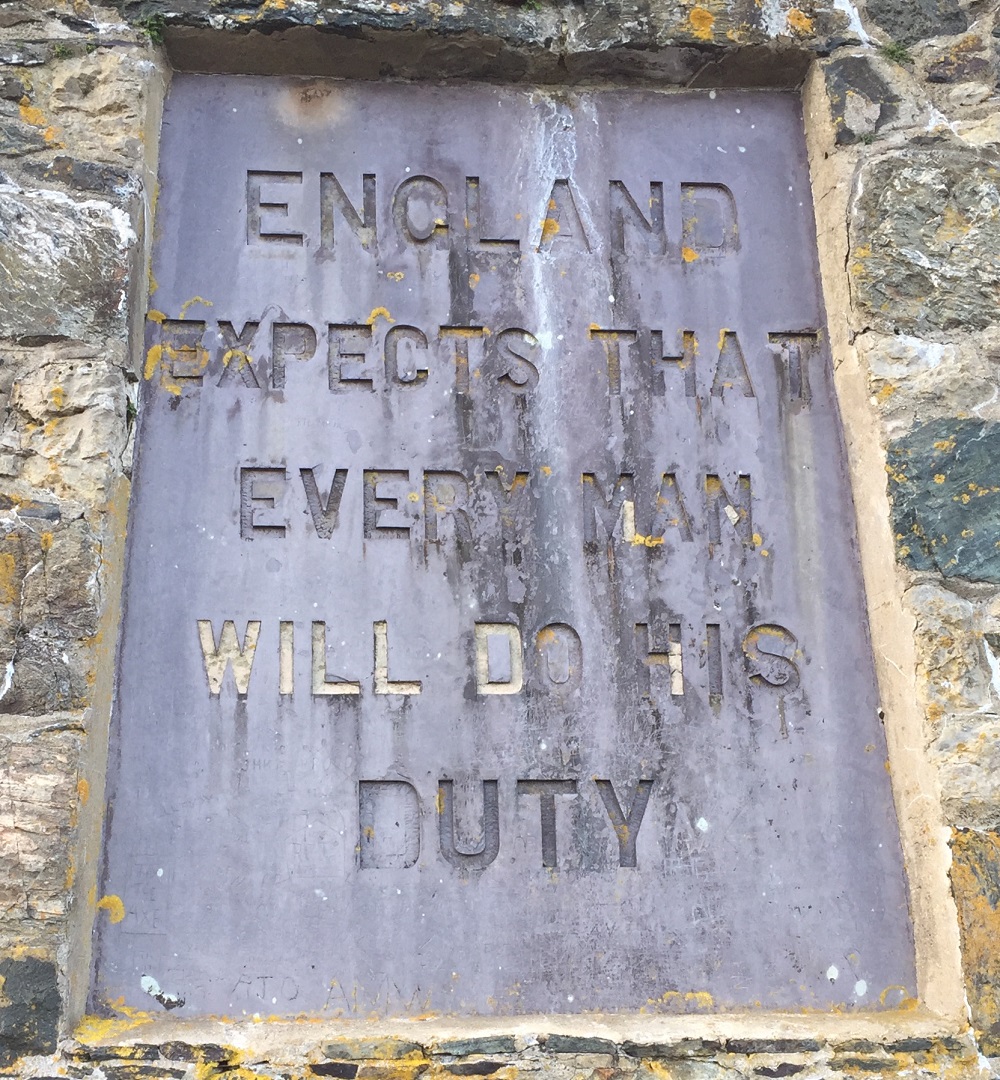
“England expects that every man will do his duty”.
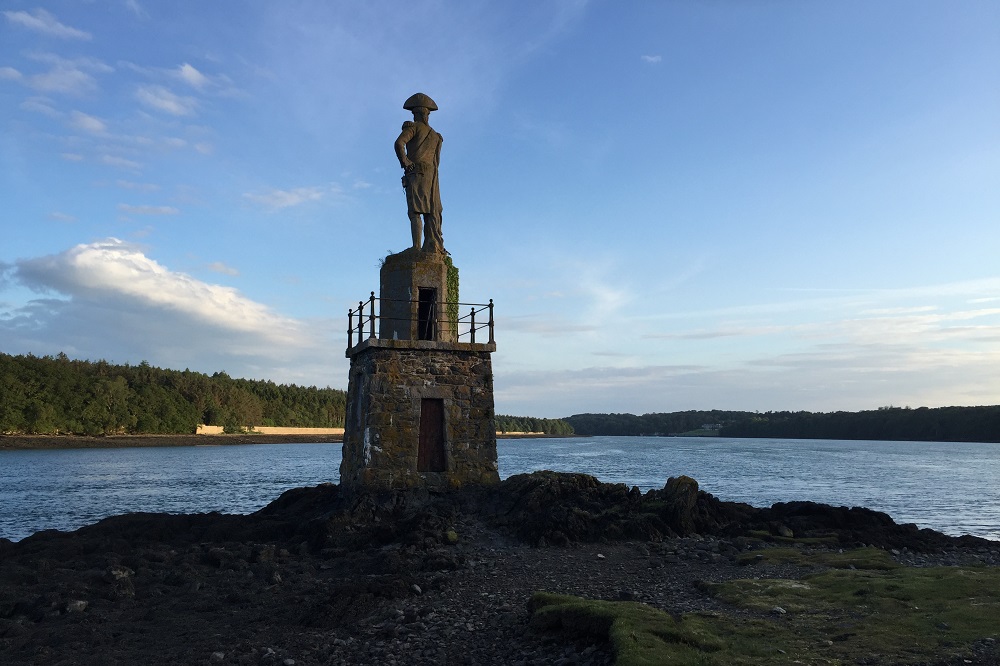
This is not a phrase one would perhaps expect to see on a statue by the shores of the Menai Strait in Anglesey. The words in question are found on a plaque at the base of Lord Nelson’s column, situated next to the Britannia Bridge.
The statue was erected in 1873, much later than the Battle of Trafalgar 1805, by Lord Clarence Paget, a former Lord of the Admiralty who lived nearby.
The quote is of words that Nelson is claimed to have uttered at the Battle of Trafalgar. It was to be a signal message to rally the British Navy. However, they certainly were not his exact words, with some accounts suggesting that he asked for the signalling of the message: “Nelson confides that every man will do his duty”.
So, from the outset, his message was edited, and the battle mythologised in order to present his life and death of that of an English national hero.
Even at the time, it was well known that sailors from nations other than England were serving in Nelson’s navy at Trafalgar, including Scotsmen, Irishmen, Americans and Italians.
There were also 18 Welshmen with Nelson on HMS Victory. Among them was Hugh Hughes from Holyhead, a 17-year-old from Anglesey like myself.
[mid-content-banner]
By emphasising Nelson’s own credentials as a national hero, therefore, the efforts and sacrifices of these men were brushed aside.
This was, therefore, a multi-national effort presented in hindsight as a victory and sacrifice for and by England.
Even at the time, therefore, the way this statue was presented on Anglesey was inappropriate and ahistorical, and it seems even more needless and out-dated today. These words, still boldly presented on the shores of Wales, may have been offensive at the time but are particularly provocative in today’s Britain.
This was a time when the Welsh were treated as inferior to our English counterparts, a time when the Welsh Not and The Blue Books (1847) were vivid reminders of Welsh cultural repression. When Wales was expected to be subsumed as a county of England.
The wording on the plaque no longer reflects a modern outward-looking Wales, with its own National Assembly and its own international ambitions in the world.
Oppression
So, what should be done about it? Do we preserve the plaque as a historical relic – quite literally, a sign of its times?
Other nations have had their own conversations about the legacy of statues, with some arguing for historical preservation and others than their propagandist message continues to resonate to the present day and so that they should be removed.
In Oxford University students have protested for the removal of the statue of Cecil Rhodes as representative of colonialism and supremacist attitudes.
In America historical re-evaluation has led to calls for removing Confederate legacy like the statues of General Robert E. Lee.
In Barbados, a report on their Nelson statue was commissioned recommending it should be moved to a less prominent position because of Nelson’s links to slavery.
In Dublin, in 1966, their Nelson’s Pillar was blown up.
And what about other symbols of the British Empire, which glory in the active and enthusiastic role Wales itself played? Sir Thomas Picton, celebrated all over Wales in the form of statues, portraits, and place names, is now widely considered to have been a monster.
Is it time for us in Wales to discuss what we do with the symbols of our own oppression, from a time where social and cultural privilege in England branded the Welsh identity as inferior? And also, what we do with the symbols celebrating our own oppression of others?
I don’t know all the answers I am only asking the questions. But I ask so that others who are more knowledgeable on the subject can continue the debate.

Support our Nation today
For the price of a cup of coffee a month you can help us create an independent, not-for-profit, national news service for the people of Wales, by the people of Wales.
Get more trusted Welsh news
Choose Nation.Cymru as a preferred source in Google News to see more of our journalism.
